

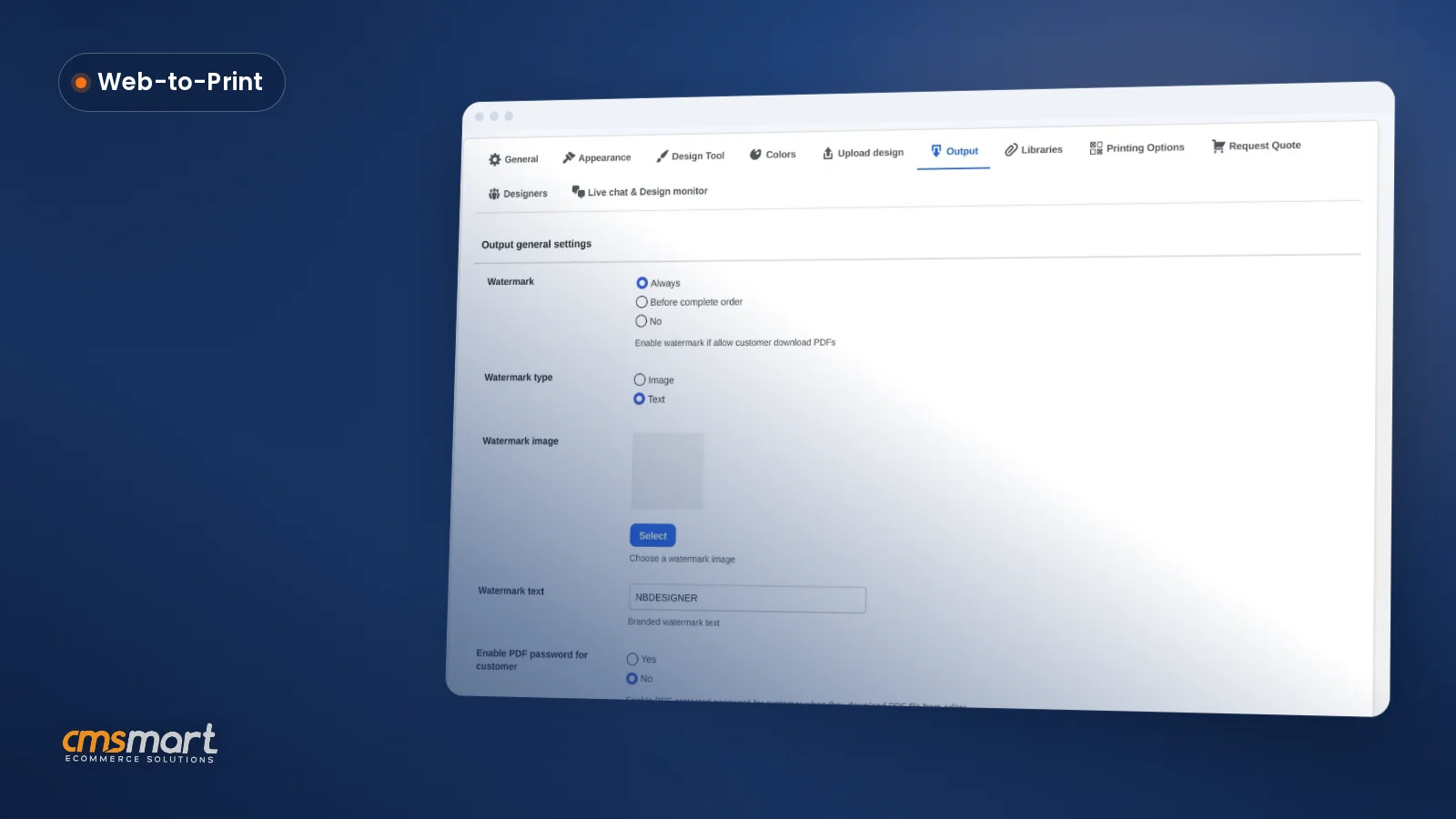
Guide · Web-to-print
Print Ready PDF Output Settings WooCommerce Setup
See what the print ready PDF output settings WooCommerce screen controls — watermark, password, bleed, FTP sync — and configure yours today.
Discover the benefits of mobile commerce to elevate your business. Cmsmart's solutions enhance customer engagement, sales growth, and streamline operations for a seamless mobile shopping experience.
Table of contents
Was this tutorial helpful?
Written by
Cmsmart WooCommerce Development Lead
Leads custom WooCommerce builds: architecture, checkout, performance and integrations.
The team behind it
 Account Manager
 Project Manager
 Business Analyst
 Developers & QA
Guide · Web-to-print
See what the print ready PDF output settings WooCommerce screen controls — watermark, password, bleed, FTP sync — and configure yours today.
Case study · AI
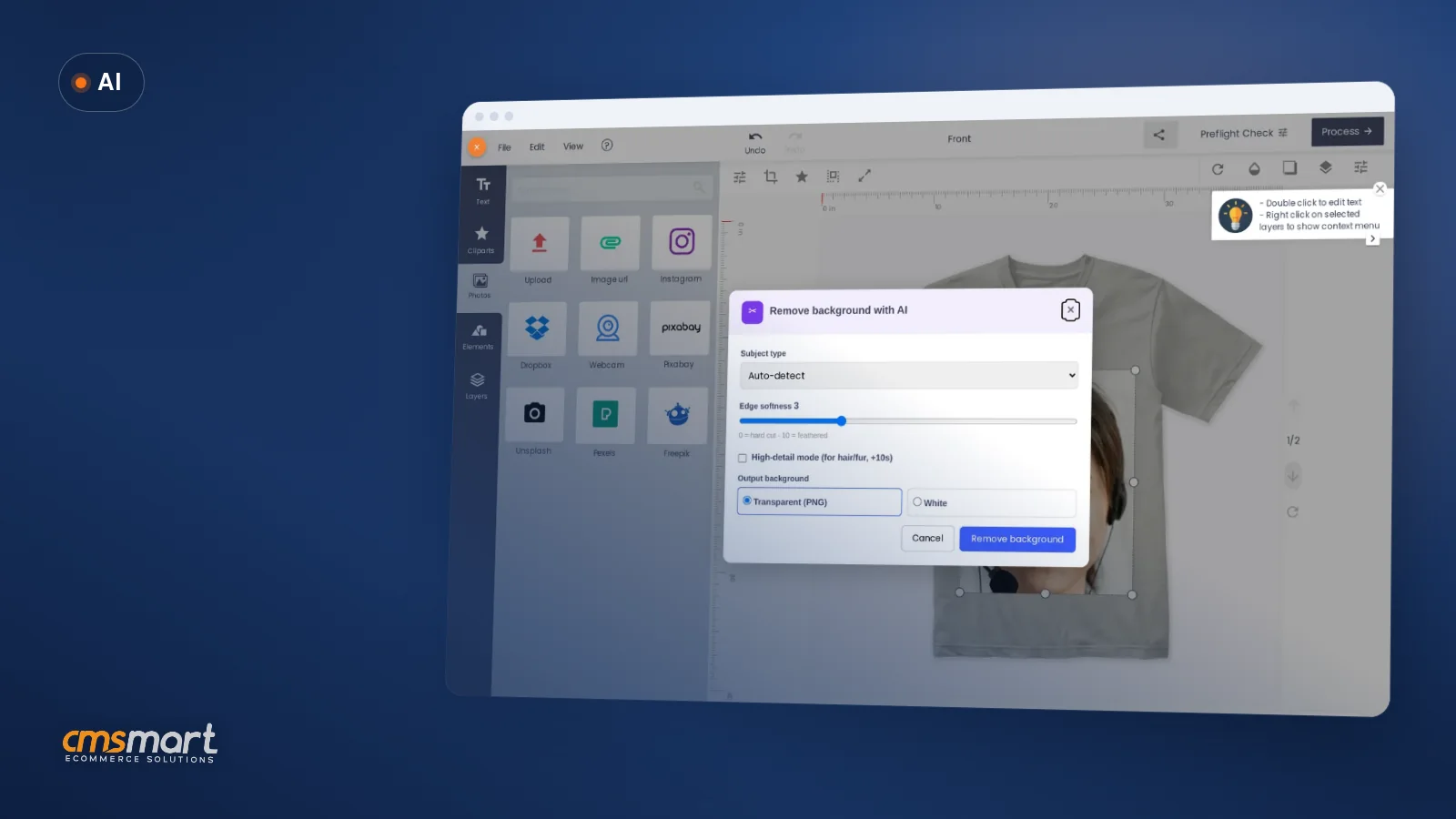
Add an AI background remover for WooCommerce to your product designer so buyers get a clean cutout instantly, and see how Cmsmart builds the rest for...
Case study · Web-to-print
Save design and reorder WooCommerce orders in one click, with a fresh print-ready PDF every time. See how Cmsmart builds it.
Browse more guides, tutorials and case studies from the Cmsmart community.
Unlock the Power of Mobile Commerce: Propel Your Business Forward
Read MoreDiscover how to harness mobile commerce to enhance your business growth. Learn strategies for optimizing the mobile shopping experience and increasing consumer engagement.
Read MoreDiscover the benefits of mobile commerce and how it can transform your business. Learn effective strategies for maximizing sales and customer engagement through mobile-optimized shopping experiences.
Read More
Cmsmart Ecommerce provides custom ecommerce and WooCommerce development services for web-to-print, product personalization, plugin support and API integration.
Cmsmart WooCommerce Development Lead
Leads custom WooCommerce builds: architecture, checkout, performance and integrations.
Meet the team →




Did you know that mobile commerce is projected to account for a staggering 72.9% of all eCommerce sales by 2021? As consumer behavior increasingly skews towards mobile platforms, adapting to these trends is no longer optional but a necessity. Take the case of VietCraft, a thriving artisan marketplace in Vietnam. Struggling with a cumbersome mobile shopping experience, they turned to Cmsmart to simplify their mobile buying journey. We helped them integrate cutting-edge mobile solutions, resulting in a remarkable 40% increase in sales within just three months. This story is not just an isolated success; it highlights the enormous potential that lies in embracing mobile commerce.
In today’s fast-paced retail landscape, ensuring a seamless and engaging mobile shopping experience can transform your business trajectory. With over 3.8 billion smartphone users worldwide, mCommerce represents a goldmine for forward-thinking retailers. By leveraging Cmsmart’s innovative solutions, which include responsive designs and secure payment gateways, you too can unlock substantial growth and enhanced customer engagement. Discover how to elevate your business with mobile strategies or explore effective selling strategies. In this tutorial, we’ll guide you through the essential steps to harnessing the power of mobile commerce and transforming your business for new heights.
Redefining Retail Through Mobile Commerce
Adaptation to Mobile-Dominant Shopping Behaviors: Can You Simplify the Mobile Buying Journey?In todays fast-paced retail landscape, adapting to mobile-centric consumer trends is essential. Simplifying the buying experience on smartphones while providing a seamless journey can be a game-changer for modern retailers.
Understanding the Mobile Commerce Opportunity
Mobile commerce, or mCommerce, is reshaping how consumers interact with brands. With over 3.8 billion smartphone users worldwide, this channel offers immense potential. Retailers leveraging mobile-friendly platforms are seeing tangible benefits.
Actionable Steps to Enhance Mobile Shopping Experiences
Keys to Mastering Mobile eCommerce
The shift towards mobile shopping demands adaptations across all facets of retail operations—security, user experience, and payment options are pivotal.
As mobile commerce avenues expand, businesses find themselves strategically positioned to capitalize on emerging consumer behaviors.
Looking forward: Dive into the current trends in mobile commerce to continue your growth journey . Up next, explore how mCommerce growth statistics reflect on broader retail trends .Clarifying the Concept of Mobile Commerce
Struggling with the surge in mobile-dominant shopping behaviors? Youre not alone.As businesses pivot to mCommerce, challenges such as integrating Buy Now Pay Later (BNPL) features, enhancing mobile user experiences, and ensuring secure mobile transactions are crucial for staying competitive.
Decoding Mobile Commerce
The landscape of shopping is rapidly evolving with mCommerce, also known as mobile e-commerce, at the forefront. This trend caters to the growing preference for shopping via smartphones, providing convenience and accessibility.
Evolution and Significance of mCommerce in Todays World
From its nascent stages, mCommerce has ballooned, transforming how consumers interact with products and services. According to
This growth underscores its pivotal role in the eCommerce ecosystem.Understanding Mobile Commerce Keywords: mCommerce, Mobile Shopping, and Mobile Payment
Recognizing the importance of keywords like mobile shopping and mobile payment is vital for businesses aiming to capture this evolving demographic. Leveraging these terms can enhance visibility and improve SEO rankings.
- Adapt platforms for mobile-first users
- Optimize mobile payment processes to enhance security measures
- Integrate AI-driven personalization for better user engagement
For further insights, explore our content on current trends in mobile commerce and delve into the benefits of mobile shopping. In summary: Embracing mCommerce is not just an option but a necessity for modern businesses to meet consumer expectations. Up next, lets explore the dynamics of current trends in mobile commerce and their impact on retail growth strategies.The Rise of In-App Purchases
Adaptation to mobile-dominant shopping behaviors is crucial in today’s competitive market.With ever-evolving consumer expectations for quick and seamless mobile shopping experiences, businesses are racing to enhance their mobile platforms for optimal engagement and transactions.
Demystifying In-App Buying
In-app purchases have transformed mobile e-commerce by allowing users to buy products or services directly within an app, improving user engagement and boosting revenue streams. As mCommerce continues to grow, integrating in-app buying becomes imperative for staying ahead in the retail game.
Advantages of Integrating In-App Buying in Mobile Commerce
Spotlight on In-App Buying: Real World Examples
Brands like Amazon and Starbucks have successfully integrated in-app purchases, providing users with frictionless checkout and personalized experiences, ultimately driving repeat business and strengthening customer loyalty.
For those looking to leverage the benefits of mobile shopping, implementing effective in-app purchasing strategies can significantly uplift the user experience and your revenue.
In summary: Integrating in-app purchases is not just about convenience, its about creating a holistic mobile shopping environment that meets modern consumer demands. As we transition to the next section, we’ll delve deeper into current trends in mobile commerce and their implications for future growth.Unraveling the Impact of Smartphones on Retail
Struggling to adapt to mobile-dominant shopping behaviors?Youre not alone. Integrating BNPL features into existing platforms, enhancing mobile user experience to increase conversions, keeping up with mobile transaction security measures, and meeting consumer expectations for quick and seamless mobile shopping are key challenges that businesses face.
Grasping the Nexus between Smartphones and Retail
The evolution of smartphones has dramatically transformed the retail landscape. Retailers are now recognizing the importance of integrating a robust mCommerce strategy to stay competitive.
Transformation of Retail by Mobile Commerce
Mobile commerce, or mCommerce, has redefined how consumers interact with brands. As smartphones become the primary mode for eCommerce transactions, businesses must adapt to new retail trends.
Deciphering Mobile E-Commerces Effect on Traditional Retail
The shift towards mobile shopping is challenging traditional retail models, requiring businesses to rethink their strategies.
In summary: Embracing mobile commerce strategies is essential for retail growth. The next section will delve into current trends in mobile commerce and explore how to leverage these for success.
Decoding the User Experience in Mobile Commerce
Are you adapting to the shift towards mobile-dominant shopping behaviors?In todays digital age, enhancing mobile user experiences in eCommerce isnt just beneficial—its critical for staying competitive. Businesses are increasingly turning to mobile commerce, or mCommerce, to meet consumer expectations for quick and seamless mobile shopping. Lets dive into this trend and uncover what makes user experience in mobile commerce so significant.
Significance of User Experience in mCommerce
As mobile devices reign supreme in digital communication and transactions, crafting a user-friendly mobile shopping experience has become indispensable. An enhanced user experience directly translates into increased engagement and conversion rates. According to Statista, mobile commerce sales are projected to account for 72.9% of all eCommerce transactions by 2021.
Essential Aspects of a User-Friendly Mobile Shopping Experience
Designing a mobile-friendly website is not just about making your desktop site fit a small screen. It encompasses a holistic approach, focusing entirely on the users ease and satisfaction. Here are some key aspects to consider:
Choosing an mCommerce Platform: A Comprehensive Guide
Selecting the right platform involves understanding your business needs and the features necessary to enhance the mobile shopping experience. Consider factors such as scalability, ease of use, and available support systems.
For more insights on the impact of smartphones on retail and the benefits of mobile shopping, explore our resources on current trends in mobile commerce and delve into Buy Now Pay Later in mobile shopping .
In summary: By enhancing mobile user experience, integrating seamless payment options, and choosing the right platform, businesses can not only meet but exceed consumer expectations, leading to higher conversion rates. Up next, we will explore the fascinating world of personalization in mobile storefronts and its impact on consumer loyalty.The Significance of Mobile Payment Methods
Transitioning to Mobile-Dominant Shopping Behaviors?In todays fast-paced digital world, adapting to mobile payment systems is crucial for businesses striving to match consumer expectations for quick and efficient transactions. The rise of mCommerce, or mobile e-commerce, has fundamentally reshaped how people engage with retail, making mobile payment methods a significant aspect of online shopping.
Breaking Down Mobile Payment Systems
Mobile payment systems offer swift and secure ways for consumers to complete their purchases. Understanding the intricacies of these systems can help you integrate BNPL (Buy Now Pay Later) features into your existing platforms to enhance the mobile user experience.
Interlink Between mCommerce and Mobile Payment
The correlation between mCommerce and mobile payment systems signifies a new era of retail trends where smartphones become a central hub for shopping. The integration of these systems promotes the efficiency of eCommerce transactions, ultimately boosting retail platforms.
Pros and Cons of Mobile Payment Systems
The significance of mobile payment methods cant be overstated, especially for businesses aiming for long-term success in the eCommerce space. As mCommerce continues to grow, integrating efficient mobile payment solutions will become indispensable.
In summary: Embracing these mobile payment systems is vital for staying competitive in todays retail environment. Our next section will explore current trends in mobile commerce and the impact of smartphones on retail to empower your strategy further.
Implementing a Buy Now Pay Later Feature
Adaptation to mobile-dominant shopping behaviors is crucial for thriving in todays ecommerce landscape. Mobile commerce, or mCommerce, is revolutionizing how consumers interact with shopping platforms. Integrating a Buy Now Pay Later (BNPL) feature can significantly enhance user experience and increase conversions by offering flexibility and ease in transactions. Lets explore how you can seamlessly implement this feature into your mobile commerce platform.Planning for BNPL Integration
Before diving into implementation, consider your platforms technical readiness and market demands. Are your consumers expecting quick and seamless shopping that BNPL can offer? Understanding consumer expectations for mCommerce can help tailor your solution to meet their needs.
Steps in Implementing a BNPL Feature in Your Mobile Commerce Platform
Integrating BNPL requires strategic planning and execution. Here’s a step-by-step guide to get you started:
Lessons from Successful BNPL Implementations
Learning from successful implementations can provide invaluable insights:
For further exploration into improving mobile commerce options, consider reading about current trends in mobile commerce and the impact of smartphones on retail.
In summary: Implementing a BNPL feature can enhance the mobile shopping experience and drive business growth. Up next, we will discuss the technological advancements in mobile commerce and how they can further transform your ecommerce strategy.Spotlight on Mobile Commerce: Trends and Future Predictions
Embrace the Future of Shopping: Harness the Power of Mobile Commerce TodayThe shift towards mobile-dominant shopping behaviors has redefined the landscape of e-commerce, making it imperative for businesses to adapt swiftly. Integrating "Buy Now, Pay Later" (BNPL) features and ensuring a seamless mobile user experience are key strategies to increase conversions and meet evolving consumer expectations.
Present mCommerce Trends
The current trends in mobile commerce, or mCommerce, reveal an ever-increasing adoption of smartphones for retail activities. With over 3.8 billion smartphone users globally, e-commerce transactions are driven by a need for convenience and immediacy. Market Insight: "In 2021, mobile e-commerce sales accounted for 72.9% of total e-commerce worldwide" . This statistic underscores the critical importance of optimizing mobile user experiences.
Projecting Future Mobile Commerce Developments
The future of mobile commerce is poised for revolutionary growth. Key areas of development include the integration of augmented reality (AR) for immersive shopping experiences, voice commerce, and advanced AI-driven personalization. As mobile payment users rise, the demand for more secure and seamless transaction processes will grow.
Paving the Way for Your Business in the Mobile Commerce Landscape
To thrive in the evolving mCommerce ecosystem, businesses must prioritize current trends in mobile commerce and ensure they are at the forefront of mCommerce growth statistics. The integration of mCommerce strategies with a focus on localizing mobile apps, improving app load times, and ensuring robust data protection will enhance user trust and engagement.
In conclusion: Navigating the mobile commerce landscape is about understanding trends, forecasting future developments, and strategically positioning your business for sustained success. Next, let’s delve into the transformative role of mobile payment systems and their impact on digital transactions.Frequently Asked Questions
Struggling to adapt to mobile-dominant shopping behaviors?Businesses are increasingly confronted with the challenge of transitioning to mobile commerce (mCommerce), a crucial aspect of modern retail trends. Adopting mCommerce strategies is essential to enhance user experience and increase conversions while meeting consumer expectations for seamless mobile shopping.
Key Questions About Mobile Commerce
1. What is Mobile Commerce (mCommerce)?
Mobile Commerce, or mCommerce, refers to the use of wireless handheld devices like smartphones and tablets to conduct commercial transactions online. It has become central to the shopping experience with the rise in smartphones shopping.
2. How Does Buy Now, Pay Later (BNPL) Impact Mobile Shopping?
Integrating Buy Now, Pay Later (BNPL) features into mobile platforms can significantly enhance sales by providing customers with flexible payment options.
3. How Can Businesses Enhance Mobile User Experience?
Optimizing mobile user experience is key to increasing conversions. Focus on simplifying navigation and ensuring fast load times.
4. What Are the Security Measures for Mobile Transactions?
Maintaining robust mobile payment security is vital for building consumer trust. Regular security audits and a secure payment gateway are integral components.
5. How to Meet Consumer Expectations in Mobile Shopping?
Understanding and exceeding consumer expectations in mobile shopping involves offering a seamless, user-friendly experience that combines speed, convenience, and safety.
Summary
Successfully navigating the challenges of mobile commerce requires continuous adaptation to current trends and technological advancements. This ensures that businesses remain competitive in the ever-evolving marketplace. Next, explore the current trends in mobile commerce to stay ahead in the industry.
FAQ Section: Troubleshooting and Pro Tips
How can I improve mobile shopping experiences for users?
Design responsive and intuitive mobile interfaces, enhance page load speeds, and streamline navigation to engage users effectively.
What should be considered when integrating BNPL features?
Ensure seamless integration with existing payment systems, comply with regulations, and assess user impact for smoother transactions.
How can mobile user experience be optimized to boost conversions?
Incorporate user-centric design principles, personalize content, and simplify checkout processes.
What are key mobile transaction security measures?
Implement SSL certificates, regular security updates, and utilize strong authentication methods to protect user data.
How to meet consumer expectations for quick mobile shopping?
Use fast-loading sites, offer a simple checkout, and provide multiple payment options to enhance the shopping experience.
How to adapt to mobile-dominant shopping behaviors?
Leverage mobile analytics to understand customer behavior and adjust marketing strategies accordingly.
Further Reading
Congratulations on unlocking the transformative potential of mobile commerce! By adapting your retail strategies to cater to the 3.8 billion smartphone users globally, you're not just keeping pace with consumer behavior but leading the charge towards a more simplified and engaging buying journey. The actionable steps outlined in this tutorial, from ensuring responsive designs to leveraging AI technologies, are vital in crafting a seamless mobile shopping experience. Ready to elevate your business? Let’s discuss how we can help you streamline this process and implement the best practices from this guide. Contact David, our CEO, directly via WhatsApp at here, or email me at [email protected]. Additionally, you can request a quotation. Join me in transforming your store into a mobile commerce powerhouse!