

Guide · Web-to-print
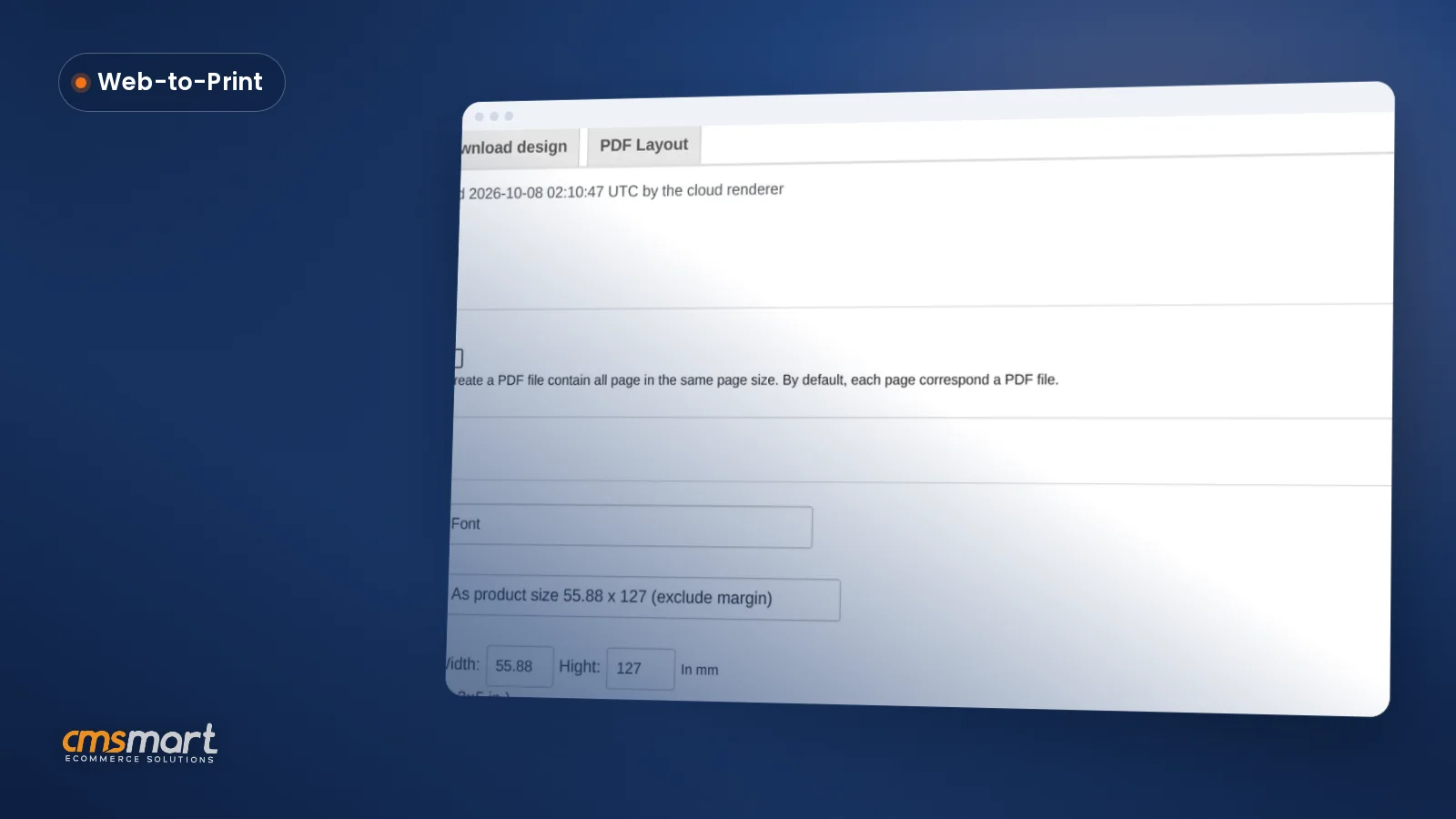
Custom Size Printing WooCommerce: Price It Live
Custom size printing WooCommerce shoppers configure themselves: Cmsmart prices it live and matches the print-ready PDF to the order. Get a quote.
Discover how to harness mobile commerce to enhance your business growth. Learn strategies for optimizing the mobile shopping experience and increasing consumer engagement.
Table of contents
Was this tutorial helpful?
Written by
Cmsmart WooCommerce Development Lead
Leads custom WooCommerce builds: architecture, checkout, performance and integrations.
The team behind it
 Account Manager
 Project Manager
 Business Analyst
 Developers & QA
Guide · Web-to-print
Custom size printing WooCommerce shoppers configure themselves: Cmsmart prices it live and matches the print-ready PDF to the order. Get a quote.
Guide · WooCommerce
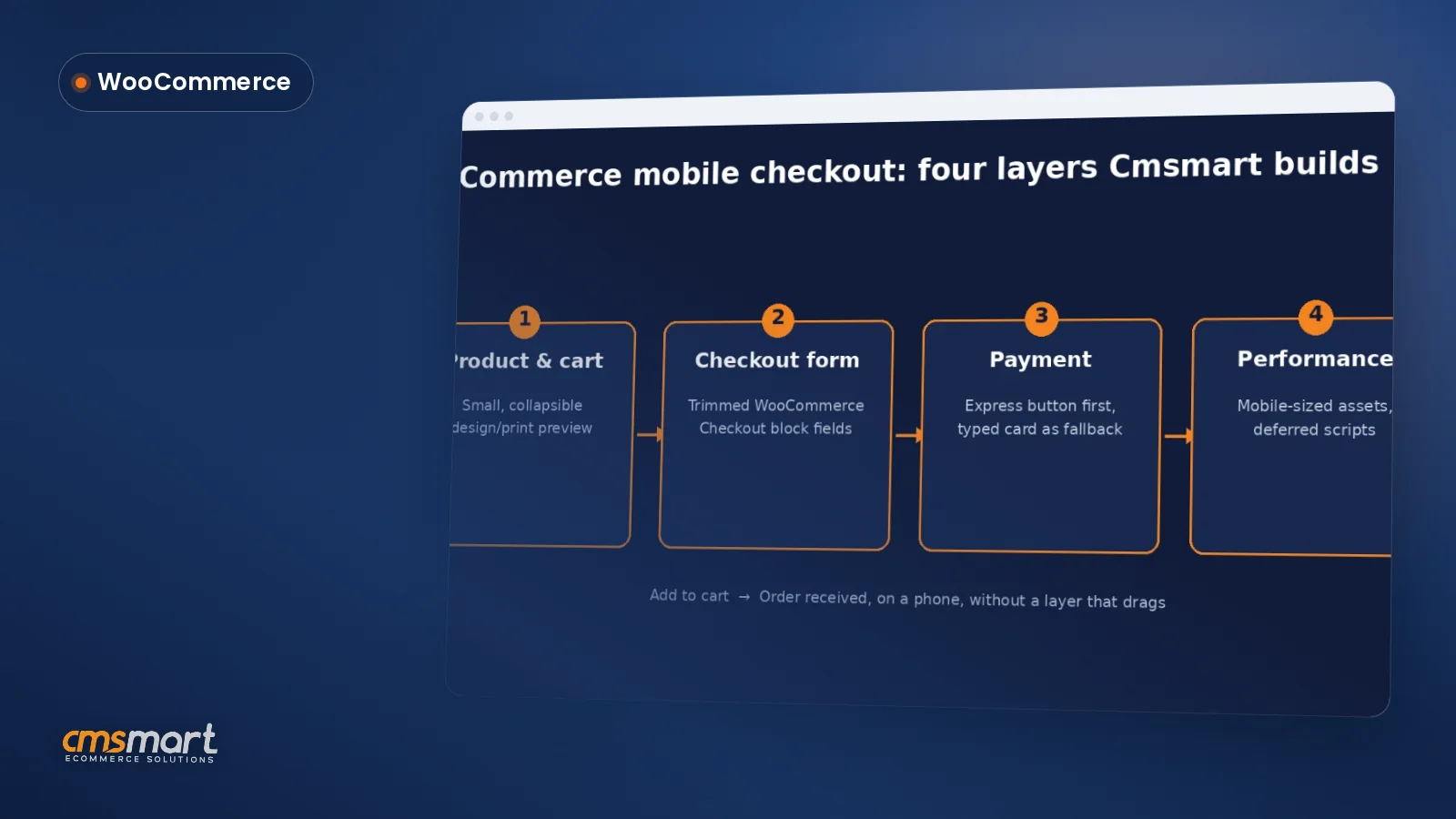
Fix your WooCommerce mobile checkout before shoppers bounce: cut fields, add express pay, speed up pages, and request a custom build quote today.
Guide · WooCommerce
Plan a WooCommerce HPOS migration that keeps checkout, plugins and reports working. Get Cmsmart's step-by-step guide and request a quote today.
Browse more guides, tutorials and case studies from the Cmsmart community.
Unlock the Power of Mobile Commerce: Propel Your Business Forward
Read MoreDiscover the benefits of mobile commerce and how it can transform your business. Learn effective strategies for maximizing sales and customer engagement through mobile-optimized shopping experiences.
Read MoreDiscover how mobile payments can enhance customer experiences, boost sales, and streamline transactions in your online store. Learn key benefits and trends shaping the future of mobile commerce.
Read More
Cmsmart Ecommerce provides custom ecommerce and WooCommerce development services for web-to-print, product personalization, plugin support and API integration.
Cmsmart WooCommerce Development Lead
Leads custom WooCommerce builds: architecture, checkout, performance and integrations.
Meet the team →




Did you know that mobile commerce is expected to account for nearly 73.9% of all e-commerce sales by 2022, generating a staggering $3.5 trillion worldwide? As businesses worldwide strive to harness this booming trend, understanding the unique nuances and challenges that come with mobile shopping has never been more crucial. Just ask Sara from London, U.K., who runs a successful fashion retail store. Last year, she realized that her customers were increasingly abandoning their carts during mobile checkout, leading to a significant drop in sales. With our guidance at Cmsmart, Sara implemented a user-friendly payment gateway and personalized mobile experiences, transforming her mobile sales strategy and leading to a 30% increase in conversion rates!
The complexity of mobile transactions, combined with differing consumer behaviors across regions, presents both challenges and opportunities for e-commerce businesses. Our internal research, supported by industry insights, emphasizes the importance of adopting advanced technologies for seamless mobile transactions while recognizing regional differences in mobile payment use. Learn more about how the right strategies can elevate your mobile commerce experience. In this tutorial, we’ll explore actionable strategies that can help you unlock the future of mobile commerce, enhance consumer engagement, and drive substantial growth for your business.
Did You Know?
Did you know that gender disparities in mobile payment use can significantly impact your e-commerce sales strategy?With mobile e-commerce projected to generate around $3.5 trillion by 2021 and account for nearly 72.9 percent of all e-commerce sales, understanding the nuances of mobile shopping is essential for businesses today.
Addressing Key Market Pain Points
Adapting to Market Trends
Its vital to stay updated with market trends in m-commerce. Here are some actionable tips to improve your strategy:- Analyze consumer behavior to identify trends and preferences.
- Utilize analytics tools to tailor offers and marketing efforts based on data.
- Leverage social commerce by integrating shopping features into platforms like Instagram and Facebook.
For further insights, explore our resources on the definition and history of mobile commerce, key statistics on m-commerce growth, top mobile shopping apps in 2018, AI and its role in mobile commerce, and the impact of video content on consumer engagement. In summary: Understanding the dynamics of mobile commerce, along with utilizing the right strategies and tools, will be critical in navigating this growing market. Next, let’s dive deeper into the notable statistics and their implications for your e-commerce operations.Bracing the Mobile Commerce Wave
Are you ready to navigate the rapidly evolving world of mobile commerce? Its crucial to stay ahead of the competition.As more consumers move towards mobile shopping, understanding gender disparities in mobile payment usage and regional adoption rates becomes essential for businesses aiming for personalized customer experiences.
Definition and History of Mobile Commerce
Mobile commerce (m-commerce) refers to any online trade transaction conducted through mobile devices. Starting with the early 2000s mobile banking initiatives, it has transformed into a significant sector of retail. Today, mobile transactions are forecasted to account for over 54% of total e-commerce sales by 2025, according to eMarketer .Impact of Mobile Commerce on Traditional Retail
The rise of mobile shopping has significantly altered the traditional retail landscape. Here’s how:Deconstructing the Mobile Commerce Landscape: Key Market Players and Innovations
Various key players dominate the mobile commerce landscape, each contributing innovative solutions. Notably:- Amazon, renowned for its user-friendly mobile app and comprehensive product offerings.
- Alibaba, leveraging mobile payment platforms like Alipay to enhance customer experience.
- Shopify, empowering small businesses through its mobile-responsive themes and tools.
To delve deeper, explore our articles on definition and history of mobile commerce and key statistics on m-commerce growth. You can also check our insights on top mobile shopping apps in 2018. In summary: Understanding the dynamics of mobile commerce not only strengthens your approach but positions you strategically for future success—up next, we’ll analyze the impact of AI on mobile commerce and how it shapes consumer interactions.Decoding Mobile Commerce Statistics
Are you aware of the significant gender disparities in mobile payment use and adoption rates across different regions? You might be missing out!Understanding mobile commerce (m-commerce) is crucial for businesses aiming to keep pace with market trends and consumer behavior in today’s digital landscape.
Unveiling Key Statistics on M-commerce Growth
The mobile commerce industry has experienced explosive growth in recent years, with various statistics highlighting its importance. For instance:Understanding Mobile Commerce Adoption Rates in Different Regions
Regions like Asia-Pacific and North America are leading the charge in mobile shopping adoption. For example:- Asia-Pacific is projected to account for over 50% of global mobile commerce sales.
- Northern Europe sees 67% of its consumers making purchases via mobile devices.
Such trends reveal the varying pace of adoption based on geography, presenting both challenges and opportunities.Gender Disparity in Mobile Payment Use: A Close Examination
Exploring gender differences in mobile payments can reveal valuable insights into consumer behavior:To successfully harness the potential of mobile commerce, businesses must focus on integrating advanced technologies to enhance personalized shopping experiences. Staying informed about the challenges and consumer preferences is essential for maintaining competitiveness in the market.
In conclusion: Recognizing the trends and disparities in mobile commerce sets the stage for informed strategies moving forward. Next, let’s dive deeper into the definition and history of mobile commerce and uncover more essential statistics on m-commerce growth.Top Mobile Shopping Applications
Facing challenges in keeping your mobile shopping app relevant? Youre not alone.Gender disparities in mobile payment use and varied consumer adoption rates across regions significantly impact e-commerce platforms. Many businesses struggle to provide personalized shopping experiences as they navigate the integration of advanced technologies in mobile commerce.
A Round Up of Best Mobile Shopping Apps in 2018
The mobile commerce landscape has seen rapid expansion, particularly in 2018, with countless apps emerging to facilitate seamless shopping. Here are a few standout apps to consider:Examining Top Features of Mobile Commerce Applications
As the focus shifts toward mobile shopping, certain features emerge as essential for enhancing user engagement:Increasing App Engagement with Personalized Shopping Experiences
Creating personalized shopping experiences is essential for augmenting consumer engagement. Consider these actionable strategies:- Utilize data analytics to understand user preferences and purchasing habits.
- Design targeted promotions based on user behavior and location.
- Integrate loyalty programs to reward frequent shoppers create a sense of belonging.
In summary: By exploring the best mobile shopping applications and understanding their core features, businesses can craft personalized shopping experiences that meet consumer needs. This sets the stage for the definition and history of mobile commerce and prepares you for our next discussion on the key statistics on m-commerce growth.Revolutionizing Mobile Commerce with AI
Struggling to enhance your mobile commerce experience? Youre not alone.Many businesses grapple with challenges like gender disparities in mobile payment usage, varying consumer adoption rates across regions, and the integration of advanced technologies to provide personalized shopping experiences.
Compelling Reasons to Integrate AI in Mobile Commerce
Integrating AI into your mobile commerce strategy can dramatically enhance consumer engagement and drive sales. Heres why you should consider this shift:Exploring Successful AI Implementations in M-commerce
Numerous brands have successfully leveraged AI in their mobile commerce strategies. Notable examples include:Future of AI and Mobile Commerce: A Speculative Look
As technology evolves, AIs role in mobile commerce will grow, promising exciting innovations:- Seamless voice shopping experiences thanks to AI voice assistants.
- Deeper integration of AR and VR technologies to enhance the shopping experience.
- Advanced predictive analytics aiding in refining marketing strategies.
Summary: Integrating AI into your mobile commerce strategy opens avenues for better customer experiences and streamlined operations. Curious about the definition and history of mobile commerce? Lets move forward to explore key statistics on m-commerce growth and the top mobile shopping apps in 2018.Boosting Mobile Commerce Marketing with Video Content
Struggling with mobile commerce marketing? You’re not alone.Many businesses encounter challenges in engaging consumers, especially with the rapid rise of m-commerce and the increasing integration of technologies like video content to enhance shopping experiences across regions.
Role of Video Content in E-commerce Marketing
Video content has emerged as a powerful tool in e-commerce, significantly impacting consumer behavior. Here are some key points about its role:Influence of Video Content on Consumer Engagement
Integrating video content into your marketing efforts can significantly enhance consumer engagement.Imbibing Video Content in Your Mobile Marketing Strategy: Best Practices
To effectively utilize video in your mobile marketing strategy, follow these best practices:- Keep videos concise (under 2 minutes) to maintain viewer attention.
- Incorporate clear calls-to-action (CTAs) at the end of your videos.
- Optimize video files for mobile devices to ensure quick loading times.
Integrating these practices can help create a more personalized shopping experience. As Kevin Duffey noted, "Video marketing elevates brand trust and improves conversion rates significantly." In summary: Utilizing video content in your mobile commerce strategies can greatly enhance consumer engagement and sales. Next, let’s explore the impact of video content on consumer engagement and learn more about creating immersive shopping experiences in the mobile realm.Augmented Reality: Redefining E-Commerce Experiences
Struggling to stand out in the competitive world of e-commerce? You’re not alone.Businesses today face significant challenges in providing personalized shopping experiences, particularly amidst gender disparities in mobile payment use and varying consumer adoption rates across regions. Integrating advanced technologies like Augmented Reality (AR) could be the game-changer you need to enhance engagement and sales in mobile commerce (m-commerce).
Augmented Reality and its Effect on Shopping Experiences
Augmented Reality transforms how consumers interact with products, allowing for more immersive and engaging shopping experiences. Heres how it can affect your strategy:In fact, a recent report indicated that 61% of consumers prefer retailers that offer AR experiences, enhancing their overall shopping journey.
Unleashing the Potential of Augmented Reality in Retail
For retailers looking to leverage AR, consider these actionable strategies:Real World Applications of Augmented Reality in M-Commerce
Several brands have successfully integrated AR into their mobile shopping experiences. For example, IKEA’s AR app allows users to see how furniture looks in their space, greatly enhancing their purchasing confidence. In summary, Augmented Reality is not just a trend; it represents a crucial shift in how consumers engage with products. By harnessing AR, you can offer personalized shopping experiences that resonate with today’s tech-savvy consumers, particularly in regions like the U.S. and U.K., where mobile shopping is booming. For those eager to dive deeper, check our sections on definition and history of mobile commerce, key statistics on m-commerce growth, and AI and its role in mobile commerce to enhance your understanding of how to incorporate advanced technologies in your strategy. Next, let’s explore the impact of video content on consumer engagement—another critical aspect of the evolving e-commerce landscape.Mobile Commerce Trends Analysis
Are you struggling to keep up with the fast-evolving landscape of mobile commerce? You’re not alone.Businesses worldwide are confronting challenges such as gender disparities in mobile payment utilization and varying consumer adoption rates across different regions. As advanced technologies like AI and augmented reality integrate into e-commerce, providing personalized shopping experiences becomes increasingly essential—and complex.
Following M-commerce Market Trends
The mobile commerce, or m-commerce, market is rapidly expanding, driven by the increasing use of smartphones and the desire for seamless shopping experiences. Here are some current trends to watch:Customer Engagement Strategies for U.S. and U.K. Mobile Users
Understanding the regional differences in consumer behavior is vital. For marketers targeting U.S. and U.K. mobile users, consider these strategies:Predictions on the Future Evolution of Mobile Commerce
As the m-commerce landscape evolves, here are some anticipated trends:- Increased reliance on voice shopping.
- Enhanced security features, addressing payment concerns.
- More intuitive shopping experiences through chatbots and virtual assistants.
- Greater use of social media platforms as direct sales channels.
In summary: The mobile commerce landscape is undergoing significant changes, with trends indicating a robust future for mobile shopping. Transitioning into our next section, we will delve deeper into the definition and history of mobile commerce—an essential foundation for mastering the evolving market dynamics. For further insights, explore the following topics: key statistics on m-commerce growth, top mobile shopping apps in 2018, AI and its role in mobile commerce, impact of video content on consumer engagement, and augmented reality and its effect on shopping experiences.Frequently Asked Questions
Struggling to navigate the complexities of mobile commerce? You’re not alone.Many businesses grapple with challenges like gender disparities in mobile payment use, varying consumer adoption rates across regions, and the integration of advanced technologies into e-commerce.
In-depth Answers to Common Questions Regarding Mobile Commerce
Technology Trends Impacting Mobile Commerce
Innovations such as AI and Augmented Reality (AR) are transforming the way consumers engage with brands. From personalized shopping experiences to immersive product displays, these technologies help bridge gaps between online and offline shopping.Overcoming Hurdles in Mobile Transactions
To enhance consumer trust and engagement, businesses should focus on:Key Insights Into Consumer Adoption Rates
Research shows that mobile users in the U.S. are more likely to complete purchases on their devices compared to those in the U.K. This insight is pivotal for brands aiming for cross-market penetration. For a comprehensive understanding of mobile commerce, check out our sections on definition and history of mobile commerce, key statistics on m-commerce growth, top mobile shopping apps in 2018, AI and its role in mobile commerce, impact of video content on consumer engagement, and augmented reality and its effect on shopping experiences. In summary: By addressing these common questions and understanding the evolving landscape of mobile commerce, businesses can enhance their strategies to improve consumer engagement and drive sales. Next, let’s delve into advanced methods for optimizing your mobile commerce efforts.FAQ Section: Troubleshooting and Pro Tips
What are the key gender disparities in mobile payment usage?
Women tend to engage more in secure payment methods, while men are more inclined towards high-value transactions.
How do consumer adoption rates for mobile commerce vary by region?
Adoption rates are generally higher in North America and Asia, driven by greater smartphone penetration and mobile-friendly infrastructure.
What advanced technologies are being integrated into e-commerce?
Technologies like AI, AR/VR, and blockchain are enhancing personalization, inventory management, and customer experience in e-commerce.
What challenges do retailers face in providing personalized shopping experiences?
Retailers struggle with data integration, maintaining privacy, and delivering consistent interactions across multiple platforms.
How is mobile commerce transforming consumer shopping behavior?
Mobile commerce allows for on-the-go shopping, personalized experiences, and seamless transactions, significantly shifting consumer habits.
What role does mobile optimization play in e-commerce success?
Mobile optimization is crucial for reducing bounce rates, improving user experience, and increasing conversion rates among mobile users.
What impact do digital wallets have on consumer spending?
Digital wallets simplify transactions, encourage impulse purchases, and typically lead to higher spending due to ease of use.
Further Reading
Now that you've unlocked the essential strategies for succeeding in mobile commerce, it's time to take action and transform your business. With the m-commerce landscape continually evolving, understanding the specific regional differences in consumer behavior is crucial for maximizing your sales potential. By implementing user-friendly payment gateways and personalized shopping experiences, you can significantly elevate customer engagement and build loyalty. Let’s discuss how we can help you implement these strategies successfully. Reach out to David, our CEO, directly at WhatsApp or email me at [email protected] for personalized insights and support. Additionally, you can request a quotation at this link. Together, we can seize the vast opportunities within mobile commerce and set your store on a path to success!