

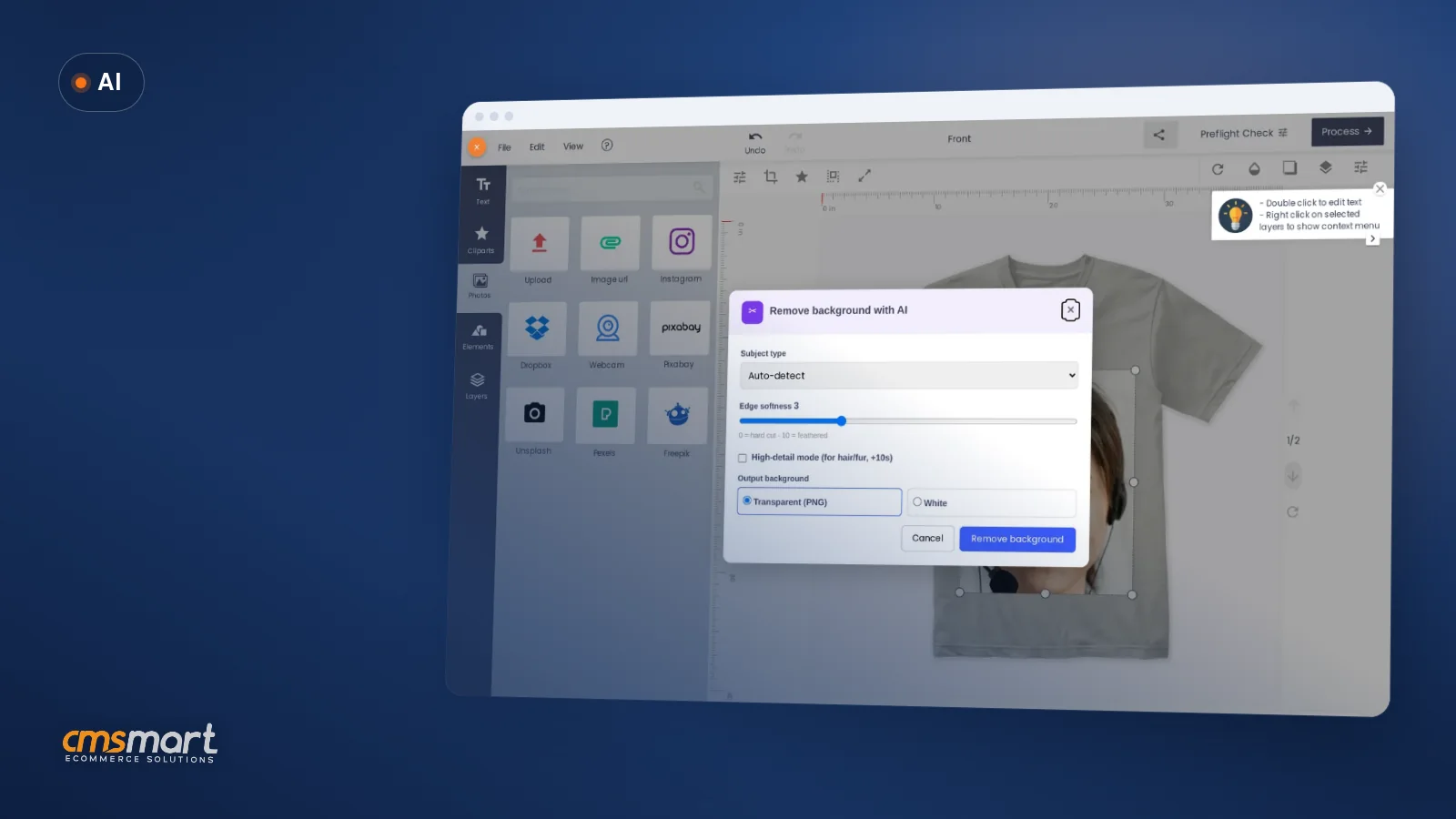
Case study · AI
AI Background Remover for WooCommerce Product Designer
Add an AI background remover for WooCommerce to your product designer so buyers get a clean cutout instantly, and see how Cmsmart builds the rest for...
Explore the transformative power of mobile commerce solutions. Enhance customer experiences, streamline operations, and maximize revenue with Cmsmart's pioneering expertise. Stay ahead in the digital marketplace and drive growth with innovative mobile strategies.
Table of contents
Was this tutorial helpful?
Written by
Cmsmart WooCommerce Development Lead
Leads custom WooCommerce builds: architecture, checkout, performance and integrations.
The team behind it
 Account Manager
 Project Manager
 Business Analyst
 Developers & QA
Case study · AI
Add an AI background remover for WooCommerce to your product designer so buyers get a clean cutout instantly, and see how Cmsmart builds the rest for...
Case study · Web-to-print
Save design and reorder WooCommerce orders in one click, with a fresh print-ready PDF every time. See how Cmsmart builds it.
Guide · Web-to-print
Custom size printing WooCommerce shoppers configure themselves: Cmsmart prices it live and matches the print-ready PDF to the order. Get a quote.
Browse more guides, tutorials and case studies from the Cmsmart community.
Unlock the Power of Mobile Commerce: Propel Your Business Forward
Read MoreDiscover how to harness mobile commerce to enhance your business growth. Learn strategies for optimizing the mobile shopping experience and increasing consumer engagement.
Read MoreDiscover the benefits of mobile commerce and how it can transform your business. Learn effective strategies for maximizing sales and customer engagement through mobile-optimized shopping experiences.
Read More
Cmsmart Ecommerce provides custom ecommerce and WooCommerce development services for web-to-print, product personalization, plugin support and API integration.
Cmsmart WooCommerce Development Lead
Leads custom WooCommerce builds: architecture, checkout, performance and integrations.
Meet the team →




As the digital landscape evolves, the significance of mobile commerce cannot be overstated. According to industry reports, mobile commerce is predicted to account for a staggering 72.9% of total e-commerce sales globally by 2021, underscoring the urgent need for businesses to embrace a mobile-first strategy. Take, for instance, the journey of FreshMart, an organic grocery retailer based in Australia. Faced with declining foot traffic and a palpable shift in consumer behavior towards online shopping, FreshMart turned to Cmsmart for assistance in developing a robust mobile commerce platform. By leveraging our innovative solutions, they successfully transformed their business model, enhancing customer engagement and boosting sales by over 50% within just six months.
In the ever-competitive world of online retail, ensuring a seamless mobile shopping experience is essential for survival. M-commerce breaks down barriers by making every consumer's smartphone an extension of your store, creating unparalleled convenience. As you delve into this tutorial, you’ll discover strategies to harness the power of mobile commerce, adapt to evolving consumer behaviors, and optimize your retail approach for the mobile-first era. For further insights on attracting customers through integrated digital strategies, check out our guides on [multi-channel marketing](https://cmsmart.net/community/empower-your-business-with-a-multi-channel-marketing-strategy-unlock-success-with-seamless-integration-across-digital-and-traditional-platforms) and [inbound marketing](https://cmsmart.net/community/enhance-your-e-commerce-strategy-with-inbound-marketing-and-content-creation). In this guide, we’ll explore actionable insights to elevate your business in the mobile commerce revolution.
Enter the Mobile Commerce Revolution
Enter the Mobile Commerce Revolution
Imagine if every consumers smartphone was an extension of your store. Welcome to Mobile Commerce!
Struggling to adapt to mobile-first consumer behavior? Youre not alone.
As businesses face challenges in integrating mobile payments with existing systems and maintaining a seamless shopping experience on mobile platforms, mobile commerce (M-Commerce) emerges as a pivotal shift. It’s about transforming every smartphone into an extension of your retail space.
Leveraging Mobile Commerce for Business Growth
Ensuring a Seamless Mobile Shopping Experience
Imagine 24/7 access to your store in the palm of every customers hand. Mobile commerce makes this a reality, providing convenience and accessibility that aligns with todays consumer expectations. Building a mobile-friendly platform is not just an add-on; its a necessity.
Actionable Tips for a Mobile-First World
For more information on the importance of embracing mobile commerce, understanding mobile wallet payments, and shopping on mobile apps like Amazon, explore our in-depth resources on importance of mobile commerce in online retail and related topics .
In summary: As we continue into a mobile-first world, businesses must embrace mobile commerce strategies to remain competitive. Next, let’s delve into the importance of mobile commerce in online retail and how it influences the growth of transactions via mobile devices.
Understanding Mobile Commerce
Adapting to mobile-first consumer behavior is crucial in todays digital landscape. Integrating mobile payments with existing systems and maintaining a seamless shopping experience on mobile platforms can distinguish a thriving e-commerce business from a struggling one.The Definition of Mobile Commerce
Mobile commerce, or M-Commerce, refers to buying and selling goods and services through mobile devices like smartphones and tablets. Unlike traditional eCommerce that occurs primarily on desktops, M-Commerce leverages mobile-specific technologies to offer tailored shopping experiences.
Evolution and Significance of Mobile Commerce
The journey of mobile commerce began alongside the smartphone revolution. As technology advanced, mobile transactions surged, overtaking desktop processes. This shift symbolizes the broader movement toward a mobile-first world, demanding businesses to adapt and innovate continually.
Understanding M-Commerce, Mobile Retail, and Mobile Transactions
M-Commerce encompasses various activities, from retail shopping on mobile apps to managing mobile wallet payments. Essential components include:
Understanding mobile commerce is just the beginning. To harness its full potential, businesses should integrate strategies that maximize the advantages of this growing trend. Moving forward, well delve deeper into the importance of mobile commerce in online retail and explore the growth of transactions via mobile devices, to fully capitalize on mobile wallet payments and app shopping experiences like Amazon.
In summary: Embracing a mobile-first strategy can significantly enhance your e-commerce platforms reach and efficiency. Next, we will uncover more about leveraging mobile strategies for maximizing growth in the competitive online retail landscape.
Mobile Apps, Wallet Payments and the Mobile Shopping Ecosystem
Is your business struggling to adapt to the mobile-first world? Youre not alone.Businesses face the pressing challenge of integrating mobile payments and ensuring seamless shopping experiences on mobile platforms.
The Role of Mobile Apps in M-Commerce
Mobile apps have revolutionized the way we shop online, offering personalized and convenient shopping experiences. In todays m-commerce-driven market, businesses leveraging these apps see an increase in consumer engagement and sales.
Mobile Wallet Payments: The Future of Transactions
As transactions evolve, mobile wallet payments represent a significant shift in how we buy and sell. From Apple Pay to Google Wallet, these tools offer speed and security.
Factors Driving the Mobile Shopping Trend
The shift to mobile shopping is driven by technology and customer psychology. Understanding these factors can help you stay ahead in a mobile-first marketplace.
For comprehensive strategies, visit our page on impact of mobile commerce and deepen your understanding of launching and adapting mobile commerce solutions.
In summary: Embracing mobile apps and wallet payments can significantly improve your businesss customer engagement and sales. Next, well explore the importance of mobile commerce in online retail, delving deeper into the growth of transactions via mobile devices.Smartphone Commerce Vs eCommerce
Tackling Mobile-First Consumer Behavior: The New Era of CommerceWith the rapid evolution of consumer behavior, businesses face unique challenges in adapting to mobile-first strategies, integrating mobile payments, and maintaining seamless shopping experiences on mobile commerce platforms.
The Differences Between eCommerce and M-Commerce
eCommerce and M-Commerce, while similar, have unique characteristics that differentiate them. eCommerce refers to all transactions conducted online, typically through a desktop or laptop, while M-Commerce caters specifically to mobile device users. This shift highlights the increasing importance of flexible, responsive designs and mobile payment integrations.
- Wider screen interfaces for detailed product displays
- Traditional payment gateways
- App-based interactions such as with shopping apps like Amazon
- Mobile payment systems like digital wallets
The Independent Growth of Smartphone Commerce
Smartphone commerce has emerged not simply as a subsidiary of eCommerce but as a pivotal player in retail, driven by the ubiquity of smartphones and improved network infrastructure. Businesses must harness this independent growth by focusing on M-Commerce-friendly mediums to reach their consumers effectively.
Impact of M-Commerce on Traditional eCommerce
The rise of M-Commerce has not diminished the relevance of traditional eCommerce but rather complemented it. There is a symbiotic relationship where M-Commerce offers instant access and portability, while traditional eCommerce provides a more detailed exploration of products.
Explore the importance of mobile commerce in online retail as we further delve into the strategies adapting to this dual-channel shopping era. From understanding mobile wallet payments to shopping on mobile apps like Amazon, mastering the intricacies of Commerce is vital for sustained success.
In summary: Recognizing and addressing these transformative shifts will prepare your business for a digital future where mobile and desktop commerce coexist symbiotically, enabling a seamless shopping experience for consumers. Now, lets explore how this eras digital wallets integrate within this expanding ecosystem.Optimal Mobile User Experience: Key to Success
Are you ready to embrace the mobile-first consumer behavior revolution?In todays digital era, adapting to the shift towards mobile-commerce (M-Commerce) is crucial for thriving in the competitive eCommerce landscape. Mobile devices have captured the lions share of online shopping, compelling businesses to integrate mobile payments seamlessly and maintain a frictionless shopping experience on all platforms.
Significance of User Experience in Mobile Commerce
Delivering a stellar mobile user experience is no longer optional; its essential. Mobile retail is driving the surge in mobile transactions, making it imperative for businesses to focus on consumer behavior in a mobile-first world. By optimizing the user interface and ensuring swift, reliable mobile device transactions, businesses can significantly enhance customer satisfaction and loyalty.
Features of a Mobile-friendly eCommerce Platform
For a platform to be considered mobile-friendly, it must offer more than just a responsive design. Essential features include optimized performance across varied network speeds, adaptable interfaces for touch navigation, and secure, diversified payment gateways that support mobile wallet payments.
How to Choose the Best Mobile Commerce Platform
Choosing the right mobile commerce platform involves evaluating several factors such as scalability, ease of integration with existing systems, and the ability to provide personalized experiences to users. An ideal platform should facilitate growth by allowing seamless integration of third-party apps and services.
- Check for platform scalability to accommodate growing traffic
- Ensure the platform supports integration with existing databases and CRMs
- Look for platforms offering customizable themes for branding consistency
In summary: By prioritizing mobile optimization and selecting the right m-commerce platform, businesses can navigate the evolving landscape of mobile shopping with ease and precision. Up next, we delve into the importance of mobile commerce in online retail and explore the growth of transactions via mobile devices .Navigating Mobile Payments Integration
Adapting to the mobile-first consumer behavior can seem daunting, but integrating mobile payments into your existing systems doesnt have to be.In todays mobile-centric world, providing a seamless shopping experience on mobile platforms is paramount for businesses to thrive. Lets explore how you can successfully integrate mobile payments and keep up with evolving consumer expectations.
Understanding Mobile Payments Systems
Mobile payment systems have revolutionized the way we shop on mobile devices, offering a convenient and secure method for transactions in eCommerce. These systems include digital wallets, mobile banking apps, and contactless payments, simplifying the purchasing journey for consumers. As the mobile payment market is projected to reach an astonishing $3 trillion by 2025, embracing these systems is no longer an option but a necessity.
Link between M-Commerce and Mobile Payments
M-Commerce, or mobile commerce, has been significantly influenced by mobile payment solutions. As online shopping on mobiles becomes more prevalent, understanding mobile wallet systems like Apple Pay, Google Pay, or Samsung Pay offers consumers a seamless experience that directly influences conversions in online retail.
Steps to Integrating Mobile Payments with Existing Systems
Navigating mobile payments integration is a journey, but its one that pays off significantly in the bustling arena of mobile commerce. For an expansive understanding of how mobile commerce affects the growth of online retail, and to explore in-depth strategies on mobile wallet payments, visit our internal guides on the importance of mobile commerce in online retail.
In summary: By integrating mobile payments, you enhance your eCommerce capabilities, ensuring your business stays ahead in a dynamically evolving mobile-first world. Up next, lets delve into harnessing the growth of transactions via mobile devices to further optimize your online presence.Best Practices in Mobile Commerce Strategy
Struggling to adapt to a mobile-first consumer behavior?Businesses often face challenges in integrating mobile payments with existing systems while maintaining a seamless shopping experience on mobile platforms.
Planning for Effective Mobile Commerce
Key Steps in Developing a Mobile Commerce Strategy
Real-Life Case Studies of Successful M-Commerce Integration
- Evaluate how leading brands have successfully navigated the shift to mobile commerce. - Learn from case studies on the growth of transactions via mobile devices and the importance of mobile commerce in online retail. In summary: Strategically planning and executing a mobile commerce strategy positions your business for success in today’s mobile-first world. Next, lets look at the growth and impact of mobile wallet payments and shopping on mobile apps like Amazon. Stay tuned for insights on enhancing the mobile shopping experience further.The Future of Mobile Commerce Trends
Struggling to stay ahead in a mobile-first world? Catching up is vital.Observations in Current Mobile Commerce Trends
As mobile devices become increasingly central to our daily lives, adapting to mobile-first consumer behavior is essential for business success. Embrace M-Commerce, Mobile Retail, Mobile Device Transactions, and more to align with evolving consumer expectations.
Predicted Future Trends in Mobile Commerce
The future of mobile commerce is set to be groundbreaking, with new technologies and consumer preferences shaping the landscape. Businesses need to integrate mobile payments and maintain a seamless experience to thrive.
How to Future-Proof Your Business with M-Commerce
To future-proof your business, embrace strategies that cater to the growth of mobile transactions. This involves optimizing the mobile shopping experience while leveraging consumer behavior insights.
For more detailed insights, explore our guides on the importance of mobile commerce in online retail, growth of transactions via mobile devices, and shopping on mobile apps like Amazon. Leverage these resources to deepen your strategy and stay competitive.
In summary: M-Commerce is not just a trend—its a redefinition of retail. Position your business for the future by integrating these insights. Up next: delve into the importance of maintaining seamless online transactions.Frequently Asked Questions
Adapting to Mobile-First Consumer Behavior: Key Q&A InsightsNavigating the complexities of Mobile Commerce (M-Commerce) requires understanding and integrating various tools and strategies to stay ahead. Here are common questions and solutions to help you adapt seamlessly to the ever-evolving mobile-first world.
1. Why is mobile commerce crucial for my business?
In todays digital age, mobile commerce is not just a trend but a necessity. Many consumers now prefer shopping from the convenience of their mobile devices. Ensuring a seamless mobile shopping experience can significantly enhance user engagement and increase sales.
2. How can I improve the mobile shopping experience?
3. What are the benefits of integrating mobile payment systems?
Mobile payments provide a secure, fast, and convenient way for users to complete transactions. Popular methods include mobile wallets like Apple Pay and Google Wallet, which streamline the purchasing process and improve conversion rates.
4. How do mobile apps enhance my eCommerce strategy?
Mobile apps offer a personalized shopping experience and can increase customer loyalty with features like push notifications and in-app exclusive deals.
For developing a mobile app, refer to our comprehensive guide on how to build an eCommerce mobile app.5. What are the challenges of maintaining a mobile-optimized store?
Common challenges include ensuring cross-platform compatibility, managing app updates, and safeguarding user data. Regular updates and employing robust security measures can mitigate these issues.
6. How do I integrate mobile commerce with my existing systems?
Effective integration requires a strategy that includes APIs and services compatible with your current systems. This might involve custom development or plugins to facilitate synchronization across platforms.
Summary
Understanding Mobile Commerce involves more than just optimizing for mobile devices—its about creating an integrated, seamless experience that meets consumer expectations and enhances business growth.
For further insights into the importance of mobile commerce in online retail or how transactions via mobile devices are transforming the market, proceed to our next section .FAQ Section: Troubleshooting and Pro Tips
How can businesses adapt to mobile-first consumer behavior?
Businesses should prioritize creating responsive and user-friendly mobile designs to enhance customer engagement.
What are the benefits of integrating mobile payments with existing systems?
Integrating mobile payments streamlines the checkout process and increases conversion rates by offering convenience and speed.
How to maintain a seamless shopping experience on mobile platforms?
Ensuring fast load times and intuitive navigation on mobile apps enhances the shopping experience and customer satisfaction.
Why is responsive design important for mobile commerce?
Responsive design ensures that a website adapts seamlessly to various screen sizes, improving accessibility and user experience.
How does mobile commerce enhance customer loyalty?
Mobile commerce allows for personalized promotions and easy access to rewards, which can improve customer retention and loyalty.
What role does mobile optimization play in digital marketing?
Mobile optimization is crucial for SEO as it improves site visibility and user experience, leading to better search engine rankings.
What are the challenges in integrating mobile payments?
Security concerns and compatible infrastructure are the primary challenges businesses face when integrating mobile payment systems.
Further Reading
Congratulations on taking the first step towards mastering Mobile Commerce! This tutorial has equipped you with the essential strategies to transform smartphones into powerful sales tools and meet the demands of today's mobile-first consumers. With the projected growth of mobile commerce, now is the perfect time to refine your approach and enhance customer experiences. Imagine the potential of your retail space being accessible 24/7, increasing sales and customer satisfaction!
Don’t hesitate to take your next step in implementing these insights. Let’s discuss how we can help you elevate your business with cutting-edge M-Commerce solutions! Reach out to David, our CEO, on WhatsApp at here, or email our Ecommerce Project Consultant at [email protected]. For tailored solutions, request a quotation here. Your success in the mobile sphere is just a conversation away!