
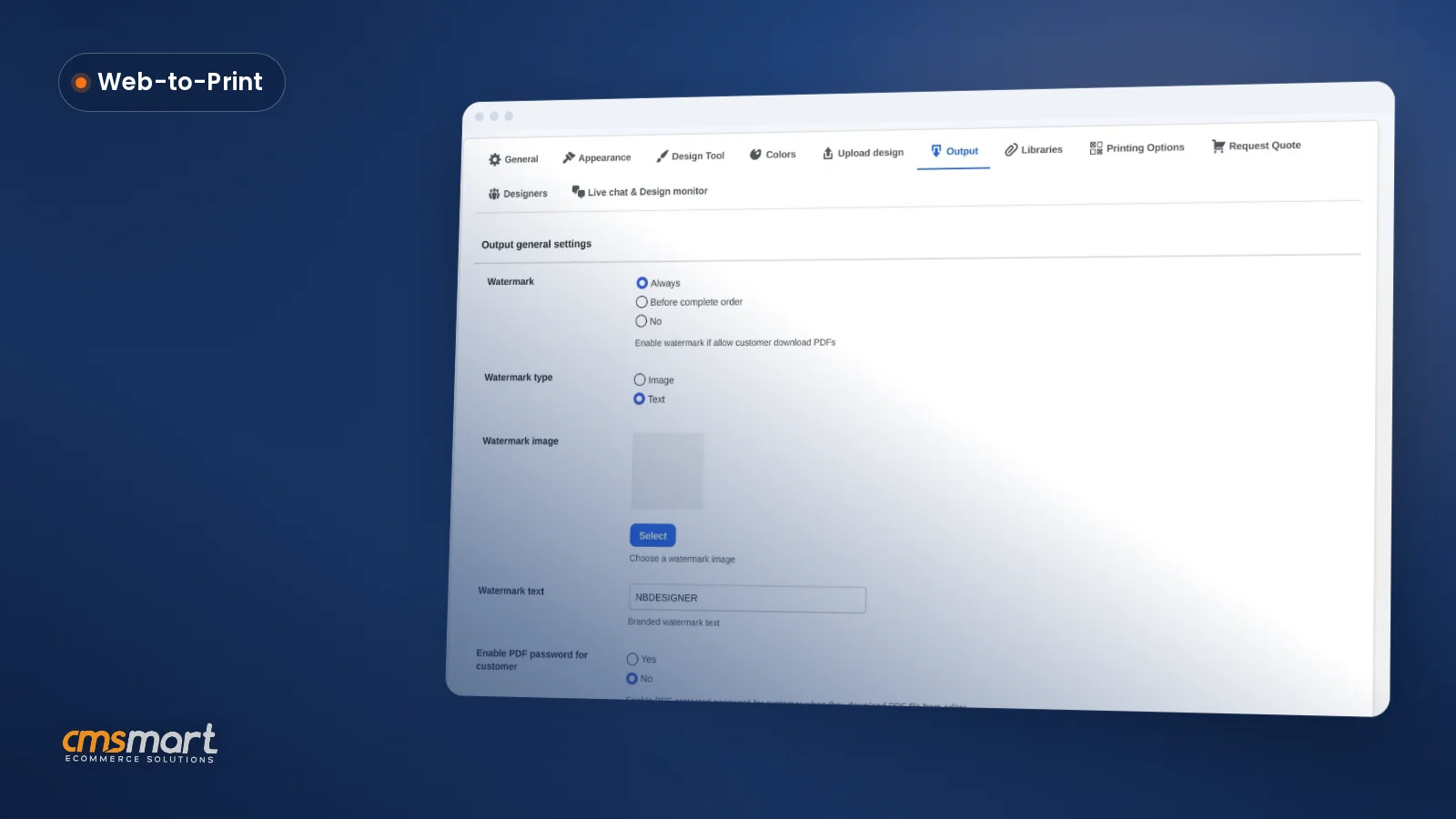
Guide · Web-to-print
Print Ready PDF Output Settings WooCommerce Setup
See what the print ready PDF output settings WooCommerce screen controls — watermark, password, bleed, FTP sync — and configure yours today.
Discover how to enhance your e-commerce business with cutting-edge solutions that drive customer engagement, optimize sales, and improve online presence!
Table of contents
Was this tutorial helpful?
Written by
Cmsmart Ecommerce Growth & Trends Analyst
Tracks ecommerce trends and turns them into practical moves for growing stores.
The team behind it
 Account Manager
 Project Manager
 Business Analyst
 Developers & QA
Guide · Web-to-print
See what the print ready PDF output settings WooCommerce screen controls — watermark, password, bleed, FTP sync — and configure yours today.
Case study · AI
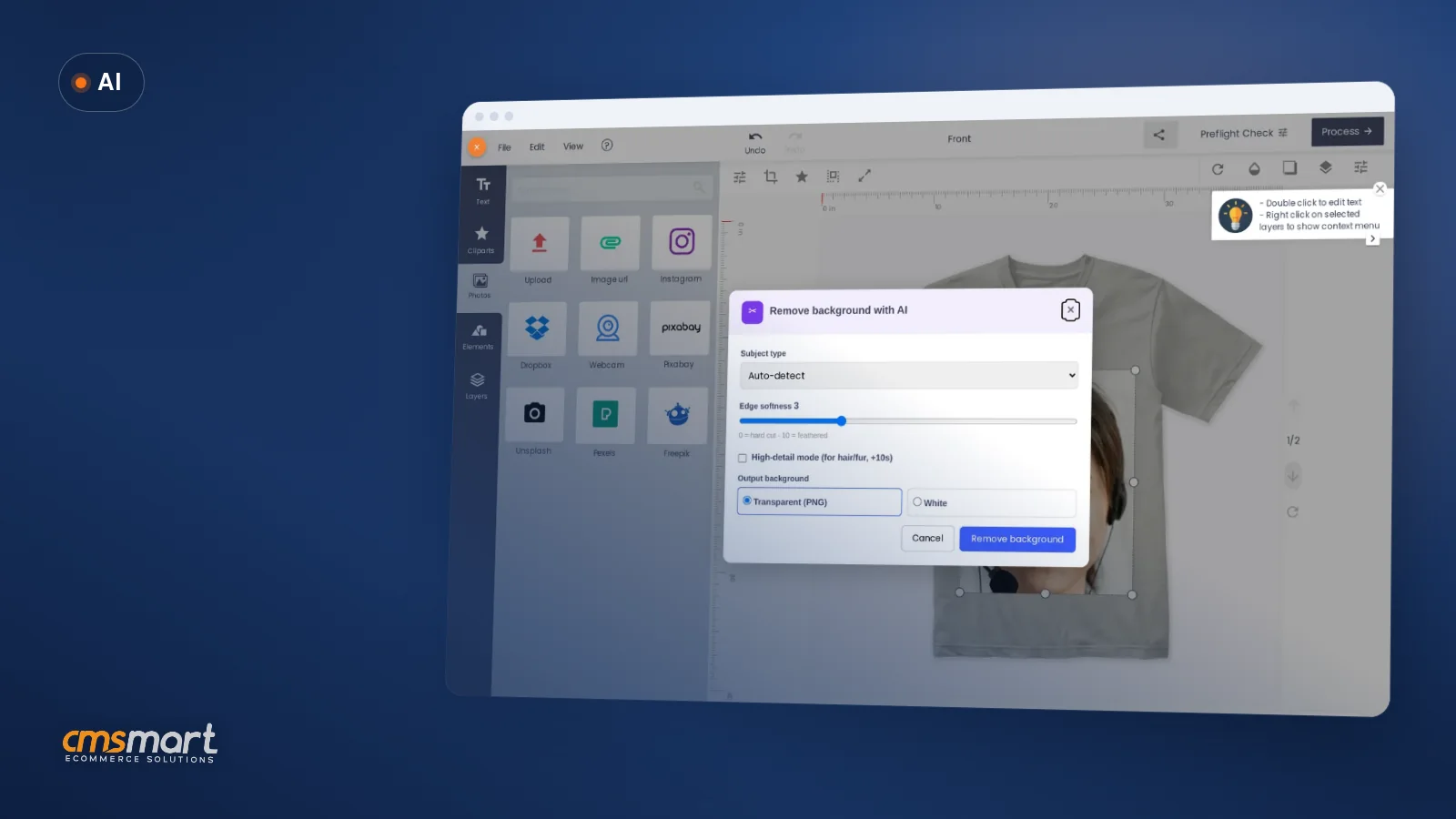
Add an AI background remover for WooCommerce to your product designer so buyers get a clean cutout instantly, and see how Cmsmart builds the rest for...
Case study · Web-to-print
Save design and reorder WooCommerce orders in one click, with a fresh print-ready PDF every time. See how Cmsmart builds it.
Browse more guides, tutorials and case studies from the Cmsmart community.
Unlock the Power of Mobile Commerce: Propel Your Business Forward
Read MoreDiscover how to harness mobile commerce to enhance your business growth. Learn strategies for optimizing the mobile shopping experience and increasing consumer engagement.
Read MoreDiscover the benefits of mobile commerce and how it can transform your business. Learn effective strategies for maximizing sales and customer engagement through mobile-optimized shopping experiences.
Read More
Cmsmart Ecommerce provides custom ecommerce and WooCommerce development services for web-to-print, product personalization, plugin support and API integration.
Cmsmart Ecommerce Growth & Trends Analyst
Tracks ecommerce trends and turns them into practical moves for growing stores.
Meet the team →




As e-commerce sales are projected to soar to over $8 trillion by 2027, the stakes have never been higher for businesses to adapt and innovate. Take the inspiring story of XYZ Fashion, a burgeoning clothing retailer from Italy, that faced a daunting challenge: a lackluster conversion rate and increasing competition. By implementing streamlined checkout processes and enhancing their mobile user experience with Cmsmart’s tailored solutions, XYZ Fashion saw a remarkable transformation, doubling their sales in just six months and gaining valuable insights into customer behaviors.
This narrative exemplifies a critical truth: the digital marketplace is an evolving landscape that rewards innovation and agility. With the number of digital buyers worldwide projected to soar to 2.14 billion, understanding how to leverage effective strategies and emerging technologies is vital for success. In this guide, we’ll explore how you can elevate your e-commerce game, unlock new opportunities, and achieve sustainable growth by implementing proven solutions. Join us as we delve into best practices that empower your e-commerce operations!
Imagine a World of Limitless Opportunities
Imagine a world where you can run an efficient, successful, and lucrative business with just a few clicks? Welcome to the world of e-commerce!Navigating the complex landscape of digital commerce can be daunting, especially when it comes to converting visitors into customers. However, with the right strategies, you can enhance user experience and interface design, adapt to mobile commerce trends, overcome logistic challenges, and manage international transactions effortlessly.
Understanding E-commerce Growth
E-commerce presents a billion-dollar opportunity. As of 2021, global e-commerce sales surpassed $4.9 trillion and are expected to grow to more than $8 trillion by 2027 . Embrace this growth by focusing on key aspects of your online store:Empower Your E-commerce Strategy
Adapting to the ever-changing demands of consumers requires innovative thinking and strategic planning. Here are actionable tips to enhance your e-commerce business:Incorporating these elements will not only improve your sales but also enhance your brands reputation in the world of online shopping.
Next Steps in E-commerce
For further insights, dive into the importance of user experience in e-commerce, explore the rise of mobile commerce, or read about customer interaction in online shopping. Understand how the global reach of e-commerce impacts your strategy, and consider the logistics role in this space. In conclusion: Embracing these strategies will enable you to take full advantage of the limitless opportunities within e-commerce. Ready to unleash your potential? Let’s move on to the next section!Deciphering E-commerce
Struggling to convert visitors into loyal customers? Youre not alone.Many businesses face challenges such as poor user experience, adapting to mobile commerce trends, and efficient logistics management. Understanding e-commerce can be the key to overcoming these pain points.
Decoding E-commerce: An Overview
E-commerce, often referred to as electronic commerce, encompasses the buying and selling of goods and services over the internet. With the rapid evolution of technology, it’s crucial to grasp the fundamentals:The Evolution and Predominance of E-commerce in Todays Digital Economy
Over the years, e-commerce has transformed from simple online transactions to complex digital ecosystems. Several factors contribute to this evolution:E-commerce, Online Shopping, and Digital Commerce: Understanding the Terminology
To better navigate the world of e-commerce, its important to familiarize yourself with key terms:- Digital Sales: Transactions conducted online
- Seamless Shopping Experience: A smooth transition from browsing to checkout
- Supply Chain Management: The oversight of materials, information, and finances as they move from supplier to manufacturer to wholesaler to retailer to consumer
For further insights, explore our content on the importance of user experience in e-commerce and the global reach of e-commerce. These can enhance your understanding of how to effectively compete in the digital marketplace. In summary: A deep understanding of e-commerce and its terminology can provide a competitive edge in today’s digital economy. Equipped with this knowledge, you are ready to explore advanced strategies in the upcoming sections. Lets dive into optimizing your logistics and delivery systems next!The Essential Role of User Experience in E-commerce
Struggling to convert visitors into loyal customers? Youre not alone.Many e-commerce businesses grapple with transforming site traffic into sales, especially in todays competitive digital landscape. A significant factor in overcoming this challenge lies within the realm of user experience (UX).
Why is User Experience Critical in E-commerce?
The user experience in online shopping plays a pivotal role in determining whether a visitor becomes a buyer. A seamless shopping journey keeps customers engaged and encourages repeat business. Key reasons why UX is critical include:Rewards of Offering a Stellar User Experience
Investing in user experience can lead to numerous advantages, including:- Increased sales: Happy customers buy more and refer friends.
- Brand loyalty: When users enjoy navigating the site, they return for future purchases.
- Enhanced reputation: Positive experiences boost word-of-mouth marketing.
A real-world example shows the power of user experience design. As Jane, a small business owner, shares:Efficient Strategies for Enhancing User Experience Design in Online Shopping Platforms
To optimize user experience in your e-commerce platform, consider the following actionable strategies:- Conduct user testing: Gather feedback directly from users to identify pain points.
- Improve site speed: A slow site can drive customers away—aim for loading times under 3 seconds.
- Offer multiple payment options: Cater to diverse preferences to reduce cart abandonment.
Enhancing your digital commerce journey doesnt stop here. Exploring the importance of user experience in e-commerce helps you understand how seamless interaction shapes your online sales landscape. In summary: Focusing on user experience not only elevates customer satisfaction but also positions your brand for growth in the competitive online marketplace. Up next, we will explore the rise of mobile commerce and how it affects your sales strategy.The Emergence of Mobile Commerce and Its Influence on E-commerce
Struggling to convert visitors into loyal customers amid the mobile commerce wave? You’re not alone.The transition to mobile shopping has become a pivotal challenge for many e-commerce businesses striving for growth in today’s fast-paced market.
Understanding Mobile Commerce and Its Connection with E-commerce
Mobile commerce, often referred to as m-commerce, represents the use of mobile devices such as smartphones and tablets to conduct commercial transactions online. This trend is intrinsically linked to e-commerce, as it enhances the convenience of online shopping for consumers on the go. Here are some key points to consider:Impact of Mobile Commerce Trends on E-commerce
The surge in mobile commerce has transformed consumer behavior significantly, highlighting the need for businesses to adapt their strategies. Key trends include:Transitioning from E-commerce to Mobile Commerce: Best Practices
As businesses shift focus to mobile commerce, applying the following best practices can lead to a smoother transition:- Invest in mobile-responsive design for your e-commerce website.
- Utilize multi-channel marketing strategies to reach customers through various platforms.
- Implement efficient logistics and delivery systems optimized for quick fulfillment.
- Focus on international transaction capabilities to tap into global markets.
In summary: The emergence of mobile commerce is reshaping the e-commerce landscape, prompting businesses to adapt and innovate. By implementing best practices in mobile strategies, you can enhance customer experience and drive sales. Next, we’ll dive deeper into the critical role of user experience in e-commerce, ensuring your platform meets evolving customer expectations.Customer Service: The Pillar of Successful E-commerce
Struggling to convert visitors into loyal customers? Youre not alone.Many e-commerce businesses grapple with turning casual web browsers into dedicated buyers due to challenges like user experience, adapting to mobile trends, and efficient logistics.
Significance of Customer Service in E-commerce
Delivering exceptional customer service is crucial for thriving in the competitive world of online shopping. Customers expect immediate assistance and seamless interaction throughout their journey. A study by HubSpot found that 93% of customers are likely to make repeat purchases if they receive excellent customer service.Best Practices for Delivering Outstanding Customer Service in E-commerce
In the realm of digital commerce, exceptional customer service can differentiate your brand. Here are some actionable tips:Transforming Customer Interactions in Online Shopping
A seamless shopping experience is key in enhancing customer satisfaction and encouraging repeat purchases. Embracing the following strategies can transform your customer interactions:- Leverage automation tools like chatbots to provide 24/7 support.
- Implement user-friendly interfaces that ease navigation and checkout processes.
- Adoption of mobile-optimized designs to cater to the increasing number of smartphone users.
To delve deeper, explore our content on the importance of user experience in e-commerce, the rise of mobile commerce, and enhancing customer interaction in online shopping. In summary: Outstanding customer service is essential for converting visitors into customers and fostering loyalty. By implementing these strategies, youll set the stage for increased satisfaction and sales—a perfect transition to understanding the role of logistics in e-commerce.Navigating International Transactions in E-commerce
Navigating the complexities of international transactions in e-commerce can be a daunting task for many businesses.With the growth of digital commerce, companies often face challenges like currency fluctuations, payment processing issues, and varying regulations across borders.
Understanding the Challenges of International Transactions in E-commerce
In todays global market, successfully converting visitors into customers involves more than just having an appealing website. Here are some common pain points related to international transactions:Strategies for Seamless Cross-Border E-commerce Transactions
To enhance your international transaction process, consider implementing the following strategies:Improving Customer Trust and Satisfaction in International E-commerce Transactions
Building trust with international customers is crucial for repeat business. Here are effective tips to enhance customer trust:- Provide detailed product information and clear return policies.
- Use trust badges and security certifications visibly on your site.
- Include customer reviews and testimonials to bolster credibility.
In summary: Addressing the challenges of international transactions through effective strategies can significantly enhance customer experiences and boost conversion rates. As we delve into our next section, we will discuss the importance of user experience in e-commerce, which goes hand in hand with improving your online sales journey. For further resources, check out our articles on the rise of mobile commerce and the role of logistics in e-commerce.Logistics and Supply Chain Management: The Backbone of E-commerce
Struggling to ensure smooth logistics and satisfied customers in your e-commerce venture? You’re not alone.In a world where seamless online shopping experiences are paramount, the importance of logistics and supply chain management cannot be overlooked. Efficient logistics systems are crucial not only for meeting customer expectations but also for converting online visitors into loyal customers.
Unveiling the Role of Logistics and Supply Chain in E-commerce
Logistics and supply chain management act as the backbone of e-commerce platforms, ensuring that products reach customers in a timely and efficient manner. This includes:
Improving Efficiency in E-commerce through Strategic Logistics Management
To enhance operational efficiency, consider the following actionable tips:
The Impact of E-commerce Platforms on Supply Chain Management Systems
The rise of digital commerce has transformed traditional supply chain management, introducing new challenges such as:
For a deeper look at evolving e-commerce challenges and solutions, view our guide on the importance of user experience in e-commerce. Also check out the rise of mobile commerce and how it impacts logistics strategies.
In summary: Strengthening your logistics and supply chain management is essential in today’s fast-paced e-commerce environment. Optimizing these systems can significantly enhance customer satisfaction and propel your business forward. Next, let’s explore how to effectively engage with customers through improved digital interactions.
Future Trends of E-commerce
Struggling to keep up with the rapidly evolving e-commerce landscape? You’re not alone.Many businesses face challenges such as converting visitors into customers, ensuring a seamless user experience, and adapting to the latest mobile commerce trends.
Current Trends Shaping the E-commerce Landscape
The e-commerce sector is on an exciting trajectory, with numerous trends actively influencing how consumers interact with online platforms. Key areas include:Predicted Future Trends and What They Mean for E-commerce
Looking ahead, several transformative trends are anticipated to reshape the e-commerce landscape:Future-proofing Your E-commerce Business
To thrive amidst these shifts in digital commerce, it’s essential to adopt smart strategies that focus on user experience and operational efficiency. Here are some actionable tips:In summary, staying current with these trends and actively implementing strategies to enhance user experience will prepare your business for a prosperous future in digital commerce. Next, we will delve into the importance of user experience in e-commerce, revealing how to create engaging interactions that drive conversions.
Frequently Asked Questions
> Converting visitors into loyal customers is often a challenge for many e-commerce businesses. Youre not alone in facing issues like crafting a seamless shopping experience, adapting to mobile commerce trends, and managing logistics effectively.>
Addressing Common E-commerce Questions
Below are some frequently asked questions that can help clarify common challenges in digital commerce pursuits.
What is the importance of user experience in e-commerce?
The user experience directly influences customer retention and conversion rates. A well-designed interface can make shopping enjoyable and straightforward.
How do mobile commerce trends affect sales?
As smartphones and tablets dominate internet browsing, having a mobile-optimized site is critical for e-commerce success.
What logistics strategies are best for e-commerce?
Logistics play a vital role in ensuring timely deliveries, which affects customer satisfaction and repeat purchases.
How to handle international transaction challenges?
Expanding your e-commerce business globally brings its own set of hurdles, especially regarding payment processing and currency conversion.
How can I improve customer interaction in online shopping?
Engaging with customers through personalized communication can enhance their shopping experience and build loyalty.
- Utilize chatbots for immediate queries
- Send personalized emails based on purchase history
- Encourage product reviews and feedback
In summary: Addressing these common questions and implementing the strategies mentioned can transform your e-commerce experience. Next, let’s delve deeper into the significant rise of mobile commerce and how it impacts your sales strategies. Be sure to explore the importance of user experience in e-commerce, rise of mobile commerce, customer interaction in online shopping, global reach of e-commerce, and the logistics role in e-commerce in our upcoming sections. FAQ Section: Troubleshooting and Pro TipsHow can I reduce cart abandonment on my eCommerce site?
Streamline the checkout process and offer free shipping options.
What design features improve user experience in online stores?
Incorporate clear navigation, attractive CTAs, and customizable product options.
How should I adapt my business for mobile commerce trends?
Ensure your site is mobile-optimized and facilitate easy in-app purchases.
What logistics strategies enhance delivery efficiency?
Implement automated order processing and real-time tracking systems.
How can I overcome challenges in international transactions?
Utilize reliable payment gateways and offer multiple currency options.
What role do analytics play in eCommerce conversion rates?
Use data to understand customer behavior and optimize marketing strategies.
How can social proof influence my online sales?
Incorporate user reviews and ratings to build trust with potential customers.
Further Reading
As we wrap up this tutorial, remember that the journey to elevate your e-commerce game and unlock success begins with the right strategies tailored to your unique needs. By prioritizing user experience, leveraging effective marketing channels, and streamlining your supply chain, you're not just keeping up with trends—you're setting the pace for success in a booming $8 trillion market. Let's transform your online store into a powerhouse of opportunities! Whether you're seeking personalized consultation or want to implement these innovative solutions, I'm here to guide you every step of the way. Reach out to David, our CEO, directly via WhatsApp at this link, or email me at [email protected] for a thorough discussion. You can also request a quotation easily by visiting this page. Join me in driving your e-commerce vision forward!