
Guide · Web-to-print
Print Ready PDF Output Settings WooCommerce Setup
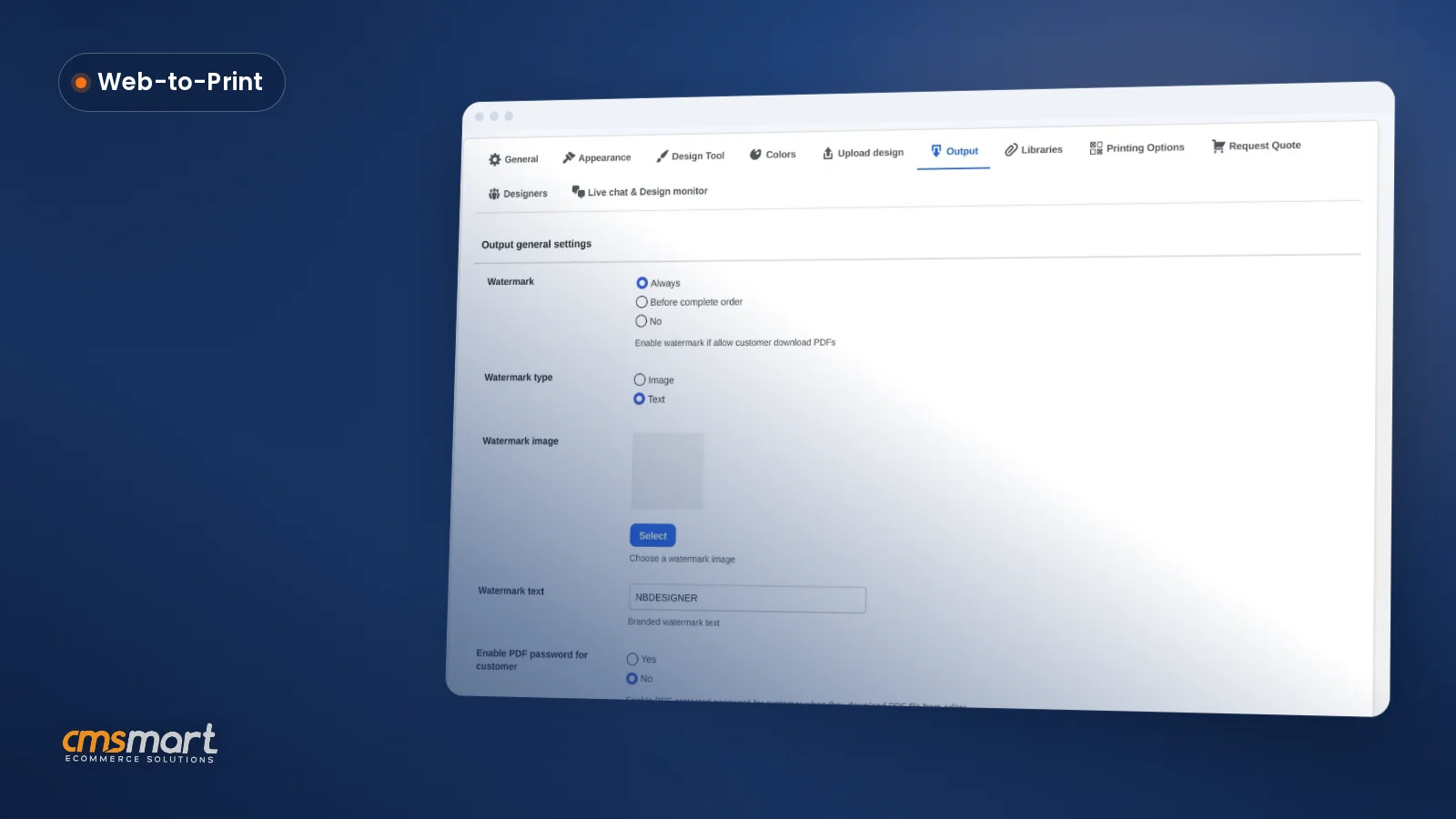
See what the print ready PDF output settings WooCommerce screen controls — watermark, password, bleed, FTP sync — and configure yours today.
Discover how effective Supply Chain Management can transform your e-commerce business by optimizing operations, enhancing productivity, and reducing costs. Learn best strategies to meet customer demands seamlessly.
Table of contents
Was this tutorial helpful?
Written by
Cmsmart Ecommerce Growth & Trends Analyst
Tracks ecommerce trends and turns them into practical moves for growing stores.
The team behind it
 Account Manager
 Project Manager
 Business Analyst
 Developers & QA
Guide · Web-to-print
See what the print ready PDF output settings WooCommerce screen controls — watermark, password, bleed, FTP sync — and configure yours today.
Case study · AI
Add an AI background remover for WooCommerce to your product designer so buyers get a clean cutout instantly, and see how Cmsmart builds the rest for...
Case study · Web-to-print
Save design and reorder WooCommerce orders in one click, with a fresh print-ready PDF every time. See how Cmsmart builds it.
Browse more guides, tutorials and case studies from the Cmsmart community.
Unlock the Power of Mobile Commerce: Propel Your Business Forward
Read MoreDiscover how to harness mobile commerce to enhance your business growth. Learn strategies for optimizing the mobile shopping experience and increasing consumer engagement.
Read MoreDiscover the benefits of mobile commerce and how it can transform your business. Learn effective strategies for maximizing sales and customer engagement through mobile-optimized shopping experiences.
Read More
Cmsmart Ecommerce provides custom ecommerce and WooCommerce development services for web-to-print, product personalization, plugin support and API integration.
Cmsmart Ecommerce Growth & Trends Analyst
Tracks ecommerce trends and turns them into practical moves for growing stores.
Meet the team →






Did you know that the global supply chain management market is projected to soar from $15.85 billion in 2020 to over $37 billion by 2027? With such staggering growth figures, it's crystal clear that effective supply chain management (SCM) isn't just an operational necessity—it's a catalyst for e-commerce success. Take, for instance, the journey of EcoTech Supplies, based in Canada. This innovative provider of sustainable products faced significant challenges in data centralization and supplier performance monitoring.
After integrating Cmsmart’s tailored supply chain solutions, EcoTech saw a remarkable turnaround: their logistics costs dropped by 25%, and their inventory waste was cut in half. By utilizing https://cmsmart.net/community/streamline-your-business-with-web-to-print-process solutions and implementing performance monitoring tools, they transformed their operational inefficiencies into a competitive advantage, demonstrating how pivotal SCM is for leaders in any industry. In this tutorial, we will explore proven strategies to unlock efficient supply chain management, enhancing your productivity while significantly reducing costs. Let’s delve into actionable insights that will position your e-commerce business for sustained growth and success!
Navigating the Complex Landscape of Supply Chain Management
Challenges in managing your supply chain can feel overwhelming, but they also present unique opportunities for growth.Issues such as difficulty in data centralization, monitoring supplier performance, high logistics costs, and inventory wastage can hinder your operational success. However, with the right strategies, you can convert these challenges into avenues for long-term business sustainability.
Addressing Common Supply Chain Management Challenges
Building Strong Supplier Relationships
Effective vendor relationships play a critical role in your supply chain efficiency. By fostering transparent communication and collaboration, businesses can ensure timely deliveries and better quality products.Effective Supply Chain Strategies
Utilizing robust strategies can significantly streamline your supply chain operations. Focus on:- Implementing real-time inventory tracking methods to stay updated on stock levels.
- Employing transportation route optimization techniques to enhance delivery efficiency.
- Using forecasting tools in sales to anticipate market fluctuations and adjust accordingly.
For more insights, explore our articles on effective supply chain strategies and real-time inventory tracking methods to deepen your understanding and enhance your operations. In summary: Managing your supply chain doesnt have to be a daunting task. By addressing the pain points with effective strategies, you can convert challenges into opportunities for growth. Next, let’s dive into the specifics of implementing efficient inventory tracking techniques to further optimize your business operations.Specifications of Supply Chain Management
Are you struggling with data centralization in your supply chain management? Youre not alone.Many organizations face challenges such as monitoring supplier performance, managing high logistics costs, and dealing with inventory wastage due to poor tracking and ineffective sales forecasting.
The Fundamentals of Supply Chain Management
Supply Chain Management (SCM) encompasses all stages of a products life from sourcing raw materials to delivering the final product to consumers. This process heavily relies on efficient logistics management, which ensures that goods are transported smoothly and cost-effectively. Key components include:Evolving Dynamics and Significance of SCM in the Modern World
The dynamics of SCM are continually evolving. Modern consumers demand quick deliveries and high-quality products, leading businesses to rethink their strategies. Some market trends include:Introducing Correlate Terms: Logistics Management, Inventory Management, Supplier Collaboration
Logistics and inventory management go hand in hand with SCM. Effective logistics management includes:- Optimizing transportation routes to reduce costs
- Establishing strong vendor relationships to ensure uninterrupted supply
Supplier collaboration is crucial for maintaining quality and consistent stock levels. When suppliers are integrated into your processes, you can respond faster to market changes. In summary: Understanding the fundamentals of supply chain management, coupled with adapting to evolving dynamics, can empower your business to tackle the existing challenges in the market. To delve deeper, check out our resources on effective supply chain strategies, real-time inventory tracking methods, and building strong supplier relationships. Next, we’ll explore essential techniques for transportation route optimization in your supply chain.Data Management: The Pillar of Successful SCM
Are you facing challenges with data centralization that hinder your supply chain efficiency?Businesses often grapple with difficulties in supplier performance monitoring, high logistics costs, and inventory wastage due to poor tracking.
Explaining the Role of Data Management in SCM
Effective data management is crucial in Supply Chain Management (SCM). By centralizing data, businesses can streamline operations, make informed decisions, and enhance vendor relationships. Here are some key points to understand its impact:Pros of Data Centralization in the Supply Chain
Centralizing data offers numerous advantages that can transform SCM:Relevant Examples of Effective Data Management in SCM
Let’s look at some real-world examples that highlight effective data management: - A leading food distributor utilized SAP systems to centralize their logistics data, resulting in significant improvements in compliance and tracking of stock levels. - An agricultural firm improved vendor relationships by implementing real-time inventory tracking methods. This not only optimized their transportation routes but also cut logistics costs by approximately 15%. In summary: Effective data management is the backbone of successful Supply Chain Management. By focusing on data centralization, companies can address pain points related to logistics costs and inventory management. As we move forward, let’s explore strategies for building strong supplier relationships to further enhance supply chain efficiency.Examining Supplier Relationships
Struggling to manage your supply chain effectively? You’re not alone.Many businesses face challenges such as data centralization, supplier performance monitoring, and high logistics costs, leading to inefficient operations and increased inventory wastage.
Understanding the Importance of Supplier Relationships in SCM
Building strong vendor relationships is crucial for successful supply chain management (SCM). A solid partnership with suppliers can lead to:Techniques for Strengthening Vendor Relationships
To foster healthy vendor partnerships, consider the following actionable tips:Challenges in Supplier Performance Monitoring and Mitigation Techniques
Monitoring supplier performance can be difficult due to inconsistent data and inadequate tracking systems. Here are some challenges and how to overcome them:- Difficulty in data centralization: Implement advanced SAP systems for coherent data management.
- High logistics costs: Optimize transportation routes for cost-effectiveness.
- Inventory wastage: Utilize effective warehouse management practices and real-time inventory tracking methods.
- Inefficient sales forecasting: Employ forecasting tools in sales for more accurate predictions.
In summary: By understanding the dynamics of supplier relationships in SCM and applying these techniques, you can improve not just collaboration but also operational efficiency throughout your supply chain. Next, let’s explore actionable strategies for effective supply chain strategies that will further enhance your business operations.Logistics and Inventory: The Heart of Supply Chain Management
Facing challenges like high logistics costs and inventory wastage? You’re not alone.Many businesses in the supply chain management (SCM) sector encounter issues such as data centralization difficulties, ineffective supplier performance monitoring, and inefficient sales forecasting.
Breaking Down the Concept of Logistics Optimization
Logistics optimization is crucial for enhancing the efficiency of your supply chain. Here are some actionable tips for improving your logistics management:
Inventory Management Essentials: From Stock Levels to Batch Tracking
Effective inventory management is vital to minimizing waste and ensuring product availability. Here are core strategies:
Surviving High Logistics Costs and Inventory Wastages: Effective Strategies
Managing high logistics costs and reducing inventory wastage can significantly impact your bottom line. Here are practical approaches:
- Leverage forecasting tools in sales for better demand planning.
- Invest in warehouse management solutions to enhance storage efficiency.
- Conduct periodic reviews of transportation costs to optimize routes and carriers.
In summary: Logistics and inventory management are fundamental to the success of your supply chain strategy. By centralizing data, optimizing supplier relationships, and exploring advanced tracking methods, you can overcome common challenges. Next, let’s explore effective supply chain strategies to further enhance your operations.Sales, Distribution, and Quality Control
Challenges in data centralization, inefficient sales forecasting, and high logistics costs can significantly impede your supply chain operations.Understanding the nuances of sales, distribution, and quality control in your supply chain management (SCM) processes is crucial for optimizing performance and reducing waste.
In-depth Understanding of Sales & Distribution in SCM
Effective sales and distribution strategies are essential for enhancing your overall supply chain efficiency. Here are some actionable tips to get you started:The Impact of Quality Control on the Supply Chain
Quality control plays a vital role in maintaining product standards and complying with food safety regulations. Here’s how to enhance quality across your supply chain:Addressing the Issue of Inefficient Sales Forecasting
Accurate sales forecasting can significantly affect your inventory and distribution planning. Consider these strategies:- Utilize forecasting tools to predict sales trends effectively.
- Analyze historical sales data to enhance accuracy.
- Engage with your sales team for insights on market demands.
For even more value, explore our resources on effective supply chain strategies, and discover techniques on real-time inventory tracking methods or building strong supplier relationships. In summary: Enhancing sales, distribution, and quality control in your supply chain not only reduces costs and inefficiencies but also fosters a better customer experience. Stay tuned as we delve into the next critical area: transportation route optimization techniques.Case Studies in Effective SCM Strategies
Facing challenges in managing your supply chain effectively? Youre in good company.Numerous businesses struggle with data centralization, supplier performance monitoring, high logistics costs, and inventory management issues.
Managing Supply Chain Efficiency with SAP Systems
Efficient Supply Chain Management (SCM) is critical in today’s fast-paced market. Utilizing SAP systems can streamline logistics management by effectively centralizing data and improving decision-making.Effective Produce Management in the Agricultural Sector
For businesses in the agricultural sector, effective produce management is essential to maintaining quality and meeting consumer demands.Ensuring Compliance with Food Safety Regulations in Supply Chains
With growing consumer awareness and regulation, ensuring compliance with food safety standards is paramount.- Adopt comprehensive tracking systems to monitor product safety throughout the supply chain.
- Engage in regular training for staff on compliance and food safety regulations.
- Perform routine audits to ensure adherence to food safety guidelines.
In summary: By implementing these strategies, you can tackle the pain points commonly associated with supply chain management. The next section will guide you through exploring real-time inventory tracking methods and how they can further enhance your SCM practices.Unearthing the Future of Supply Chain Management
Facing challenges in supply chain management? You’re not alone.Many businesses struggle with issues such as data centralization, monitoring supplier performance, and managing logistics costs. These roadblocks can lead to wastage due to poor inventory tracking and inefficient sales forecasting.
Current Innovations in SCM
The landscape of Supply Chain Management (SCM) is rapidly evolving, with several innovations making significant impacts. Here are some key trends you should be aware of:Predicted Future Movements
As we look ahead, several key movements are expected to shape SCM:How to Future-Proof Your Business with SCM
To ensure your supply chain is prepared for the future, consider these actionable strategies:- Implement robust data integration systems like SAP to centralize information across various platforms.
- Strengthen vendor relationships through ongoing communication and performance monitoring.
- Optimize transportation routes using advanced algorithms to reduce logistics costs and delivery times.
- Utilize forecasting tools to improve sales predictions, turn inventory faster, and reduce wastage.
In summary: By understanding current innovations and preparing for future trends, you can effectively navigate the challenges of SCM. This ensures not just survival but also thriving in the competitive market landscape. Next, we will delve into effective supply chain strategies that can further enhance your operational efficiency.Frequently Asked Questions
Facing challenges in data centralization and supplier performance monitoring? You’re not alone.Many businesses encounter significant pain points like high logistics costs, inefficient sales forecasting, and inventory wastage due to poor tracking.
Understanding Common Supply Chain Management Questions
Here are 5-10 frequently asked questions that can help clarify your doubts around Supply Chain Management (SCM):What are the key components of effective Supply Chain Management?
Supply Chain Management includes:How can I optimize my inventory tracking methods?
Utilize these actionable tips:How do I build strong supplier relationships?
Building robust vendor relationships can enhance your supply chain. Consider the following:What tools can assist in sales forecasting?
Using effective forecasting tools can help:How can transportation route optimization reduce costs?
Optimizing transportation routes can lead to:- Reduced fuel consumption
- Improved delivery times
- Lower overall logistic expenditures
In summary: Addressing these frequently asked questions can enhance your approach to Supply Chain Management, helping in tackling key challenges like data centralization and logistics costs. For deeper insights, move on to our next section covering effective supply chain strategies and advanced methods such as real-time inventory tracking!FAQ Section: Troubleshooting and Pro Tips
What are the key challenges in data centralization for supply chain management?
Data fragmentation across systems hinders real-time insights and decision-making.
How can I improve supplier performance monitoring?
Implement regular performance reviews and analytics tools to track supplier metrics effectively.
What causes high logistics costs in supply chains?
Inefficient routes, rising fuel prices, and inadequate warehousing lead to inflated logistics expenses.
How to reduce inventory wastage due to poor tracking?
Adopt real-time inventory management systems to maintain accurate stock levels and minimize waste.
What are effective strategies for accurate sales forecasting?
Utilize historical data and advanced analytics to enhance forecasting accuracy and meet market demand.
Why is inventory tracking crucial in supply chains?
Robust tracking prevents stockouts and overstock situations, ensuring efficient operations and customer satisfaction.
How can technology aid in overcoming supply chain challenges?
Utilizing integrated software solutions enhances visibility, efficiency, and response times across the supply chain.
Further Reading
As we conclude this tutorial on unlocking efficient supply chain management, remember that overcoming these challenges can significantly enhance your e-commerce success. By centralizing data, monitoring suppliers, optimizing logistics, and building strong vendor relationships, you’re primed for sustainable growth. Embrace these strategies to not only improve productivity but also reduce costs, setting your business on a path to lasting success. Let’s discuss how we can help you implement these transformative practices! For personalized consultation, feel free to reach out to David, our CEO, on WhatsApp, or email me directly at [email protected]. Ready to take the next step? Request a quotation today, and let’s work together to elevate your supply chain management!