

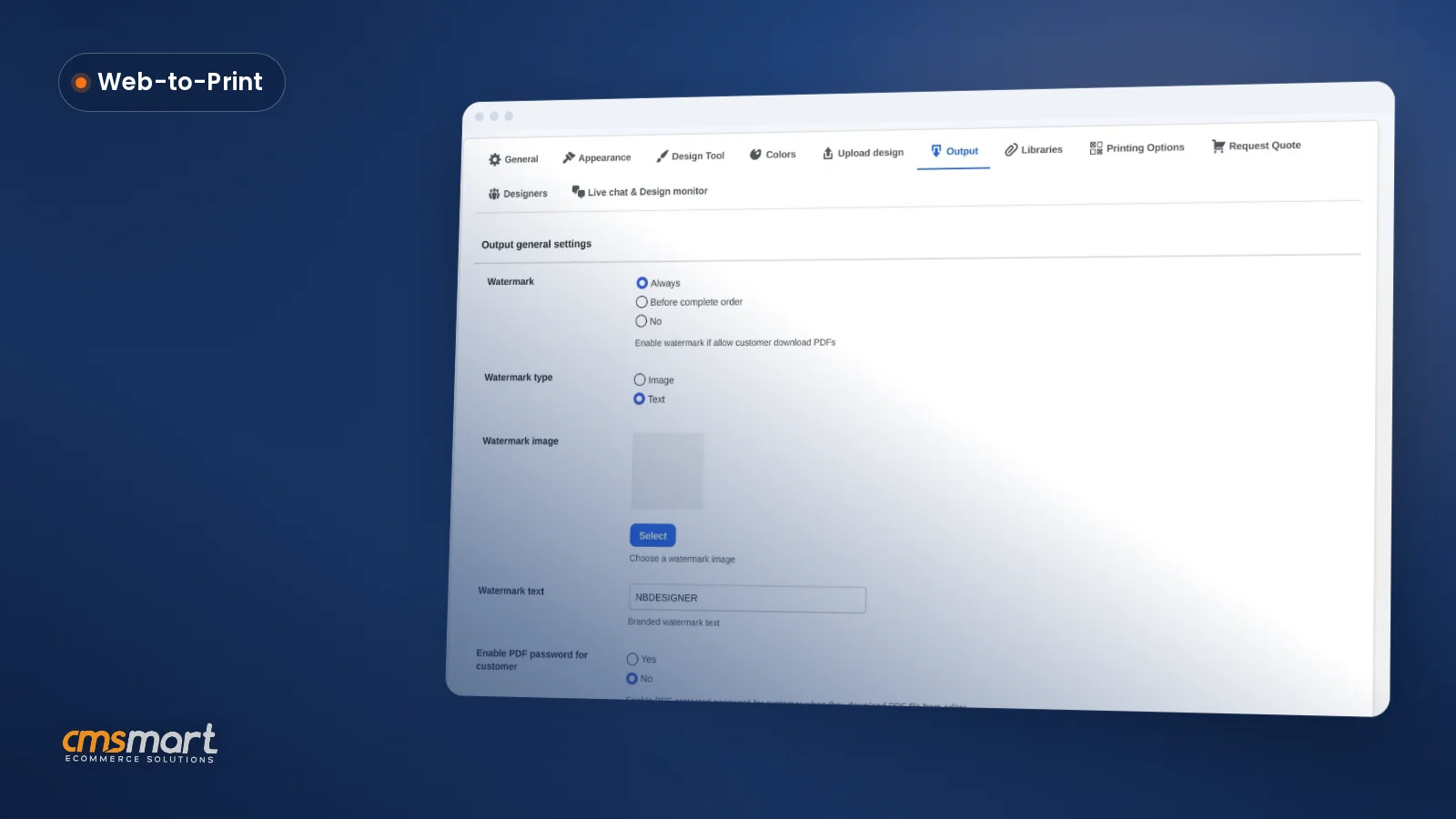
Guide · Web-to-print
Print Ready PDF Output Settings WooCommerce Setup
See what the print ready PDF output settings WooCommerce screen controls — watermark, password, bleed, FTP sync — and configure yours today.
Discover the transforming impact of M-Commerce as it revolutionizes shopping with optimized mobile solutions, enhancing user experiences, and boosting conversion rates with cutting-edge technology.
Table of contents
Was this tutorial helpful?
Written by
Cmsmart WooCommerce Development Lead
Leads custom WooCommerce builds: architecture, checkout, performance and integrations.
The team behind it
 Account Manager
 Project Manager
 Business Analyst
 Developers & QA
Guide · Web-to-print
See what the print ready PDF output settings WooCommerce screen controls — watermark, password, bleed, FTP sync — and configure yours today.
Case study · AI
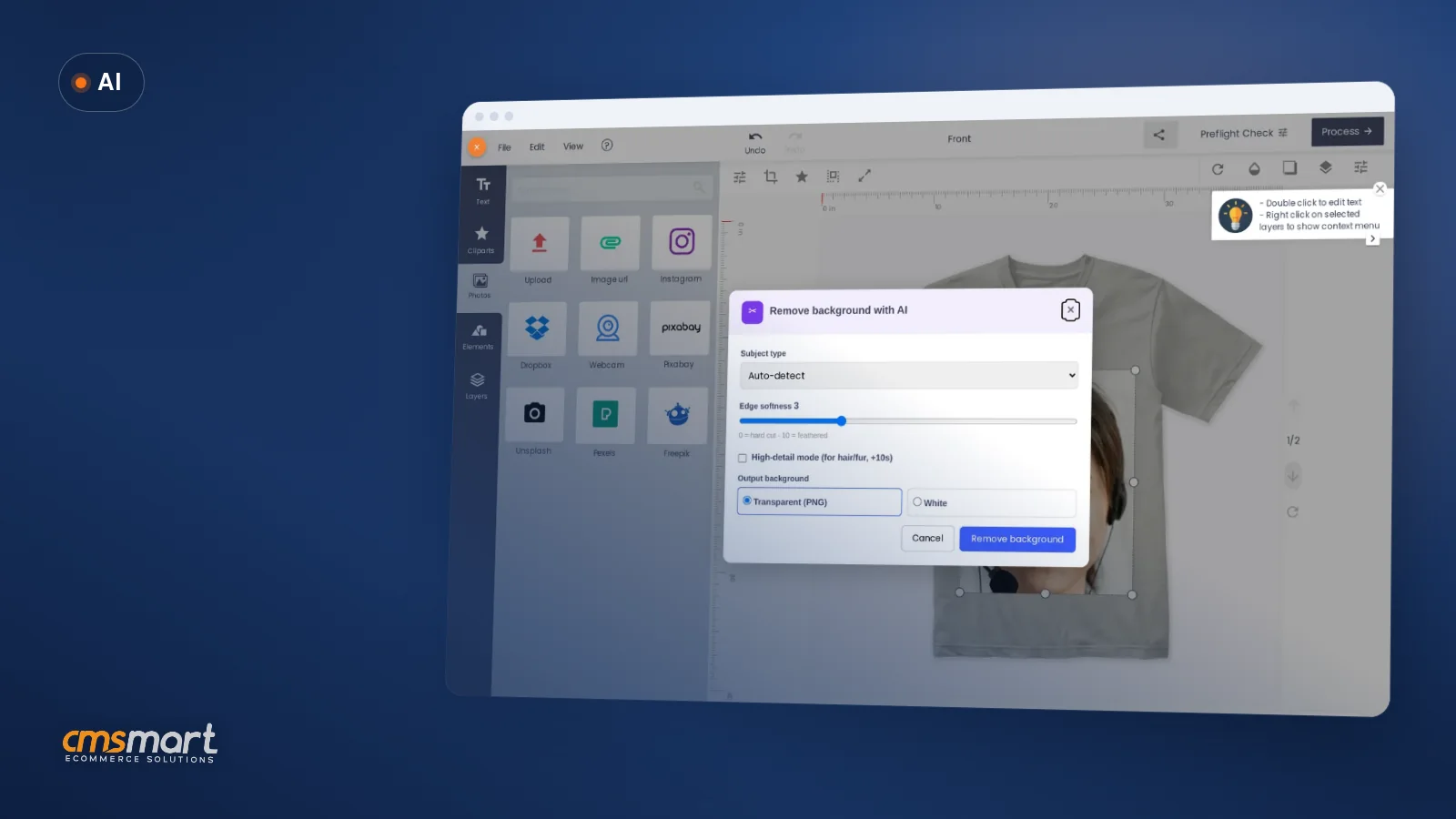
Add an AI background remover for WooCommerce to your product designer so buyers get a clean cutout instantly, and see how Cmsmart builds the rest for...
Case study · Web-to-print
Save design and reorder WooCommerce orders in one click, with a fresh print-ready PDF every time. See how Cmsmart builds it.
Browse more guides, tutorials and case studies from the Cmsmart community.
Unlock the Power of Mobile Commerce: Propel Your Business Forward
Read MoreDiscover how to harness mobile commerce to enhance your business growth. Learn strategies for optimizing the mobile shopping experience and increasing consumer engagement.
Read MoreDiscover the benefits of mobile commerce and how it can transform your business. Learn effective strategies for maximizing sales and customer engagement through mobile-optimized shopping experiences.
Read More
Cmsmart Ecommerce provides custom ecommerce and WooCommerce development services for web-to-print, product personalization, plugin support and API integration.
Cmsmart WooCommerce Development Lead
Leads custom WooCommerce builds: architecture, checkout, performance and integrations.
Meet the team →




Imagine a world where retail thrives in the palm of your hand! With mobile commerce projected to skyrocket to an astounding $3.56 trillion by 2024—accounting for over 50% of e-commerce sales—the necessity for businesses to adapt to mobile technologies has never been more crucial. This shift is not just a trend; it's a transformative journey akin to electrifying the retail landscape. Take the example of Fashion Hub, a vibrant clothing retailer based in Singapore. Faced with dwindling foot traffic and a growing digital-savvy customer base, they partnered with Cmsmart to enhance their mobile shopping experience. Through our tailored mobile commerce solutions, they successfully increased their conversion rates by 30% within six months, entirely reshaping their business operations.
Mobile commerce, or m-commerce, is moving beyond mere convenience to become a cornerstone of modern retail strategy. This tutorial explores how you can revolutionize your business by leveraging m-commerce for a seamless shopping experience. With insights on maximizing your mobile platform using AI-driven analytics and personalized marketing strategies, you'll be well-equipped to engage with customers effectively. For more comprehensive understanding, don’t forget to check out our resources on strategic mobile optimization and harnessing AI for e-commerce growth. In this guide, we will delve into the powerful tactics you can implement to ensure your business not only survives but thrives in this mobile-first era.
Imagine a World Run by Mobile Commerce
Imagine a world where the majority of retail transactions are conducted right on consumers smartphones or tablets. Welcome to the era of m-commerce!Businesses today face the vital need to adapt to mobile technology, a driving force in expanding marketing reach and increasing brand visibility through mobile platforms. Transitioning transaction processes to mobile channels ensures engagement with an audience that’s always on the move.
Revolutionizing Retail with Mobile Commerce
Mobile commerce, also known as m-commerce, has transformed the retail landscape, bringing shopping experiences directly to the palm of the hand. As businesses tap into this digital platform, they face the challenge and opportunity of adapting to an increasingly mobile-first world. Explore our comprehensive guides on the transformative impact on businesses.
Maximizing the potential of mobile commerce requires businesses to rethink conventional operations and embrace flexible, scalable solutions that evolve with market trends. For a deeper dive into the importance of mobile commerce, explore our comprehensive guides on the transformative impact on businesses.
Adapting Strategies for Success
With smartphones and tablets becoming primary shopping tools, adopting strategies that cater to this medium has never been more critical:
- Utilize mobile-specific SEO techniques to increase visibility and reach.
- Design mobile-responsive interfaces for improved usability and access.
- Incorporate secure, easy-to-use payment gateways optimized for mobile transactions.
In summary: Embracing mobile commerce paves the way for expanding business horizons and engaging a wide audience seamlessly. As you move forward, discover more about the growth of mobile commerce sales and how to leverage m-commerce effectively.Demystifying M-Commerce: Beyond a Buzzword
Struggling to keep up with mobile trends? You’re not alone.
Businesses today need to urgently adapt to mobile technology to expand their marketing reach and increase brand visibility on digital platforms. The growing reliance on smartphones and tablets for shopping and transactions necessitates adapting transaction processes for mobile users efficiently.
Defining Mobile Commerce
Mobile commerce, or m-commerce, goes beyond just being a buzzword. It represents the use of wireless devices like smartphones and tablets to conduct commercial transactions online. Synonyms like wireless commerce, mobile retail, and mobile transactions are often used to describe this innovative process.
The Evolution and Significance of M-Commerce in a Digital Age
The shift from traditional e-commerce to m-commerce is a significant milestone in the digital era. As mobile technology continues to advance, businesses must leverage push notifications, SMS marketing, and in-app promotions to engage effectively with their audience.
Decoding M-Commerce Terminology: Mobile Retail, Wireless Commerce, and Mobile Transactions
Understanding the distinct terminologies within m-commerce helps businesses better strategize. Mobile retail refers to shopping via mobile platforms, whereas wireless commerce covers broader online transactions conducted through wireless devices.
In conclusion: As businesses increasingly recognize the transformative impact on businesses, its vital to understand and leverage the growth of mobile commerce sales. Next, we’ll delve into how m-commerce utilization offers competitive advantages in the digital landscape.
The Game Changer: On-Demand Mobile Payments and Transactions
Embrace the Future with On-Demand Mobile Payments and TransactionsIn todays fast-paced digital world, businesses struggle to keep up with evolving mobile technology, missing crucial opportunities to expand their marketing reach, enhance brand visibility, and adapt transaction processes specifically for mobile users.
What are On-Demand Mobile Payments and Transactions?
On-demand mobile payments and transactions refer to the ability to complete financial transactions using mobile devices like smartphones and tablets. Leveraging mobile commerce solutions, these transactions are seamless, quick, and can be performed from anywhere, any time, making them an indispensable part of modern commerce.
Advantages of Incorporating Mobile Payments into Your Business Model
Integrating mobile payment solutions into your business model can significantly boost your operational efficiency and customer satisfaction. Here are some key benefits:
Real-world Examples of Successful M-Commerce Businesses
Many businesses have successfully leveraged mobile payment solutions to thrive in the competitive digital landscape. For instance:
For examples of successful implementations, explore our guide on progressive web app development .
In summary: On-demand mobile payments and transactions are game-changers for businesses aiming to thrive in the digital age. Integrating these solutions into your operating model not only enhances customer satisfaction but also positions your business for future growth. In the next section, well delve into the importance of mobile commerce and its transformative impact on businesses .Inside the Mobile Ecosystem: Navigating M-Commerce
Adapting to the Mobile Era: A Crucial Shift for BusinessesBusinesses face the critical challenge of embracing mobile technology to expand their reach, enhance brand visibility, and streamline transaction processes for mobile users.
Understanding the Mobile Ecosystem
Navigating the mobile ecosystem requires a comprehensive understanding of mobile commerce, or m-commerce, which encompasses wireless commerce and mobile retail via smartphones and tablets. Mobile technology has revolutionized digital platforms, leveraging push notifications, SMS marketing, and in-app promotions to engage consumers.
The Role of M-Commerce in the Mobile Ecosystem
M-commerce is not just a trend but a vital component of the digital economy. By integrating mobile technology into business models, companies can enhance customer engagement and retention. Utilizing mobile apps and websites facilitates new purchasing experiences, fostering customer loyalty.
The Impact of M-Commerce on Traditional Commerce Models
As m-commerce continues to grow, it significantly impacts traditional commerce models. Retailers must integrate digital and physical store experiences to maintain competitiveness. Consumers expect a seamless shopping journey, whether through click-and-collect services or mobile payment solutions at physical checkouts.
In summary: Embracing the mobile ecosystem through m-commerce offers businesses a path to staying relevant in a rapidly digitizing world. Next, we will delve into the importance of mobile commerce and its transformative impact on business models .Unleashing the Power of Mobile Marketing and Visibility
Businesses needing to adapt to mobile technology? Youre not alone.Expanding your marketing reach through mobile, increasing brand visibility, and adapting transaction processes for mobile users are more crucial than ever. Welcome to the era of mobile commerce—a driving force behind sustainable business growth.
Unlocking the Importance of Mobile Marketing in M-Commerce
Mobile commerce, or m-commerce, represents the retail revolution led by smartphones, tablets, and other wireless devices. According to recent market insights, mobile commerce sales are projected to account for almost 73% of total e-commerce sales by 2021. Businesses must capitalize on this shift to boost visibility and customer engagement.
Essential Features of Effective Mobile Marketing Strategies
Crafting a mobile marketing strategy requires integrating tools and techniques that resonate with your target audience. Effective strategies are built on understanding user behavior to deliver personalized experiences.
Choosing the Right Mobile Marketing Approach for Your Business
Determining the right approach involves evaluating your business goals and aligning them with mobile technologies. Whether through apps, mobile web, or hybrid solutions, maintaining consistency and relevancy is key.
- Align mobile strategies with overall business objectives
- Segment your audience to tailor mobile content effectively
- Explore partnerships for expanded mobile outreach
In summary: Harness the power of mobile marketing to not only reach a broader audience but also to deepen engagement and boost sales. The next section will delve into how mobile commerces transformative impact can be leveraged for business success. For more insights, visit our comprehensive guide on the importance of mobile commerce and explore the transformative impact on businesses, ensuring your full utilization of m-commerce growth .Next-Level Retail: Mobile Payments and Digital Integration
Is your brand ready to embrace the mobile revolution?Todays businesses grapple with the necessity to adapt to mobile technology. From enhancing marketing reach to boosting brand visibility, mobile platforms like smartphones and tablets are revolutionizing how brands connect with customers on a digital level.
Exploring the Concept of Mobile Payments
Mobile payments are changing the retail landscape. They enable consumers to make purchases using their smartphones or tablets, bringing convenience and efficiency to the forefront. These transactions involve a digital transfer of funds through mobile apps or digital platforms, allowing seamless shopping experiences.
Linking Digital Integration with M-Commerce
Digital integration goes beyond basic transaction capabilities, merging with mobile commerce (m-commerce) for an enhanced consumer experience. Businesses can leverage push notifications, SMS marketing, and in-app promotions to engage and retain their mobile audience.
Advantages and Challenges of Mobile Payments for Businesses
Embracing mobile payments offers numerous benefits, including increased sales and enhanced customer satisfaction. However, businesses must also tackle challenges such as security concerns and technology integration complexities.
- Advantages:
- Faster checkout processes reduce cart abandonment rates.
- Enhanced customer data collection for better personalization.
- Challenges:
- Ensuring transaction security and data protection.
- Integrating with existing systems without interrupting operations.
In conclusion: Mobile payments and digital integration are not just trends—theyre transformative forces in the retail world. By integrating these technologies, businesses can improve efficiency, gain deeper customer insights, and ultimately drive sales. As we move forward, the focus will shift towards the broader implications and growth potential of mobile commerce sales and its transformative impact on businesses. Lets delve into these aspects in the next section on the strategic implementation.Becoming a Pro at M-Commerce: Best Practices and Steps for Implementation
Mobile Commerce: The Game Changer for Your BusinessIn the fast-paced digital era, businesses are faced with the crucial need to adapt to mobile technology. The challenge: how to seamlessly integrate mobile commerce (m-commerce) to expand marketing reach, enhance brand visibility, and tailor transaction processes to mobile users.
Planning for M-Commerce Integration
Embarking on the mobile commerce journey starts with clear planning. Whether its through mobile websites, apps, or push notifications, your strategy needs to align with your business goals while utilizing mobile technology effectively.
Key Steps to Implement an Effective M-Commerce System
Implementing m-commerce requires a step-by-step approach, focusing on creating a seamless user experience across devices.
Case Studies of Successful M-Commerce Integrations
Learning from the success of others can provide invaluable insights. Look at case studies of businesses that have successfully integrated m-commerce to boost their sales and customer engagement.
In Summary: Adapting to mobile commerce is not just about staying relevant but thriving in a competitive market. By leveraging the transformative impact of m-commerce, businesses can achieve unprecedented growth and visibility. Next, we will explore the importance of mobile commerce as a transformative force for businesses in more depth. For further exploration, check our comprehensive guide on the importance of mobile commerce.Future Trends in Mobile Commerce: Staying Ahead of the Curve
Businesses needing to adapt to mobile technology are facing increasing pressure to harness the unstoppable rise of mobile commerce. With smartphones and tablets at the forefront of digital interactions, the significance of mobile technology for expanding marketing reach has never been more prominent. This shift represents not just an opportunity but a necessity for businesses eager to maintain relevance and increase brand visibility in todays market.Current Trends Shaping the Landscape of M-Commerce
Mobile commerce, also known as m-commerce or wireless commerce, is rapidly evolving. The integration of push notifications, SMS marketing, and in-app promotions is transforming user engagement.
Forecasted Trends in Mobile Commerce
Looking ahead, the focus will shift towards personalized and efficient mobile shopping experiences. Innovations in mobile payment solutions and app functionality improvements are setting new standards:
Future-Proofing Your Business with M-Commerce Strategies
To stay ahead of the curve, businesses must adopt a future-proof approach. Here are strategies to remain competitive:
Understanding these trends and their implications can guide businesses to adapt effectively, ensuring they not only survive but thrive in the evolving digital landscape. In the next section, we will explore the transformative impact on businesses embracing m-commerce and discuss the next steps for leveraging growth through mobile commerce.
Frequently Asked Questions
Is your business ready for the mobile revolution?As mobile technology continues to evolve, businesses must adapt or risk falling behind. Embracing mobile platforms is key to expanding your marketing reach, increasing brand visibility, and optimizing transaction processes for mobile users.
Q and A: Common Mobile Commerce Questions
Here, we answer some frequent questions about mobile commerce to help your business thrive in the digital age.
What is Mobile Commerce?
Mobile commerce, also known as m-commerce, refers to the buying and selling of goods and services through mobile devices like smartphones and tablets. Its an extension of e-commerce, focusing on convenient, anytime access for mobile users.
Why is Mobile Commerce Essential?
With over 80% of internet users owning a smartphone, businesses have a vast opportunity to reach consumers where they spend most of their time—on their mobile devices. Embracing mobile commerce allows you to offer seamless shopping experiences across digital platforms.
How Do Businesses Implement Mobile Commerce Features?
What Challenges Are Associated with Mobile Commerce?
Some common challenges include cybersecurity threats, the need for responsive design, and ensuring fast load times on mobile networks. Overcoming these challenges requires robust mobile strategies and continuous optimization.
What Role Does Mobile Commerce Play in Broader E-commerce Strategies?
Mobile commerce acts as a dynamic component of a multi-channel e-commerce strategy, covering aspects like mobile marketing campaigns, personalized customer interactions, and mobile-friendly service enhancements. This integration boosts the transformative impact of mobile commerce on businesses.
In summary: By leveraging mobile commerce, businesses enhance their reach, cater to mobile consumers, and ultimately increase sales. For a deeper dive into the importance of mobile commerce, its transformative impact on businesses, and how to harness its full potential, check our guides on utilization of m-commerce and the remarkable growth of mobile commerce sales. Next, let’s dive into specific mobile marketing strategies to propel your business forward..Further Reading
You’ve taken essential steps toward mastering mobile commerce and optimizing user experiences in an increasingly digital landscape. By leveraging mobile platforms, enhancing navigation, and personalizing marketing efforts, your business is set to thrive amidst rising trends projected to surpass $3.56 trillion in sales by 2024. Let’s transform your strategy into actionable results! If you’re ready to embrace this evolution, I invite you to connect with our team. Reach out to David, our CEO, via WhatsApp for personalized insights, or email me directly at [email protected] to discuss implementation strategies. Need a tailored solution? Request a quotation at our website. Join me in revolutionizing your mobile commerce journey!