

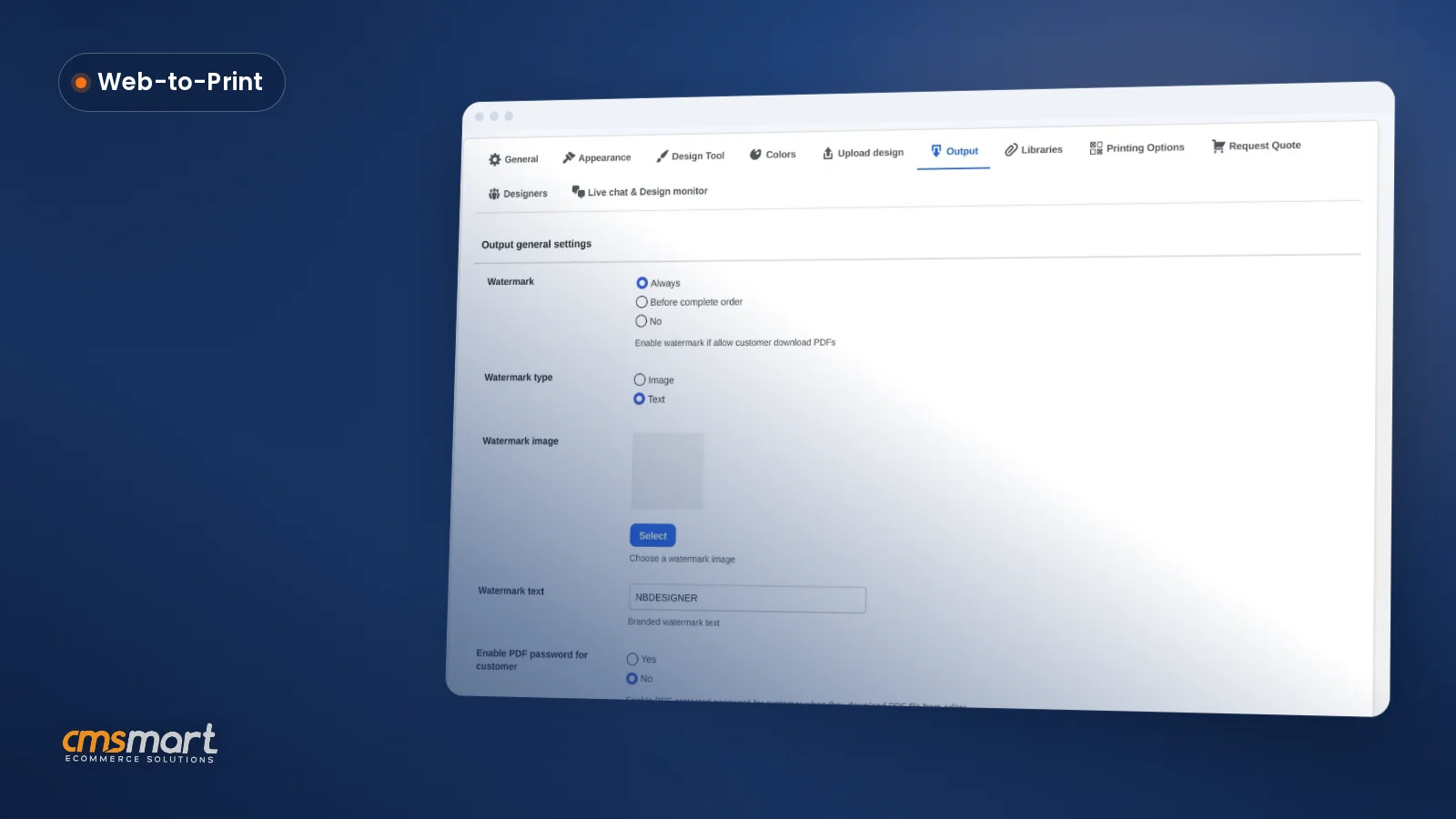
Guide · Web-to-print
Print Ready PDF Output Settings WooCommerce Setup
See what the print ready PDF output settings WooCommerce screen controls — watermark, password, bleed, FTP sync — and configure yours today.
Discover innovative mobile shopping solutions that enhance customer engagement and drive sales. From AR visualizations to seamless integrations, explore strategies tailored for modern eCommerce success.
Table of contents
Was this tutorial helpful?
Written by
Cmsmart WooCommerce Development Lead
Leads custom WooCommerce builds: architecture, checkout, performance and integrations.
The team behind it
 Account Manager
 Project Manager
 Business Analyst
 Developers & QA
Guide · Web-to-print
See what the print ready PDF output settings WooCommerce screen controls — watermark, password, bleed, FTP sync — and configure yours today.
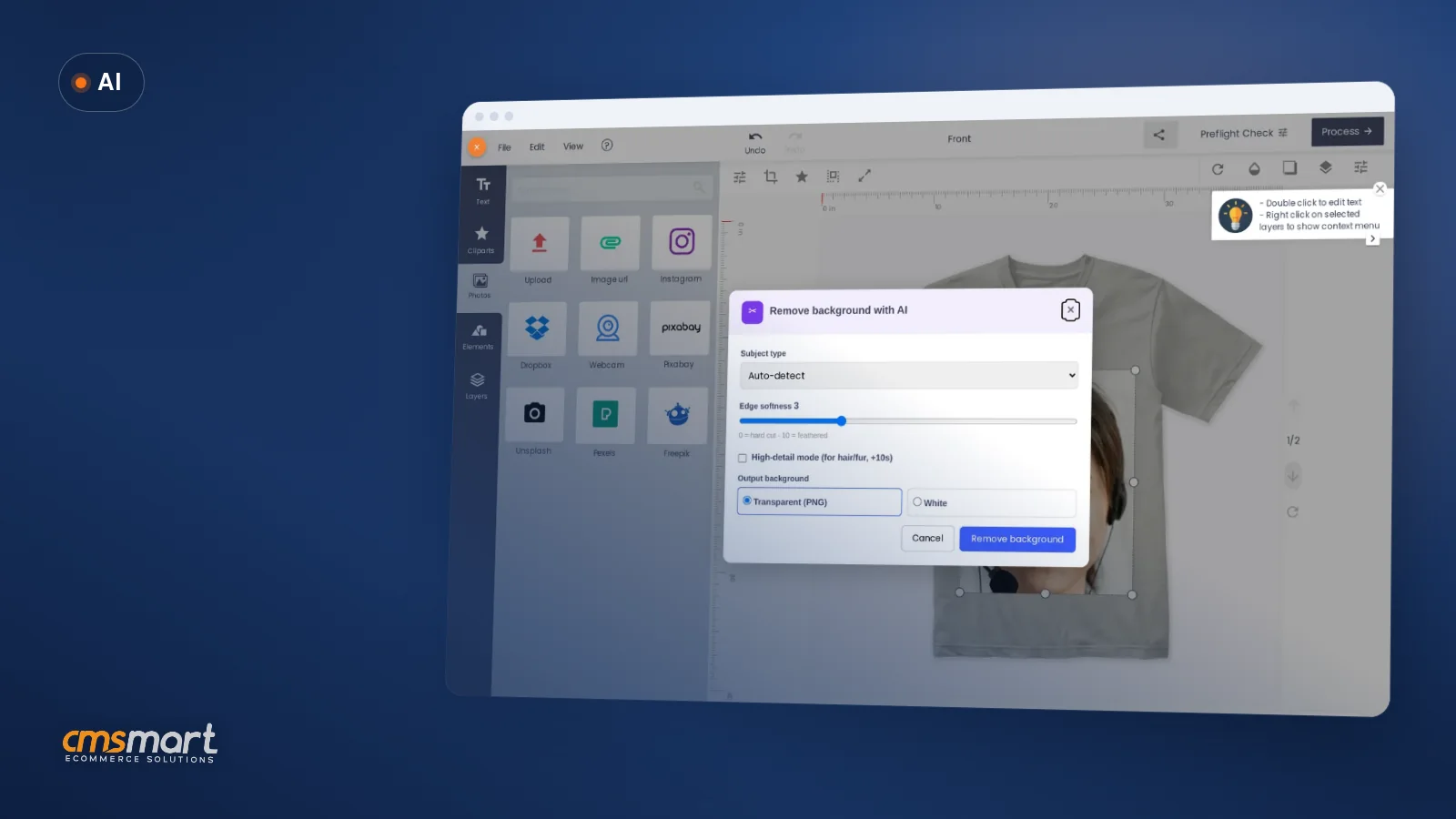
Case study · AI
Add an AI background remover for WooCommerce to your product designer so buyers get a clean cutout instantly, and see how Cmsmart builds the rest for...
Case study · Web-to-print
Save design and reorder WooCommerce orders in one click, with a fresh print-ready PDF every time. See how Cmsmart builds it.
Browse more guides, tutorials and case studies from the Cmsmart community.
Unlock the Power of Mobile Commerce: Propel Your Business Forward
Read MoreDiscover how to harness mobile commerce to enhance your business growth. Learn strategies for optimizing the mobile shopping experience and increasing consumer engagement.
Read MoreDiscover the benefits of mobile commerce and how it can transform your business. Learn effective strategies for maximizing sales and customer engagement through mobile-optimized shopping experiences.
Read More
Cmsmart Ecommerce provides custom ecommerce and WooCommerce development services for web-to-print, product personalization, plugin support and API integration.
Cmsmart WooCommerce Development Lead
Leads custom WooCommerce builds: architecture, checkout, performance and integrations.
Meet the team →




The era of mobile shopping is no longer just a trend; it's a revolution. As renowned brands like Amazon report that over 70% of their sales now come from mobile devices, the urgency for businesses to adapt is palpable. A prime example is Artisan Creations, a small business based in Australia that specializes in handmade crafts. Faced with declining foot traffic and an increasingly competitive online market, they turned to Cmsmart for a transformative mobile shopping solution. By leveraging our robust m-commerce strategies tailored to their unique offerings, Artisan Creations saw a staggering 150% increase in mobile sales within just three months, proving that embracing mobile optimization not only meets customer expectations but can also drive significant revenue growth.
The growth of mobile shopping channels is expected to reach nearly 4.5 billion users by 2024, creating an undeniable shift that businesses can no longer ignore. In this tutorial, we will explore cutting-edge solutions designed to enhance customer experiences and increase conversions specifically for mobile platforms. You'll discover how to optimize your site for mobile use, implement effective app engagement strategies, and embrace conversion techniques tailored for today's savvy shoppers. Get ready to unlock the secrets of successful mobile shopping and ensure your business thrives in this new digital landscape. Join us now as we dive into the compelling world of mobile commerce!
The Rise to Mobile Shopping Dominance
Need for mobile optimization, Understanding consumer behavior during holiday shopping, Responding to the growth of mobile shopping channels.The evolution of e-commerce has reached an exhilarating juncture, where mobile commerce (or m-commerce) reigns supreme, turning smartphones into gateways for unparalleled shopping experiences.
Seamlessly Enter the Mobile Shopping Paradigm
Imagine stepping into the universe of e-commerce where a smartphone is your key to unlocking an exclusive shopping spree. This shift is reshaping the very fabric of retail as businesses race to optimize mobile platforms to capture the surge of holiday shoppers keen on convenience and speed. To remain pertinent, leveraging a mobile-friendly approach is imperative. Is your business ready to seize the mobile opportunity?
Capitalize on Enhanced Mobile Experiences
Making shopping via smartphones and tablets seamless hinges on strategies such as:- Adopting a responsive design and mobile optimization for fluid navigation.
- Targeting webroomers—shoppers who browse online but purchase offline—with integrated channel strategies.
For insights on maximizing mobile conversions and creating engaging user experiences, you can check our resources on mobile optimization strategies.By embedding these strategies and employing mobile-first approaches, your business can thrive even in a hyper-competitive market. Todays consumers demand speed, personalization, and seamless checkout processes—all of which are attainable through intelligent mobile enhancements.
In Summary: The ascent of mobile shopping necessitates strategic shifts toward mobile-friendly platforms to capture the ever-mobile consumer. As we continue our journey, next well explore how technical optimizations can further refine your e-commerce domination. Stay tuned to learn about enhancing user engagement and maximizing mobile conversion.Understanding Mobile Commerce
Need for mobile optimization, Understanding consumer behavior during holiday shopping, Responding to the growth of mobile shopping channels.As consumers increasingly rely on smartphones and tablets for online shopping, harnessing the potential of mobile commerce—or m-commerce—is crucial for retailers aiming to maximize sales and engagement during peak shopping seasons.
Definition of Mobile Commerce
Mobile commerce, often referred to as m-commerce, encompasses all online shopping activities conducted on mobile devices such as smartphones and tablets. This includes browsing, shopping, and purchasing products through mobile apps or websites. As mobile retail becomes more prevalent, it offers unparalleled convenience for shoppers seeking flexibility and speed in their purchasing journey.
The Evolution and Impact of M-Commerce on the Retail Industry
The transformation from traditional retail to mobile digital commerce has significantly reshaped how consumers interact with brands. The convenience of m-commerce reflects in the numbers:
Retailers that optimize for mobile experiences often see better customer engagement and conversion rates, particularly during holiday shopping seasons.Terminology: Mobile Shopping, Mobile Retail, and Showrooming vs. Webrooming
Understanding key terms can enhance your strategy:
- Mobile Shopping: Purchasing products directly via mobile devices.
- Mobile Retail: Retail operations that leverage mobile platforms to facilitate customer sales.
- Showrooming vs. Webrooming: Showrooming involves visiting stores to check products before buying them online, whereas webrooming involves researching online before purchasing in-store.
Integrating app engagement and conversion optimization into your strategy aids in attracting both showroomers and webroomers. In summary: Embrace the growth of mobile shopping channels by understanding consumer behavior and optimizing for mobile engagement. Next, explore how to maximize mobile conversion and user engagement through our strategies on responsive design and mobile optimization.The Influence of Holiday Shopping on Mobile
Does holiday shopping feel daunting on mobile? Youre not alone.As mobile commerce gains momentum, understanding consumer behavior during holiday shopping is crucial for businesses striving to capitalize on this trend.
The Holiday Shopping Phenomenon in Mobile Commerce
Mobile devices are revolutionizing the way consumers shop, particularly during the holidays. With the rise in smartphone and tablet usage, m-commerce has become a key player in holiday shopping strategies. Consumers appreciate the convenience and speed of purchasing gifts at their fingertips, shifting the shopping experience dramatically. Engaging in mobile retail isnt just about being present online; its about optimizing for performance and user engagement during this peak period.
How Mobile Sales Surge During Holiday
The statistics confirm an upward trend in mobile purchases during festive seasons. For instance, mobile sales accounted for a substantial percentage of e-commerce transactions during Black Friday and Cyber Monday. According to recent market insights, mobile commerce sales are expected to skyrocket, highlighting its importance in any strategic plan.
Leveraging Mobile Commerce Strategies for Holiday Shopping
To tap into the potential of holiday shopping, retailers need to focus on several key strategies. Prioritizing conversion optimization for mobile platforms, enhancing app engagement, and ensuring smooth online shopping channels are vital. Incorporating features such as seamless mobile checkout, personalized promotions, and robust security measures enhances the shopping experience for users.
To fully leverage the power of mobile in holiday shopping, its essential to integrate advanced strategies that cater to the evolving needs of consumers. For additional methods on maximizing engagement, refer to our guide on how to build a WordPress multi-vendor eCommerce website.
In conclusion: Mastering mobile optimization during the holiday season unlocks numerous opportunities for increased conversions and customer satisfaction. For more information on enhancing user engagement and adopting responsive design, don’t miss our insights on crafting targeted solutions for webroomers and beyond.The Power of Responsive Design and Mobile Optimization
Are you aware that mobile optimization could be the missing link in capturing your holiday shoppers?As consumer behavior shifts towards browsing through mobile shopping channels, understanding the nuances of responsive design and mobile optimization has never been more urgent. Heres how you can harness these elements to boost your site’s performance.
Why Mobile Optimization Matters
With the relentless growth of smartphones and tablets, mobile commerce, or m-commerce, is not just a trend—its a necessity. A site that isnt mobile-friendly can drive away potential sales faster than you can say "bounce rate." According to recent market insights, close to 73% of eCommerce traffic will be mobile by 2021 . This implies that business owners must prioritize mobile optimization to stay competitive.
Enhancing User Experience With Responsive Design
Responsive design is the art of creating web experiences that adapt effortlessly to any screen size. Its not only about aesthetics but also about ensuring functionality. A responsive site encourages longer sessions and higher engagement, which are critical to maximizing mobile conversions.
Role of Mobile Optimization in Maximizing Conversion
The connection between mobile optimization and conversion is evident; a streamlined mobile experience translates to more completed purchases. Below are some strategies to optimize mobile conversions:
For deeper insights into maximizing mobile conversion and user engagement, visit our resources on responsive design and mobile optimization to effectively target webroomers and cluster content.
In summary: Embracing mobile optimization isnt just a technical upgrade, it’s a strategic move towards capturing a larger audience and boosting sales. Up next, we will explore the mechanics of targeting webroomers and how they can be converted into loyal customers.Revealing Consumer Behavior in the Mobile Shopping Arena
Feeling overwhelmed by the surge in mobile shopping? Youre not alone.In todays digital marketing landscape, understanding and optimizing for mobile commerce are essential to capitalize on the booming mobile shopping channels. Let’s dive into how consumer behavior is reshaping this space and what you can do to stay ahead.
Understanding How Consumers Use Mobile for Shopping
Mobile commerce, or m-commerce, is not just a trend—its a fundamental shift in how consumers engage with retail. This shift is driven by the increased use of smartphones and tablets for online shopping. Consider these insights:
The Impact of Showrooming and Webrooming on Purchase Decisions
Consumers are increasingly engaging in behaviors like showrooming—browsing products in-store but buying online, and webrooming—researching products online but purchasing in physical stores. Here’s how these practices are influencing buying decisions:
Techniques for Targeting Mobile Webroomers
To capture the mobile webroomer audience, consider these actionable strategies:
Optimize mobile platforms with responsive designs to convert webroomers into customers .
In summary: Mobile shopping is revolutionizing consumer behavior, presenting both challenges and opportunities. By understanding these shifts and implementing targeted strategies, you can enhance user engagement and drive conversions. Next, we’ll explore strategies to maximize mobile conversion and user engagement by leveraging responsive design and mobile optimization.Mobile Shopping Channels: Growth and Opportunity
Is your business ready for the mobile shopping revolution?The rapid shift towards mobile commerce highlights the growing significance of mobile optimization for online retailers.
The Rise of Online Shopping Channels on Mobile Devices
Mobile retail channels are on the rise as smartphones and tablets become the primary tools for online shopping. This trend has transformed consumer behavior, especially during peak shopping seasons like the holidays. Mobile devices offer convenience and accessibility, making them indispensable in todays digital marketplace.
How to Optimize Various Mobile Shopping Channels
By efficiently optimizing mobile shopping channels, businesses can significantly enhance user experience and conversion rates. Here are some impactful strategies:
Navigating the Shift from Traditional Retail to M-Commerce
The transition from traditional retail to m-commerce offers opportunities for businesses to reach broader audiences and enhance customer engagement. Understanding this shift is essential for success:
For further insights on maximizing mobile conversion and user engagement, see our comprehensive guide on responsive design and mobile optimization.
Summing it up: Embracing mobile commerce channels is no longer optional—its a necessity. Harness these strategies for a robust e-commerce presence and lead your business into the next section on advanced marketing tactics, focusing on targeting webroomers and streamlining your multichannel presence.Boosting Mobile User Engagement and Conversions
Are you finding it challenging to keep mobile shoppers engaged and convert their visits into sales?In todays fast-paced digital landscape, optimizing mobile commerce is crucial, especially as consumer behavior shifts during peak shopping seasons like holidays. As mobile shopping channels grow, understanding and responding to these trends can significantly enhance your businesss performance.
Strategies to Increase Mobile User Engagement
The rise of smartphones and tablets has redefined online shopping channels. Here’s how to maximize engagement:
Best Practices for Improving Mobile Conversion Rates
Boosting mobile conversions involves more than just a sleek design. Consider these practices:
Utilizing App Engagement Strategies for Mobile Commerce
Enhancing app engagement can lead to more substantial user retention and growth:
- Incorporate loyalty programs that reward repeat purchases and foster brand loyalty.
- Engage users via social media integration for broader reach and interaction.
- Optimize load times and ensure a glitch-free app experience.
In summary: By implementing these strategies, you set the stage for ongoing mobile commerce success. Next, we will explore advanced techniques to maximize mobile conversion and user engagement, focusing on responsive design and targeting the specific needs of webroomers.Future Trends in Mobile Commerce
Feeling the pressure to optimize your mobile commerce strategy?Youre not alone. As consumer behavior shifts towards mobile shopping, especially during holiday seasons, businesses must adapt to the booming mobile shopping channels.
Current and Predicted Trends in Mobile Commerce
Mobile commerce, often referred to as m-commerce or mobile retail, is evolving at a rapid pace. Smartphones and tablets have become the primary devices for online shopping, and the market shows no signs of slowing down.
The Advent of AR and VR in Mobile Shopping
Augmented Reality (AR) and Virtual Reality (VR) are setting new standards for user engagement and conversion optimization in mobile commerce. These technologies offer immersive shopping experiences, allowing customers to visualize products in their environment before purchasing.
How to Stay Ahead: Future-Proofing Your Mobile Commerce Strategies
To remain competitive, businesses must leverage the latest technologies and strategies. Here are actionable tips to future-proof your mobile commerce:
Building a mobile commerce strategy that meets evolving consumer needs involves understanding the E-E-A-T guidelines—Expertise, Authority, and Trustworthiness—and addressing business pain points like optimizing conversion rates and enhancing user experiences.
In summary: By integrating cutting-edge technologies and focusing on user engagement and conversion, businesses can stay ahead in the mobile commerce landscape. Next, well dive into "Maximize Mobile Conversion and User Engagement" to further enhance your strategies.Frequently Asked Questions
Need for mobile optimization, Understanding consumer behavior during holiday shopping, Responding to the growth of mobile shopping channelsNavigating the rapidly evolving landscape of mobile commerce can be challenging for businesses eager to optimize their mobile channels to keep pace with consumer behavior changes, especially during peak seasons like holidays.
What is Mobile Commerce?
Mobile commerce, also known as m-commerce, refers to the buying and selling of goods and services through wireless handheld devices like smartphones and tablets. By understanding and leveraging m-commerce, businesses can provide more personalized and accessible shopping experiences.
Why is Mobile Optimization Crucial?
How Can You Enhance App Engagement?
Improving m-commerce involves prioritizing user experience and creating value through your mobile platform. Here are some strategies:
Addressing FAQs in Mobile Commerce
Here are frequently asked questions that can help clarify your approach to mobile commerce:
Next Steps in Enhancing Mobile Commerce
For a deeper exploration into maximizing mobile conversion and user engagement, visit our guide on responsive design and mobile optimization. You can further boost your strategy by targeting webroomers with our multi-vendor marketplace solutions. In summary, mobile commerce presents a golden opportunity for businesses to tap into the growing online shopping channels. By addressing common FAQs and implementing innovative strategies, you can significantly enhance your mobile retail presence and customer engagement. Up next, lets delve into advanced techniques to maximize user experience and satisfaction.Further Reading
In conclusion, the era of mobile shopping is not just a trend—it's a revolution! By embracing mobile optimization, understanding consumer behaviors, and leveraging innovative engagement strategies, you position your business at the forefront of this exciting landscape. The techniques outlined in this tutorial can help you transform your customer experiences and significantly increase your conversions as we move towards 2024. Let’s discuss how we can assist you in implementing these cutting-edge solutions. Don't hesitate to reach out to David directly via WhatsApp at https://wa.me/84937869689, or email me at [email protected]. You can also request a quotation for personalized solutions by visiting https://cmsmart.net/home/teams/#contact. Join me in transforming your store into a mobile powerhouse today!