
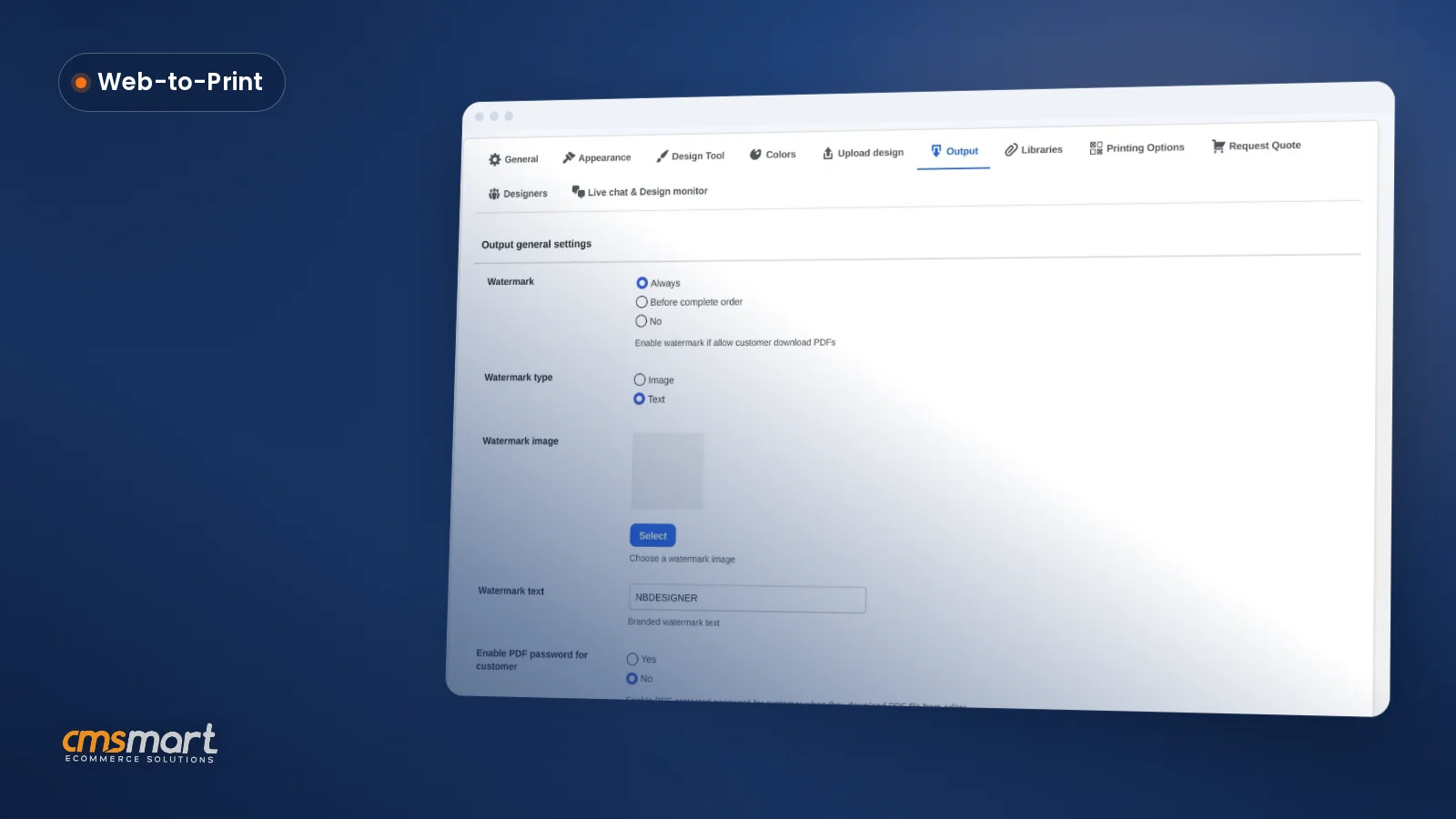
Guide · Web-to-print
Print Ready PDF Output Settings WooCommerce Setup
See what the print ready PDF output settings WooCommerce screen controls — watermark, password, bleed, FTP sync — and configure yours today.
Discover the power of an optimized mobile ecommerce strategy to enhance user engagement, streamline operations, and drive business growth.
Table of contents
Was this tutorial helpful?
Written by
Cmsmart Ecommerce Growth & Trends Analyst
Tracks ecommerce trends and turns them into practical moves for growing stores.
The team behind it
 Account Manager
 Project Manager
 Business Analyst
 Developers & QA
Guide · Web-to-print
See what the print ready PDF output settings WooCommerce screen controls — watermark, password, bleed, FTP sync — and configure yours today.
Case study · AI
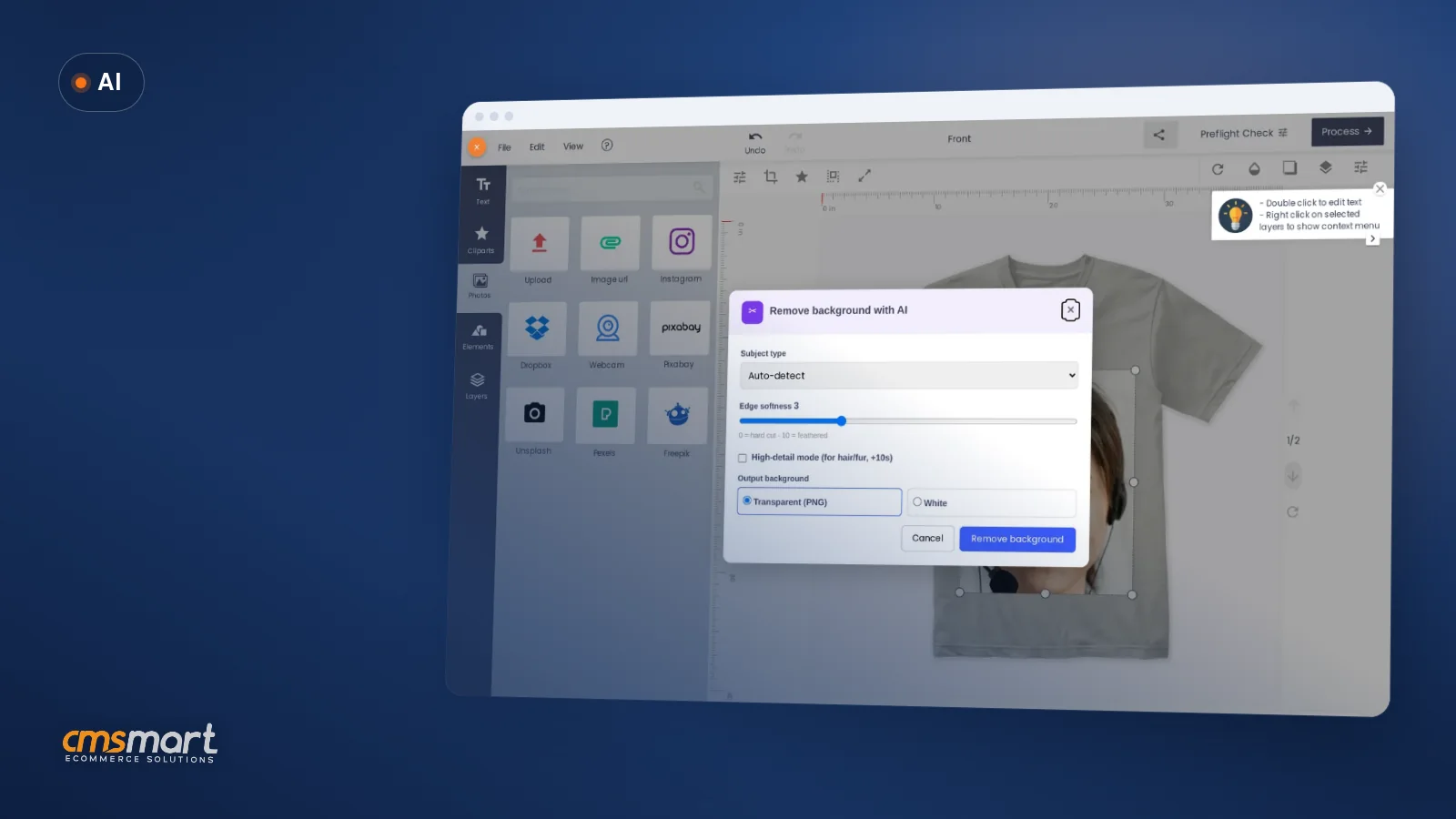
Add an AI background remover for WooCommerce to your product designer so buyers get a clean cutout instantly, and see how Cmsmart builds the rest for...
Case study · Web-to-print
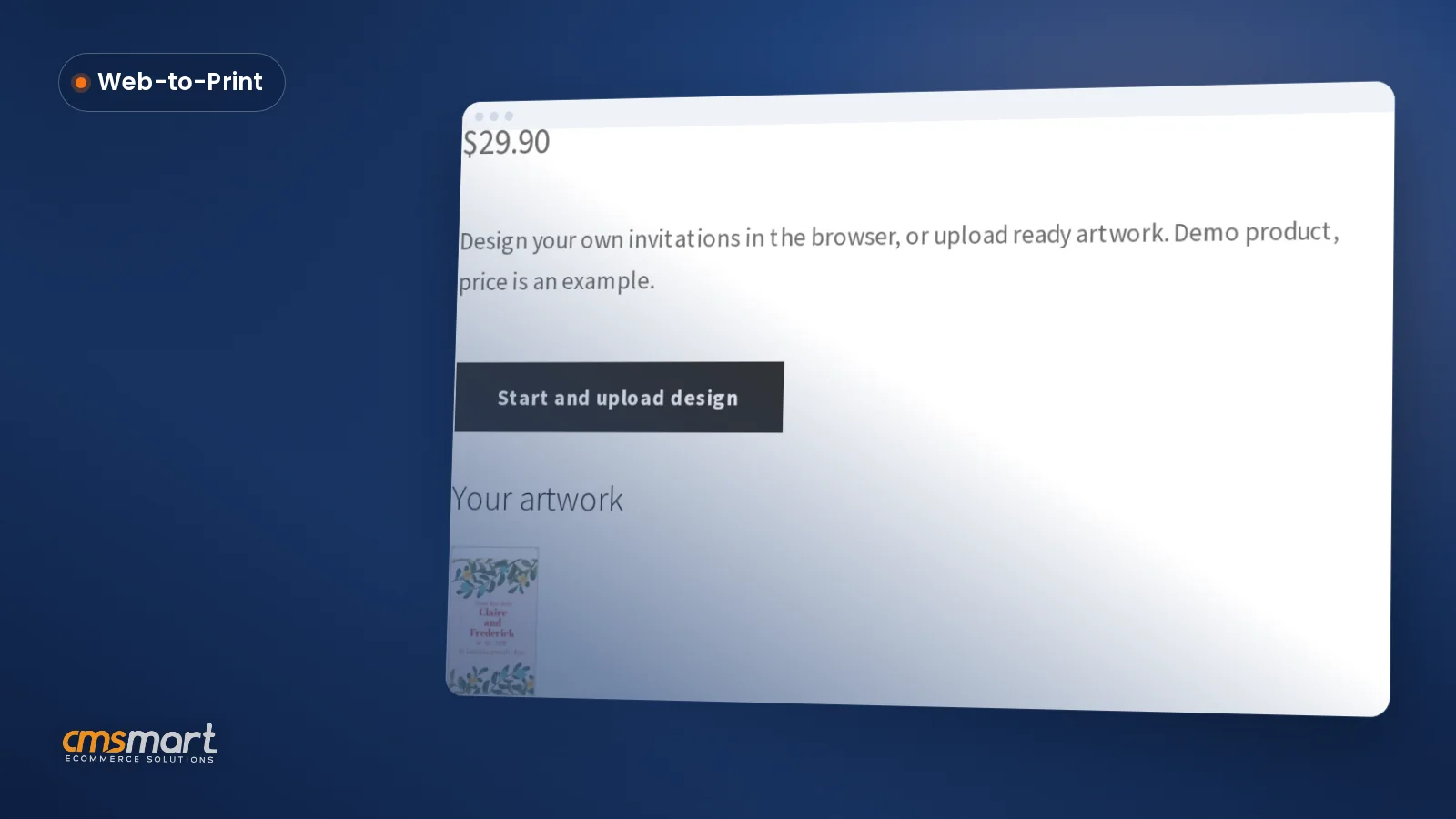
Save design and reorder WooCommerce orders in one click, with a fresh print-ready PDF every time. See how Cmsmart builds it.
Browse more guides, tutorials and case studies from the Cmsmart community.
Unlock the Power of Mobile Commerce: Propel Your Business Forward
Read MoreDiscover how to harness mobile commerce to enhance your business growth. Learn strategies for optimizing the mobile shopping experience and increasing consumer engagement.
Read MoreDiscover the benefits of mobile commerce and how it can transform your business. Learn effective strategies for maximizing sales and customer engagement through mobile-optimized shopping experiences.
Read More
Cmsmart Ecommerce provides custom ecommerce and WooCommerce development services for web-to-print, product personalization, plugin support and API integration.
Cmsmart Ecommerce Growth & Trends Analyst
Tracks ecommerce trends and turns them into practical moves for growing stores.
Meet the team →




Did you know that mobile shopping now accounts for over 54% of total ecommerce sales in 2023? This staggering statistic from the digital landscape underlines the necessity for businesses to adapt quickly or risk being left behind. One client of ours, Jane's Boutique from Australia, faced significant challenges with low mobile conversion rates. Customers were abandoning their carts at the checkout stage due to a cumbersome process and poor mobile user experience. We stepped in to transform her online store’s mobile strategy by implementing streamlined navigation, optimized mobile layouts, and secure payment options, leading to an impressive 35% increase in conversions within just two months.
The evolution of mobile commerce is more than just a trend; it’s a crucial aspect of remaining competitive in today’s market. As we explore the cutting-edge mobile ecommerce strategies that can boost sales and enhance user experience, we’ll delve into effective tactics, backed by real-world success stories, to empower your business on the move. To further enrich your understanding, check out our resources on effective inbound marketing and transforming your business with mobile-first strategies.
In this guide, we will share proven strategies to optimize your online store for mobile usage, ensuring that you can meet customer expectations effectively. Let’s dive into the steps that will revolutionize your online presence and enhance customer engagement!
Empowering Business on the Move
Abandoned shopping carts due to complex checkouts, low mobile conversion rates, challenges in mobile UX design, building brand trust on mobile devices, effective social media marketing strategies—many businesses face these hurdles daily.Empowering Businesses Through Mobile Commerce via Customer Devices
Imagine having your business in the hands of millions through their mobile devices—convenience and accessibility at its finest. With the mobile commerce strategy evolving, seamless integration of user experience (UX) and ecommerce mobile optimization is crucial for improving conversion rates and enhancing browsing engagement.
Optimizing Mobile Checkout: Enhancing the Tablet User Experience
A well-optimized mobile checkout process can significantly reduce cart abandonment rates. By enhancing tablet user experience, retailers can foster a smoother mobile shopping journey and improve shopping cart retention rates.
Using Social Platforms for Ecommerce
Using social media platforms effectively in your ecommerce strategy can enhance customer engagement and brand interaction, driving higher conversion rates through direct product promotions.
In summary: Empowering your business through mobile commerce not only drives sales but also strengthens customer loyalty. Next, lets transition into how to optimize multi-vendor marketplaces and capitalize on increased mobile interactions.
.Deconstructing Mobile Ecommerce Strategy
Struggling with abandoned shopping carts and low conversion rates on mobile devices? Youre not alone.In todays fast-paced retail landscape, enhancing your mobile ecommerce strategy is critical for success. From seamless browsing to trustworthy brand interactions, crafting the perfect mobile experience can significantly boost your sales.
Defining Mobile Ecommerce Strategy
Mobile commerce, a subset of ecommerce, focuses on engaging customers through mobile platforms. This involves creating a customer-centric approach that enhances shopping on smartphones and tablets.
The Relevance of Mobile Ecommerce in Todays Retail Landscape
With consumers increasingly relying on mobile devices, retailers must adapt to retain their competitive edge. Mobile platforms offer unmatched reach and potential for personal engagement.
Key Factors Constituting A Robust Mobile Retail Strategy
Crafting a successful mobile retail strategy involves several critical elements that can turn potential customers into loyal advocates.
- Streamlined checkout processes to reduce cart abandonment.
- Integration of social media channels to expand brand reach.
- Augmented reality features to enrich product browsing experiences.
In summary: Fine-tuning your mobile ecommerce strategy is essential to thrive in the modern retail environment. By focusing on enhancing the mobile shopping journey, including optimizing checkout processes and integrating advanced visual solutions, your business can achieve higher conversion rates and improved brand credibility. Next, well explore how you can optimize your mobile checkout process and leverage social platforms for ecommerce success.Revamping Your Checkout Process
Struggling with abandoned shopping carts due to complex checkouts?Retailers often encounter challenges like low mobile conversion rates and ineffective mobile UX design, which undermine trust and customer retention on mobile platforms. Here’s how to revamp your checkout process for a seamless e-commerce experience.
What Makes a Seamless Mobile Checkout Process?
In todays mobile-driven world, optimizing your mobile commerce strategy is crucial. A seamless mobile checkout process improves conversion rates and enhances mobile retail strategy. Key elements include:
Effective Strategies for Checkout Process Improvement
Improving your checkout process doesnt just mean making it faster; it means ensuring its intuitive and frictionless. Here are some strategies:
Reducing Cart Abandonments and Enhancing Conversion Rates
Addressing cart abandonment involves understanding customer behavior and refining the shopping process to address their concerns. Here’s how you can reduce cart abandonments and boost conversion:
In summary: By implementing these strategies, you can significantly improve user experience and conversion rates. Next, we’ll delve into optimizing mobile checkout processes including how to tailor mobile experiences to different user needs and devices.
For more details on enhancing your eCommerce platform, check out our resources on multi-vendor e-commerce setup and professional e-commerce development services.Curating User Experience for Mobile Shoppers
Abandoned shopping carts due to complex checkouts, low mobile conversion rates, and ineffective social media marketing strategies are common challenges for e-commerce businesses today.Underlining Importance of Mobile UX
As more shoppers turn to their mobile devices for purchasing, curating an excellent mobile user experience (UX) is crucial. With mobile sales exceeding 54% of total e-commerce sales globally in 2022, optimizing mobile interfaces to enhance customer experiences is no longer optional—its essential.
Innovative Approaches to Mobile UX Designs
Innovative UX designs leverage modern technology and user-friendly interfaces to create engaging shopping experiences.
Addressing Challenges in Mobile UX Design and Execution
Designing a mobile-friendly experience can be daunting, but addressing common pain points can vastly improve conversion rates.
As e-commerce evolves, businesses that adopt a comprehensive optimize mobile checkout process, enhance tablet user experience, and effectively use social platforms for ecommerce will lead the market. These strategies align with the E-E-A-T guidelines that emphasize expertise, authoritativeness, and trustworthiness—integral to building brand trust on mobile devices.
In summary: By focusing on these key areas, you can overcome the challenges of mobile UX design and execution. Next, let’s delve into strategies to improve the mobile shopping journey to further elevate the customer experience.Leveraging Visual Storytelling and Branding
Abandoned shopping carts due to complex checkouts? Youre not alone.Many businesses face challenges in increasing mobile conversion rates and optimizing mobile user experience. Effective strategies in visual storytelling and branding can help tackle these issues head-on.
Role of Visual Storytelling in Ecommerce
Visual storytelling is crucial in engaging customers and enhancing brand credibility. By weaving compelling narratives through visuals, brands can:
For instance, integrating product videos can increase purchase intent by up to 85%, according to a HubSpot study.
Establishing and Strengthening Brand Credibility on Mobile
Establishing a trustworthy brand on mobile devices is essential for customer confidence. Here are some actions to strengthen your brands credibility:
- Leverage customer testimonials and reviews directly on product pages
- Maintain a consistent visual identity across all digital touchpoints
- Incorporate seamless payment solutions to optimize mobile checkout process
For more details on enhancing mobile user experiences, refer to improving mobile shopping journey.Incorporating LSI Terms for a Strong Brand Narrative
Using Latent Semantic Indexing (LSI) keywords naturally throughout your content improves SEO and strengthens your brand story. Here are a few ways to integrate them effectively:
- Sync content with trending buzzwords like Ecommerce Mobile Optimization and Mobile Commerce Strategy
- Create a robust content strategy that aligns with your target audiences interests
- Utilize internal linking strategies to direct traffic to areas such as using social platforms for ecommerce
In conclusion: By leveraging the power of visual storytelling, maintaining brand credibility, and incorporating strategic keywords, you can significantly improve mobile commerce outcomes. Next, explore ways to enhance tablet user experience for a seamless cross-device shopping journey.Optimizing Tablet UX Design and How It Affects Sales
Facing decreased conversion rates on mobile devices due to problematic UX design? Youre not alone.Many businesses struggle with optimizing their mobile commerce strategy, impacting customer experiences and sales.
Distinguishing Tablet UX from Mobile UX
While both mobile and tablet UX design share similarities, differentiating them ensures you cater to each platform’s capabilities and user behaviors. Tablets offer larger screen real estate, allowing for richer content display and enhanced visual storytelling, contributing greatly to effective browsing engagement.
Optimizing User Experience on Tablets
Creating a seamless user interface (UI) on tablets not only enhances customer interactions but significantly affects conversion rates. Prioritizing customer comfort can transform browsing sessions into purchases.
- Implement gesture-based navigation for intuitive interaction.
- Optimize loading speed to improve smoothness of experience.
- Ensure product images and descriptions are detailed and actionable.
Pro Tips:Case Studies: Proven Impact of Optimized Tablet UX on Sales
By analyzing successful implementations, we see a clear pattern where tablet-specific designs drive substantial sales growth.
In summary, enhancing tablet UX can serve as a potent mobile retail strategy, directly impacting your e-commerce sales positively. Next, we’ll delve into optimizing the mobile checkout process to further lower cart abandonment rates and boost order completions.
For more information, see further resources on how to optimize mobile checkout process and enhance tablet user experience, as well as strategies to use social platforms for ecommerce and improve mobile shopping journey .
Social Advertising: Your Ticket to Boost Mobile Sales
Struggling with abandoned shopping carts and low mobile conversion rates?You’re not alone. Many businesses encounter the challenges of complex checkouts and building brand trust on mobile devices. Social advertising might be your solution to effectively transforming your eCommerce sales strategy.
The Connection Between Social Advertising and Mobile Ecommerce
Social media platforms are integral to a successful Mobile Commerce Strategy. By leveraging these platforms, businesses can enhance customer experiences, increase browsing engagement, and improve conversion rates. With the right strategy, social advertising not only drives traffic but also strengthens brand credibility.
Effective Social Media Marketing Strategies for Mobile Ecommerce
Implementing a Mobile Retail Strategy through social media can address pain points and optimize your eCommerce operations. Prioritize simplified mobile checkouts and cater to user expectations on mobile devices.
Transforming Social Platforms into Ecommerce Hubs
Social platforms can double as eCommerce hubs, driving direct sales through features like shoppable posts and integrated payment systems. This shift can blur the lines between browsing and buying, enhancing the mobile shopping journey.
For more strategic insights, see our guide on how to use social platforms for eCommerce.
In summary: Social advertising leverages the broad reach and versatility of social media to enhance your mobile eCommerce. Up next, delve into advanced content strategies that will optimize the mobile shopping experience.Frequently Asked Questions
Struggling with abandoned shopping carts due to complex checkouts?Many mobile ecommerce strategies face the pain points of low conversion rates, design challenges, and building brand trust. Heres a FAQ section to simplify your journey.
A Q and A section addressing 5-10 popular queries about Mobile Ecommerce Strategy
Mobile Commerce Strategy is pivotal today, but many still have questions. Lets explore some common inquiries to enhance your mobile shopping journey:
Complex checkouts and slow loading times discourage users. Regularly optimize your mobile checkout process for a seamless experience.
Poor user experience and lack of mobile optimization. Enhance your mobile UX with intuitive design and fast loading speeds.
Effective social media marketing strategies boost engagement and drive conversions through visual storytelling.
User reviews, secure checkout processes, and transparent communication enhance brand credibility.
Ensure a responsive design, use fast-loading images, and simplify navigation.
Improve Your Mobile Ecommerce Strategy
To delve deeper, explore our resources on enhancing tablet user experiences and discover how to optimize every touchpoint. In summary: By addressing these common questions and applying practical strategies, youre well-equipped to improve your mobile conversion rates—up next, we venture into advanced analytics and monitoring methods for sustained growth.Further Reading
Congratulations on taking the first step towards transforming your online store! By implementing a robust mobile ecommerce strategy, you’ve learned how to tackle common challenges such as abandoned carts and low conversion rates. Imagine the potential of reaching millions with seamless mobile experiences that boost customer engagement and trust. Now, it’s time to put this knowledge into action. Let’s discuss how we can help you implement these strategies effectively! Connect with David directly on WhatsApp at [WhatsApp David], or reach out to our Ecommerce Project Consultant via email at [Email Project Consultant]. If you're ready to explore customized solutions, request a quotation here. Your journey to enhanced mobile commerce begins today!