
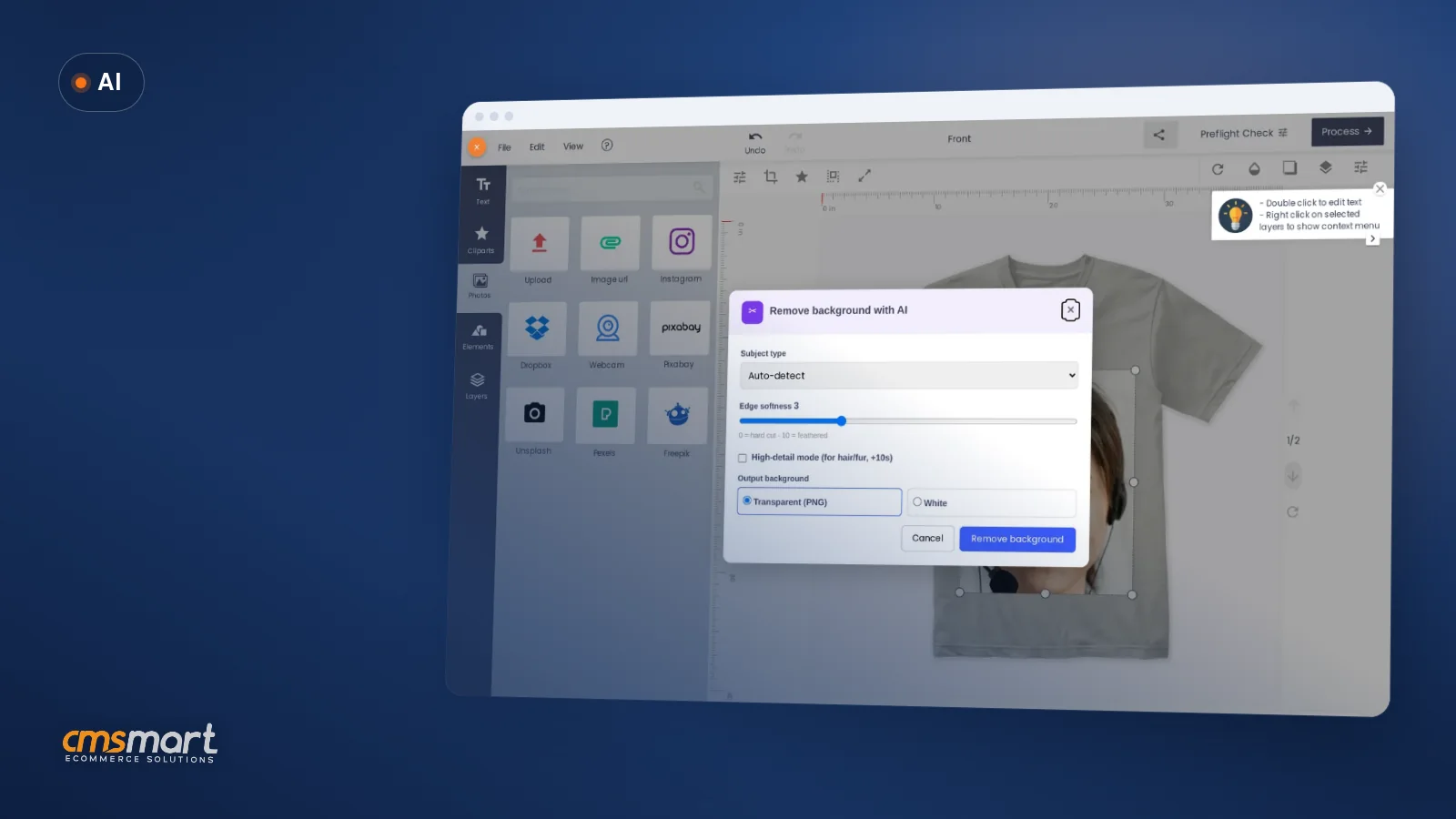
Case study · AI
AI Background Remover for WooCommerce Product Designer
Add an AI background remover for WooCommerce to your product designer so buyers get a clean cutout instantly, and see how Cmsmart builds the rest for...
Discover how e-commerce can transform your business by enhancing customer engagement, optimizing processes, and driving growth. Our comprehensive solutions cater to diverse needs, ensuring a successful online presence.
Table of contents
Was this tutorial helpful?
Written by
Cmsmart Ecommerce Growth & Trends Analyst
Tracks ecommerce trends and turns them into practical moves for growing stores.
The team behind it
 Account Manager
 Project Manager
 Business Analyst
 Developers & QA
Case study · AI
Add an AI background remover for WooCommerce to your product designer so buyers get a clean cutout instantly, and see how Cmsmart builds the rest for...
Case study · Web-to-print
Save design and reorder WooCommerce orders in one click, with a fresh print-ready PDF every time. See how Cmsmart builds it.
Guide · Web-to-print
Custom size printing WooCommerce shoppers configure themselves: Cmsmart prices it live and matches the print-ready PDF to the order. Get a quote.
Browse more guides, tutorials and case studies from the Cmsmart community.
Unlock the Power of Mobile Commerce: Propel Your Business Forward
Read MoreDiscover how to harness mobile commerce to enhance your business growth. Learn strategies for optimizing the mobile shopping experience and increasing consumer engagement.
Read MoreDiscover the benefits of mobile commerce and how it can transform your business. Learn effective strategies for maximizing sales and customer engagement through mobile-optimized shopping experiences.
Read More
Cmsmart Ecommerce provides custom ecommerce and WooCommerce development services for web-to-print, product personalization, plugin support and API integration.
Cmsmart Ecommerce Growth & Trends Analyst
Tracks ecommerce trends and turns them into practical moves for growing stores.
Meet the team →




Did you know that global e-commerce sales are projected to surpass $8 trillion by 2027? This staggering growth reflects a significant shift in consumer behavior, highlighting the urgency for businesses to embrace innovative digital strategies. For instance, after partnering with Cmsmart, EcoTech Solutions, a burgeoning tech startup from Australia specializing in eco-friendly products, transformed their online presence. Faced with the challenge of engaging a tech-savvy audience, they turned to Cmsmart's comprehensive e-commerce strategies. Leveraging augmented reality and enhanced logistics, EcoTech was able to not only adapt but thrive in a competitive landscape, boosting their customer engagement by 150% within just six months.
With 79% of consumers favoring online shopping for its convenience, it’s crucial to tap into the power of e-commerce to elevate your business. In this tutorial, we'll explore actionable strategies tailored to today’s market, including effective digital marketing and utilizing cutting-edge technology to revolutionize your online sales channels. For deeper insights, check out our resources on maximizing your online store’s success and transforming your printing operations. In this guide, we’ll break down how you can unlock growth and enhance customer engagement through innovative e-commerce solutions.
Captivating the Power of E-commerce
Keeping up with rapid e-commerce growth can feel overwhelming, especially when consumer preferences are constantly evolving.Many businesses struggle to adapt to new technologies like augmented reality and enhance logistics for better customer satisfaction. Yet, leveraging online retail can open the floodgates to unprecedented sales for your business.
Understanding the Power of E-commerce
The e-commerce sector is booming, with global sales expected to reach over $8 trillion by 2027. This growth is fueled by shifting consumer buying behavior and the rise of mobile shopping apps. To maximize this opportunity, consider the following actionable tips:Elevate Your E-commerce Strategy
Explore trends and changes in the e-commerce sector to ensure your business stays relevant. By focusing on the growth trajectory of online shopping, you can identify emerging market segments and optimize your digital marketing efforts. For a deeper dive into specific strategies, check out our articles on digital marketing strategies in online retail. In summary: Adapting to the fast-paced world of e-commerce requires understanding shifts in consumer behavior and integrating technologies that enhance shopping experiences. Next, let’s examine trends and changes in the e-commerce sector to further align your business with market demands.Unraveling the Realm of E-commerce
Keeping pace with the rapid e-commerce growth can feel overwhelming. You’re not alone in navigating this evolving landscape.As consumer preferences shift, businesses must adapt, integrating new technologies and enhancing logistics to improve customer satisfaction.
Defining E-commerce: Beyond Simple Online Shopping
E-commerce refers not just to buying and selling on the internet, but to a vast ecosystem that encompasses various forms of digital retail. It has transformed how consumers engage with brands and make purchasing decisions. Here are some core aspects to consider:Understanding the Digital Retail Revolution
The e-commerce sector is booming, with the global market size expected to hit a staggering $8 trillion by 2027, according to data from Statista. Market Insight: The COVID-19 pandemic accelerated many businesses transition to online sales channels, revealing deep shifts in consumer buying behavior.Synonymous Terms: E-commerce, Online Shopping, and Internet Sales Explained
Understanding the terms associated with e-commerce can help you dive deeper into strategies for growth. Here’s a breakdown of synonyms and related terms:Actionable Strategies for E-commerce Success
To succeed in the competitive digital retail landscape, businesses should consider the following actionable tips:- Enhance Logistics: Streamline your shipping and delivery systems to improve customer satisfaction.
- Leverage Augmented Reality: Use AR to allow customers to visualize products before purchasing.
- Utilize Digital Marketing Strategies: Implement effective email marketing campaigns and social media outreach.
- Stay Updated on Consumer Preferences: Analyze shopping trends and adapt your offerings accordingly.
In summary: By understanding and implementing these e-commerce principles, businesses can better navigate the complexities of online selling. Up next, let’s explore the latest trends and changes in the e-commerce sector to ensure you stay ahead in this fast-paced environment.Interpreting Consumer Preferences and Market Trends
Keeping up with rapid e-commerce growth and adapting to changing consumer preferences can be daunting.As digital retail evolves, understanding online consumer behavior is crucial to maximizing your success.
Importance of Understanding Buying Behavior in E-commerce
Understanding the nuances of consumer buying behavior allows businesses to tailor their strategies effectively. Here are some key aspects to consider:Decoding Consumer Trends: What Drives Online Sales?
To successfully drive online sales, understanding consumer trends is essential. Key factors include:Navigating Emerging Market Segments in the E-commerce Industry
As e-commerce grows, new market segments are constantly emerging. Here’s how to navigate these changes:- Explore niche product categories tailored to specific audiences.
- Leverage social media advertising to target emerging customer demographics.
- Consider logistics improvements to ensure faster delivery times and enhanced customer satisfaction.
In summary: Staying ahead requires a keen insight into consumer preferences and trends, allowing businesses to adapt and thrive. With effective digital marketing strategies, such as social media engagement and tailored email campaigns, your e-commerce venture can achieve sustainable growth. In the next section, well delve deeper into the trends and changes in the e-commerce sector and their implications for your business strategy.Projecting the Future of E-commerce
Keeping up with rapid e-commerce growth can feel overwhelming.Businesses today face several challenges, from adapting to changing consumer preferences to integrating new technologies like augmented reality, all while enhancing logistics for better customer satisfaction and leveraging digital marketing strategies for higher sales.
Predicting Future E-commerce Projections
The future of online shopping looks bright, with experts predicting significant growth in the e-commerce sector. According to Statista, global e-commerce sales are expected to reach approximately $6.3 trillion by 2024 . This growth indicates that more consumers are embracing digital retail as their primary shopping method.Analyzing Growth Rates and Potential in Online Shopping
As traditional shopping habits change, consumers are increasingly inclined to make their purchases online. This shift opens up various product categories to explore and innovate. Some key insights include:The Impact of Mobile Apps and Augmented Reality on E-commerce
The integration of mobile apps and augmented reality into online retail offers vast opportunities for businesses aiming to enhance their customer engagement. Here are some strategies to consider:- Develop user-friendly mobile apps to facilitate seamless shopping.
- Leverage augmented reality to allow customers to visualize products before purchasing.
- Utilize influencer partnerships for authentic marketing that resonates with your target audience.
In summary: The e-commerce sector is poised for exciting growth driven by technological advancements and changing consumer behaviors. To delve deeper into trends and changes in the e-commerce sector, explore the growth trajectory of online shopping and upcoming emerging market segments. Next, lets examine digital marketing strategies that can elevate your online retail presence! : https://www.statista.com/statistics/379046/worldwide-retail-e-commerce-sales/Strategizing Digital Marketing in E-commerce
Struggling to keep up with the rapid growth of e-commerce? You’re not alone.Many online retailers face challenges in adapting to changing consumer preferences and enhancing their digital marketing strategies to drive sales.
Role of Digital Marketing in E-commerce Success
With global internet sales expected to reach $8 trillion by 2027, leveraging various digital marketing channels is crucial for e-commerce success. Here’s how you can enhance your strategy:
Upgrading to Next-Level Marketing: Email Campaigns and Social Media Advertising
Integrating well-crafted email campaigns and engaging social media advertisements can significantly boost your e-commerce sales:
Tapping into the Power of Influencer Partnerships
Influencer marketing continues to revolutionize online retail:
To see significant results, start implementing these digital marketing strategies now. Explore our resources on trends in e-commerce and marketing strategies for online retail to stay ahead.
In summary: Digital marketing is pivotal in navigating the e-commerce landscape successfully. Next, we’ll dive into the emerging market segments and how to seize new opportunities for growth.Emphasizing on Logistics Improvements and Customer Satisfaction
Keeping up with the rapid growth of e-commerce can be challenging, especially when it comes to enhancing logistics and ensuring customer satisfaction.As businesses aim to adapt to the evolving landscape of online shopping, the importance of effective logistics cannot be overstated.
Examining the Role of Logistics in E-commerce
Logistics is a critical component of digital retail, influencing everything from inventory management to shipping methods. An efficient logistics system is essential in building customer trust and improving their buying experience.Strategies to Enhance Logistics for Improved Customer Satisfaction
Improving logistics can directly enhance customer fulfillment. Here are some actionable strategies:Adapting to Changing Consumer Preferences in Online Shopping
Todays consumers are ever more discerning about their shopping experiences. Understanding and adapting to these preferences is crucial for e-commerce success.- Offer mobile shopping apps to cater to the increasing number of mobile shoppers.
- Incorporate consumer-driven product categories that respond to market trends.
- Embrace social media advertising and influencer partnerships to appeal to younger demographics.
In summary: Focusing on logistics improvements and enhancing customer satisfaction is vital for any e-commerce business. Integrating new technologies and understanding consumer preferences allows retailers to thrive in a growing market. Next, let’s dive into the evolving trends and changes in the e-commerce sector, exploring the growth trajectory of online shopping and how you can leverage digital marketing strategies for your business success.Insights on Various Product Categories in E-commerce
Keeping up with the rapid growth of e-commerce can feel overwhelming, especially with shifting consumer preferences and advanced technologies.To thrive in this dynamic landscape, youll need to adapt quickly, enhance user experiences, and leverage innovative strategies.
Exploring Top Product Categories Driving E-commerce Sales
The e-commerce sector is functional due to several product categories that consistently drive sales. Its essential to understand which categories are performing well to tailor your offerings effectively. Here are the leading categories:The Future of Personalized Shopping Experiences
Consumer expectations are shifting towards personalized shopping experiences. Integrating technologies such as augmented reality can enhance product visualization. Here are ways to achieve personalization:In-depth Analysis of E-commerce Growth Trends from 2017 to 2021
The growth trajectory of online shopping has been impressive. Between 2017 and 2021, the e-commerce market saw an average annual growth rate of 15%. Key trends include:- Expansion of mobile shopping apps
- Increased acceptance of online payments
- Growth in cross-border e-commerce
- Emergence of new market segments such as subscription services
In summary: As you adapt to these insights and trends, understanding consumer preferences and leveraging smart digital marketing strategies will be key to your success.Next, we will delve into the trends and changes in the e-commerce sector, helping you stay ahead in this competitive industry.
Addressing Challenges in Adapting to Rapid E-commerce Growth
Keeping up with rapid e-commerce growth is a challenge many businesses face today.Adapting to changing consumer preferences, integrating new technologies like augmented reality, enhancing logistics for better customer satisfaction, and leveraging digital marketing for higher sales can feel overwhelming.
Overcoming Pain Points in Keeping Up with E-commerce Growth
To stay competitive, businesses must address key pain points head-on. Here are actionable strategies:The Role of New Technologies Like Augmented Reality in Addressing Challenges
Incorporating new technologies can set your online store apart. Consider these advanced options:Strategizing to Leverage Digital Marketing for Higher Sales
Effective digital marketing strategies are essential for capturing and retaining customers. Here’s how to optimize your approach:- Engage with customers through email marketing and personalized offers.
- Utilize influencer partnerships to reach targeted audiences.
- Analyze the performance of your digital ads for continuous improvement.
In summary: By addressing these challenges through technology integration and effective digital marketing strategies, you position your business for success in the evolving e-commerce landscape. As we move forward, we will dive deeper into ongoing trends and changes in the e-commerce sector, offering insights into how to adapt effectively.Frequently Asked Questions
Keeping up with the rapid growth of e-commerce can feel overwhelming, particularly with ever-changing consumer preferences and the need to integrate new technologies.As digital retail evolves, businesses must adapt to ensure they remain competitive and continue to meet customer demands.
Frequently Asked Questions
1. What are the current trends in e-commerce?
2. How should I choose the right digital marketing strategy?
Consider your target audience and market dynamics:3. What are the key factors to enhance logistics for better customer satisfaction?
Prioritize logistics improvements by:4. What product categories are trending in e-commerce?
Focus on popular segments:5. How do I effectively leverage augmented reality in my e-commerce strategy?
Integrate AR to transform shopping experiences:These insights and strategies can significantly enhance your e-commerce efforts. For more details, explore how to stay on top of trends and changes in the e-commerce sector and learn about the growth trajectory of online shopping.
In summary: As the digital economy expands, staying informed and adaptable is crucial for success. In the next section, we will delve deeper into digital marketing strategies that can enhance your online retail presence and drive sales.FAQ Section: Troubleshooting and Pro Tips
How to keep up with rapid e-commerce growth?
Utilize scalable solutions and cloud hosting to handle increasing traffic and demand.
How to adapt to changing consumer preferences?
Implement AI-powered personalization to cater to individual customer needs and trends.
What role does augmented reality play in e-commerce?
AR enhances the shopping experience by allowing customers to virtually 'try before they buy.'
How can logistics be improved for better customer satisfaction?
Integrate major shipping carriers for real-time tracking and flexible shipping options.
What digital marketing strategies boost e-commerce sales?
Leverage social media integrations and targeted email marketing campaigns for higher engagement.
How can businesses utilize customer feedback in e-commerce?
Enable customer reviews and feedback options to build trust and improve product offerings.
What features support multi-vendor e-commerce platforms?
Multi-vendor capabilities include individual vendor storefronts, approval systems, and commission tracking.
Further Reading
In today’s e-commerce landscape, staying ahead of rapid changes is crucial for unlocking growth and customer engagement. By implementing strategies like digital marketing, augmented reality experiences, and enhanced logistics, you're not just adapting—you’re thriving. You have the opportunity to transform your business into a customer-centric powerhouse, capitalizing on the projected $8 trillion market. Let’s discuss how we can help you implement these innovative solutions! Connect with David directly at WhatsApp for quick insights or reach our Ecommerce Project Consultant at [email protected]. If you're ready to take the leap, request a quotation through this link. Together, let’s elevate your store and embrace the future of e-commerce!