
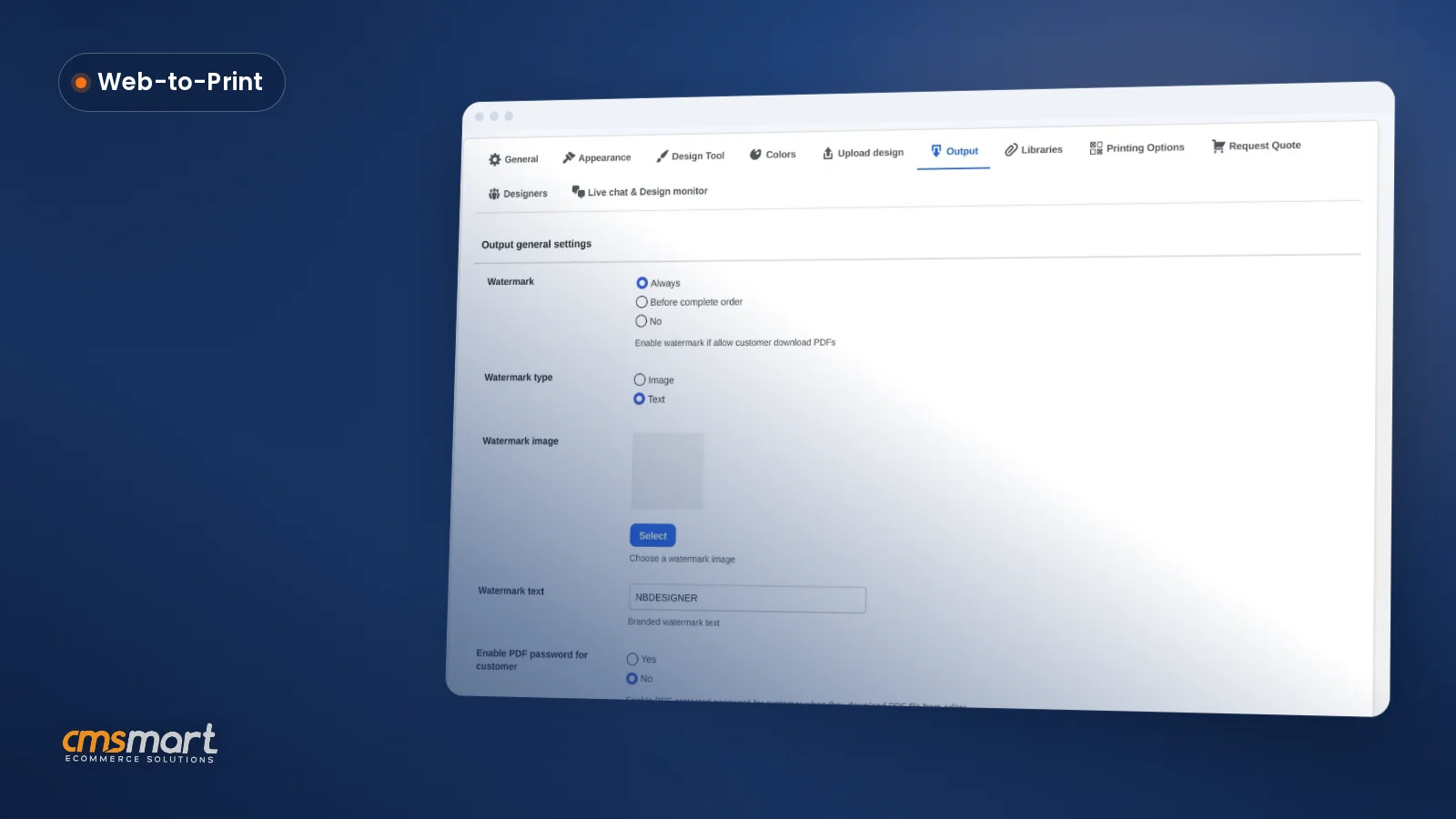
Guide · Web-to-print
Print Ready PDF Output Settings WooCommerce Setup
See what the print ready PDF output settings WooCommerce screen controls — watermark, password, bleed, FTP sync — and configure yours today.
Discover essential strategies to elevate your eCommerce business. Learn how to enhance customer experience, optimize website performance, and increase sales through effective digital marketing techniques.
Table of contents
Was this tutorial helpful?
Written by
Cmsmart Ecommerce Growth & Trends Analyst
Tracks ecommerce trends and turns them into practical moves for growing stores.
The team behind it
 Account Manager
 Project Manager
 Business Analyst
 Developers & QA
Guide · Web-to-print
See what the print ready PDF output settings WooCommerce screen controls — watermark, password, bleed, FTP sync — and configure yours today.
Case study · AI
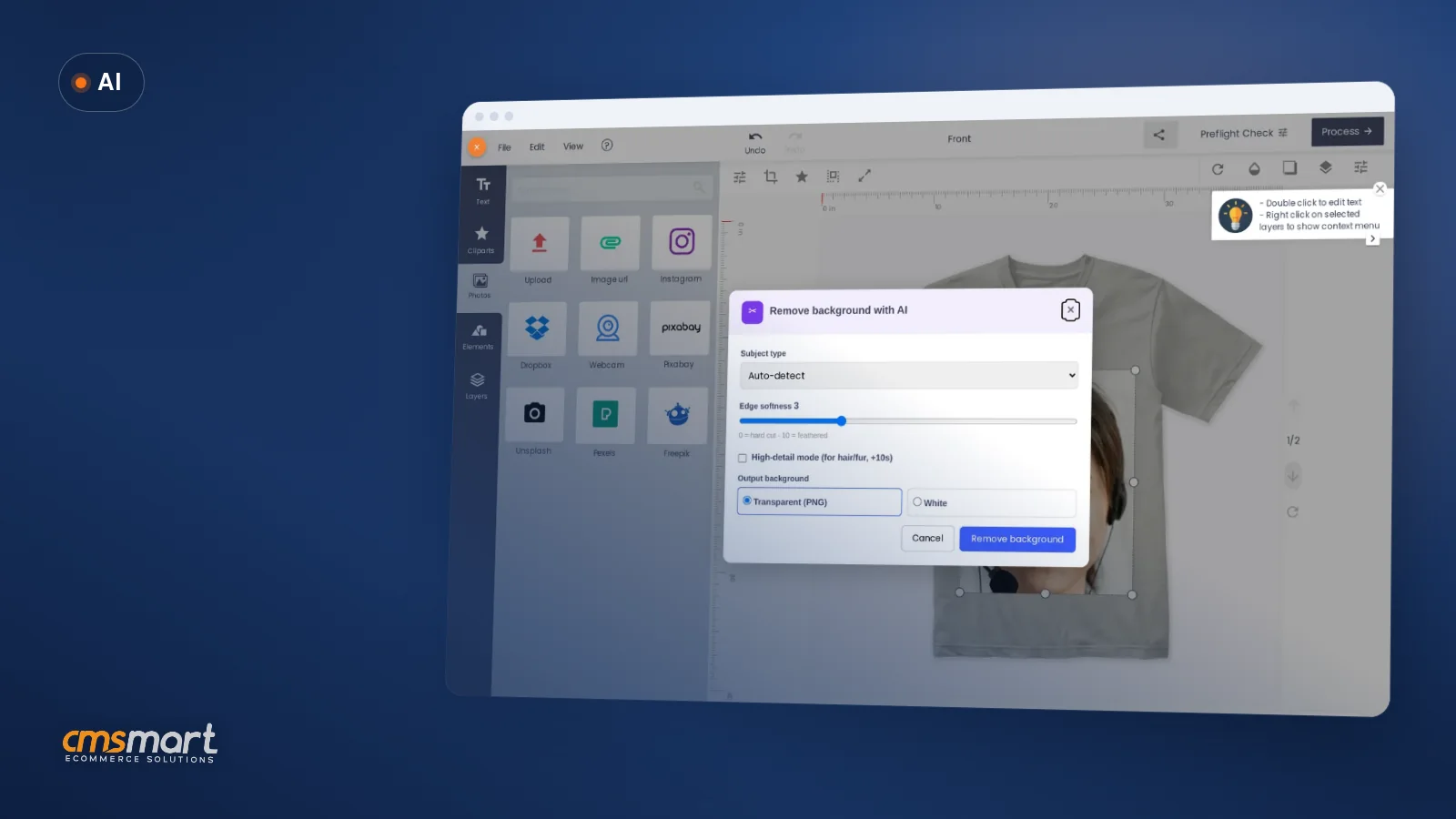
Add an AI background remover for WooCommerce to your product designer so buyers get a clean cutout instantly, and see how Cmsmart builds the rest for...
Case study · Web-to-print
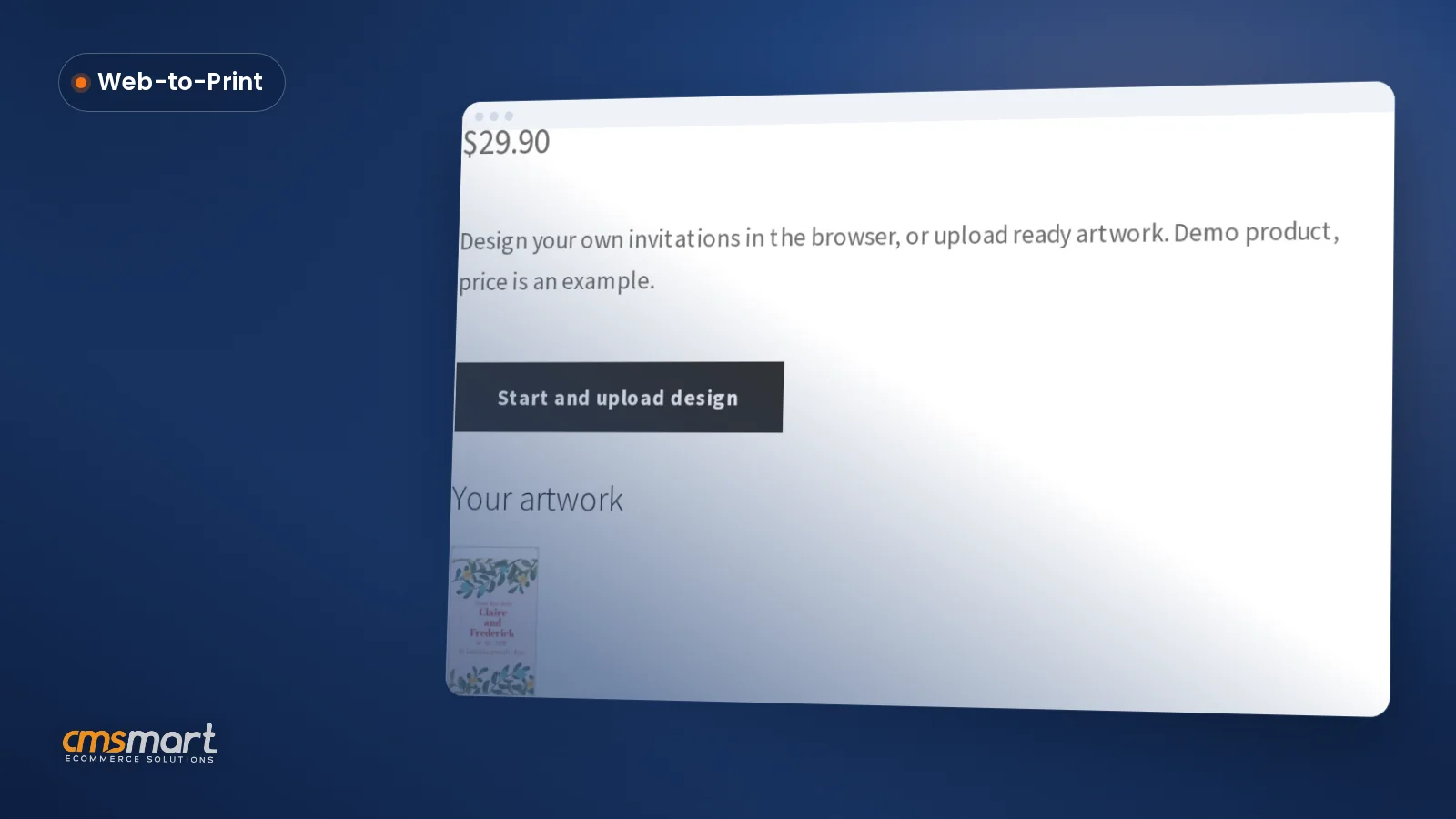
Save design and reorder WooCommerce orders in one click, with a fresh print-ready PDF every time. See how Cmsmart builds it.
Browse more guides, tutorials and case studies from the Cmsmart community.
Unlock the Power of Mobile Commerce: Propel Your Business Forward
Read MoreDiscover how to harness mobile commerce to enhance your business growth. Learn strategies for optimizing the mobile shopping experience and increasing consumer engagement.
Read MoreDiscover the benefits of mobile commerce and how it can transform your business. Learn effective strategies for maximizing sales and customer engagement through mobile-optimized shopping experiences.
Read More
Cmsmart Ecommerce provides custom ecommerce and WooCommerce development services for web-to-print, product personalization, plugin support and API integration.
Cmsmart Ecommerce Growth & Trends Analyst
Tracks ecommerce trends and turns them into practical moves for growing stores.
Meet the team →




As global eCommerce sales skyrocketed to nearly $4.9 trillion in 2021, the challenge for many businesses remains: how do you navigate the complexities of the digital marketplace? Take the story of ABC Apparel from Australia—struggling to integrate their traditional retail setup with an online presence, they faced dwindling sales and rising operational costs that left them uncertain of their future. After partnering with Cmsmart, ABC Apparel transformed their approach, embracing our user-friendly eCommerce solutions. Within six months, they saw a remarkable 40% increase in online sales and improved overall customer engagement.
In today's fast-paced digital landscape, optimizing your eCommerce strategy is paramount. The global e-commerce market is projected to reach $8 trillion by 2027, presenting immense opportunities for businesses willing to adapt. Unlock your e-commerce potential by streamlining inventory management, enhancing user experience, and deploying effective digital marketing strategies. In this tutorial, we’ll delve into actionable strategies designed to boost your online sales and support sustainable growth. Let's get started!
Welcome to the world of eCommerce
Struggling to integrate your physical store with online platforms? Youre not alone.Many businesses face challenges in navigating the complexities of digital marketing, efficiently managing inventory, and improving conversion rates while striving to retain customers in a competitive market.
Welcome to the World of eCommerce
Imagine the endless possibilities for your business with global reach, 24/7 availability, and diversified revenue streams... Welcome to eCommerce!As you venture into online retail, understanding key factors can significantly enhance your digital commerce experience. Here are some actionable tips:
Embrace the Shift to Digital Commerce
With internet shopping on the rise, adapting your business model can unlock new potential. Consider familiarizing yourself with the essential components of eCommerce success, such as: - Understanding customer behavior through analytics. - Adapting your marketing strategies using data-driven insights. - Enhancing your website’s user experience to reduce bounce rates.For a deep dive into the tools that can help optimize your transition, be sure to learn about starting an online store, explore eCommerce platforms comparison, discover effective digital payment solutions, tips for improving customer retention techniques, and our guide to SEO for online retail. In summary: eCommerce offers enticing opportunities for growth and innovation; transitioning online can revolutionize your business potential. Next, lets explore how to leverage eCommerce platforms for maximum impact.
Unlocking eCommerce strategies
Struggling to integrate your physical store with an online platform? You’re not alone.Many businesses face challenges such as managing inventory, navigating digital marketing, and improving conversion rates in a competitive market.
Defining eCommerce and Its Importance in Todays Business World
eCommerce, or digital commerce, refers to the buying and selling of goods online. In todays fast-paced environment, a robust eCommerce strategy is essential for any business aiming to thrive. Here are a few reasons highlighting its significance:Understanding the Basics of Developing an Effective eCommerce Strategy
Building a successful eCommerce strategy involves several key components:Identifying Suitable eCommerce Platforms for Your Business
Choosing the right eCommerce platform is vital for your online retail success. Consider options that align with your business goals. Popular platforms include:Don’t forget to evaluate aspects like user experience, payment processing methods, and inventory management functionalities when choosing the right platform.
In summary: Understanding the fundamentals of eCommerce and choosing the right platforms is crucial for success. By refining your strategy and optimizing your online presence, you position yourself better in the digital marketplace. Next, let’s learn about starting an online store and explore the eCommerce platforms comparison for comprehensive insights into enhancing your online retail journey!Best Practices for Digital Marketing in eCommerce
Struggling to navigate the complexities of digital marketing in your eCommerce business? Youre not alone.Many online retailers face hurdles like integrating physical stores with online platforms, managing inventory effectively, and improving conversion rates in an increasingly competitive market.
The Role of SEO in eCommerce
Effective Search Engine Optimization (SEO) is crucial for enhancing your online visibility. Here are some essential tips:Social Media Marketing for Online Retail
Harnessing social media is vital for connecting with customers. Consider these strategies:Latest Digital Marketing Trends for eCommerce Businesses
Staying current with digital marketing trends is essential for sustained growth. Here are a few to watch:- Use artificial intelligence for personalized marketing experiences.
- Incorporate video marketing strategies to demonstrate products effectively.
- Prioritize mobile optimization as more consumers shop on their devices.
In summary: Successful digital marketing requires a blend of efficient SEO, engaging social media tactics, and awareness of the latest trends. Ready to dive deeper? Next, lets explore starting an online store and effective eCommerce platform comparisons. Check out our Guide to SEO for online retail and discover tips for improving customer retention techniques.Demystifying the User Experience in Online Shopping
Integrating physical stores with online platforms can be a daunting challenge for many retailers.The struggle to streamline digital marketing efforts while managing inventory effectively can hinder growth in a competitive landscape.
Why User Experience Matters in eCommerce
User experience (UX) is a cornerstone of successful online retail. A seamless UX not only attracts visitors but keeps them engaged, ultimately boosting conversion rates.
Keys to Creating a User-Friendly Shopping Experience
Creating an engaging online shopping experience can differentiate your brand. Here are essential tips:
The Importance of Mobile Responsiveness in Online Shopping
With over 50% of global e-commerce traffic coming from mobile devices, a mobile-responsive design isnt optional—its essential. Here’s how to optimize:
In summary, providing a stellar user experience in your online shop can significantly improve customer satisfaction and drive sales. As you implement these strategies, consider how they impact your overall eCommerce strategy.
Discover more about starting an online store, or explore eCommerce platforms comparison to better understand your options. Check out our tips for improving customer retention techniques and delve into our guide to SEO for online retail. Let’s enhance your digital presence!Inventory Management for Optimized eCommerce Operations
Struggling to manage your inventory effectively in the competitive world of e-commerce? You’re not alone.Many businesses grapple with the challenge of efficiently managing inventory, especially when trying to integrate physical stores with online platforms. This is pivotal in improving conversion rates and enhancing customer retention in an ever-evolving digital marketplace.
Understanding Inventory Management in an eCommerce Setting
Inventory management is the backbone of online retail. It ensures that you have the right products available at the right time, thus optimizing the user experience. Here are some essential strategies you can implement:Proven Strategies for Efficient Inventory Control
Establishing effective inventory control can lead to significant cost savings and improved customer satisfaction. Here are some proven strategies:The Role of Digital Integration in Streamlining Inventory Management Systems
Implementing a digital integration strategy can streamline your inventory management processes. Consider the following options:- Utilize cloud-based inventory systems for real-time updates accessible from anywhere.
- Integrate your inventory management with online sales platforms to reduce manual entry and errors.
- Adopt barcode scanning systems for efficient tracking and auditing of inventory.
In conclusion, optimizing your inventory management system is crucial for navigating the complexities of e-commerce. By integrating proven strategies and leveraging digital solutions, you can enhance your customer retention and streamline operations. To further enhance your online business, make sure to learn about starting an online store, explore eCommerce platforms comparison, discover effective digital payment solutions, read our tips for improving customer retention techniques, and guide to SEO for online retail.Payment Solutions for Seamless eCommerce Transactions
Struggling with seamless transactions for your online store? You’re not alone.Many merchants encounter challenges integrating payment solutions that enhance user experience while tackling inventory management and improving conversion rates in the competitive digital commerce landscape.
An Overview of Digital Payment Solutions
Digital payment solutions are essential for any eCommerce platform aiming to provide a smooth shopping experience. These solutions transform internet shopping by offering customers various payment options, including credit and debit cards, digital wallets, and bank transfers. Consider implementing the following payment methods:Choosing Secure and Reliable Payment Gateways for Your Online Store
Selecting the right payment gateway is crucial for protecting your business and customers. A secure payment gateway not only safeguards sensitive information but also builds trust and credibility with your audience. Here are important factors to consider:The Role of Cryptocurrencies in eCommerce
The rise of cryptocurrencies is revolutionizing digital commerce by providing an additional layer of payment security and anonymity. Accepting cryptocurrencies can attract a new demographic of customers eager to shop online. Here’s how you can integrate this trend:- Choose a reliable cryptocurrency payment processor.
- Display clear instructions for customers on how to use crypto for purchases.
- Stay updated with cryptocurrency regulations in your locale.
In summary: By implementing diverse digital payment solutions, ensuring the security of transactions, and embracing cryptocurrency options, you can effectively enhance your online stores performance. For further guidance, learn about starting an online store, explore eCommerce platforms comparison, and discover effective digital payment solutions. Next, we will delve into tips for improving customer retention techniques.Developing Customer Retention Techniques in a Competitive eCommerce Marketplace
Struggling to retain customers in a competitive eCommerce marketplace? Youre not alone.In todays digital commerce landscape, navigating digital marketing challenges and ensuring customer loyalty are essential for long-term success.
Why Customer Retention is Vital for eCommerce
Retaining customers is significantly more cost-effective than acquiring new ones. In fact, research indicates that acquiring a new customer can cost five times more than retaining an existing one. Businesses that focus on customer retention enjoy a loyal customer base, which translates to repeat sales and increased profits. The statistics show that increasing customer retention by just 5% can boost profits by 25% to 95% .Effective Strategies for Boosting Customer Loyalty
Here are some actionable strategies to enhance customer loyalty:Case Studies of Businesses Excelling at Customer Retention
Many eCommerce giants have successfully cultivated customer loyalty. For instance, Amazons Prime membership offers convenience and exclusive benefits, significantly enhancing customer retention.Next Steps to Enhance Your Customer Retention Techniques
To advance your customer retention strategies, consider exploring innovative tools and methodologies such as advanced CRM systems or leveraging big data to predict purchasing behavior. For more insights, check out our resources on starting an online store, eCommerce platforms comparison, and digital payment solutions. In summary: Fostering strong customer relationships is key to thriving in eCommerce. Ready to dive deeper? Next, we’ll explore effective digital payment solutions to further enhance your customer experience.Addressing the Challenges of Starting and Running an Online Store
Feeling overwhelmed by the challenges of starting and managing your online store? You aren’t alone.Many entrepreneurs grapple with the complexity of integrating physical stores with online platforms, navigating digital marketing, managing inventory, improving conversion rates, and retaining customers in a competitive market.
Navigating Digital Marketing Challenges in eCommerce
To make a mark in digital commerce, here are some actionable tips:Improving Conversion Rates in Online Retailing
Focus on the user experience to turn visitors into buyers:Tips for Integrating Physical Stores with Internet Shopping Platforms
Creating a seamless experience between physical and online stores can attract customers:- Implement an integrated inventory management system for accurate stock levels
- Offer options like in-store pickup for online orders
- Leverage in-store promotions to drive online traffic
In summary: Successfully addressing these challenges in online retail requires a multi-faceted approach, from enhancing digital marketing strategies to ensuring smooth integration between Internet shopping platforms and physical stores. Ready to dive deeper? Next, lets explore eCommerce platforms comparisons and discover the tools you need to thrive in the digital marketplace.Frequently Asked Questions
Struggling to navigate the challenges of eCommerce? Youre not alone.Many businesses encounter hurdles like integrating physical stores with online platforms, managing inventory effectively, and retaining customers in a competitive market.
Understanding Common eCommerce Questions
In this section, we address some of the most frequently asked questions surrounding online retail and digital commerce to help you enhance your user experience and overcome common obstacles.
A Compilation of 5-10 Common Questions Around eCommerce and Their Answers
Is Your eCommerce Platform Right for You?
Choosing the right eCommerce platform can make or break your business. Explore your options and discover the one that fits your needs best. In summary: Understanding these common questions and strategies empowers you to effectively enhance your digital commerce efforts. Next, lets dive into our guide on starting an online store to further solidify your foundation!FAQ Section: Troubleshooting and Pro Tips
How can I integrate my physical store with online platforms?
Utilize multi-channel retailing to connect both environments, ensuring consistent branding and smooth customer experiences.
What are effective strategies for digital marketing in eCommerce?
Focus on SEO, leverage social media, and create targeted digital campaigns to drive traffic and conversions.
How can I manage inventory efficiently across multiple channels?
Implement a centralized inventory management system to track stock levels and streamline operations across all platforms.
What techniques can boost conversion rates on my eCommerce site?
Enhance user experience with optimized product pages, streamline checkout processes, and utilize scarcity tactics.
What strategies help in retaining customers in a competitive market?
Establish loyalty programs, personalize customer interactions, and maintain consistent communication through targeted emails.
How do I track sales performance and customer behavior effectively?
Use analytics tools to monitor sales data, customer engagement metrics, and campaign effectiveness for informed decision-making.
What are the best practices for optimizing a multi-channel selling strategy?
Ensure seamless integration of sales channels, maintain branding consistency, and track customer interactions to enhance engagement.
Further Reading
As we close this tutorial on unlocking your e-commerce potential, remember that the journey to boosting online sales begins with the strategies you've learned today. From optimizing user experiences to implementing effective inventory management, these actionable insights are essential for thriving in a competitive landscape. Don't navigate this digital transformation alone—let's discuss how we can help you implement these strategies tailored to your business needs. Contact David, our CEO, directly on WhatsApp, or reach out via email at [email protected] for personalized consultation. Additionally, if you're ready to take the next step, you can request a quotation today. Join me in transforming your store into a thriving online enterprise!