

Guide · Web-to-print
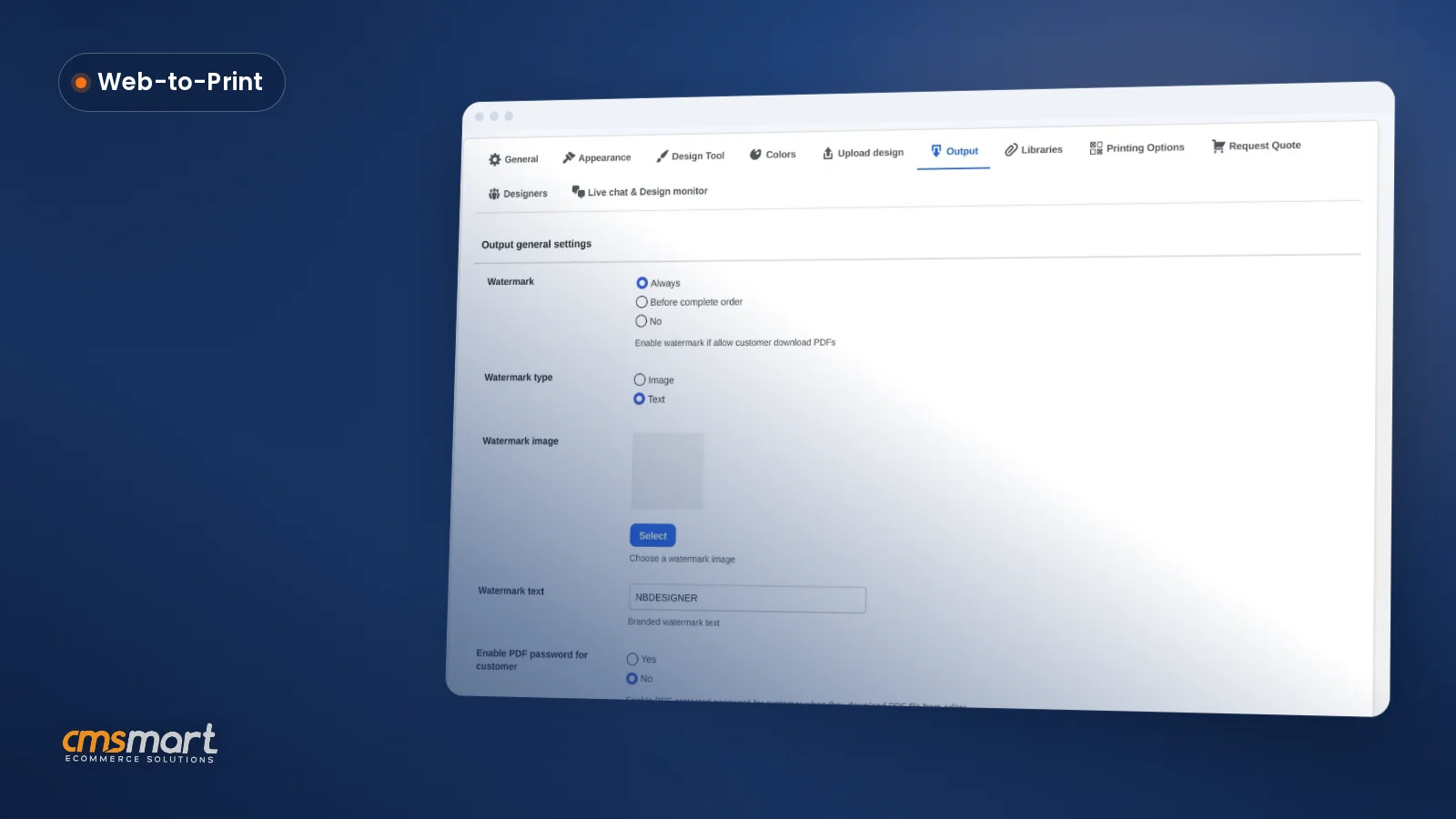
Print Ready PDF Output Settings WooCommerce Setup
See what the print ready PDF output settings WooCommerce screen controls — watermark, password, bleed, FTP sync — and configure yours today.
Explore Cmsmart's innovative mobile commerce solutions that optimize the shopping experience across all devices, enhancing customer engagement and driving sales for your business.
Table of contents
Was this tutorial helpful?
Written by
Cmsmart WooCommerce Development Lead
Leads custom WooCommerce builds: architecture, checkout, performance and integrations.
The team behind it
 Account Manager
 Project Manager
 Business Analyst
 Developers & QA
Guide · Web-to-print
See what the print ready PDF output settings WooCommerce screen controls — watermark, password, bleed, FTP sync — and configure yours today.
Case study · AI
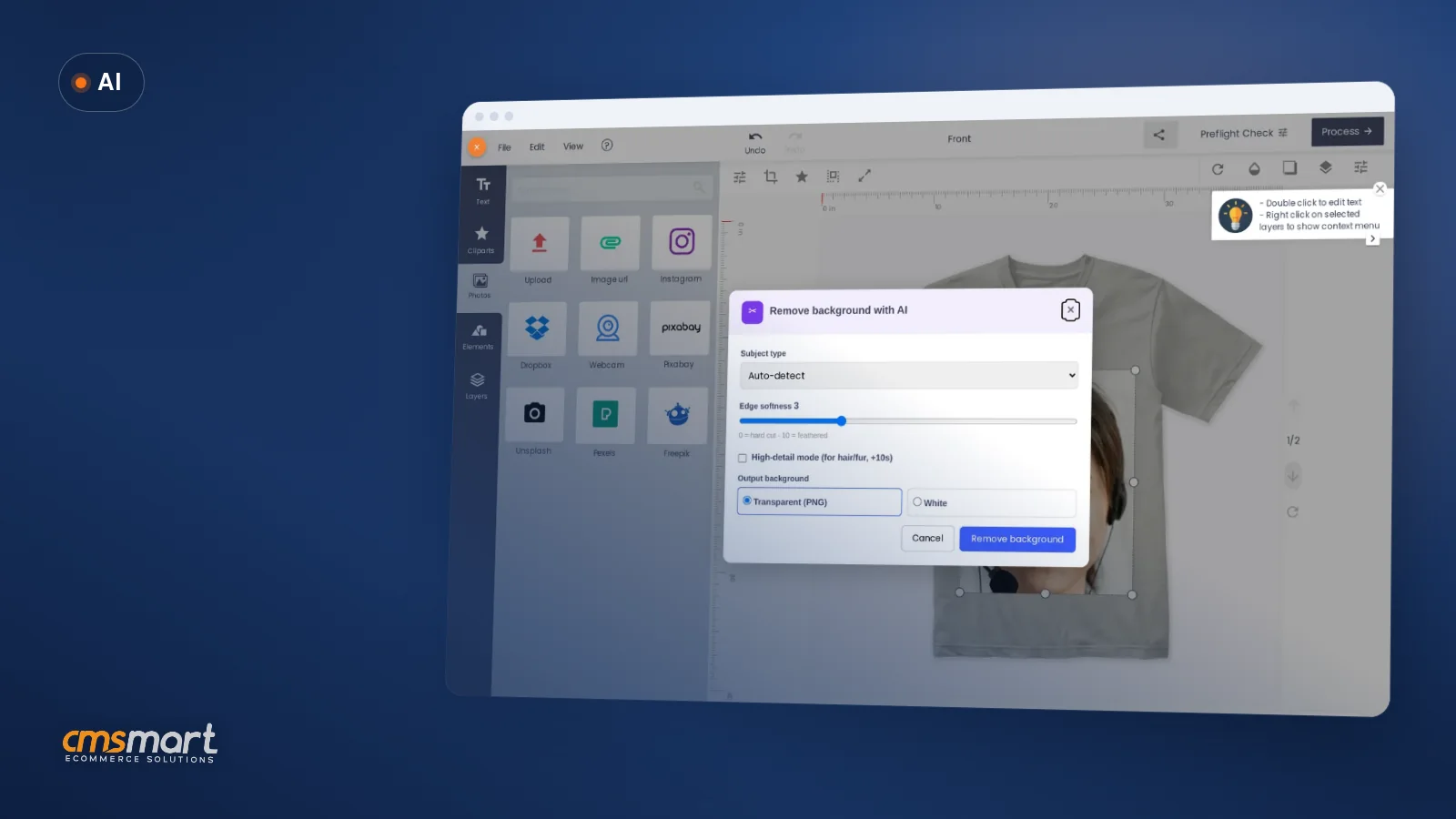
Add an AI background remover for WooCommerce to your product designer so buyers get a clean cutout instantly, and see how Cmsmart builds the rest for...
Case study · Web-to-print
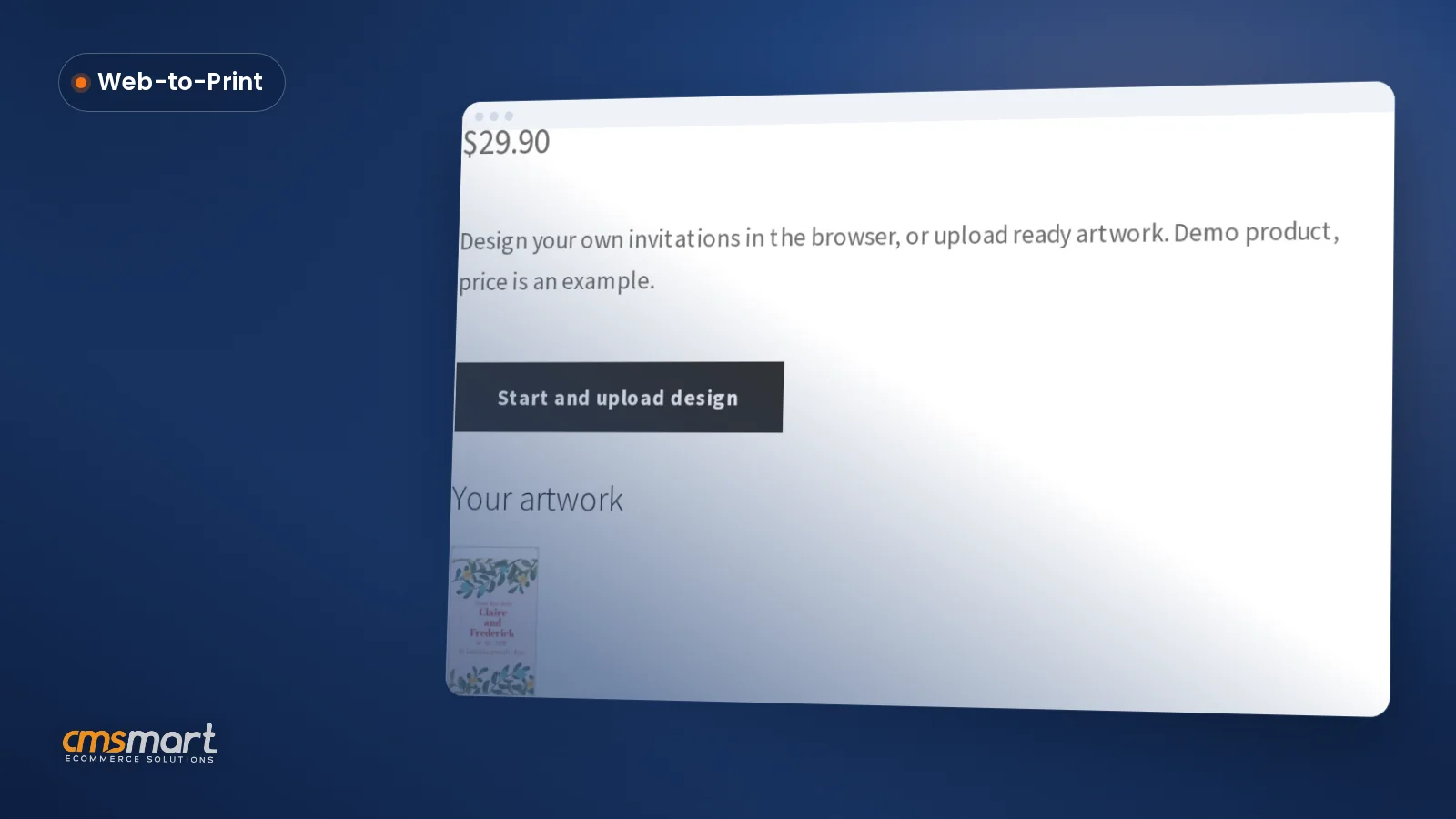
Save design and reorder WooCommerce orders in one click, with a fresh print-ready PDF every time. See how Cmsmart builds it.
Browse more guides, tutorials and case studies from the Cmsmart community.
Unlock the Power of Mobile Commerce: Propel Your Business Forward
Read MoreDiscover how to harness mobile commerce to enhance your business growth. Learn strategies for optimizing the mobile shopping experience and increasing consumer engagement.
Read MoreDiscover the benefits of mobile commerce and how it can transform your business. Learn effective strategies for maximizing sales and customer engagement through mobile-optimized shopping experiences.
Read More
Cmsmart Ecommerce provides custom ecommerce and WooCommerce development services for web-to-print, product personalization, plugin support and API integration.
Cmsmart WooCommerce Development Lead
Leads custom WooCommerce builds: architecture, checkout, performance and integrations.
Meet the team →




Did you know that by 2025, mobile commerce is expected to represent a staggering 73% of global eCommerce sales? This shift underscores the urgent need for businesses to adopt mobile strategies that capture this dynamic market. Imagine a small business owner, Maria, who runs a boutique clothing store in Spain. Struggling to compete against larger retailers, she turned to Cmsmart for a mobile commerce solution that would enable her customers to shop seamlessly from their devices. By implementing our advanced mobile-friendly platform, Maria not only improved her sales figures but also enhanced customer engagement, witnessing a 40% increase in mobile transactions within just three months.
This case reflects the critical importance of adapting to consumer preferences for mobile shopping. With mobile commerce revolutionizing the retail landscape, now is the time to harness these opportunities. In this guide, we will explore cutting-edge mobile commerce solutions that can elevate your business to new heights, providing you not only with best practices and innovative strategies but also the tools necessary to thrive in this ever-evolving marketplace. Let’s dive in!
The Dawn of the Mobile Shopping Era
Rapid expansion requires businesses to adapt quickly to mobile platforms.Imagine a world where your customers can purchase products with a single tap on their mobile devices. Welcome to the world of Mobile Commerce!
Embrace the Mobile Commerce Revolution with M-Commerce Strategies
Mobile commerce, or M-Commerce, is transforming the way consumers shop, making it imperative for businesses to adapt swiftly. By leveraging smartphones and tablets, customers enjoy the convenience of online shopping on the go. This evolution has rapidly become a cornerstone for revenue growth in the eCommerce landscape.
Action Steps for Boosting Mobile Shopping Revenue
Its not just about being present on mobile; its about thriving. Here are some actionable tips:
- Enhance Mobile UX: Provide a seamless, engaging experience across all devices.
- Leverage Push Notifications: Re-engage users with timely, personalized notifications.
- Utilize Data and Analytics: Use insights to refine engagement and conversion strategies.
In summary, the dawn of the mobile shopping era is here, urging businesses to leverage these dynamics for growth. Next, well explore the significant contributions of mobile to eCommerce and how enterprises can capitalize on these burgeoning trends .Decoding Mobile Commerce (M-Commerce)
Rapid expansion requires businesses to adapt quickly to mobile platforms.In the fast-paced world of e-commerce, thriving means embracing mobile commerce, or M-Commerce. Businesses are experiencing high competition in mobile user acquisition and must invest in mobile-friendly infrastructure to unlock unprecedented market potential.
What is Mobile Commerce?
Mobile commerce is the buying and selling of goods and services through mobile devices such as smartphones and tablets. It transforms the shopping experience, making it more accessible and convenient for consumers around the globe. With an estimated 7.33 billion mobile users worldwide by 2023, the shift to M-commerce is not just an opportunity but a necessity for businesses to tap into this vast market .
How Mobile Shopping Transformed Ecommerce Growth
The rise of mobile shopping has been a game-changer for eCommerce growth. A staggering 72.9% of all eCommerce sales are expected to be made on a mobile device by 2021, illustrating the pivotal role mobile commerce plays. To remain competitive, businesses must understand these dynamics and leverage them for revenue growth.
Deciphering M-Commerce Terminology
Understanding the terminology surrounding mobile commerce is crucial for businesses looking to stay ahead. Heres a quick guide to the essential terms:
Mobile commerce is an essential component of the overall eCommerce landscape. Businesses that fail to adapt risk falling behind as the market shifts rapidly towards mobile-first strategies. By understanding how to leverage the impact of smartphones on shopping habits and integrating strategies such as SEO optimization, companies can drive growth and improve user engagement.
For further insights into the impact of smartphones on shopping habits and how mobile internet usage is transforming eCommerce, explore topics like growth of mobile commerce and contribution of mobile to eCommerce available on our platform.
In summary: Mobile commerce is no longer the future—its the present. To ensure your business thrives in this mobile-first era, investing in a robust mobile strategy is key. Next, well explore the essential features of successful mobile commerce platforms .The Rising Dominance of Mobile Internet Usage
Rapid expansion requires businesses to adapt quickly to mobile platforms.High competition in mobile user acquisition and the need for businesses to invest in mobile-friendly infrastructure are becoming increasingly critical for tapping into the market potential.
Mobile internet usage is skyrocketing, transforming how consumers shop and interact with brands online. Businesses must understand and leverage mobile commerce dynamics for revenue growth. Heres a look into how this shift is reshaping the eCommerce landscape.
Increase in Smartphone Shopping
The convenience of mobile shopping is undeniable, with millions opting for smartphones and tablets to make purchases. As of 2023, around 79% of smartphone users have made a purchase online using their mobile device in the last six months.
Statistical Overview of Mobile Internet User Trends
Over the past decade, the number of mobile internet users has surged. This growth highlights the critical need for businesses to align their strategies with mobile internet trends. Consider these actionable insights:
Influence of Mobile Internet Usage on Global Ecommerce Trends
With the rise of mobile usage, global eCommerce trends are leaning towards more personalized, immediate, and location-based services. This shift is driving businesses to rethink their digital strategies to focus on mobile consumer behavior.
Empower your eCommerce strategy by understanding the growth of mobile commerce and how mobile contributes significantly to eCommerce success. Delve into more about mobile internet user statistics to see its impact on shopping habits and business growth.
In summary: Embracing these mobile internet trends positions your business for future eCommerce success, leading to the next section on optimizing customer experiences through mobile-first design and interaction strategies.The Impact of Mobile Commerce on the Ecommerce Ecosystem
Rapid expansion requires businesses to adapt quickly to mobile platforms.The rise of mobile commerce, also known as M-Commerce, is reshaping the eCommerce ecosystem at an unprecedented pace. Adapting your business to mobile-friendly infrastructure is no longer optional—its imperative for tapping into the growing market potential and staying competitive.
Understanding the Ecommerce Ecosystem
The eCommerce ecosystem is a dynamic, interconnected network of online interactions and transactions. Within this ecosystem, mobile commerce plays a pivotal role by providing consumers with the power to shop anytime, anywhere, directly from their smartphones or tablets.
The Role of Mobile Commerce in the Ecommerce Ecosystem
Mobile commerce drives significant growth in eCommerce by enhancing accessibility and convenience for users. As smartphones and mobile internet usage increase, businesses must leverage these tools to maintain competitive advantages in the market.
The Contribution of Mobile to Ecommerce
Mobile shopping revenue continues to climb as more consumers turn to their devices for online purchases. Incorporating mobile commerce solutions can elevate your eCommerce strategy by addressing key business pain points such as customer reach and engagement.
For deeper insights, explore impact of social media on your eCommerce and how to integrate cutting-edge trends.
In summary: As mobile commerce continues to influence eCommerce growth, businesses must strategically adapt to mobile shopping dynamics to achieve sustainable revenue growth. Next, let’s explore the growth of mobile commerce and effective strategies to leverage this evolving landscape.The Power of a Mobile-Friendly Shopping Interface
Rapid expansion requires businesses to adapt quickly to mobile platforms.In todays competitive landscape, businesses face intense pressure to invest in mobile-friendly infrastructure to unlock the vast potential of mobile commerce for revenue growth.
Importance of Mobile-Friendly Interface for M-Commerce
Understanding the significance of mobile shopping is essential in capturing the growing market of mobile users. A mobile-friendly eCommerce platform ensures a smooth shopping experience, significantly impacting customer satisfaction and retention.
- User Experience: Easy navigation and quick load times optimize user interactions.
- Higher Conversions: Streamlined interfaces lead to fewer cart abandonments and higher sales.
- Increased Mobile Traffic: A responsive design capitalizes on the surge in mobile internet usage, leading to more visitors.
Learn how to build an eCommerce mobile app to align with the growth of mobile commerce.Essential Features of a Mobile-Friendly Shopping Interface
To thrive in digital commerce, a mobile-friendly site must incorporate critical features that enhance the buying experience.
Selecting an M-Commerce Platform Offering an Optimal User Interface
Choosing the right platform is crucial for providing an exceptional mobile commerce experience.
Investing in a mobile-friendly interface is no longer optional but a fundamental requirement for success in the modern digital marketplace. Our detailed guide on the impact of smartphones on shopping habits can offer further insights .
In summary: Embracing a mobile-friendly interface is pivotal for eCommerce growth in the mobile epoch, with the next section detailing how to leverage digital marketing strategies for mobile commerce success.Mobile Commerce and the Digital Integration
Rapid expansion requires businesses to adapt quickly to mobile platforms.In todays fast-paced digital world, businesses face intense competition in mobile user acquisition. It’s essential for companies to invest in mobile-friendly infrastructure to leverage market potential and understand the dynamics of mobile commerce for substantial revenue growth.
The Connection between Digital Integration and Mobile Commerce
Mobile commerce, often referred to as M-commerce, is the pinnacle of digital integration, seamlessly blending technology with shopping experiences. As smartphones and tablets become ubiquitous, they revolutionize how consumers interact with brands, making mobile shopping a trend that businesses cannot ignore. The question is, what happens when we integrate these technologies with our everyday business strategies?
Benefits and Challenges of Implementing Mobile Commerce
While M-commerce offers numerous advantages, it also comes with a set of challenges. On the positive side, it enables businesses to reach customers anywhere, anytime, thereby expanding their market reach. However, developing a mobile-friendly infrastructure requires investment and an understanding of user behavior on mobile platforms.
Mobile Commerce Impact on Digital Sales
The impact of mobile commerce on digital sales has been profound, influencing shopping habits and customer expectations. With the rise of digital commerce, businesses must adopt mobile-first strategies to optimize their sales funnels and enhance the customer journey.
In conclusion, mobile commerce is not just an add-on; its a necessity for modern eCommerce. Businesses must integrate mobile strategies to sustain growth and stay competitive in the digital marketplace. Next, we’ll explore how smartphones have changed shopping habits in the "Impact of Smartphones on Shopping Habits" section.
Best Practices for Implementing a Mobile Commerce Strategy
Rapid expansion requires businesses to adapt quickly to mobile platforms. High competition in mobile user acquisition.Businesses today are facing unprecedented challenges in capturing the mobile commerce market, a sector that’s evolving as swiftly as it is expanding. Adopting a strategic approach will not only help in gaining a competitive edge but will also cater to the increasing demand for mobile-friendly shopping experiences.
Planning for M-Commerce Implementation
Mobile Commerce (M-Commerce) is reshaping the way consumers shop online. To leverage this shift effectively, planning your M-Commerce integration is crucial. Start by analyzing your target audiences mobile behaviors and preferences. Consider factors such as user-friendly design, fast loading times, and secure payment gateways to enhance the shopping experience.
Key Steps in Implementing a Mobile Commerce Strategy
Implementing an effective mobile commerce strategy involves a series of calculated steps. Begin by selecting the right platform that supports responsive designs and has strong eCommerce capabilities. Focus on improving the mobile shopping experience and ensure it is as intuitive as possible to encourage repeated transactions.
Success Stories of Mobile Commerce Integration
Learning from success stories can provide valuable insights into what works in real-world scenarios. Many businesses have successfully transitioned to mobile commerce and reported significant increases in sales and customer loyalty.
Innovative mobile commerce [strategies like utilizing cutting-edge technologies such as Augmented Reality (AR) and Artificial Intelligence (AI)](https://cmsmart.net/community/ecommerce-mobile-app-development-the-latest-guide) , have set leading businesses apart by offering personalized shopping experiences and virtual product trials.
In summary: Harnessing mobile commerce dynamics can unlock significant revenue growth and competitive advantage for your business. Up next, well delve into the specific impacts of smartphone integrations on consumer shopping habits.Future Trends in Mobile Commerce
Rapid expansion requires businesses to adapt quickly to mobile platforms.In todays dynamic eCommerce landscape, staying ahead involves leveraging mobile commerce or M-Commerce to its fullest potential. Mobile platforms are revolutionizing how businesses operate, and adapting promptly can unlock unprecedented growth opportunities.
Current Trends in Mobile Commerce
Mobile commerce has steadily evolved, with an astounding increase in online sales via mobile devices such as smartphones and tablets. Businesses are capitalizing on this shift by improving user interfaces and deploying mobile-friendly features to enhance shopping experiences.
Predicted Future Mobile Shopping Developments
Looking forward, mobile commerce will continue evolving with technological advancements like voice search and cryptocurrency payments. These innovations will enable faster, more seamless shopping experiences, crucial for future-proofing businesses in the rapidly growing digital commerce ecosystem.
Future-Proofing Your Business with Mobile Commerce
Investing in mobile commerce is no longer optional but a necessity to remain competitive. Optimizing your business for mobile entails adopting multi-channel selling and embracing sustainability practices, reinforcing customer trust and ensuring continuity in an ever-changing market.
- Develop a robust mobile commerce strategy with multi-channel integration to enhance customer experience across all touchpoints.
- Utilize CMSmart’s mobile commerce solutions to create consistent, engaging experiences across all devices .
In summary: Future trends in mobile commerce present significant opportunities for business growth. Staying adaptable and informed about the latest trends can position your business for long-term success. Next, lets delve into the benefits of eCommerce and how you can leverage these insights for your business growth .Frequently Asked Questions
Rapid expansion requires businesses to adapt quickly to mobile platforms, and understanding mobile commerce dynamics is key to tapping into this potential.Commonly Asked Questions About Mobile Commerce
In the ever-evolving landscape of e-commerce, mobile commerce or M-Commerce has become a crucial component for business growth. Here, we answer some frequently asked questions to help you navigate the mobile shopping space.
What is Mobile Commerce?
Mobile commerce refers to the buying and selling of goods and services through mobile devices such as smartphones and tablets. It allows consumers to shop from anywhere, providing a seamless shopping experience on-the-go.
Why Should Businesses Invest in Mobile Commerce?
With over 50% of global internet users accessing the web via mobile devices, investing in mobile commerce is crucial. Mobile shopping is not just a trend but an essential development in the digital commerce landscape .
How Can I Improve My Mobile Shopping Experience?
What Technologies Enhance Mobile Commerce?
Key technologies driving mobile commerce include AI-powered recommendations, augmented reality for product visualization, and one-click checkout processes. These innovations enhance the user experience and drive higher conversions.
What are the Challenges of Mobile Commerce?
Common challenges include ensuring data security, delivering a seamless user experience across devices, and staying abreast of evolving technological trends. Additionally, competition in mobile user acquisition remains high.
By addressing these frequently asked questions, businesses can better understand the landscape of mobile commerce and implement strategies that align with the growth of mobile shopping.
For more information, explore internal resources on the growth of mobile commerce and the impact of smartphones on shopping habits.
In conclusion: Rapid adoption of mobile commerce offers immense potential for revenue growth. Up next, discover how to effectively integrate mobile-friendly infrastructure into your business strategy.FAQ Section: Troubleshooting and Pro Tips
How can businesses quickly adapt to mobile commerce?
Invest in scalable mobile-friendly platforms to harness rapid market shifts.
What strategies can be effective in a competitive mobile user acquisition landscape?
Utilize targeted marketing and optimize app store presence to outpace competitors.
Why is investing in mobile infrastructure critical for eCommerce success?
It ensures seamless user experiences and supports growing mobile transactions.
How can understanding mobile commerce dynamics boost revenue?
Leverage mobile shopping trends and customer data for personalized marketing.
What role does mobile commerce play in business expansion?
M-commerce opens new revenue streams by reaching broader customer bases.
Further Reading
As we've explored, embracing mobile commerce is no longer just an option; it's a necessity for tapping into the evolving shopping behaviors of today's consumers. By optimizing your eCommerce platforms for mobile devices, you've positioned your business to significantly boost sales and enhance customer engagement. But to truly harness the power of M-Commerce, you need expert guidance tailored to your unique needs. Let’s discuss how we can help you implement these strategies for maximum impact. Reach out to David, our CEO, directly via WhatsApp or email [email protected] for a personalized consultation. Additionally, for a detailed proposal, don’t hesitate to request a quotation. Join us in transforming your store into a mobile commerce powerhouse!