
Guide · Web-to-print
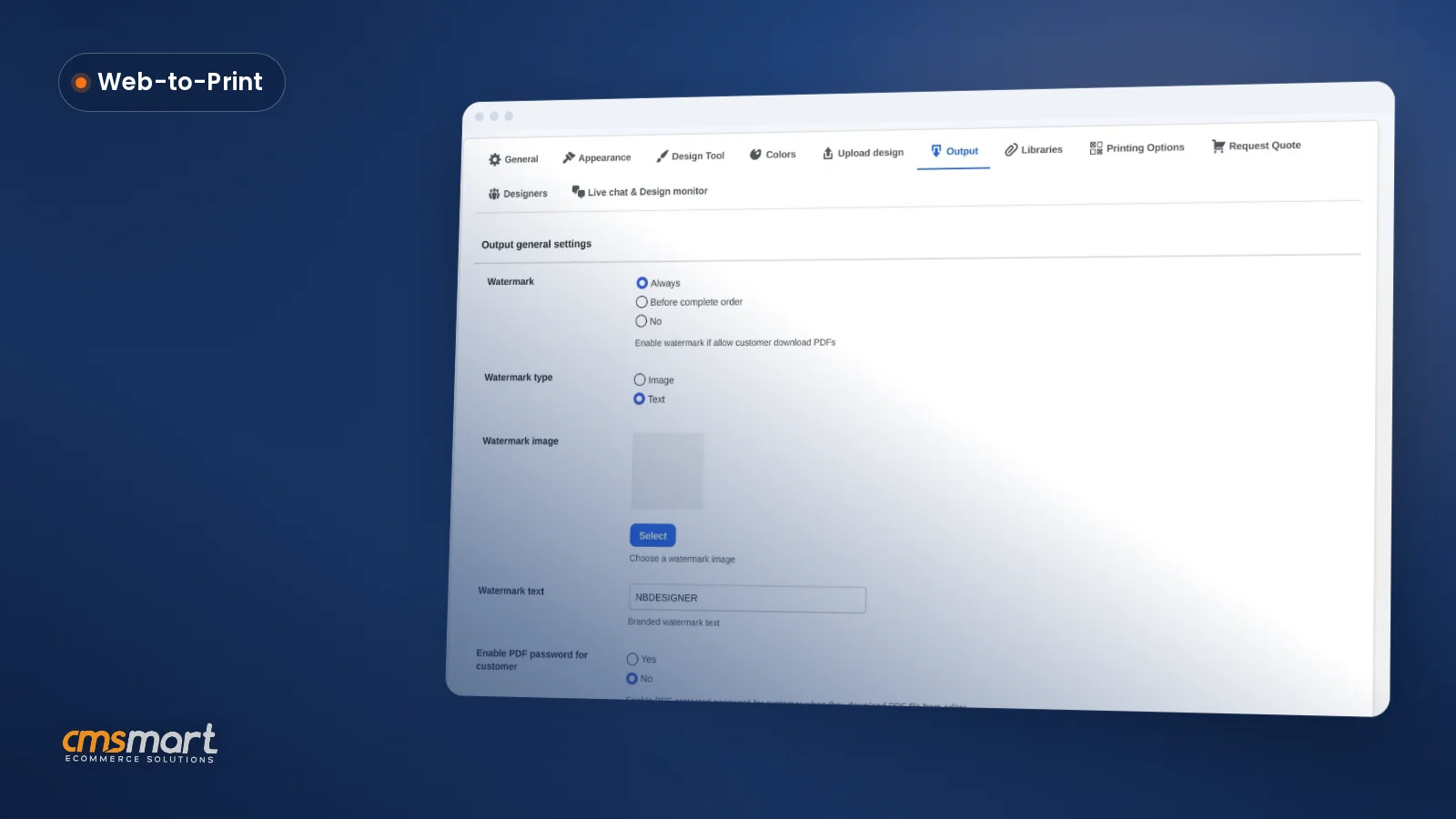
Print Ready PDF Output Settings WooCommerce Setup
See what the print ready PDF output settings WooCommerce screen controls — watermark, password, bleed, FTP sync — and configure yours today.
Explore the transformative potential of e-commerce as digital platforms redefine shopping experiences with innovative solutions, personalization, and global reach. Stay ahead with insights on future trends.
Table of contents
Was this tutorial helpful?
Written by
Cmsmart Ecommerce Growth & Trends Analyst
Tracks ecommerce trends and turns them into practical moves for growing stores.
The team behind it
 Account Manager
 Project Manager
 Business Analyst
 Developers & QA
Guide · Web-to-print
See what the print ready PDF output settings WooCommerce screen controls — watermark, password, bleed, FTP sync — and configure yours today.
Case study · AI
Add an AI background remover for WooCommerce to your product designer so buyers get a clean cutout instantly, and see how Cmsmart builds the rest for...
Case study · Web-to-print
Save design and reorder WooCommerce orders in one click, with a fresh print-ready PDF every time. See how Cmsmart builds it.
Browse more guides, tutorials and case studies from the Cmsmart community.
Unlock the Power of Mobile Commerce: Propel Your Business Forward
Read MoreDiscover how to harness mobile commerce to enhance your business growth. Learn strategies for optimizing the mobile shopping experience and increasing consumer engagement.
Read MoreDiscover the benefits of mobile commerce and how it can transform your business. Learn effective strategies for maximizing sales and customer engagement through mobile-optimized shopping experiences.
Read More
Cmsmart Ecommerce provides custom ecommerce and WooCommerce development services for web-to-print, product personalization, plugin support and API integration.
Cmsmart Ecommerce Growth & Trends Analyst
Tracks ecommerce trends and turns them into practical moves for growing stores.
Meet the team →





Are you struggling to keep pace with the booming e-commerce market, projected to soar to $8 trillion by 2025? You're not alone. Many businesses find themselves navigating the rapid evolution of consumer preferences and technological advancements. For instance, let’s take the example of Global Clothing Co from Australia, a mid-sized fashion retailer. Faced with dwindling sales due to stagnant online engagement, they turned to Cmsmart to revitalize their digital strategy. By integrating AI-powered personalization and utilizing emerging trends, they not only regained their customer base but also saw a remarkable 30% increase in online sales within six months.
In a world where shopping evolves with technology, understanding these shifts is essential for survival. As customer experiences transform, leveraging dynamic content and multichannel strategies can unlock unprecedented opportunities for growth and innovation. Welcome to the future of e-commerce—a domain where rules are rewritten by adaptability and tech integration. Dive into this tutorial to explore the tools and strategies you need to harness digital platforms effectively.
Embracing the Future
Struggling to keep up with the fast-paced growth of e-commerce? You’re not alone.Many businesses face challenges adapting to the continuous evolution of consumer habits and device preferences in the rapidly expanding online retail sector.
Imagine the Future of E-commerce
Imagine a world where shopping evolves hand in hand with technology, directly influenced by our habits and such evolving needs. Welcome to the future of e-commerce—a realm where understanding the growth of digital commerce is not just advantageous, but essential for survival.
Stay Ahead with Emerging Trends
Embracing Technology for Growth
Adopting new technologies and market approaches isn’t just a trend; it’s a necessity. Integrate features like one-click checkout and gamification to reduce cart abandonment and increase customer engagement .
Embracing sustainable practices is also crucial. Highlight eco-friendly products and options like carbon-neutral shipping to appeal to environmentally conscious consumers .
In summary: As the e-commerce landscape transforms, staying informed and agile in implementing these trends will be key to your success. Next, lets delve into the impact of mobile technology on shopping behaviors and how to capitalize on this shift.Decoding the Patterns: E-Commerce Sales Growth
Struggling to keep up with fast-paced sales growth in the e-commerce arena?Youre not alone. Many businesses find it challenging to adapt to changing consumer habits and understand the impact of global events on digital commerce.
Understanding E-Commerce Sales Growth from 2014 to 2024
The e-commerce sector has experienced remarkable growth over the past decade. From 2014 to 2024, global e-commerce sales are projected to nearly double, reaching a staggering $7 trillion by 2024.
Impact of Global Events on E-Commerce: The Pandemic Effect
Global events like the COVID-19 pandemic have drastically shifted consumer behavior towards online shopping. Lockdowns and social distancing measures accelerated this progression.
Future Predictions: Projecting E-Commerce Trends
The future of online retail is brimming with potential. As the e-commerce industry evolves, staying ahead of emerging trends is crucial.
Enhancing Your Strategy
For more insights, explore our guide on e-commerce sales growth from 2014 to 2024 and the impact of the pandemic on e-commerce.
In summary: Navigating the evolving e-commerce landscape requires not just adapting to current trends, but also planning for future shifts. Next, well delve into how to leverage smartphone shopping trends to capture a growing audience .Tapping into the Device Market: Smartphone Shopping Trends
Struggling to adapt to the rapid changes in consumer habits and device preferences? Youre not alone.The e-commerce sector is evolving swiftly, with smartphones playing a central role in shaping new shopping experiences. Understanding these shifts can help businesses stay ahead and adapt their strategies effectively.
Exploring the Role of Smartphones in Modern E-Commerce
The use of smartphones in e-commerce has drastically transformed how we shop. Its not only about convenience but also about the personalized shopping experience that drives engagement and sales. From in-app purchases to location-based promotions, smartphones bridge the gap between online and physical retail spaces.
Comparative Analysis: Smartphone vs Traditional Online Retailing
Smartphone shopping is redefining traditional retail by offering unparalleled access and flexibility compared to desktop platforms. This mobile shift is accountable for a 30% higher conversion rate on smartphone platforms as depicted in numerous studies.
Predicting the Future of Mobile E-Commerce
The future of e-commerce is undeniably mobile. Innovations like augmented reality (AR) and voice search are expected to become staples in mobile shopping experiences. As businesses look ahead towards 2025, integrating multichannel strategies will be crucial in capturing wider market shares.
In conclusion, by understanding and leveraging smartphone shopping trends, businesses can position themselves to thrive in the rapidly advancing landscape of digital commerce. Ready to dive deeper into the evolving trends? Next, well explore the future trajectory of e-commerce sales growth, particularly in response to the pandemics impact.
Consumer Habits: Shaping the E-Commerce Industry
Keeping up with fast-paced sales growth can be challenging, especially when adapting to changing consumer habits and device preferences.Understanding how global events impact the e-commerce landscape is crucial for businesses striving to stay ahead. Heres how consumer habits are shaping the e-commerce industry today.
Analysing Sales Patterns in Relation to Consumer Habits
Understanding the fluctuations in consumer buying patterns is key to adapting your e-commerce strategy effectively. From impulse purchases driven by promotions to thoughtful seasonal buying, sales patterns tell a story of evolving consumer needs.
Influence of Consumer Behavior on E-commerce Trends
E-commerce is heavily influenced by consumer behavior, with digital commerce continually evolving in response to shifting consumer expectations and technological advancements.
Future Projections Based on Current Consumer Habits
The future of e-commerce promises continued growth and innovation, with consumer habits paving the way for new opportunities and challenges. Digital retailers must anticipate these shifts to remain relevant.
- Consider integrating innovative solutions like AR for product visualization .
- Explore partnership opportunities to expand your market reach via social media marketing.
In summary: Adapting to consumer habit changes ensures your e-commerce strategy remains aligned with market demands. Next, we will delve into specific tactics for maximizing e-commerce growth through advanced digital marketing techniques.Embracing the Future: Emerging E-Commerce Trends
Are you keeping pace with the rapid evolution of e-commerce trends? It’s crucial for staying ahead in the fast-paced world of online retail.Understanding how to adapt to changing consumer habits, device preferences, and global events is essential to thriving in a competitive market.
Unveiling the Most Prominent E-commerce Trends
In the digital commerce landscape, new trends are continually reshaping how businesses operate and engage with consumers. Here are some of the most influential trends to watch:
How Emerging Trends are Reshaping Online Retail
As the e-commerce landscape continues to evolve, emerging trends dictate the dynamics of online retail:
Predicting the Impact of Future Trends on E-Commerce
Understanding future trends is vital for businesses aiming to maintain a competitive edge:
- Voice Commerce: With the rise of smart speakers, voice search optimization is crucial for capturing voice commerce opportunities.
- Social Commerce Expansion: Social media platforms are becoming major sales channels, integrating shoppable posts and direct purchasing options.
- Blockchain for Secure Transactions: The adoption of blockchain technologies is set to revolutionize e-commerce by providing secure and transparent transactions.
In summary: Embracing these emerging e-commerce trends is essential for maintaining a competitive advantage. Next, well delve into the specifics of optimizing your online presence, starting with sustainable e-commerce practices.Overcoming Obstacles: Addressing E-Commerce Pain Points
Struggling to keep up with rapid sales growth and changing consumer habits in e-commerce? Youre not alone.Businesses worldwide are grappling with the fast-paced dynamics of online retail while aiming to understand and capitalize on global events.
Pain Point: Keeping Up with Fast-Paced Sales Growth
Adapting to Changing Consumer Habits and Device Preferences
With a swift rise in smartphone users, ensuring your e-commerce site is mobile-optimized is crucial. Create seamless experiences whether your customer is shopping from a desktop or on the go.
Understanding and Leveraging Global Events for E-Commerce Success
Staying informed about global trends and events can offer a competitive edge in e-commerce. Adapt your strategies to align with perceived shifts in consumer behavior during significant global occurrences.
For more about understanding e-commerce systems, and to delve into emerging trends in e-commerce, explore our in-depth guides.
In summary: Navigating e-commerce growth involves strategic scaling, responsive adaptation to consumer habits, and leveraging global events. Next, let’s explore how to enhance your online presence through competitive pricing strategies.The Big Picture: An In-Depth E-Commerce Industry Analysis
Struggling to keep up with fast-paced sales growth, adapting to changing consumer habits, and understanding the impact of global events on e-commerce? You’re not alone.In an era where digital commerce evolves swiftly, staying informed and adaptive is crucial for success. Lets dive into a comprehensive analysis of the e-commerce industry, focusing on growth trends, future forecasts, and effective strategies to stay ahead.
Understanding the Current State of the E-Commerce Industry
The e-commerce landscape is a dynamic and rapidly changing arena. Globally, e-commerce sales reached over $4.2 trillion in 2020 and continue to surge, with Asia dominating the market share . Factors such as rising internet penetration, enhanced payment solutions, and improved logistics play pivotal roles in this exponential growth.
Forecasting the Future of E-Commerce: An Expert Perspective
The future of e-commerce points to even more exciting transformations. The market is expected to hit $6.5 trillion by 2023, driven by technological innovations and expanding global reach. Key trends include the rise of virtual reality shopping, voice-activated purchases, and sustainable commerce practices.
Strategies for Staying Ahead in the Rapidly Changing E-Commerce Landscape
To thrive in this ever-evolving space, businesses need to be agile and forward-thinking. Here are some strategies:
- Embrace omnichannel retailing to offer seamless shopping experiences across various platforms.
- Leverage data-driven insights to enhance customer engagement and retention.
- Focus on sustainability to meet the growing demand for eco-friendly products .
- Invest in cybersecurity to protect customer data and maintain trust.
In summary: Keeping up with the dynamic e-commerce landscape involves a robust understanding of the current market, predictive insights into future developments, and strategic planning. As we transition to the next section, well take an in-depth look at e-commerce sales growth from 2014 to 2024, the impact of the pandemic on e-commerce, smartphone shopping trends, and more emerging trends in digital commerce .Frequently Asked Questions
Navigating the Future of E-Commerce: Your Questions AnsweredAs the e-commerce industry continues its rapid evolution, businesses face challenges such as keeping up with fast-paced sales growth, adapting to changing consumer habits, and understanding the impact of global events. Here, we address some of the most common questions about the future of e-commerce to help you stay ahead.
What are the current trends in e-commerce?
The digital commerce landscape is constantly shifting. Here’s what to watch:
How is the global pandemic affecting e-commerce?
The pandemic has accelerated the shift to online shopping, leading to significant e-commerce growth. Companies need to adapt to this change with robust online platforms and enhanced digital experiences.
What new technology is impacting e-commerce?
Technological advancements are reshaping how consumers shop online:
Where is e-commerce heading?
The future points to a more integrated, personalized, and customer-centric industry:
What should businesses focus on for continued growth?
To capitalize on emerging trends, businesses should:
In conclusion: Staying informed and agile can help businesses survive and thrive in this dynamic e-commerce landscape. Let’s delve deeper into the specifics of e-commerce sales growth and how the pandemic has altered shopping behavior.
FAQ Section: Troubleshooting and Pro Tips
What ecommerce trends are shaping the future?
AI personalization and AR visualization are enhancing shopping experiences.
How can businesses keep up with rapid sales growth?
Utilize scalable hosting and expand server resources for increased traffic handling.
What adaptions are needed for changing consumer habits?
Incorporate mobile commerce and voice search to meet new shopper preferences.
How do global events impact ecommerce?
They influence supply chains and can shift consumer priorities and spending habits.
What role do subscription models play in ecommerce?
They provide recurring revenue and enhance customer loyalty.
How does omnichannel selling support growth?
Synchronize across channels like social media and marketplaces for a seamless consumer experience.
What are key features for web-to-print ecommerce?
Customization, automated workflows, and multi-vendor support enhance operations.
Further Reading
As we stand on the brink of an e-commerce revolution, it's crucial to take the insights from this tutorial and act decisively. By embracing emerging trends like AI-powered personalization and augmented reality, you can position your business at the forefront of the digital marketplace. Don't let the fast-paced evolution of consumer behavior leave you behind. Let's discuss how we can help you implement these transformative strategies and ensure your success in this thriving environment. Whether you reach out to our CEO David at WhatsApp or email me at [email protected], we're here to support you. Additionally, if you're ready to explore tailored solutions, request a quotation through this link. Join us in shaping the future of your e-commerce business!