


Guide · AI
AI Generated Designs Print on Demand: Quality & Rights
Selling AI generated designs print on demand? Check resolution, usage rights and AI preflight first, then get a Cmsmart quote.
Discover how Artificial Intelligence in E-commerce enhances customer experience and optimizes operations. Learn about AI-driven personalization, chatbots, and more to boost sales and engagement.
Was this tutorial helpful?
Written by
Cmsmart AI for Ecommerce Engineer
Adds practical AI to stores: image tools, preflight checks, automation and assistants.
The team behind it
 Account Manager
 Project Manager
 Business Analyst
 Developers & QA
Guide · AI
Selling AI generated designs print on demand? Check resolution, usage rights and AI preflight first, then get a Cmsmart quote.
Guide · AI
Draft AI product descriptions WooCommerce shoppers trust, add a human review step, dodge duplicate content, and control cost -- see Cmsmart's setup gu...
Guide · AI
See how an AI chatbot for WooCommerce can answer order questions from your store data, where a human must step in, and get a custom build quote.
Browse more guides, tutorials and case studies from the Cmsmart community.
Unlock the Power of Mobile Commerce: Propel Your Business Forward
Read MoreDiscover how to harness mobile commerce to enhance your business growth. Learn strategies for optimizing the mobile shopping experience and increasing consumer engagement.
Read MoreDiscover the benefits of mobile commerce and how it can transform your business. Learn effective strategies for maximizing sales and customer engagement through mobile-optimized shopping experiences.
Read More
Cmsmart Ecommerce provides custom ecommerce and WooCommerce development services for web-to-print, product personalization, plugin support and API integration.
Cmsmart AI for Ecommerce Engineer
Adds practical AI to stores: image tools, preflight checks, automation and assistants.
Meet the team →
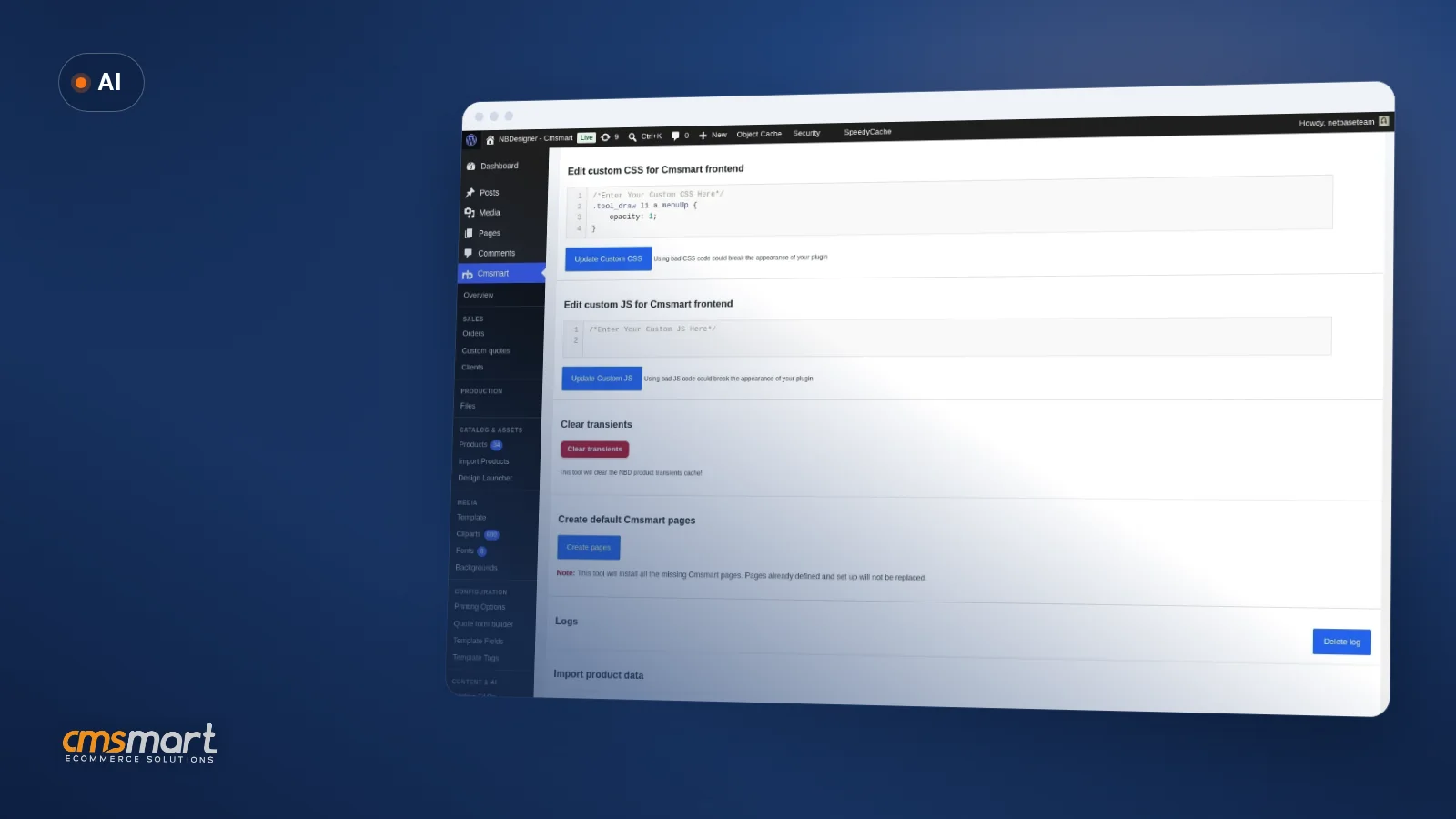



As the retail landscape rapidly evolves, the infusion of artificial intelligence (AI) into e-commerce strategies offers an unprecedented opportunity for businesses to stay competitive. According to Statista, the artificial intelligence market within the retail sector is projected to hit a staggering $23.32 billion by 2027. This remarkable growth underscores a pressing need for e-commerce businesses to embrace cutting-edge technology in their operations. One shining example is ABC Furniture, a mid-sized company based in Germany. Faced with declining customer engagement and operational inefficiencies, ABC Furniture turned to Cmsmart to integrate AI-driven solutions that fundamentally shifted their business model. By implementing intelligent product recommendation systems and automated customer service chatbots, they not only improved their customer interactions but significantly increased their sales conversions by over 35% within six months.
This compelling case highlights the transformative power of AI in enhancing e-commerce operations, perfectly aligning with our tutorial on Harnessing Artificial Intelligence in E-commerce: Transform Your Business with Intelligent Solutions. In this guide, we will delve deeper into how AI can personalize shopping experiences, automate processes, and redefine your customer engagement strategies. For more insights on unlocking customer loyalty and maximizing your business efficiency, check out our resources on enhancing customer experience and advanced inventory management. Let's get started on transforming your e-commerce operations!
The Dawn of AI-Enabled E-commerce
Enhancing efficiency in e-commerce operations has never been more crucial.As the digital marketplace grows more competitive, businesses must adapt to ever-evolving consumer expectations and leverage the latest technologies to stay ahead. What if artificial intelligence could revolutionize and optimize your e-commerce business operation, making it more efficient and customer-friendly than ever?
The Role of AI in E-commerce
AI technology in online retail is transforming the landscape of digital commerce by enabling personalized shopping experiences, improving customer interactions, and automating routine operations. Here are some crucial benefits that AI brings to e-commerce businesses:Adapting Business Models to AI Advancements
Businesses are now urged to adjust their models to harness AI’s capabilities fully. This includes tailoring shopping experiences to consumer preferences and utilizing predictive sales to adapt to changing consumer behavior.Improving Customer Service Through Automation
Automation powered by AI can significantly improve customer service. Here’s how:Next Steps: Embrace AI Technologies
Dive deeper into the essential advancements in AI and how they are leading to significant changes in e-commerce models. Explore more about how recommendation engines work, the role of chatbots in enhancing online customer service, and the benefits of warehouse automation. For more insights, check out our resources on the growth of AI in e-commerce sector and consumer preferences tailored to shopping experiences. In summary: Leveraging AI for enhanced efficiency and personalized experiences is no longer an option but a necessity for e-commerce brands aiming for success. Next, let’s explore the evolving expectations of businesses from AI systems as we move forward in this digital age.Decoding AI in E-commerce
Enhancing efficiency in e-commerce operations is a pressing priority for businesses today. With the rise of artificial intelligence, companies must adapt their business models to leverage AI advancements effectively.Meeting consumer demands for personalized experiences while improving customer service through automation is now crucial for staying competitive in the digital marketplace.
Defining AI in Digital Commerce
Artificial Intelligence (AI) in digital commerce refers to using machine learning algorithms and data analytics to enhance the shopping experience. By integrating AI technologies, e-commerce platforms can offer personalized shopping experiences, optimize logistics, and improve overall efficiency in operations.Reviewing the Evolution and Significance of AI in the E-commerce Landscape
The evolution of AI has transformed the e-commerce landscape dramatically. Here are the key stages of development:Key AI Features in E-commerce
To thrive in this evolving landscape, here are some key AI features e-commerce businesses should consider:Businesses aiming to succeed in the current e-commerce landscape must embrace AI technology to enhance operational efficiencies. As you explore the growth of AI in the e-commerce sector, consider how these innovations can reshape consumer preferences and create tailored shopping experiences. Keep in mind that adapting to AI-driven expectations is crucial for remaining relevant in a rapidly changing environment.
In summary: Embracing AI in e-commerce not only improves efficiencies and operations but also transforms business models. Now, let’s explore how artificial intelligence is shaping logistics and inventory management for e-commerce businesses.AI Transforming Online Retail Operations
Enhancing efficiency in e-commerce operations has become crucial as businesses strive to adapt their models to rapidly advancing AI technologies.In today’s competitive landscape, meeting consumer demands for personalized experiences and improving customer service through automation are essential pain points for many retailers.
What is Warehouse Automation?
Warehouse automation refers to the use of technology and software systems to improve the efficiency and accuracy of warehouse operations. By automating repetitive tasks, businesses can streamline operations, reduce errors, and ultimately enhance productivity.The Impact of AI on Logistics and Inventory Management
AI is revolutionizing logistics and inventory management. It enhances efficiency by predicting demand, optimizing routes, and reducing delivery times.Exploring Case Studies of AI in Business Operations
Successful enterprises are already leveraging AI to improve various business operations. Here are some noteworthy examples:- Amazon: Utilizes sophisticated algorithms for inventory management and improved supply chain efficiency.
- Walmart: Implements machine learning to analyze customer data and optimize merchandise assortments across stores.
- Zara: Uses AI for accurate demand forecasting, resulting in minimal overproduction of garments.
To dive deeper into the evolving trends impacting the growth of AI in the e-commerce sector and how businesses are meeting consumer preferences for tailored shopping experiences, check out our resource on consumer preferences tailored shopping experiences. In summary: Embracing AI-driven solutions is imperative for businesses looking to stay competitive in the evolving e-commerce landscape. Next, we will explore the significant changes AI is causing in e-commerce models and the role of customer service chatbots in enhancing user engagement.Personalizing Customer Experience Through AI
Are you struggling to meet consumer demands for personalized experiences in the e-commerce landscape?Achieving higher efficiency in e-commerce operations while adapting to AI-driven advancements can seem daunting. However, personalization through artificial intelligence is becoming vital for success in today’s retail environment.
Understanding the Role of AI in Influencing Consumer Preferences
Artificial Intelligence (AI) is revolutionizing the digital commerce space by actively shaping consumer shopping behavior. By leveraging AI in online retail, businesses can dive deep into user preferences and deliver tailored experiences that resonate with individual shoppers.
The Art of Personalized Shopping - The AI Way
Creating tailored shopping experiences is more art than science, yet its entirely achievable with AI. By using customer service chatbots and advanced algorithms, retailers are ensuring that shoppers find exactly what they want without excessive searching.
Examining Successful Personalization Strategies Powered by AI
Successful retailers are leading the way in personalization strategies through AI implementation. They understand that business model transformation is necessary for meeting the evolving demands of consumers.
In conclusion, personalizing customer experience through AI isn’t just a trend; it’s a necessity for businesses striving to enhance efficiency and satisfaction. As the landscape continues to evolve, exploring areas like the growth of AI in the e-commerce sector and the role of chatbots in online customer service will provide further insights into how to leverage these strategies effectively. Stay tuned for our next section, where we will dive deeper into the transformative power of AI in retail.
Chatbots and Virtual Assistants: Rethinking Customer Interaction
Enhancing customer interactions is crucial for e-commerce success in todays fast-paced digital landscape.Businesses are now challenged to adopt advanced technologies like AI to meet increasing consumer demands for personalized experiences and efficient operations.
Introduction to Chatbots and Virtual Assistants in E-commerce
Chatbots and virtual assistants are revolutionizing the way retailers interact with their customers. By integrating these technologies into their platforms, businesses can:The Role of Chatbots in Online Customer Service
Chatbots are more than just automated response systems; they are key components of effective customer service in e-commerce. By handling common queries and providing instant responses, chatbots help businesses:How Retailers are Utilizing Virtual Assistants for Enhanced User Interaction
Many retailers are leveraging virtual assistants to create intuitive and engaging user interactions. These technologies enable:- Voice-activated shopping experiences for hands-free engagement.
- Integration with smart devices to enhance convenience in orders.
- Better inventory management through predictive sales analytics.
For more on how technology in retail is transforming business operations, check our insights on the growth of AI in e-commerce sector and the expectations of businesses from AI. In summary, as customer service continues to evolve with AI advancements, it’s essential for retailers to harness the potential of chatbots and virtual assistants. This integration not only enhances customer satisfaction but also streamlines internal operations. Up next, let’s dive deeper into the benefits of warehouse automation in e-commerce.Predictive Sales: Leveraging AI for Business Growth
Struggling to enhance your e-commerce efficiency? You’re not alone.Many businesses are finding it challenging to adapt to rapidly changing consumer demands for personalized shopping experiences, all while improving their operational efficiency and customer service through automation.
Unraveling the Concept of Predictive Sales
Predictive sales harnesses the power of AI in online retail to forecast future sales trends based on historical data. By analyzing patterns in consumer shopping behavior, businesses can anticipate demand, optimize inventory, and tailor marketing efforts effectively.How AI is Revolutionizing Predictive Sales
AI technology is transforming business model landscapes in digital commerce by providing tools that boost operational efficiency. Here’s how it impacts predictive sales:Exploring AI-Driven Predictive Sales Tools and Their Benefits
Integrating AI-driven tools into your sales strategy can unlock numerous advantages. These tools not only streamline operations but also significantly personalize the shopping experience for consumers. Consider the following benefits:- In-depth analytics uncover hidden sales opportunities and customer preferences.
- Real-time insights enable agile decision-making, allowing businesses to pivot strategies quickly.
- Enhanced customer targeting improves marketing effectiveness and increases revenue.
In summary: Predictive sales equips businesses with the tools needed to meet evolving consumer expectations, ultimately driving growth and efficiency. The next step is to delve into the growth of AI in the e-commerce sector, which will further illuminate how technology is reshaping shopping experiences.Enhancing E-Commerce Efficiency Through AI
Enhancing efficiency in e-commerce operations is no longer optional; it’s essential for survival in a competitive market.With the increasing expectations of consumers for personalized experiences and seamless service, businesses must adapt their operations to harness the power of AI advancements.
Challenges and Solutions for Efficiency in E-commerce Operations
E-commerce companies often grapple with several challenges that hinder efficiency, including managing logistics, inventory, and providing customer support. Implementing AI can address these pain points effectively. Here are some actionable solutions:Adapting Business Models to Accommodate AI Advancements
The transformation in business models is critical as AI continues to shape consumer shopping behavior. Retailers must pivot towards digital commerce strategies that incorporate smart technologies. Consider the following adaptation strategies:Case Studies on Successful AI Integration for Enhanced Efficiency
Several businesses have successfully integrated AI solutions to enhance their operational efficiency and consumer service: - Case Study 1: A leading online retailer implemented an AI system that reduced their customer query response time by 75%, greatly enhancing customer satisfaction. - Case Study 2: A global brand utilized predictive analytics to adjust inventory levels seasonally, reducing excess stock by 30%. For more insights on the growth of AI in the e-commerce sector, check out our detailed guides on consumer preferences tailored shopping experiences, and the role of chatbots in online customer service. In summary: Enhancing e-commerce efficiency through AI not only meets consumer demands for personalized experiences but also transforms business models to be more agile and responsive to market changes. In the next section, we will delve into the specific tools and technologies that can be harnessed for maximizing operational efficiency.The Future Predictions of AI in E-commerce
Enhancing efficiency in e-commerce operations while adapting to the surge of AI advancements is critical for modern businesses.With consumers increasingly seeking personalized shopping experiences and improved customer service through automation, understanding the future of AI in e-commerce has never been more essential.
Current AI Trends
Artificial Intelligence is transforming the e-commerce landscape, providing tools and insights that cater to evolving consumer preferences. Some significant trends include:Predicted AI Developments in E-Commerce
The future of AI in online retail looks promising with anticipated innovations such as:Future-Proofing Your E-Commerce Business with AI Integration
To adapt effectively to the changing landscape, businesses must consider:- Continuous Learning: Implement continuous learning systems that adapt to consumer shopping behavior.
- Feedback Loops: Create mechanisms to gather customer feedback, which AI can analyze to further improve services.
- Strategic Partnerships: Collaborate with AI companies for enhanced technological benefits.
In conclusion, the integration of AI into e-commerce not only aims to meet customer demands but also anticipates future trends, ensuring businesses remain competitive. As we transition towards further AI applications, we will explore the growth of AI in the e-commerce sector and its profound impacts on consumer preferences for tailored shopping experiences.Frequently Asked Questions
Are you looking to improve efficiency in your e-commerce operations? You’re not alone.In an era where consumer demands for personalized shopping experiences are at an all-time high, many businesses are grappling with how to adapt their models to advancements in AI technology.
Maximizing Efficiency with AI in Online Retail
Common Questions & Answers About AI in E-commerce
Q1: How does AI enhance e-commerce operations?
AI streamlines operations through automation, improving efficiency in processes like logistics, inventory management, and customer service.
Q2: What role do chatbots play in online retail?
Chatbots assist businesses in providing round-the-clock customer support, answering queries, and guiding users through their shopping journey.
Q3: How can personalized shopping experiences be improved using AI?
Using AI algorithms, businesses can analyze consumer shopping behavior to deliver tailored recommendations and offers.
Q4: What are the expectations businesses have of AI?
Businesses look for AI solutions to enhance user interaction, automate repetitive tasks, and enable data-driven decision-making.
Q5: Are there significant changes in the e-commerce model due to AI?
Yes, AI is transforming traditional models by introducing innovative methods for engaging consumers and enhancing profitability through data analysis.
In conclusion: Embracing AI technology in your e-commerce strategy is crucial for meeting consumer demands and enhancing operational efficiency. For more in-depth insights, explore sections on the mobile growth of AI in e-commerce sector and role of chatbots in online customer service. Next, let’s delve into how recommendation engines work and their impact on sales.Further Reading
In wrapping up our exploration of harnessing artificial intelligence in e-commerce, it's clear that integrating AI solutions can significantly elevate your business operations and customer interactions. By implementing intelligent tools such as personalized product recommendations and advanced chatbots, you can create a shopping experience that resonates deeply with your customers. As you consider taking the next steps in transforming your store, I invite you to reach out to David, our CEO, for personalized insights. Connect with him via WhatsApp at here or email our dedicated Ecommerce Project Consultant at project@cmsmart.net for tailored consultation. Additionally, if you're ready to explore pricing options, request a quotation here. Let’s work together to revolutionize your e-commerce business!