
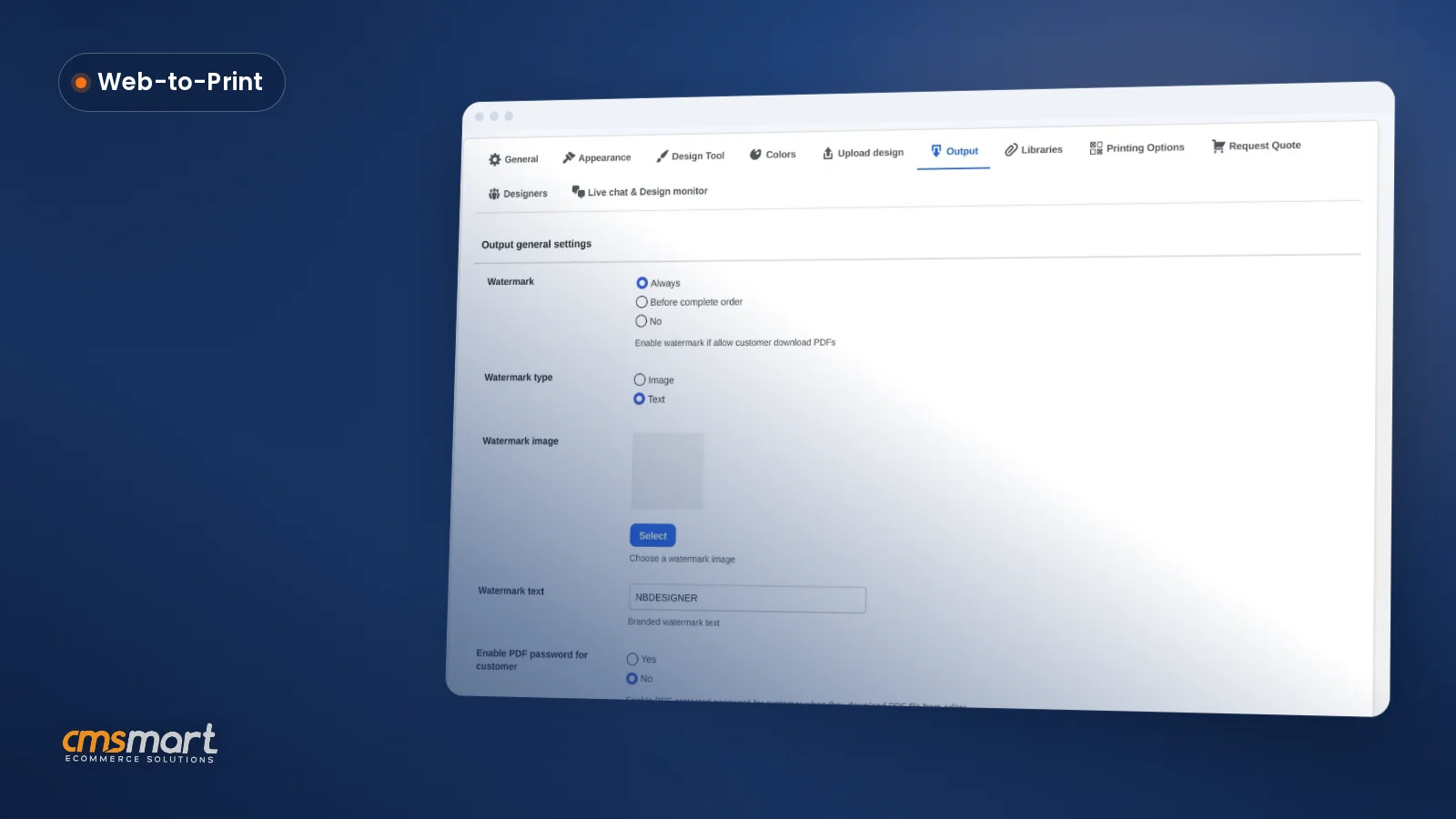
Guide · Web-to-print
Print Ready PDF Output Settings WooCommerce Setup
See what the print ready PDF output settings WooCommerce screen controls — watermark, password, bleed, FTP sync — and configure yours today.
Discover how to elevate your eCommerce strategy with expert insights, tools, and techniques to boost sales and enhance customer engagement online. Join the eCommerce revolution today!
Table of contents
Was this tutorial helpful?
Written by
Cmsmart Ecommerce Growth & Trends Analyst
Tracks ecommerce trends and turns them into practical moves for growing stores.
The team behind it
 Account Manager
 Project Manager
 Business Analyst
 Developers & QA
Guide · Web-to-print
See what the print ready PDF output settings WooCommerce screen controls — watermark, password, bleed, FTP sync — and configure yours today.
Case study · AI
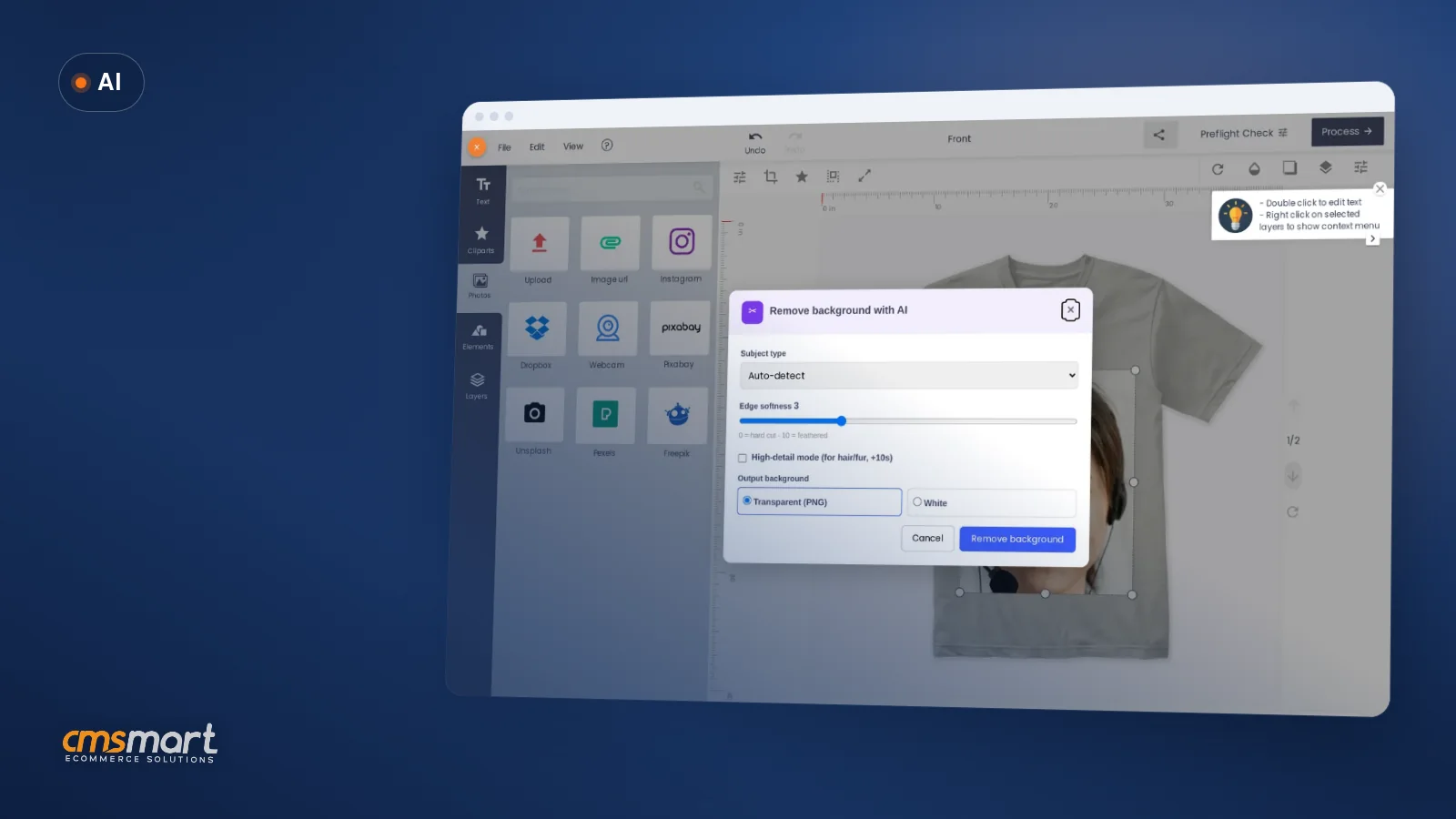
Add an AI background remover for WooCommerce to your product designer so buyers get a clean cutout instantly, and see how Cmsmart builds the rest for...
Case study · Web-to-print
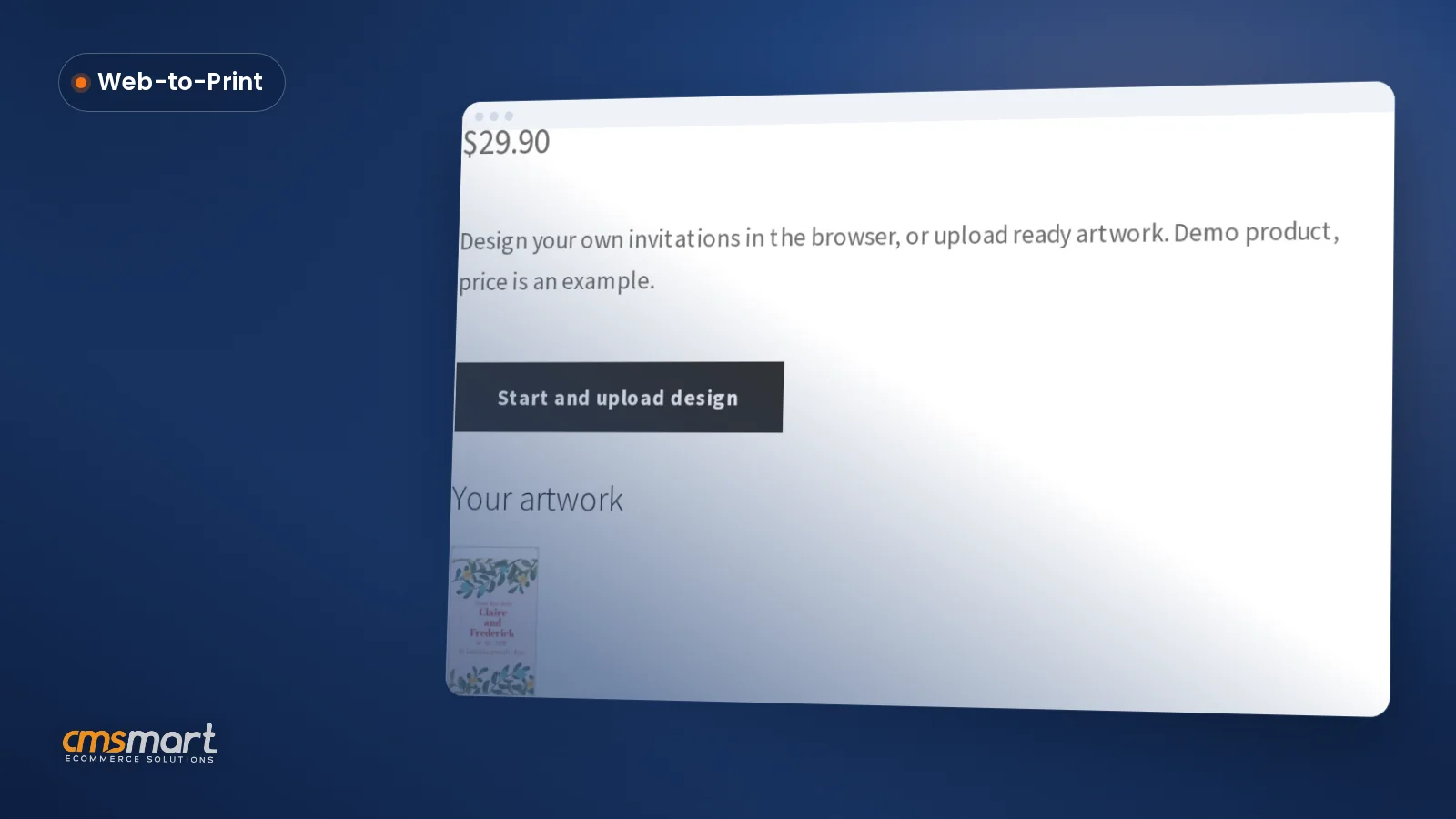
Save design and reorder WooCommerce orders in one click, with a fresh print-ready PDF every time. See how Cmsmart builds it.
Browse more guides, tutorials and case studies from the Cmsmart community.
Unlock the Power of Mobile Commerce: Propel Your Business Forward
Read MoreDiscover how to harness mobile commerce to enhance your business growth. Learn strategies for optimizing the mobile shopping experience and increasing consumer engagement.
Read MoreDiscover the benefits of mobile commerce and how it can transform your business. Learn effective strategies for maximizing sales and customer engagement through mobile-optimized shopping experiences.
Read More
Cmsmart Ecommerce provides custom ecommerce and WooCommerce development services for web-to-print, product personalization, plugin support and API integration.
Cmsmart Ecommerce Growth & Trends Analyst
Tracks ecommerce trends and turns them into practical moves for growing stores.
Meet the team →




As the global eCommerce market is projected to skyrocket to a staggering $8 trillion by 2027, the urgency for businesses to adapt and innovate has never been more critical. Consider the inspiring journey of FashionFusion, a clothing retailer based in Australia, which faced dwindling sales due to outdated digital practices and ineffective customer engagement. By embracing cutting-edge eCommerce strategies and switching to responsive platforms offered by Cmsmart, they not only revitalized their online presence but also significantly improved customer communications, resulting in a 50% increase in sales within just six months.
In a world where seamless customer interactions and user-friendly platforms are essential, businesses like FashionFusion are leading the charge, transforming challenges into opportunities. It's no longer about surviving; it's about thriving in this new era of digital commerce. This tutorial will guide you through innovative strategies and solutions that can enhance your online business, drawing upon authoritative market insights and proven case studies. Whether it’s implementing effective personalization strategies or streamlining backend operations, Cmsmart is here to support your journey into the future of eCommerce. Enhance your customer engagement or master your eCommerce strategies today. In this tutorial, we will explore practical steps to unlock the power of eCommerce and transform your business.
The Future is eCommerce
Ensuring platform responsiveness across devices can be a game changer for your business.Maintaining seamless communication with customers and harnessing user-friendly platforms are vital pain points that many digital retailers encounter. Fortunately, the evolution of eCommerce is set to revolutionize the way businesses operate and engage.
Embrace the New Era of eCommerce
Imagine a future where business success is seamless – accessible at the click of a button and boosted by the latest technology. That future is here, and its called eCommerce. This transformative landscape allows businesses to overcome challenges such as:Achieving Success with Modern Strategies
To navigate this vibrant market, here are some actionable tips to enhance your eCommerce strategy:Explore Related Insights
For a deeper understanding of how to stay ahead in the competitive eCommerce landscape, read more on modern eCommerce strategies and the importance of multi-device optimization. In summary: Leveraging the power of eCommerce not only addresses key business pain points but also opens doors to unprecedented growth. Next, let’s delve into the strategies for effective customer engagement techniques that will elevate your online presence.Deciphering eCommerce and Its Power
Are you struggling to ensure your eCommerce platform is responsive and user-friendly across multiple devices? Youre not alone.Many businesses face the challenge of creating seamless customer experiences while managing backend operations efficiently.
Understanding eCommerce: Definition and Importance
eCommerce, or online retail, refers to the buying and selling of goods and services over the internet. Its importance cannot be overstated, as it has transformed how consumers shop and how businesses operate. Today, eCommerce accounts for a significant portion of total retail sales.Exploring the Evolution of Online Retail
The evolution of eCommerce has been remarkable, with advancements in technology and user expectations driving rapid change. Early online marketplaces have evolved into comprehensive platforms that integrate sophisticated backend technology and responsive design to enhance user experience.Comparing Traditional Commerce and eCommerce
Comparing traditional retail with digital commerce reveals some key differences:- Accessibility: eCommerce offers 24/7 access, unlike conventional stores with limited hours.
- Scalability: Online businesses can reach a global market without the constraints of physical locations.
- Personalization: eCommerce platforms can implement advanced personalization strategies, tailoring user experiences based on consumer behavior.
In summary: Understanding eCommerce and its evolution highlights its transformative power in the retail sector. As we move forward, focusing on modern eCommerce strategies, optimizing for multi-device experiences, and enhancing user engagement through personalization will be vital. Next, lets delve into effective customer engagement techniques that can elevate your online sales.Enhancing eCommerce with Multi-device Engagement
Struggling to connect with customers on various devices? You’re not alone.Many businesses find it challenging to ensure seamless user experiences across all platforms, which can hinder customer engagement and drive down sales.
The Necessity of Multi-Device Optimization
In todays digital commerce world, having a responsive design is not just a trend—its a necessity. With over 50% of global online traffic coming from mobile devices, the importance of multi-device optimization cannot be overstated. A user-friendly platform that delivers a consistent experience, whether on a desktop, tablet, or smartphone, is crucial for retaining customers.Strategies for Effective Engagement across Devices
Engaging your customers effectively across multiple devices involves tailored communication strategies and innovative technology. Some actionable strategies to consider include:Real-World Examples of Successful Multi-Device Engagement
Several businesses have excelled at multi-device engagement by focusing on user experience. For instance, a renowned online retailer revamped their mobile site, resulting in a 30% increase in mobile sales. Their investment in responsive design led to improved customer satisfaction, reflecting in their overall revenue growth. In summary: Enhancing your eCommerce platform through multi-device engagement is no longer optional; it’s essential for maximizing sales and customer satisfaction. By optimizing your sites responsiveness, utilizing strategic engagement techniques, and learning from successful examples, you can effectively connect with customers across all devices. Next, let’s dive into modern eCommerce strategies that further enhance user experience and empower your business growth! For more insights, check out our guide on importance of multi-device optimization and effective customer engagement techniques.Revolutionizing Customer Communication in eCommerce
Struggling to connect with your customers effectively? You’re not alone.Many eCommerce businesses face the challenge of ensuring smooth and effective communication with their clients, which is crucial for driving sales and improving user experience.
The Role of Communication in Online Retail
In the dynamic world of digital commerce, communication plays a pivotal role in not only attracting but also retaining customers. Here are some key aspects to consider:Best Practices for eCommerce Customer Communication
Implementing the right strategies can vastly improve your customer interactions. Consider these best practices:Innovative Customer Communication Channels in Digital Commerce
Embrace new technologies to enhance the customer experience. Here are some channels you can explore:Implementing these innovative channels not only enriches customer experience but also streamlines backend operations, ensuring a cohesive strategy across your platforms. In summary: Effective customer communication is vital for thriving in the competitive eCommerce landscape. By leveraging modern eCommerce strategies, understanding the importance of multi-device optimization, and integrating robust technology, you can significantly enhance user experiences. Next, let’s delve into the importance of implementing effective personalization strategies that resonate with your customers.
Improving Shopping Cart Experience through Personalization
Struggling to enhance your online shopping experience? You’re not alone.Many eCommerce businesses encounter challenges in providing a responsive and personalized shopping cart that boosts user satisfaction and sales. Ensuring a seamless experience across devices, facilitating smooth customer communication, and implementing effective personalization strategies are crucial for success in today’s competitive digital marketplace.
Basics of Online Shopping Cart User-Experience
Creating a user-friendly platform starts with understanding the core elements of a great shopping cart experience:Implementing Personalization Options in eCommerce
Personalization is key to enhancing the shopping experience. Here are actionable tips to implement effective personalization strategies:Case Studies: Success through Personalized Shopping Cart Experience
Many brands have successfully increased conversions through tailored shopping cart experiences. For instance, a leading fashion retail brand personalized its checkout page based on demographics and saw a 25% increase in completed purchases. In summary: By focusing on responsive design and integrating personalization options, you can vastly improve the user experience in your online store. This foundational work lays the groundwork for exploring deeper strategies, including modern eCommerce strategies and the importance of multi-device optimization. Let’s delve into engaging effective customer techniques in the next section!Leveraging Technology for Seamless eCommerce Operations
Is your eCommerce platform struggling to keep pace with the demands of modern consumers? Youre not alone.Many businesses face critical challenges in ensuring platform responsiveness across devices, facilitating seamless customer communication, and improving user experience to drive sales.
Importance of Technology Integration in eCommerce
Integrating technology is essential for thriving in the competitive world of online retail. A robust technological framework enhances:Exploring the Backend Technology in Online Retail
Understanding the backend technology is crucial for merchants looking to optimize their operations. Key elements include:Benefits and Challenges of Technology Integration
While integrating technology presents numerous benefits, it also comes with challenges. Here’s what to consider:- Benefits:
- Improved efficiency in operations
- Enhanced customer experiences through personalization
- Better data analysis and targeted marketing strategies
- Challenges:
- Initial investment costs may be high
- Need for ongoing maintenance and updates
- Potential complexity in training staff on new systems
In summary: Leveraging the right technology is crucial for ensuring your eCommerce operations are smooth and efficient. By integrating robust systems, you can enhance customer engagement and streamline backend processes, setting the stage for long-term success. Next, we’ll delve into modern eCommerce strategies that can further elevate your business. Dont miss out on learning about the importance of multi-device optimization and effective customer engagement techniques!Driving eCommerce Success with User-Friendly Platforms
Ensuring platform responsiveness across devices is crucial for modern eCommerce success. Are you facing challenges in facilitating smooth customer communication and improving user experience to drive sales? Youre not alone.Many businesses struggle with delivering a seamless online retail experience that meets customer expectations in a crowded digital commerce landscape.
User-Friendly eCommerce Platforms: Why They Matter?
User-friendly eCommerce platforms are essential for creating an engaging shopping experience. They play a pivotal role in retaining customers and boosting sales. A platform that is easy to navigate not only enhances user experience but also contributes to higher conversion rates.Key Elements of a User-Friendly eCommerce Platform
When selecting a platform, consider the following key elements that contribute to user-friendliness:Selecting the Right eCommerce Platform for Your Business
Choosing the right eCommerce platform is vital for your business’s success. Consider your specific needs, such as scalability, ease of use, and available features. Here’s how to ensure you make the best choice:- Assess your business model: online retail, subscription services, or digital goods.
- Evaluate customization options to facilitate a unique user experience.
- Test different platforms with demos to find the most intuitive for your team.
For more insights on building a successful eCommerce strategy, check out our resources on modern eCommerce strategies, the importance of multi-device optimization, and effective customer engagement techniques. In summary: Investing in a user-friendly eCommerce platform is not just beneficial—its essential for thriving in todays market. By focusing on deliverability and backend efficiency, you can set your business up for sustained growth. Next, we will explore enhancing user experience with personalization strategies that resonate with shoppers.Embracing the Future of eCommerce
Struggling to keep your eCommerce platform relevant in a rapidly changing market? Youre not alone.Many businesses encounter challenges such as ensuring platform responsiveness across devices, facilitating smooth customer communication, improving user experience to drive sales, implementing effective personalization strategies, and managing backend operations efficiently.
Current Trends Shaping the eCommerce Industry
The landscape of online retail is evolving at breakneck speed. Here are key trends you should pay attention to:The Future of Digital Commerce: Predictions and Opportunities
The future holds vast potential for digital commerce. Consider these emerging opportunities:Preparing your Business for the Future of eCommerce
Planning ahead is critical for thriving in the digital marketplace. Here are actionable steps to prepare your business:To thrive in the competitive online marketplace, businesses must adopt modern strategies, such as multi-device optimization, effective customer engagement techniques, enhancing user experience with personalization, and integrating robust technology in eCommerce. In summary: By embracing current trends and preparing for the future, your eCommerce business can stay competitive and resonate with customers. Next, let’s explore advanced marketing strategies to enhance your digital presence.
Frequently Asked Questions
Struggling to improve your eCommerce experience? Youre not alone.Many online retailers face the challenge of optimizing their platforms to meet customer expectations while boosting sales and ensuring seamless operations.
Common eCommerce Questions Answered
Responsive design ensures your online store looks great on any device, helping you reach more customers and improving engagement.
Implementing chatbots and direct messaging options can greatly help facilitate smoother conversations with your customers.
Intuitive navigation, fast load times, and easy checkout processes are key factors in enhancing user experiences that convert visitors into buyers.
Tailoring your marketing towards individual customer preferences increases engagement and can lead to higher conversion rates.
Investing in robust backend solutions enables a smoother operation of your eCommerce website, from inventory management to payment processing.
Implementing Effective Strategies
To bridge the gap between expectation and reality, explore modern eCommerce strategies emphasizing multi-device optimization, enhancing user experience with personalization, and integrating advanced technology into your operations. For more insights on converging these strategies, check out our resources. In summary: Addressing these FAQs can empower you to enhance your online retail business. In the next section, well dive deeper into optimizing communication channels and improving customer engagement techniques.FAQ Section: Troubleshooting and Pro Tips
How can I ensure my eCommerce site is responsive across devices?
Implement responsive design techniques using fluid grids and flexible images.
What strategies facilitate smooth customer communication?
Utilize automated messaging tools and personalized email campaigns for timely updates.
How can I improve user experience to drive sales?
Focus on optimizing site navigation, checkout processes, and page load speeds.
What are effective personalization strategies for eCommerce?
Use customer data to tailor recommendations, promotions, and content specific to user preferences.
How can I manage backend operations efficiently?
Integrate inventory management systems with eCommerce platforms to streamline order processing and tracking.
What role does customer feedback play in eCommerce?
Customer reviews build trust and help improve service and product offerings.
How can I track customer interactions for better insights?
Implement analytics tools to monitor user behavior and engagement on your site.
Further Reading
In conclusion, you now possess the knowledge to transform your online business by unlocking the true power of eCommerce. By ensuring platform responsiveness, improving customer communication, and leveraging user-friendly solutions, you can tap into the immense potential of the booming $8 trillion market. Don’t let this opportunity pass you by! Let’s discuss how we can help you implement these innovative strategies tailored specifically for your needs. Contact David directly on WhatsApp for expert insights, or reach out to me at [email protected]. Interested in a personalized assessment? Request a quotation today and take the first step toward elevating your business in this new era of eCommerce. Your success is just a conversation away!