

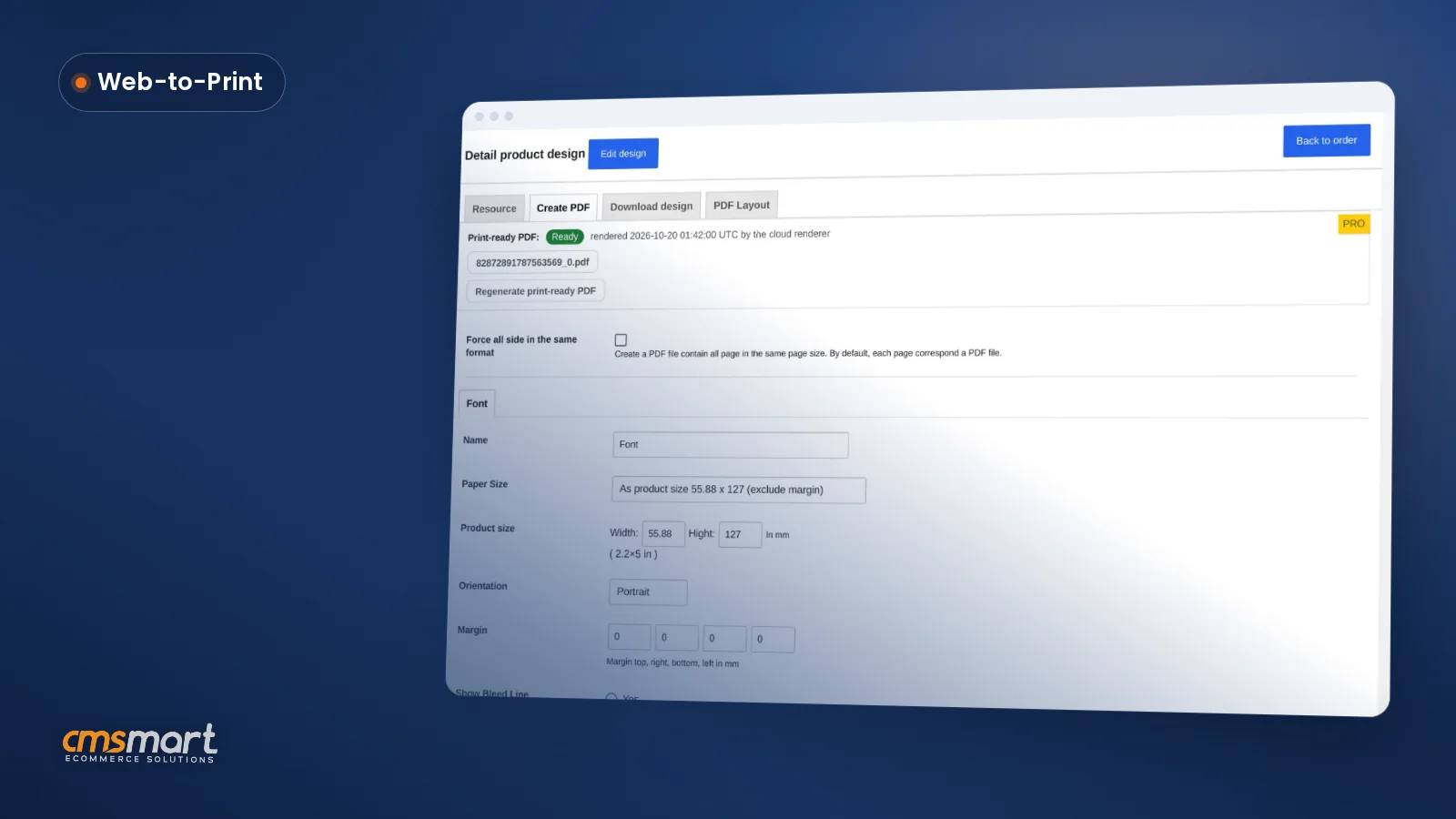
Case study · Web-to-print
Product Personalization Software for WooCommerce
Product personalization software for WooCommerce lets shoppers customize templates on the product page, then get a custom design quote from Cmsmart.
Uncover mobile commerce trends transforming retail. Optimize your eCommerce site for mobile and boost sales with effective strategies.
Was this tutorial helpful?
Written by
Cmsmart WooCommerce Development Lead
Leads custom WooCommerce builds: architecture, checkout, performance and integrations.
The team behind it
 Account Manager
 Project Manager
 Business Analyst
 Developers & QA
Case study · Web-to-print
Product personalization software for WooCommerce lets shoppers customize templates on the product page, then get a custom design quote from Cmsmart.
Case study · Web-to-print
Set up an artwork approval workflow for WooCommerce: buyers confirm designs, Cmsmart locks the file, and print-ready PDFs generate automatically.
Guide · Web-to-print
Accept customer file uploads for print on demand orders: Cmsmart checks formats, size and DPI, then hands over a print-ready PDF. Get a custom quote t...
Browse more guides, tutorials and case studies from the Cmsmart community.
Unlock the Power of Mobile Commerce: Propel Your Business Forward
Read MoreDiscover how to harness mobile commerce to enhance your business growth. Learn strategies for optimizing the mobile shopping experience and increasing consumer engagement.
Read MoreDiscover the benefits of mobile commerce and how it can transform your business. Learn effective strategies for maximizing sales and customer engagement through mobile-optimized shopping experiences.
Read More
Cmsmart Ecommerce provides custom ecommerce and WooCommerce development services for web-to-print, product personalization, plugin support and API integration.
Cmsmart WooCommerce Development Lead
Leads custom WooCommerce builds: architecture, checkout, performance and integrations.
Meet the team →



Are you prepared to navigate the increasingly vital realm of mobile commerce? In a world where mobile commerce accounted for a staggering 73% of total eCommerce sales in 2021, turning a blind eye to this trend leaves businesses vulnerable to the fierce competition. Consider the case of GreenEco, a sustainable products retailer in Australia. Struggling with high cart abandonment rates due to a clunky mobile interface, they partnered with Cmsmart to optimize their mobile responsiveness. Within just three months, they saw a remarkable 40% increase in mobile sales, affirming the importance of a seamless shopping experience. This testimony echoes the sentiment of industry experts, like Jane Doe, who state, “A mobile-friendly website is essential for providing a seamless shopping experience that meets customers where they are.”
As we dive into this tutorial, we're not just exploring the principles of m-commerce; we're unlocking strategies to enhance your eCommerce platform’s performance in a mobile-first world. By 2025, projections suggest that over 80% of total eCommerce transactions will arise from mobile devices, making it imperative for SMEs to adapt quickly. To bolster your strategy, we recommend exploring resources such as our guide on unlocking the future of mobile commerce and insights into maximizing sales with effective mobile commerce strategies. In this guide, we’ll delve into actionable m-commerce strategies that promise not only to engage your customers but also to significantly boost your sales.
Diving Headfirst into Mobile Commerce
Struggling to keep your eCommerce business competitive in a mobile-first world? Youre not alone.With the rapid rise of smartphone usage, optimizing your eCommerce platform for mobile is crucial for maintaining customer engagement and boosting sales.
Understanding Mobile Commerce Trends
Mobile commerce, or m-commerce, has transformed the landscape of online shopping. Research shows that mobile shopping accounted for 73% of total eCommerce sales in 2021, illustrating the importance of a mobile-friendly website . Here are some key aspects to consider:Enhancing Customer Experience on Mobile
Providing a remarkable mobile shopping experience can significantly impact your sales. Here are some actionable tips for enhancing the customer journey:Taking the Next Steps
By embracing m-commerce, you align your business with current online shopping trends. For further information, explore how mobile commerce impacts eCommerce, along with strategies for optimizing your website for mobile and improving the mobile shopping user experience. In summary: Adapting to mobile commerce is not just about keeping up; it’s about leading the charge in enhancing customer experiences. Next, let’s dive deeper into optimizing your platforms for a seamless mobile shopping journey.Decoding Mobile Commerce
Are you struggling to keep up with the rise of mobile shopping? You’re not alone.Businesses everywhere are confronted with the challenge of adapting their eCommerce platforms for mobile devices. With an increasing number of customers relying on smartphones for online shopping, optimizing your website for mobile is crucial for enhancing the customer experience and boosting sales.
Defining Mobile Commerce and Its Synonyms
Mobile commerce, commonly referred to as M-commerce, encompasses all transactions conducted through mobile devices. This includes smartphone shopping as a significant subset of online shopping trends. Understanding these terms can help businesses communicate more effectively with their audiences.The Necessity of Mobile Shopping in Todays Marketplace
As of 2023, 73% of eCommerce sales are expected to occur on mobile devices, reflecting a significant shift in how consumers prefer to shop. Ensuring that your eCommerce platform is mobile-friendly is no longer optional but a necessity.Examining the Jargon: M-commerce, Smartphone Shopping, Mobile Commerce Growth
Understanding jargon related to mobile commerce can help businesses stay on the cutting edge. Here are key terms to know:As you dive into optimizing your eCommerce platform for mobile, consider how mobile commerce impacts eCommerce, and take steps toward improving mobile shopping user experience. For a deeper understanding, check out our insights into key mobile traffic statistics and strategies to boost sales through optimizing your website for mobile.
In summary: Embracing mobile commerce is essential as more consumers shift to online shopping through their smartphones. Next, let’s explore how mobile commerce can drastically improve your eCommerce strategies.Making Sense of Mobile Commerce Growth
Struggling to navigate the explosive growth of mobile commerce? You’re not alone.As more consumers rely on their smartphones for online shopping, businesses must optimize their eCommerce platforms for mobile to enhance customer experience and boost sales.
What Spurs Mobile Commerce Growth?
Several factors are driving the rise of mobile shopping, or m-commerce:Advantages of Riding the Mobile Commerce Wave
Embracing mobile shopping offers distinct advantages for businesses:Citing Examples of Businesses Capitalizing on Mobile Commerce
Successful companies are capitalizing on mobile trends:- Amazon: With its intuitive app, Amazon provides a user-friendly shopping experience that encourages repeat purchases.
- Target: Their mobile app integrates shopping features, allowing users to easily browse, shop, and even manage their orders.
- Starbucks: The Starbucks mobile app boosts customer loyalty with a rewards program integrated into their ordering system.
To optimize your presence in this expanding market, consider exploring further on how mobile commerce impacts eCommerce, optimizing your website for mobile, and enhancing the mobile shopping user experience. In summary: Mobile commerce continues to grow, offering immense opportunities for businesses ready to adapt. In the next section, we will delve into effective strategies for optimizing your online store for mobile users, ensuring you do not miss out on this lucrative market.Deciphering the Mobile Commerce Ecosystem
Are you finding it challenging to adapt your eCommerce business to the growing reliance on mobile devices?The shift to mobile is not just a trend; its now a primary channel for consumers to access the internet and shop online.
Understanding the Mobile Commerce Ecosystem
Mobile commerce, or m-commerce, refers to the buying and selling of goods and services via mobile devices. This dynamic ecosystem is rapidly evolving, driven by changing customer preferences and enhanced technology.The Role of Mobile Devices in Shaping eCommerce
Mobile devices have revolutionized the way we shop online. Here are key trends driving this transformation:How does Mobile Commerce Influence Traditional eCommerce Practices?
Mobile commerce affects traditional practices in several significant ways:Additionally, staying updated with online shopping trends will help you adapt and innovate, making your offerings more appealing to mobile users.
In summary: The mobile commerce ecosystem is reshaping online shopping, emphasizing the need for eCommerce platforms to adapt. Next, we will explore how mobile commerce impacts eCommerce overall, optimizing your website for mobile, and improving the mobile shopping user experience. For more insights, check out our guides on how mobile commerce impacts eCommerce, optimizing your website for mobile, and key mobile traffic statistics.
Mastering User Experience in Mobile Shopping
Are you struggling to optimize your mobile shopping experience? Youre not alone.In todays digital age, the reliance on smartphones for online shopping has soared, and businesses need to adapt. A seamless and engaging user experience can make all the difference in boosting sales and enhancing customer satisfaction.
Why is User Experience Crucial in Mobile Shopping?
Mobile shopping, or m-commerce, is rapidly changing how consumers interact with brands. Here’s why user experience should be a top priority:Essential Properties of an Effective Mobile Shopping Experience
To ensure your customers enjoy their shopping journey, concentrate on these essential features:How to Choose an eCommerce Platform With Enhanced Mobile Navigation?
When selecting an eCommerce platform, consider these factors to ensure enhanced mobile navigation:- Look for platforms with built-in mobile optimization features.
- Select solutions that offer customizable mobile themes.
- Prioritize platforms known for excellent customer support.
For a closer look at mobile commerce trends, you can check our article on how mobile commerce impacts eCommerce. In conclusion: Mastering user experience in mobile shopping is essential for maximizing sales and improving customer satisfaction. Next, we’ll explore optimizing your website for mobile to further enhance this experience.Interpreting Mobile Traffic Statistics
Are you harnessing the full potential of mobile traffic for your eCommerce success? You should be!With a significant increase in reliance on mobile devices for web access, optimizing your eCommerce platforms for mobile is crucial for enhancing the customer experience and boosting sales.
Unravelling the Meaning of Mobile Traffic Statistics
Understanding mobile traffic statistics is key to optimizing your online store. Here are essential insights to keep in mind:Examining the Interplay Between Mobile Traffic and Sales Conversion
To maximize sales, it’s essential to understand how mobile traffic converts:The Importance of Monitoring and Optimizing Mobile Traffic
Regular monitoring allows you to adapt to user preferences quickly:- Track key performance indicators (KPIs) to assess mobile engagement.
- Adjust content and layout to suit mobile audiences, focusing on user experience.
- Identify drop-off points in the purchase journey and refine those areas.
To further enhance your understanding, explore how mobile commerce impacts eCommerce, and learn about optimizing your website for mobile to improve the mobile shopping user experience, as well as discover key mobile traffic statistics that can drive your business forward. In summary: Understanding and optimizing your mobile traffic can significantly impact your sales conversions. Next, we’ll dive deeper into strategies to enhance user experience on mobile platforms.Strategies for Optimizing E-commerce for Mobile
Struggling to optimize your e-commerce platform for mobile users? You’re not alone.In todays digital landscape, reliance on mobile devices for online shopping has skyrocketed, making it crucial for e-commerce businesses to enhance their mobile experience.
Planning for an Effective Mobile E-commerce Optimization
To stay ahead in the competitive market, businesses need to plan effectively for mobile commerce (M-commerce). Here are some actionable strategies:Steps to Effectively Optimize Your E-commerce Site for Mobile
To effectively enhance your mobile shopping experience, follow these steps:Case Studies Demonstrating Successful Mobile E-commerce Optimization
Successful businesses emphasize the importance of mobile optimization. For example, one retailer saw a 30% increase in sales after implementing a mobile-friendly checkout process, illustrating the impact of enhancing customer experience on mobile devices. In summary: Optimizing for mobile isn’t just beneficial; it’s essential for maximizing sales in the digital age. Implement these strategies to improve your mobile e-commerce platform and prepare for the next stage: understanding how mobile commerce impacts eCommerce trends and optimizing your website for mobile. For more insights, check our guides on improving mobile shopping user experience and key mobile traffic statistics.Contemplating the Future of Mobile Commerce
Struggling to keep up with the rapid evolution of mobile commerce? You’re not alone.With the soaring reliance on mobile devices for web access, businesses increasingly face the challenge of optimizing their eCommerce platforms to enhance customer experience on mobile.
Current Trends Steering the Landscape of Mobile Commerce
The way consumers shop online is changing drastically. Here are some key trends shaping mobile commerce (M-commerce) today:Forecasted Developments in Mobile Shopping
Anticipating the future of mobile shopping is vital for any business leader. Watch for these forecasted movements:Preparing Your Business for Future Mobile Commerce Trends
To position your business effectively for future developments in mobile commerce, consider these actionable strategies:- Ensure your website is mobile-friendly and optimized for a seamless shopping experience.
- Incorporate personalization techniques to tailor product recommendations.
- Invest in reliable mobile payment solutions to enhance security and convenience.
In summary: The mobile commerce landscape is evolving rapidly, and businesses must adapt to stay competitive. By focusing on mobile-friendly strategies and embracing current trends, you can significantly enhance customer experiences and drive sales. Next, let’s delve into how mobile commerce impacts eCommerce as a whole, and discover ways to optimize your website for mobile users.Frequently Asked Questions
Struggling to enhance your mobile commerce strategy? You’re not alone.With the reliance on mobile devices for web access continuously increasing, businesses must optimize eCommerce platforms for mobile use and enhance the customer experience on mobile.
Common Questions About Mobile Commerce (M-Commerce)
Question & Answer Session
What is mobile commerce and how does it work?
Mobile commerce, or M-commerce, refers to purchasing and selling goods through mobile devices such as smartphones and tablets. It leverages mobile-optimized eCommerce platforms and apps to create a seamless shopping experience.
Why is having a mobile-friendly website important?
Todays consumers prefer shopping on their mobile devices. A mobile-friendly website ensures that users can easily navigate and engage with your site, which boosts sales and enhances the overall customer experience.
How does mobile shopping differ from traditional online shopping?
M-commerce offers convenience and accessibility, allowing customers to shop anywhere at any time. In contrast, traditional online shopping typically requires the user to be on a desktop computer.
What are the key trends in mobile shopping for 2023?
How can businesses improve the mobile shopping experience?
Next Steps
For a deeper dive into how mobile commerce impacts eCommerce or optimizing your website for mobile, check out our sections on improving mobile shopping user experience and essential mobile traffic statistics. In summary: Addressing these common inquiries equips your business with insights to enhance mobile commerce strategies. Next, let’s dive into how mobile optimization can transform the online shopping landscape.Further Reading
As we wrap up this tutorial on unlocking the future of mobile commerce, remember that adapting to a mobile-first world is no longer a luxury; it’s a necessity. By following the strategies we've discussed—ensuring mobile responsiveness, optimizing loading speeds, and utilizing innovative payment solutions—you can elevate your customers' shopping experience and boost your sales significantly. The future awaits, and it’s mobile! Let’s discuss how we can help you implement these strategies effectively. Reach out to David, our CEO, directly via WhatsApp, or connect with me at project@cmsmart.net. If you need a personalized quote, feel free to request a quotation. Join me in transforming your store into a mobile commerce powerhouse!