
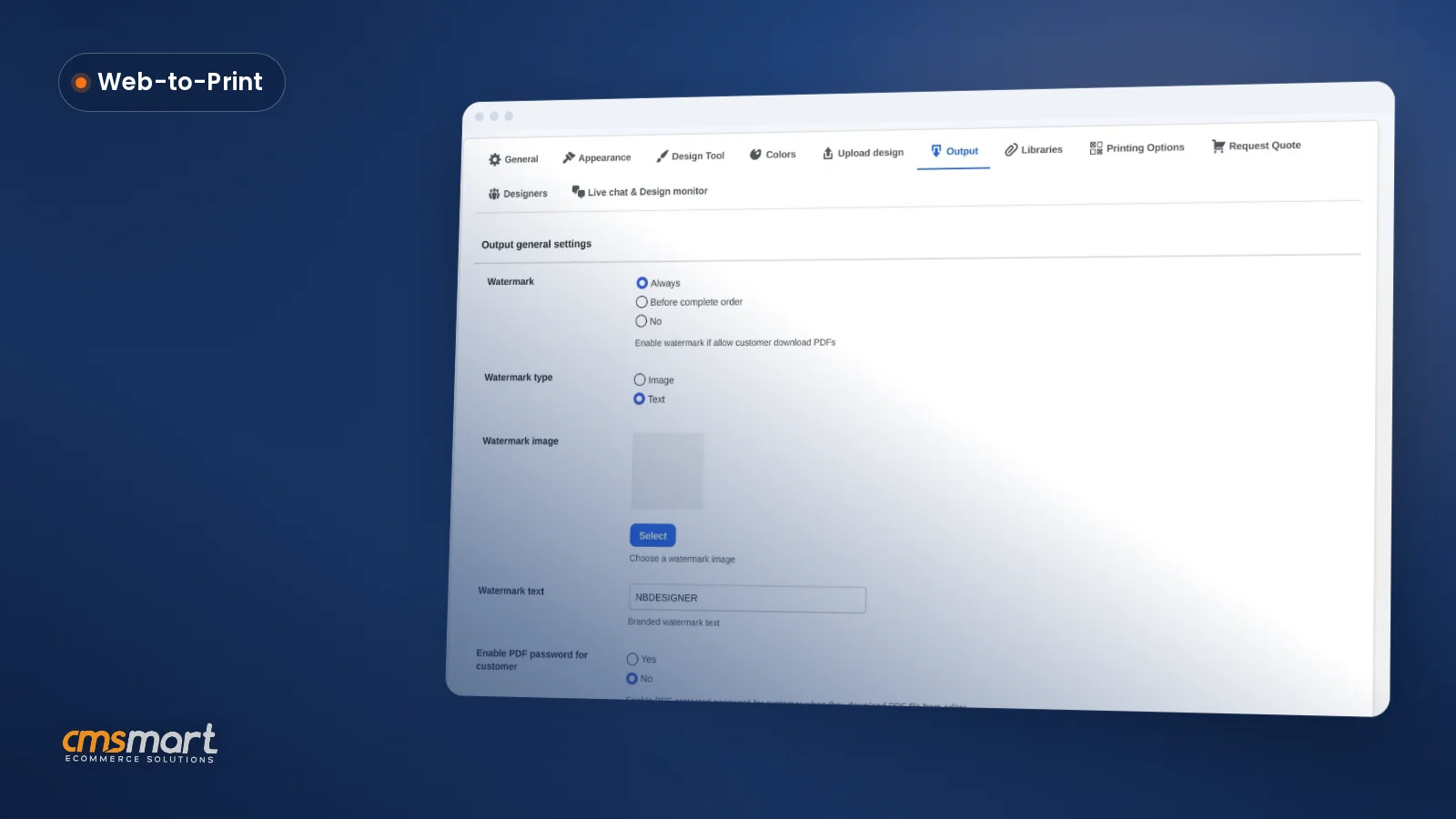
Guide · Web-to-print
Print Ready PDF Output Settings WooCommerce Setup
See what the print ready PDF output settings WooCommerce screen controls — watermark, password, bleed, FTP sync — and configure yours today.
Unlock the power of multi-channel sales to drive traffic, increase conversions, and maximize revenue. Leverage the best strategies to streamline operations and engage customers across various platforms.
Table of contents
Was this tutorial helpful?
Written by
Cmsmart Headless & API Integration Engineer
Connects stores to ERP, MIS, print APIs and headless frontends.
The team behind it
 Account Manager
 Project Manager
 Business Analyst
 Developers & QA
Guide · Web-to-print
See what the print ready PDF output settings WooCommerce screen controls — watermark, password, bleed, FTP sync — and configure yours today.
Case study · AI
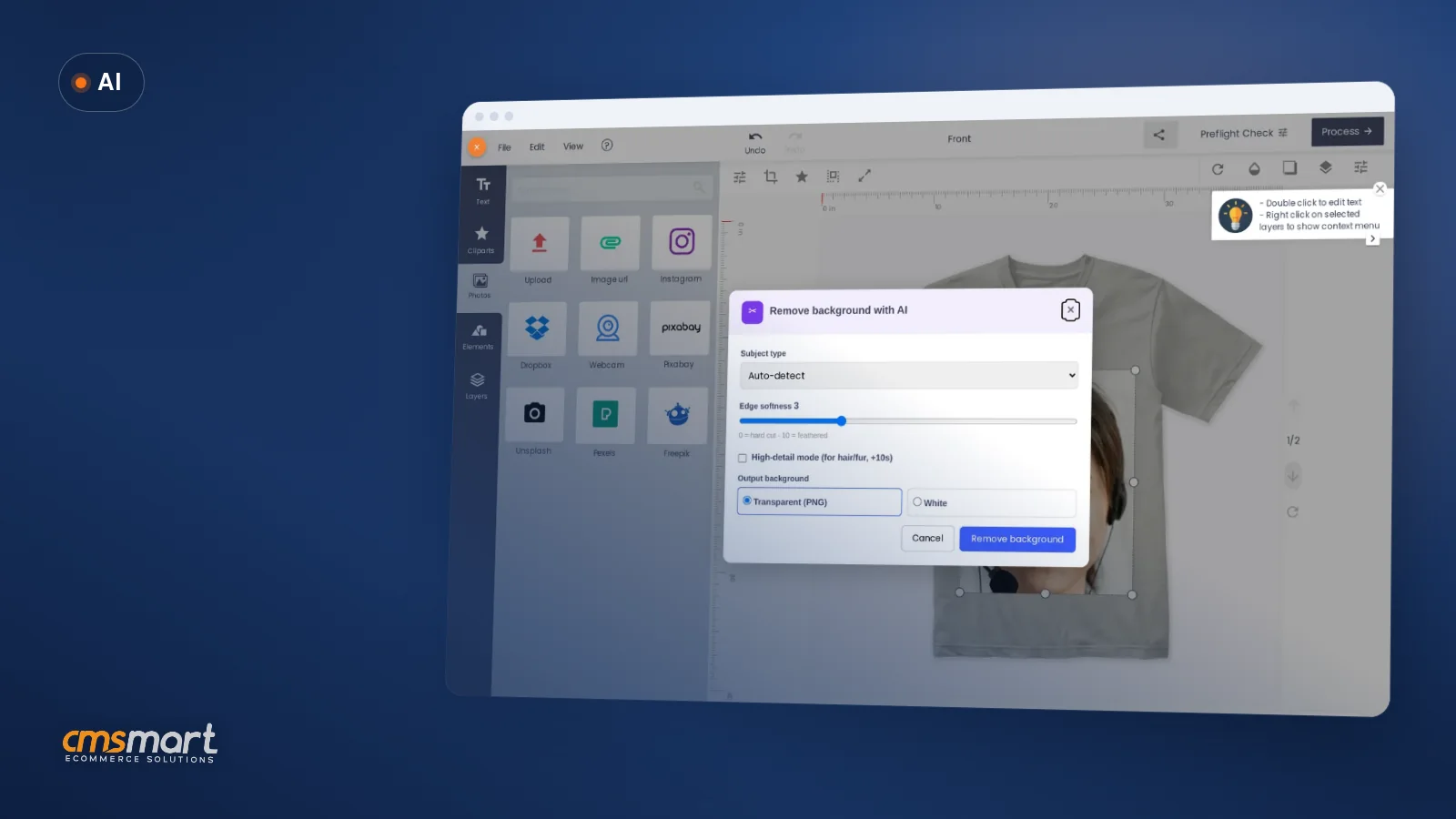
Add an AI background remover for WooCommerce to your product designer so buyers get a clean cutout instantly, and see how Cmsmart builds the rest for...
Case study · Web-to-print
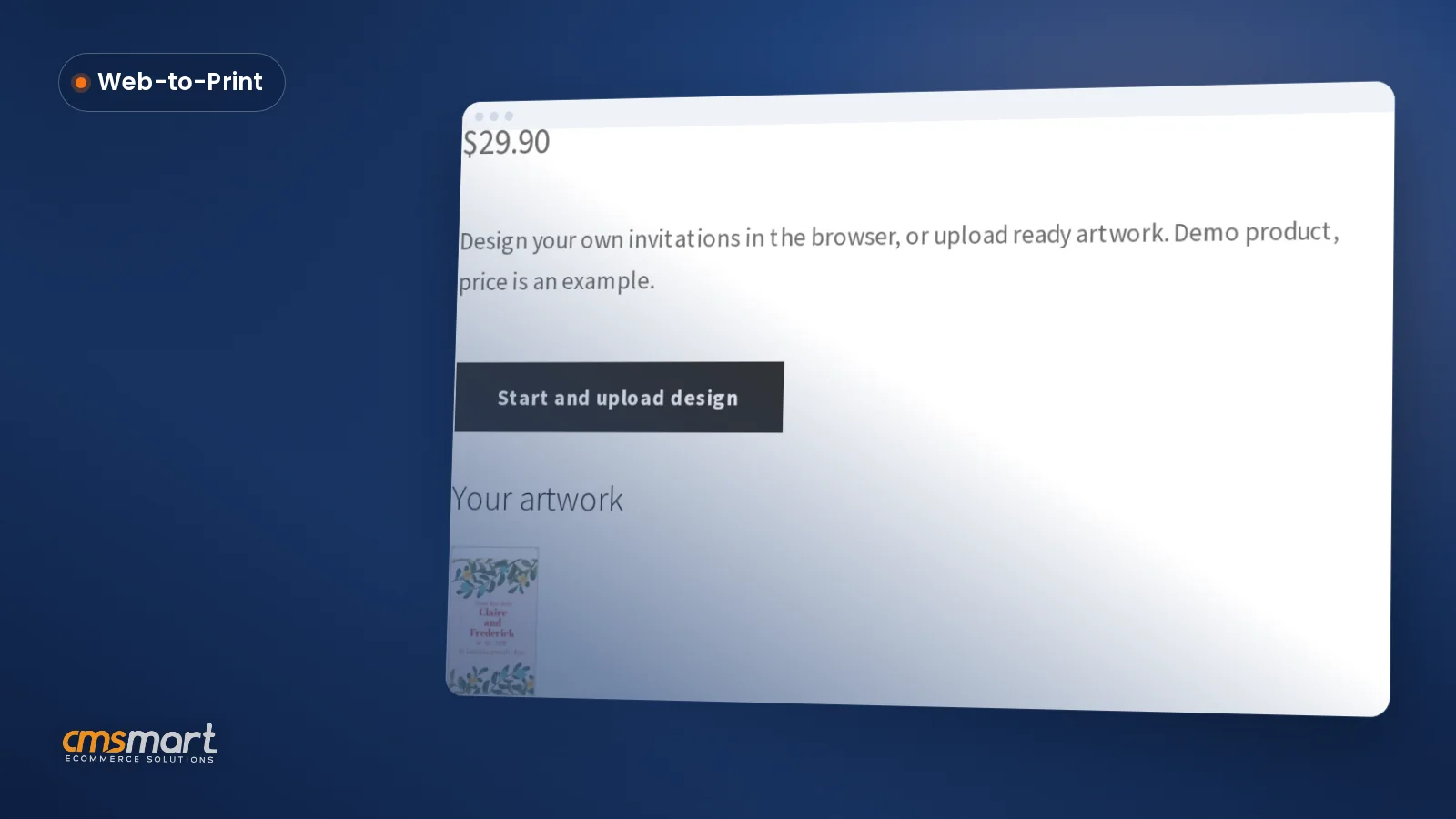
Save design and reorder WooCommerce orders in one click, with a fresh print-ready PDF every time. See how Cmsmart builds it.
Browse more guides, tutorials and case studies from the Cmsmart community.
Unlock the Power of Mobile Commerce: Propel Your Business Forward
Read MoreDiscover how to harness mobile commerce to enhance your business growth. Learn strategies for optimizing the mobile shopping experience and increasing consumer engagement.
Read MoreDiscover the benefits of mobile commerce and how it can transform your business. Learn effective strategies for maximizing sales and customer engagement through mobile-optimized shopping experiences.
Read More
Cmsmart Ecommerce provides custom ecommerce and WooCommerce development services for web-to-print, product personalization, plugin support and API integration.
Cmsmart Headless & API Integration Engineer
Connects stores to ERP, MIS, print APIs and headless frontends.
Meet the team →




Did you know that businesses embracing multi-channel retailing experience a staggering 30% increase in customer lifetime value? This statistic underscores the importance of reaching consumers through various channels in today’s competitive market. Let’s take the example of Café Delight, a vibrant coffee chain in Australia, which faced a significant roadblock in engaging customers effectively across both their online and physical stores. The disconnect between their in-store experience and online presence limited their growth, leading to lost sales and frustrated customers. By integrating a robust multi-channel sales strategy with Cmsmart, Café Delight not only streamlined its operations but also enhanced customer engagement, resulting in a remarkable increase in sales.
The journey towards becoming a fully integrated retailer requires understanding the intricacies of multi-channel sales. This transformative approach allows businesses to unify their online and offline platforms, providing a seamless shopping experience for consumers. As you dive into this tutorial, you’ll discover actionable insights on deploying integrated systems for unified inventory tracking, utilizing data analytics for performance monitoring, and implementing strategic cross-channel marketing. For additional inspiration, check out our resources on effective multi-channel marketing strategies, growth strategies, and how to harness digital platforms for growth. In this guide, we’ll explore the steps to transform your business and maximize its potential through multichannel sales.
Imagine Seamless Online and Offline Sales
Imagine navigating the maze of multiple sales channels with ease.For many businesses, the challenge lies in efficiently reaching end consumers while integrating traditional and modern sales methods. Welcome to the future of retail where omnichannel sales transform your business dynamics.
Seamlessly Connect Online and Offline Sales
Imagine if your online and offline retail environments could function as one. The power of multi-channel distribution lies in its ability to enhance consumer reach and streamline operations.With the right mix of eCommerce strategies, you can unify your sales efforts, effectively bridging the gap between digital and physical storefronts.
Connecting your operations means fewer silos and more consistency, allowing businesses to leverage both online convenience and offline tangibility. This powerful blend of multi-channel retailing serves as a catalyst for growth.
Actionable Tips for Multi-Channel Success
Ensuring a Unified Customer Experience
Multi-channel integration isnt just about availability on various platforms—its about ensuring your customer enjoys a cohesive experience every step of the way. From the first click to an in-store purchase, seamless transitions are key to increasing customer reach.For deep dives into optimizing this approach, explore:
- Understanding Multi-Channel Sales
- Traditional vs Multi-Channel Supply Chain
- D2C Models Explained
- Increasing Customer Reach
- Direct-to-Consumer Channels
In conclusion: Embracing multi-channel eCommerce strategies empowers your business to adapt and thrive in todays competitive market landscape, setting the stage for enhanced customer engagement and sustained growth. Next, well explore strategies to foster deeper consumer interactions and engagement tactics across diverse platforms.Decoding Multi-Channel Sales
Moving Beyond Chaos in Sales Channels: A Roadmap to Multi-Channel SuccessIn todays intricate commercial environment, mastering the art of engaging consumers through numerous sales channels is essential. The ability to efficiently reach customers while juggling traditional and innovative sales strategies defines the success of modern businesses.
Understanding Multi-Channel Sales and Retailing
Multi-channel sales, an emerging force in retail, provides the flexibility to engage with customers across various platforms such as physical stores, e-commerce sites, and social media. This strategy maximizes consumer reach and strengthens market presence.
The Emergence of Multi-Channel Sales in Todays Retail Landscape
With consumer behaviors shifting towards convenience, businesses can no longer rely solely on traditional routes. Leveraging multiple channels enables reaching a broader audience and adapting swiftly to market changes.
Terminology: Grasping Concepts of Omnichannel Retailing and Multi-Channel Distribution
Understanding the distinctions in terms such as omni-channel and multi-channel sales is vital:
In conclusion, implementing multi-channel sales strategies is not simply about adding more channels, but about creating synergy among them to improve customer engagement and drive sales growth. For a detailed understanding of these strategies and how they can maximize your businesss potential, explore our guides on understanding multi-channel sales and D2C models explained.
Next up: We will explore the intricacies of the traditional vs. multi-channel supply chain and delve deeper into the advantages of direct-to-consumer channels.
Why Direct-to-Consumer (D2C) Models are Prevailing
Struggling to navigate complex sales channels?Businesses today are increasingly challenged with reaching end customers efficiently while integrating traditional and modern sales methods. The rising trend of Direct-to-Consumer (D2C) models offers a streamlined path through this complexity, empowering businesses to sell directly to their customers without intermediary channels.
What is the Direct-to-Consumer (D2C) Model?
The Direct-to-Consumer (D2C) model simplifies selling by allowing businesses to bypass traditional distribution channels and sell directly to consumers. By using D2C frameworks, companies can better control their brand narrative, pricing strategies, and customer interactions.
The Advantages of Implementing D2C Models
Choosing a D2C model can present several business benefits:
Insights into Successful D2C Business Stories
Successful D2C brands like Allbirds and Dollar Shave Club have utilized innovative marketing strategies and robust eCommerce platforms to scale rapidly. They have shown how a strong online presence and a focus on sustainability can attract a loyal customer base.
For businesses looking to embrace D2C, its essential to understand integrated eCommerce strategies, and how to manage both traditional and modern D2C channels .
In summary: Adopting a Direct-to-Consumer model can offer unparalleled benefits in terms of customer reach and brand control. As you consider this transition, explore our guide on increasing customer reach which dives deeper into understanding multi-channel sales versus traditional supply chains and explains how D2C models can effectively augment your sales strategies.Examining Traditional vs Multi-Channel Supply Chain
Struggling to navigate complex sales channels and adapt to modern sales methods? Youre not alone. Addressing the key pain points of reaching end customers efficiently and integrating traditional and modern sales methods is crucial for todays businesses.
Understanding Traditional Supply Chains and their Limitations
Traditional supply chains often involve a linear process, where products move from manufacturers to wholesalers, then to retailers, and finally to consumers. While this method has been reliable for decades, it faces limitations in today’s fast-paced market:
The Role of Multi-Channel Sales in Disrupting Traditional Supply Chains
Multi-channel sales have revolutionized the way products reach consumers, introducing diverse distribution channels such as online retail, omnichannel sales, and more:
For businesses looking to succeed, embracing multi-channel distribution is not just an option; its a necessity. Explore our insights on understanding multi-channel sales for a comprehensive guide.
Impact of Multi-Channel Sales on Wholesalers, Retailers, and Manufacturers
Multi-channel sales present both challenges and opportunities for traditional stakeholders:
In summary, understanding and integrating traditional and multi-channel supply chains is essential for staying competitive in todays market. The subsequent section will delve into D2C models explained and strategies for increasing customer reach. Embrace these changes to not only remain relevant but to thrive in the evolving ecommerce landscape.
Consumer Reach through Multi-Channel Sales
Struggling to navigate complex sales channels? Youre not alone.Many businesses face the challenge of reaching end consumers efficiently while integrating traditional and modern sales methods.
Importance of Increasing Consumer Reach in Multi-Channel Retail
The Role of Ecommerce Strategies in Multi-Channel Distribution
Effective eCommerce strategies are crucial when distributing products across various channels. Implementing a unified customer experience and integrating with marketplaces like Amazon and eBay can significantly boost your consumer base.
How to Improve Online Retail Presence and Dominate Sales Channels
- Invest in SEO and content marketing to increase online visibility and attract a larger audience.
- Using tools like social media shopping and live stream events can engage more consumers effectively.
In summary, increasing consumer reach through multi-channel sales is about creating synergy between online and offline strategies—next, lets delve into understanding multi-channel sales and the contrasts between traditional vs multi-channel supply chains.Challenges in the Multi-Channel Sales Adoption
Navigating complex sales channels can be daunting, especially when integrating traditional sales methods with modern eCommerce strategies to reach end customers efficiently.Understanding the Complexities of Multi-Channel Sales
As businesses face the challenge of expanding their consumer reach, adopting a multi-channel retailing strategy becomes essential. Omnichannel sales and multi-channel distribution allow you to engage customers across various platforms, but this integration often increases the complexity of supply chain stages and distribution channels.
Insights into the Struggle of Integrating Traditional and Modern Sales Methods
Bridging the gap between traditional vs. multi-channel supply chain approaches is vital for businesses seeking to adapt to direct sales channels. This integration often involves revisiting traditional sales models and strategically incorporating direct-to-consumer (D2C) models.
Tips for Overcoming the Challenges of Transitioning to Direct Sales Channels
Transitioning to direct sales channels requires actionable changes that can increase customer reach and optimize the eCommerce platform. Whether shifting from distributive sales to direct-to-consumer channels, consider these strategies:
For more strategies on understanding multi-channel sales, visit our comprehensive guide on how to create a multivendor marketplace website.
In summary: By effectively managing these challenges, businesses can transition smoothly into eCommerce and adapt to modern consumer demands. Next, lets explore how to maximize the potential of D2C models explained in our upcoming section.Implementing Multi-Channel Sales Successfully
Navigating complex sales channels is a challenge faced by many businesses wanting to reach end customers efficiently. By integrating traditional and modern sales methods, companies can adapt to direct sales channels effectively.Strategies for Adopting Multi-Channel Sales
The Steps to Implementing a Multi-Channel Sales Model
Implementing a multi-channel sales model requires careful planning and strategic execution:
Case Analysis of Successful Multi-Channel Sales Brands
Several brands have set benchmarks with their successful adoption of multi-channel sales:
In summary: Implementing a successful multi-channel sales strategy enables businesses to reach wider audiences and improve consumer satisfaction. As we move forward, understanding multi-channel sales will be critical in enhancing your market presence . Up next, well delve into the nuances of "traditional vs multi-channel supply chain" to further refine your approach.The Future of Sales Channel
Navigating complex sales channels can be a daunting task, but its essential for reaching end customers efficiently and integrating both traditional and modern sales methods.Current Trends in Multi-Channel Sales
Todays market is witnessing a significant shift towards omnichannel sales, where consumers are engaging with brands through multiple touchpoints. To stay competitive, businesses are adopting multi-channel retailing strategies to enhance customer reach and distribution.
As one expert noted,
Predicted Developments in Omnichannel Retailing
The future of multi-channel distribution looks promising with emerging technologies. Here are some predictions:
How to Future-Proof Your Business with Multi-Channel Sales
Adapting to direct sales channels is critical to staying ahead in the ecommerce landscape. Here are some actionable tips:
In summary, embracing multi-channel sales not only expands your reach but also strengthens your position in the competitive market. For more insights on understanding multi-channel sales, traditional vs multi-channel supply chain, and increasing customer reach, explore our extensive resources.
Next, lets delve into the evolving landscape of direct-to-consumer channels and how they are shaping future business models.Frequently Asked Questions
Navigating complex sales channels can feel daunting, but with informed strategies, reaching end customers efficiently through multi-channel sales can be a game-changer.Lets explore how you can enhance your business sales using Multi-Channel Distribution, integrating traditional and modern sales methods, and adapting efficiently to direct sales channels.
Q&A Section Covering 5-10 Common Questions About Multi-Channel Sales
Understanding Multi-Channel Sales
Multi-channel sales allow businesses to interact with customers through various channels, combining online Retail, brick-and-mortar stores, and social media platforms. This strategy enhances consumer reach, leveraging both modern and traditional sales pathways.
Integrating Traditional vs. Multi-Channel Supply Chain
A well-integrated supply chain that includes both traditional routes and innovative e-commerce solutions can ensure timely deliveries and enhanced customer satisfaction.
D2C Models Explained
Direct-to-Consumer (D2C) models eliminate the middleman, providing businesses with full control over their products from creation to customer delivery. This ensures that you directly engage and retain customer loyalty.
Increasing Customer Reach
To expand your customer base, leverage platforms like Amazon or eBay, ensuring seamless inventory synchronization across all sales channels.
Direct-to-Consumer Channels
Capitalize on channels like social media and dedicated e-commerce websites to boost brand presence while maintaining strong customer relations.
Cluster Content for Enhanced Strategy
Explore related articles on Understanding Multi-Channel Sales, Traditional vs. Multi-Channel Supply Chain, and D2C Models Explained for comprehensive insights.
Summary: Embracing multi-channel sales equips you with flexible strategies to efficiently reach and engage end-users. Next, well dive into the nuances of supply chain optimization for your multi-channel strategies .FAQ Section: Troubleshooting and Pro Tips
How can I efficiently navigate complex sales channels?
Utilize integrated platforms to centralize management of varied sales channels efficiently.
What are the benefits of multi-channel sales?
Multi-channel sales expand reach, improve customer engagement, and increase sales potential.
How do I integrate traditional and modern sales methods?
Combine online platforms with in-store experiences to offer seamless shopping interactions.
What strategies enhance direct sales channel adaptation?
Focus on personalized customer experiences and direct feedback loops to refine offerings.
How can I effectively reach end customers?
Leverage social commerce and targeted digital marketing to engage directly with end consumers.
What role does technology play in modern sales channels?
Implementation of AI and analytics enhances targeting and customer personalization.
Why is it important to unify customer experience across channels?
Unified experiences increase loyalty and satisfaction by providing consistency across touchpoints.
Further Reading
Congratulations on taking the first step towards revolutionizing your business through multi-channel sales! With the actionable strategies shared in this tutorial, you're now equipped to enhance visibility, boost conversions, and maximize growth by seamlessly integrating your online and offline sales environments. Imagine a future where your retail strategy is not just concurrent but cohesive—this is not just a vision, but a viable reality. Let’s discuss how we can help you implement these concepts effectively. For personalized guidance, reach out to David, our CEO via WhatsApp, or connect with our expert team at [email protected]. If you’re ready to dive deeper, request a quotation today, and let’s embark on this transformative journey together!