

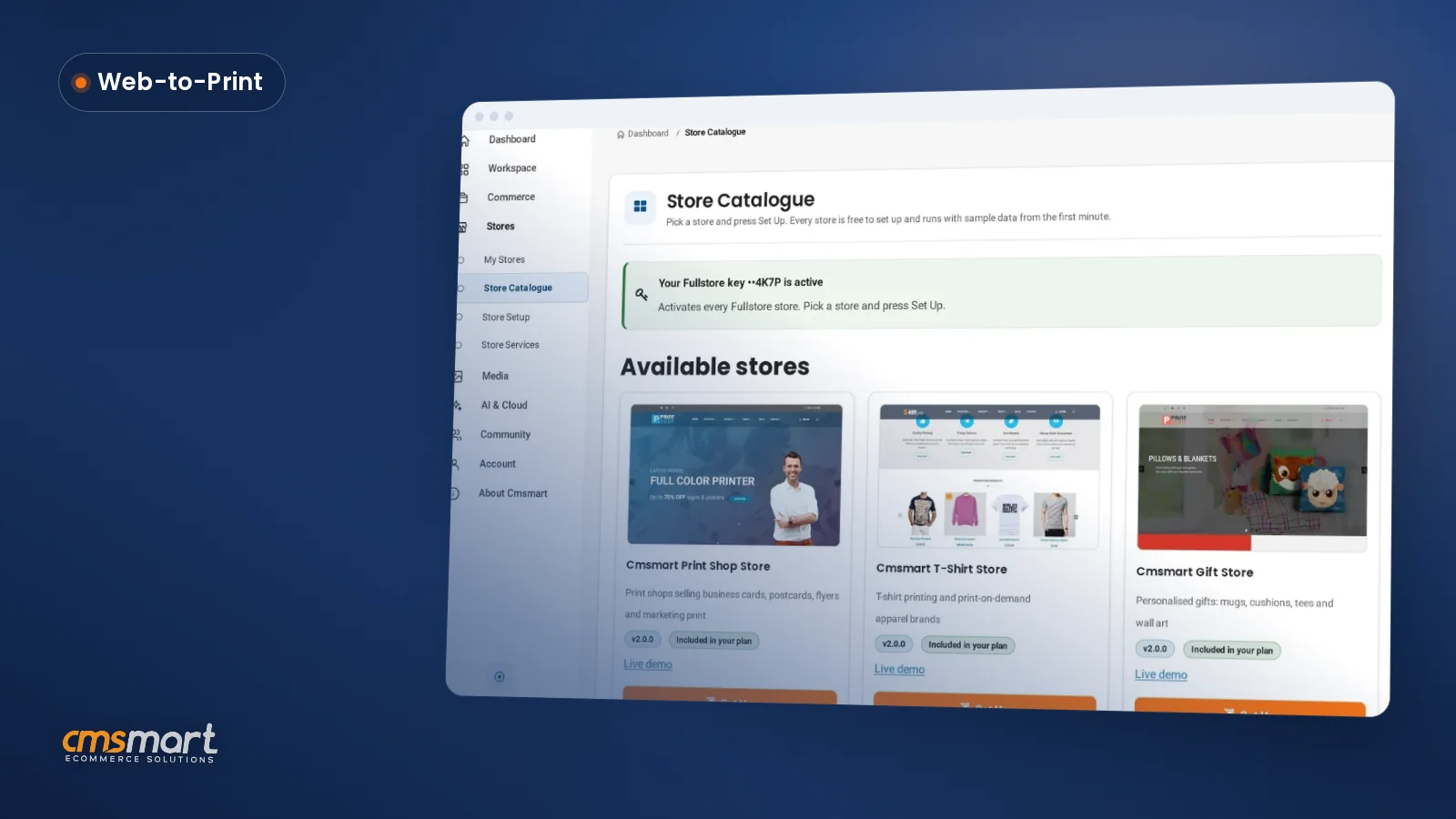
Guide · WooCommerce
What's New in Cmsmart Stores: November 2026
See what is new in Cmsmart this November: 15 ready-made Cmsmart Stores, Cmsmart B2B 2.2.0 and Product Designer fixes. Try the Store Setup wizard today...
Setting up templates in the admin side of a t-shirt website's online design package means building a design once and assigning it to many products at once, instead of recreating artwork for every new listing. Cmsmart's template library speeds up checkout, cuts design cost per product, and reduces unprintable files for print-on-demand t-shirt stores.
Was this tutorial helpful?
See also: Cmsmart pricing and Cmsmart products.
Written by
Cmsmart Print-on-Demand & Apparel Specialist
Helps T-shirt, apparel and print-on-demand brands sell personalised products online.
The team behind it
 Account Manager
 Project Manager
 Business Analyst
 Developers & QA
Guide · WooCommerce
See what is new in Cmsmart this November: 15 ready-made Cmsmart Stores, Cmsmart B2B 2.2.0 and Product Designer fixes. Try the Store Setup wizard today...
Guide · Web-to-print
The Cmsmart Stores Setup wizard installs niche, B2B and Marketplace stores with sample data live in minutes. See what changed and try it free.
Guide · Web-to-print
The NBDesigner plugin now gives stationery shoppers a curated background library so print-ready PDFs always match the preview. See how to set it up.
Browse more guides, tutorials and case studies from the Cmsmart community.
Follow the steps to plan a T-shirt business, choose hosting and a WordPress theme, add key plugins, create product samples and promote the store.
Read MoreStarting to get money from home by selling t-shirts. Here is an easy guideline on How to start a t-shirt business from home to follow. Let’s discover.
Read MoreThe print on demand business benefits are real, but only with the right tools in place. See how Cmsmart turns orders into print-ready files. Get a quote.
Read More
Cmsmart Ecommerce provides custom ecommerce and WooCommerce development services for web-to-print, product personalization, plugin support and API integration.
Cmsmart Print-on-Demand & Apparel Specialist
Helps T-shirt, apparel and print-on-demand brands sell personalised products online.
Meet the team →


In short
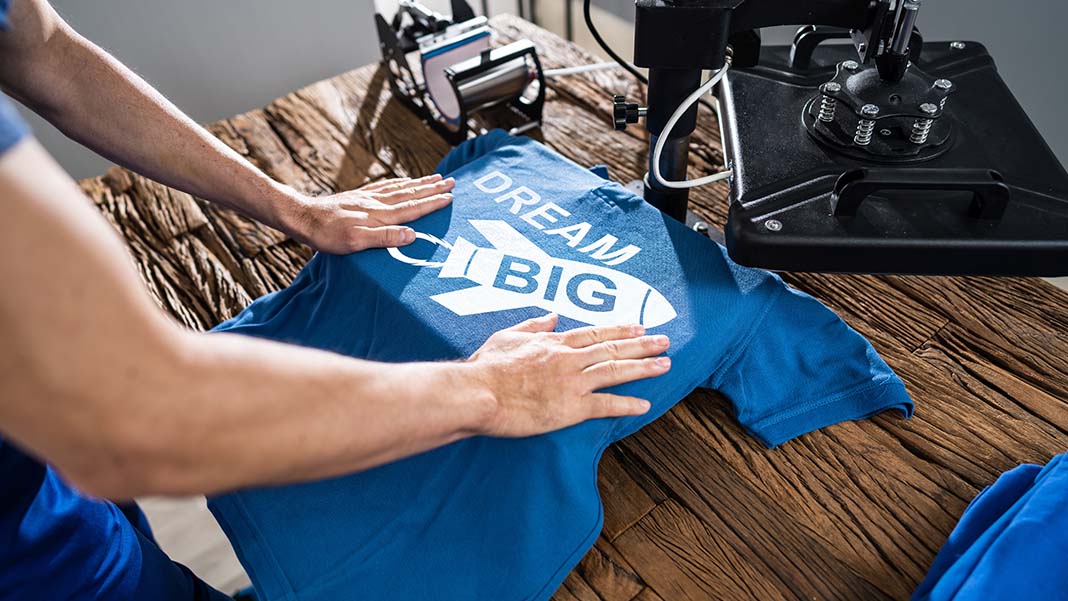
A blank design canvas is where a lot of T-shirt and print-on-demand sales quietly die: the buyer has a shirt in the cart, no idea what to put on it, and closes the window. T-shirt design templates for print-on-demand stores fix that: Cmsmart's Template library puts ready-made designs on the product page instead, so buyers personalize a finished look in minutes and you launch new drops without hiring a designer each time.
What does it cost your T-shirt store when buyers start from a blank canvas?
Every blank canvas is a decision the buyer has to make alone, and plenty walk away instead of making it. Cmsmart's Template library removes that decision point by showing a curated set of ready-made designs right on the product page, so apparel and POD buyers reach checkout with a finished look in minutes instead of an abandoned designer tab.
Talk to any T-shirt or POD seller for five minutes and the same pains come up:
None of this is one line on your P&L, but it is still a cost: design hours spent per product rather than per catalog, a share of the 70.22% average cart-abandonment rate documented across the industry — 17% of shoppers who abandon blame a buying process that felt too long or complicated (Baymard Institute, 2026) — and drops you never launched for lack of a spare day to build new mockups.
What would a template-driven T-shirt store look like?
Picture a shopper landing on your Men's T-shirt page at 9pm, picking one of six ready-made graphics, swapping in their own name, and checking out in under two minutes. Cmsmart's Template library turns that from a wish into the default path, so your store looks fully stocked with fresh designs even on products you have never personally touched.
Example scenario. A WooCommerce apparel store is planning a back-to-school drop. Instead of commissioning twenty new mockups, the team designs four graphics once and assigns each to the Men's and Women's T-shirt, hoodie and tote products. Shoppers see the drop as soon as it is assigned — no new product pages, no redesign per color. On launch day, a parent who has never used a design tool picks a template, adds a name in the text box, and the order lands in the queue as a print-ready file. The work was a few hours once, not a week spread across a dozen products.
If this is the gap between where your store is today and where you want it, talk to an ecommerce expert about planning it for your catalog.
How does Cmsmart's Template library turn one design into dozens of ready-to-buy products?
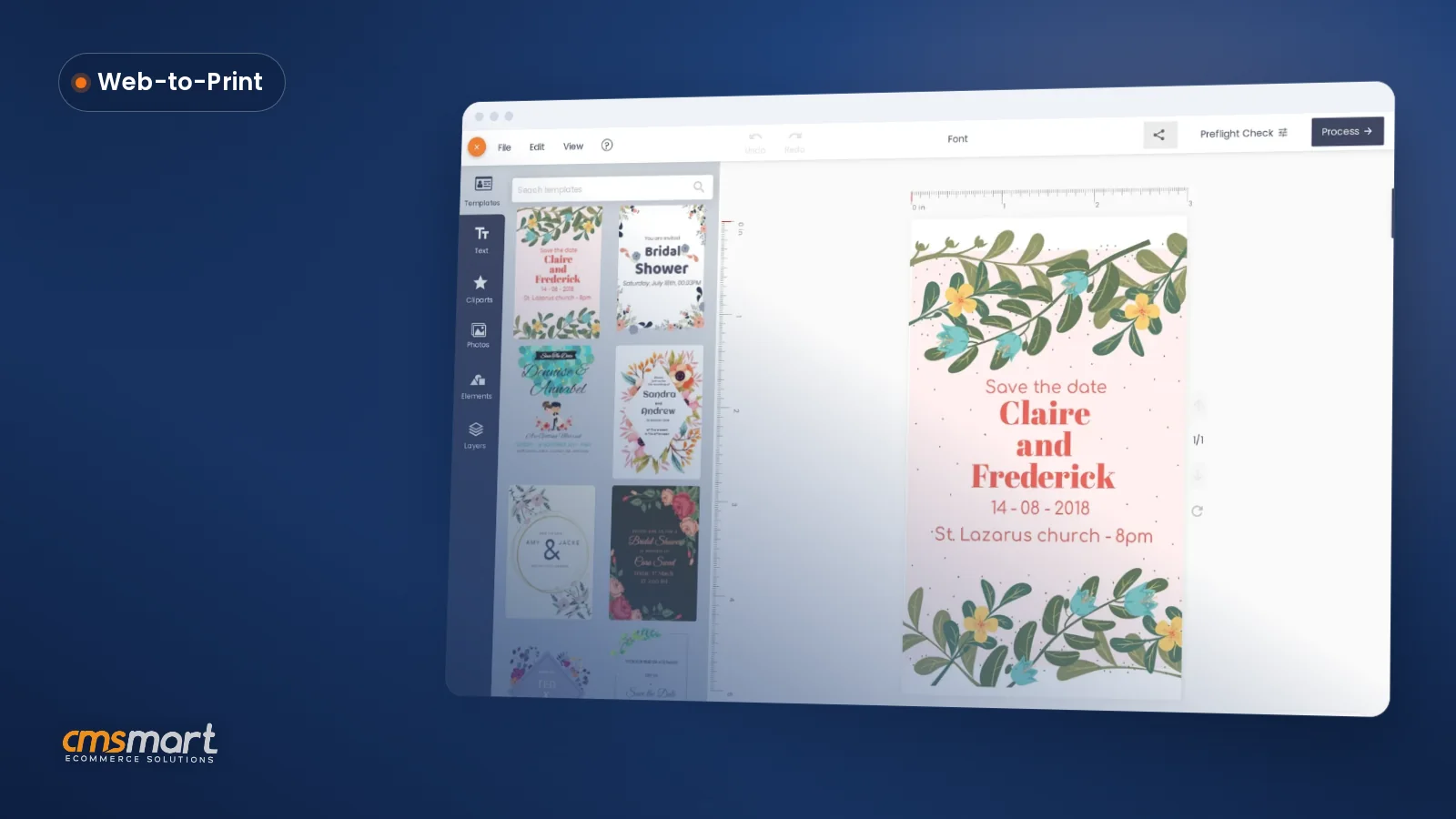
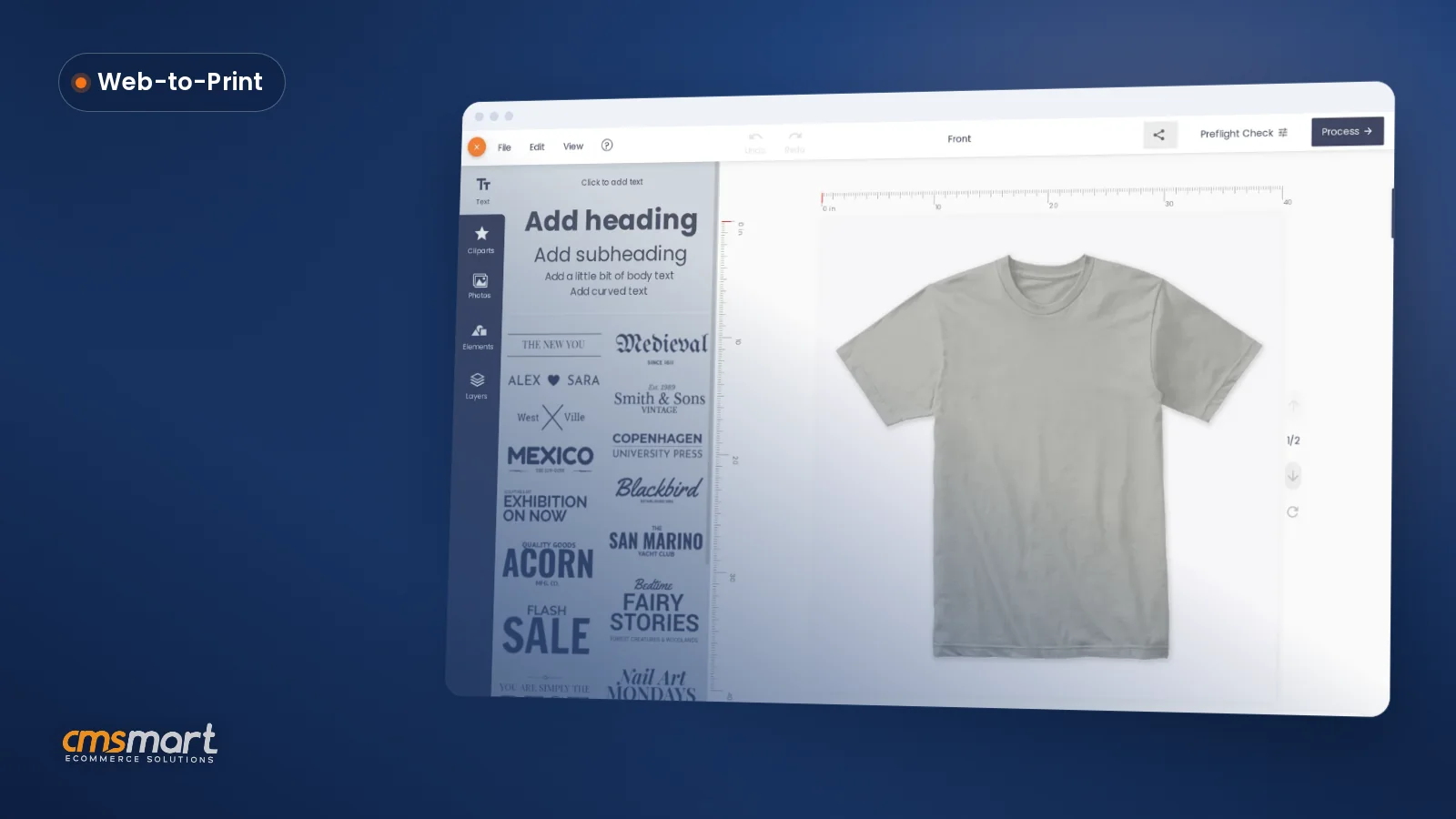
Cmsmart's Template library separates the one-time work of designing from the repeatable work of selling it: an admin builds a design in the same online designer buyers use, saves it, then assigns it to every product it fits from one screen — so the storefront instantly shows a stocked gallery instead of an empty canvas.
The building blocks, and what is in the plugin today versus custom work:
A template, in this context, is just a design saved by the admin instead of a buyer, with the same layers, text and print-ready output as any customer design. A print-ready PDF is the production file the cloud renderer or Create PDF generates from that design, sized and bled to the product's real dimensions rather than a generic mockup.
Cmsmart insight: treat your template library like your best-selling mockups list. If a design has sold more than a handful of times, turn it into a template so the next buyer can personalize it instead of starting from zero — a reorder-friendly starting point also cuts down the preflight back-and-forth over bleed, safe zone and resolution that a from-scratch upload often triggers.
What's the business value of a T-shirt template library, and which KPIs track it?
A template library turns design time into a fixed, one-time cost instead of a per-order variable, raises the share of designer sessions that reach checkout, and gives your team a library of print-tested looks to reuse across colors, sizes and seasons — tracked as fewer abandoned sessions and a faster time-to-launch for every new drop.
Apparel is not a side category for this feature: it is the single biggest slice of a fast-growing market. The global print-on-demand market was worth an estimated $10.8 billion in 2025, and apparel accounted for the largest share of that revenue at 39.5% (Grand View Research, 2025) — exactly the segment a T-shirt template library is built to serve.
Rough-cut ROI worksheet. Use your own numbers, not ours:
Multiply the hours saved by your hourly rate to see the monthly design cost a template library avoids — before counting any lift in finished, paid designs at checkout.
How do you set up t-shirt design templates for print-on-demand stores?
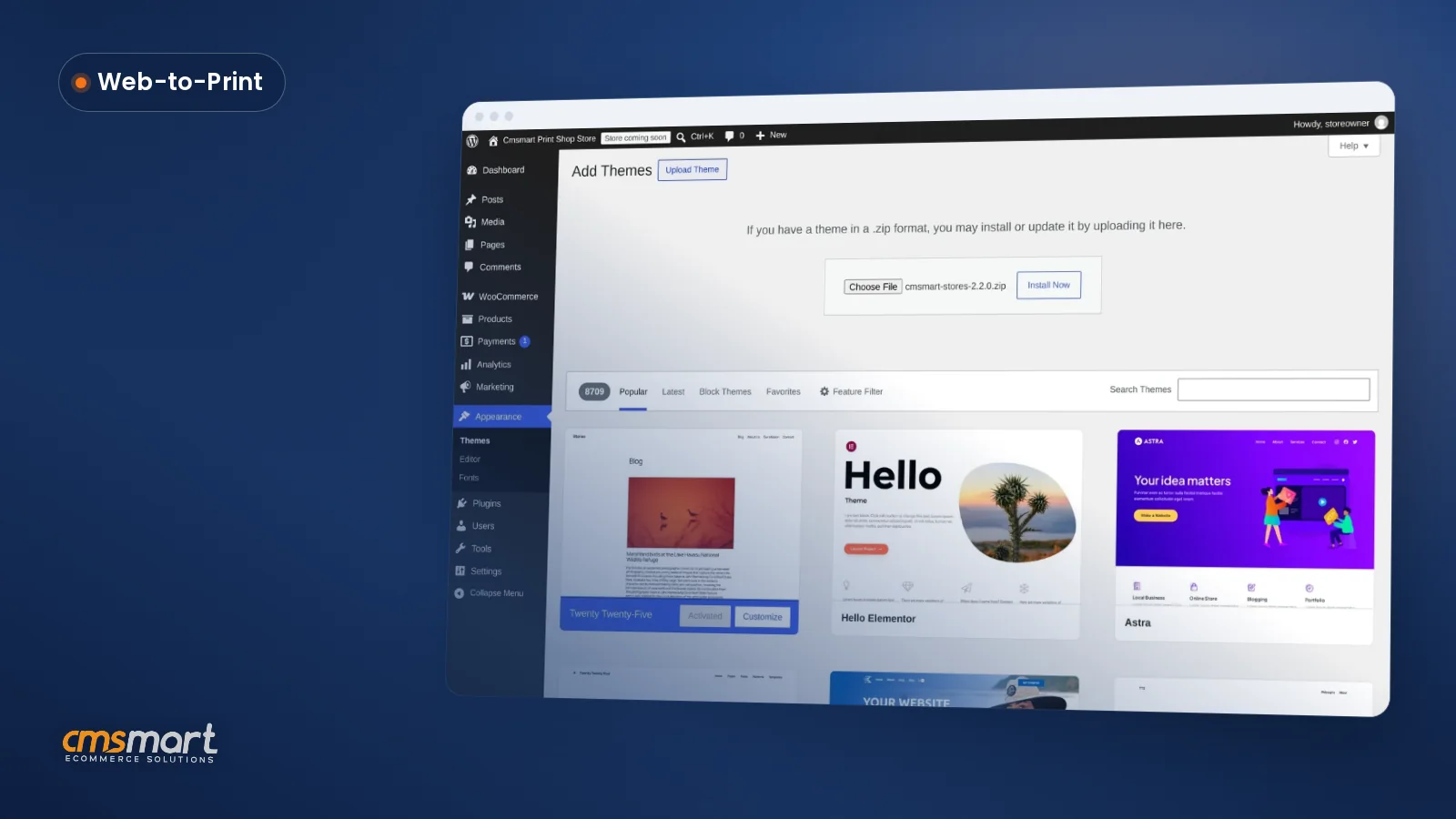
Setting up a template library is mostly admin-side work in screens you already use: design once in the Cmsmart online designer, assign the result to every product it fits from Manager → Products, and your storefront starts showing ready-made T-shirt designs immediately — no new plugin and no developer required for this basic workflow.
Print options, output format, DPI and color profile live in the designer's general settings rather than the Template screen; set those up first if you have not already.
What can Cmsmart build on top of templates for your T-shirt brand?
The Template library ships the catalog, the designer and the assignment screen; Cmsmart's custom development team builds what is specific to your brand on top of it — seasonal automation, ERP-fed catalogs and dedicated team stores that the core plugin does not attempt to do out of the box.
Delivery follows the same path for every build: discovery, solution design, sprints, QA and launch, with support after go-live — see our ecommerce project delivery model.
Plan my T-shirt template library
Why work with Cmsmart for your T-shirt template library?
Cmsmart has built WooCommerce product-designer stores since 2012 as a Netbase JSC division, with 6,300+ client projects and 1,800+ live stores running today — including T-shirt and POD catalogs that lean on the same Template library and print-ready PDF pipeline this guide covers.
The proof we can actually point to, nothing invented:
From a verified Trustpilot review of the plugin this library ships in: "We have had the NB Designer plugin installed for three years and have experienced absolutely no problems during that time. It is wonderful to see their commitment to continuous development [...] the level of support is outstanding." — Web Developer, United Kingdom, Trustpilot, 2026.
If you are comparing this to the basics of building and tagging a template library, our guide on creating and organizing templates in Cmsmart Product Designer covers that setup in more depth; this guide focuses on the T-shirt and POD business case for using it. For the designer and pricing engine behind both, see our web-to-print solutions hub and the Cmsmart Product Designer plugin page.
Frequently asked questions about T-shirt design templates
Does the Template library work for products other than T-shirts?
Yes. The same Manager → Template and Assign to products screens power the catalog-wide feature on any product you turn it on for, not an apparel-only one — Cmsmart's own demo store runs it on business cards and photo books alongside T-shirts.
Do I need a developer to set up a basic template library?
No. Enabling the designer, building a design, saving it as a template and using Assign to products are all done from the WordPress admin. A developer becomes useful once you want automation on top, such as scheduled rotation or an ERP feed.
Can buyers still upload their own artwork instead of picking a template?
Yes. The product page offers both paths — "Upload a full design" for buyers who already have artwork, and "Design here online" for buyers starting from a template or a blank canvas. Templates add a faster third option rather than replacing the other two.
What happens once a buyer's design is approved?
Cmsmart 2.17 locks approved artwork on the server: saving over a design whose order item has been approved is refused with a clear message, from any link or open designer tab. If it genuinely needs to change, editing it reopens the proof for review and queues a fresh print-ready PDF.
How long does a custom build like a team store or ERP-fed templates take?
It depends on scope, but every Cmsmart custom build runs through the same discovery, solution design, sprints, QA and launch process, with support afterward, the same model behind our store and print-shop setup service.
Is there a video walkthrough of building a template?
Yes — see the video walkthrough above for a recording of the same designer workflow this guide describes.
Can an existing template be edited after it's already assigned to products?
Yes. Updating a template's artwork, colors, or print areas applies the change to every product already using that template, so a store never needs to rebuild each listing by hand. This is the same one-to-many link between the admin template and the live product that makes a t-shirt store's design library worth maintaining in the first place.
Why do print-on-demand stores see fewer unprintable files once they switch to templates?
Templates lock in preset design areas, print-safe margins, and resolution rules, so buyers work inside boundaries that are already proven to print cleanly instead of free-forming on a blank canvas. Removing that blank-canvas step is also why preflight checks catch far fewer errors once a template library is running across a store's catalog.