
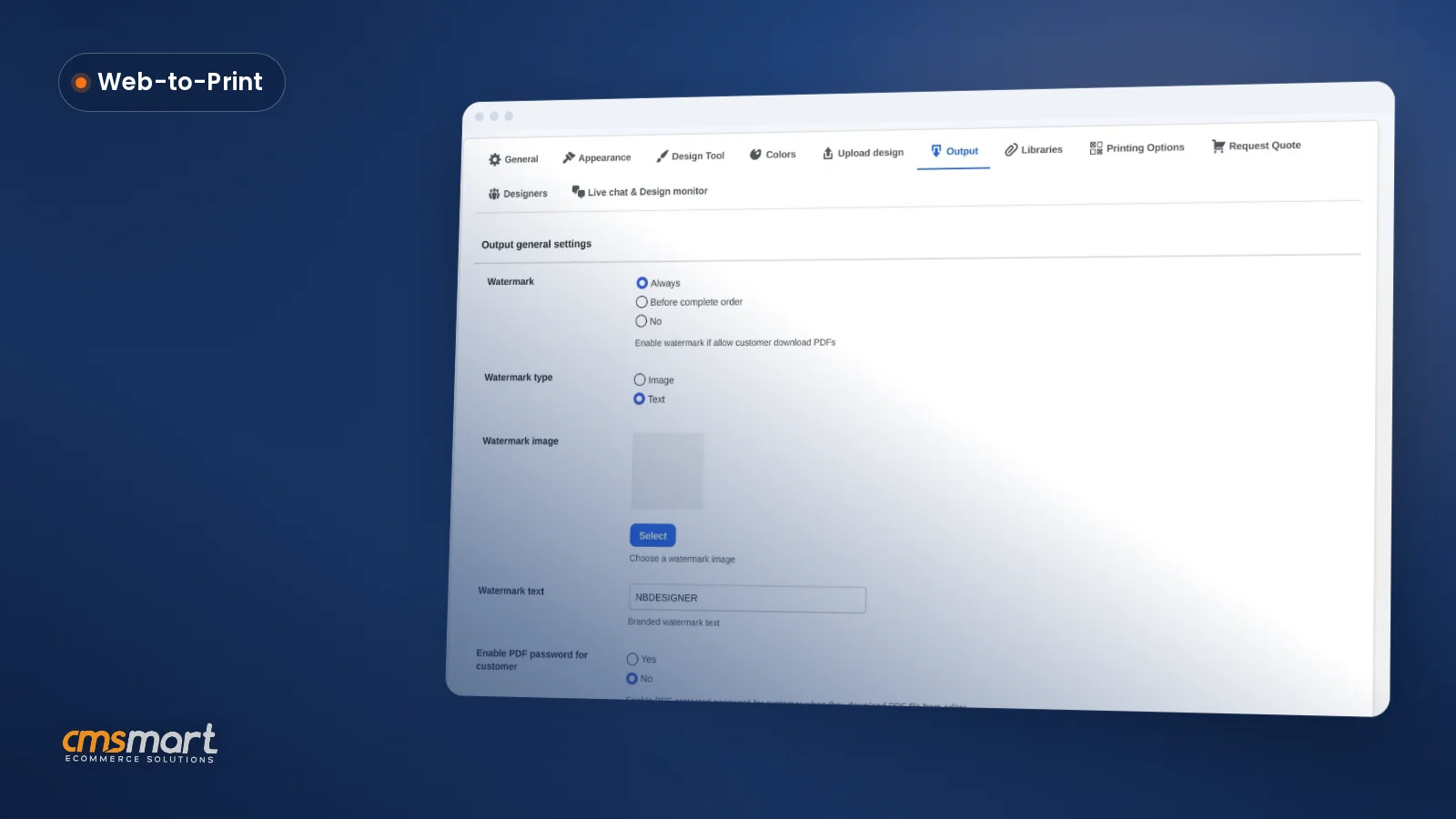
Guide · Web-to-print
Print Ready PDF Output Settings WooCommerce Setup
See what the print ready PDF output settings WooCommerce screen controls — watermark, password, bleed, FTP sync — and configure yours today.
Explore cutting-edge e-commerce trends to enhance your online business strategy. Stay informed and ahead of the competition with the latest insights and actionable strategies for success.
Table of contents
Was this tutorial helpful?
Written by
Cmsmart Ecommerce Growth & Trends Analyst
Tracks ecommerce trends and turns them into practical moves for growing stores.
The team behind it
 Account Manager
 Project Manager
 Business Analyst
 Developers & QA
Guide · Web-to-print
See what the print ready PDF output settings WooCommerce screen controls — watermark, password, bleed, FTP sync — and configure yours today.
Case study · AI
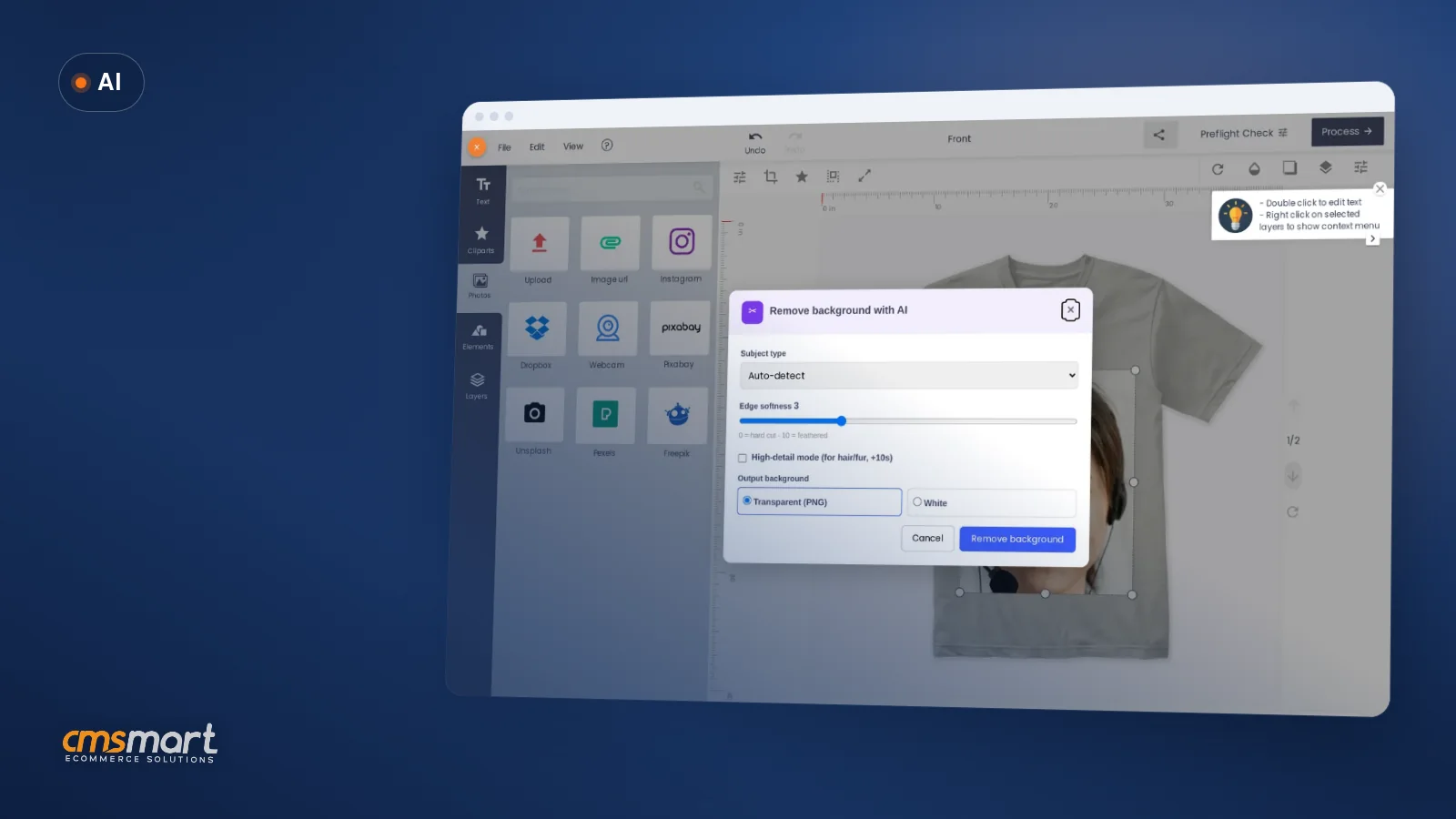
Add an AI background remover for WooCommerce to your product designer so buyers get a clean cutout instantly, and see how Cmsmart builds the rest for...
Case study · Web-to-print
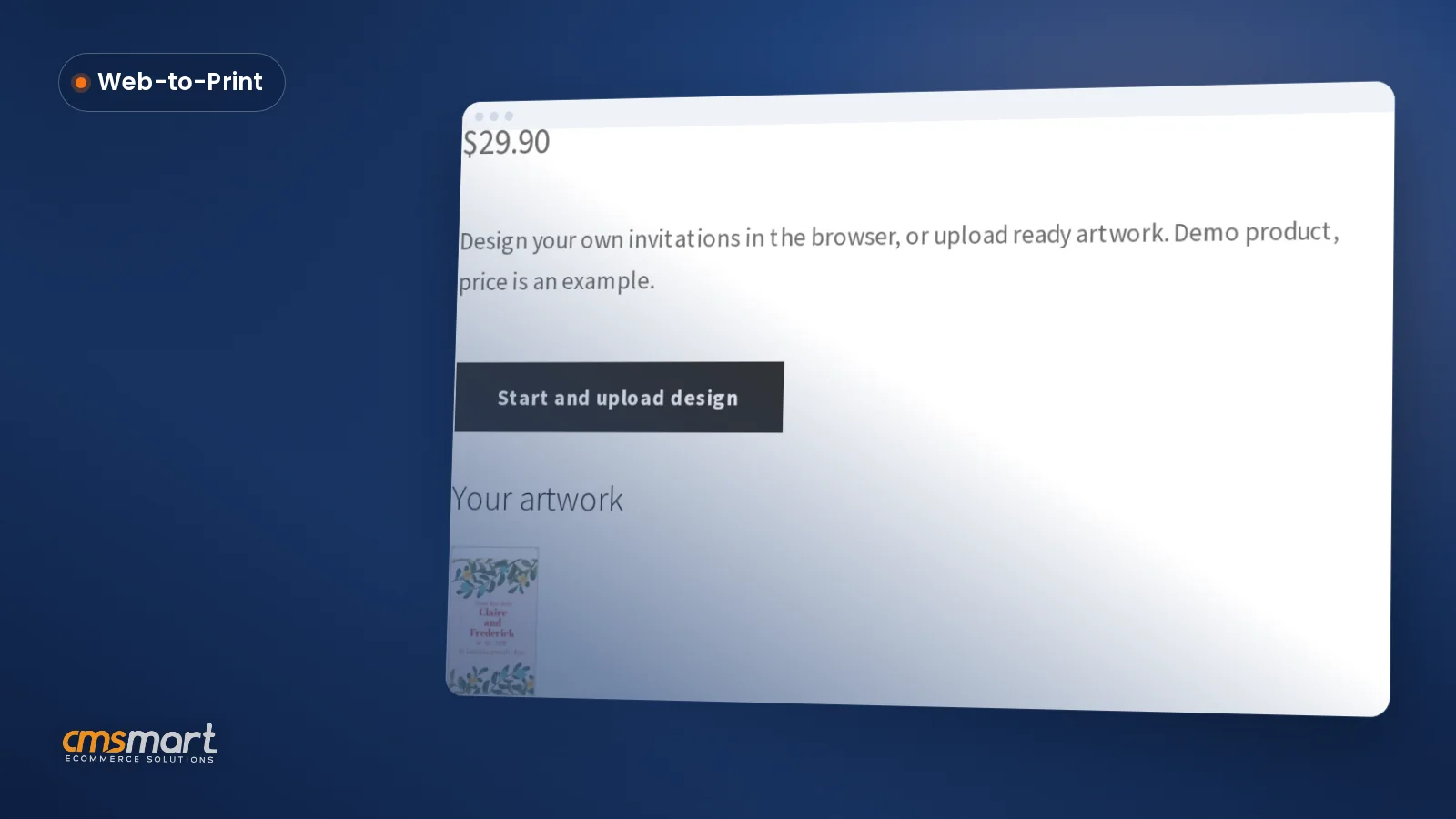
Save design and reorder WooCommerce orders in one click, with a fresh print-ready PDF every time. See how Cmsmart builds it.
Browse more guides, tutorials and case studies from the Cmsmart community.
Unlock the Power of Mobile Commerce: Propel Your Business Forward
Read MoreDiscover how to harness mobile commerce to enhance your business growth. Learn strategies for optimizing the mobile shopping experience and increasing consumer engagement.
Read MoreDiscover the benefits of mobile commerce and how it can transform your business. Learn effective strategies for maximizing sales and customer engagement through mobile-optimized shopping experiences.
Read More
Cmsmart Ecommerce provides custom ecommerce and WooCommerce development services for web-to-print, product personalization, plugin support and API integration.
Cmsmart Ecommerce Growth & Trends Analyst
Tracks ecommerce trends and turns them into practical moves for growing stores.
Meet the team →




As e-commerce continues to grow exponentially, with a remarkable global market value projected to reach $6.38 trillion by 2024, business owners face the pressing challenge of staying relevant and competitive in a rapidly evolving landscape. The shift towards online shopping has been further accelerated by the pandemic, highlighting the necessity for brands to adapt to new consumer behaviors. For instance, a well-known fashion retailer, Fashionify from Australia, struggled to maintain customer engagement and sales amidst the rise of mobile shopping and social media commerce. By partnering with Cmsmart, they streamlined their operations, implemented multi-channel strategies, and enhanced mobile user experiences, leading to a 35% increase in online sales within six months.
In light of these developments, understanding the latest e-commerce trends is not just beneficial—it's critical for success. From embracing mobile optimization and social commerce to refining personalized shopping experiences, there are myriad opportunities to enhance your online presence. For a deeper dive into effective strategies, consider exploring our resources on multi-channel e-commerce success and how to revolutionize customer experiences. In this guide, we’ll decode these critical trends and provide actionable insights to help your online store not just survive but thrive in 2023.
Staying Ahead: Decoding Latest E-commerce Trends
Adapting to the ever-changing landscape of e-commerce can feel overwhelming.With new trends appearing rapidly, businesses must continually evolve to meet the demands of consumers.
Navigating the Latest E-commerce Trends
To stay competitive, it’s essential to harness the latest online retail trends, which encompass various aspects including shopping behavior and technology integration. Here are some crucial areas to focus on:Implementing Advanced Strategies for Success
Adapting to these e-commerce developments not only requires understanding trends but also applying them strategically. Consider: - Regularly updating your website based on customer feedback. - Utilizing AI tools for data-driven insights into consumer preferences. - Executing targeted marketing campaigns on platforms favoured by your audience. In summary: By understanding and implementing these latest trends and techniques, you put your business in an advantageous position for growth.Next, let’s delve deeper into optimizing your strategies by exploring omnichannel retail strategies, mobile shopping optimization, and creating personalized shopping experiences.
Unveiling Omnichannel Strategies for Enhanced Customer Engagement
Adapting to the evolving landscape of consumer behavior is crucial for achieving success in todays competitive e-commerce market.With the rise of multi-channel shopping, brands must focus on delivering value-driven experiences that resonate with customers across various platforms.
Defining Omnichannel and its Importance in Todays E-commerce Landscape
Omnichannel refers to a comprehensive approach that integrates multiple shopping channels to provide a seamless customer experience. This strategy is becoming indispensable as 73% of consumers use multiple channels during their shopping journey, according to studies from Shopper’s Voice (link: https://www.shoppersvoice.com). Here are the reasons why an omnichannel strategy is vital:Benefits of Using Omnichannel Strategies in E-commerce
Implementing an omnichannel approach offers several advantages:- Increased customer loyalty through tailored shopping experiences.
- Data-driven insights gained from customer shopping patterns across channels.
- Cost-effective strategies that maximize returns on investment.
As stated by an industry expert:Examples of Effective Omnichannel Strategies
Consider the following actionable strategies to enhance your e-commerce presence:- Integrate social media shopping options to capture impulse buyers.
- Utilize mobile-optimized websites to cater to on-the-go consumers.
- Provide click-and-collect services to bridge online and offline experiences.
To delve deeper into optimizing your e-commerce store, explore topics like explore omnichannel retail strategies, optimize for mobile shopping, and leverage social commerce for Gen Z. In summary: Adopting an omnichannel approach is essential for modern e-commerce success. By creating unified, engaging customer experiences, businesses can thrive amidst competitive pressures. In the next section, well look at practical tips to optimize your mobile shopping experiences to further enhance customer satisfaction.Mastering Mobile Shopping Optimization
Struggling to adapt to the rapid shift towards mobile shopping? You’re not alone.With the surge in multi-channel shopping behaviors, optimizing websites for mobile traffic has become essential for retailers today.
The Rise of Mobile Commerce in Todays Retail Market
As consumer preferences change, its important to recognize the value of mobile commerce within the broader context of online retail trends. - In 2023, mobile devices accounted for 54.8% of all global online sales. - This trend is expected to keep growing, potentially reaching 67% of e-commerce sales by 2025.Embracing mobile shopping can enhance the customer experience and help businesses remain competitive. Failing to do so may alienate a significant portion of potential customers who prefer shopping on their mobile devices.
Importance of Optimizing E-commerce Sites for Mobile
Optimizing e-commerce sites for mobile devices not only improves accessibility but also strengthens customer retention. Consider the following actionable tips:Insights to Build Mobile-Friendly E-commerce Sites
Creating a mobile-friendly site is essential for fostering engagement and enhancing the shopping experience. Here are some strategies to implement:- Design simple, attractive layouts with larger buttons for easy navigation.
- Incorporate engaging visuals, including high-quality images and videos. Loyalty programs relate to customer retention strategies in e-commerce.
- Utilize customer reviews prominently to build trust and credibility.
Moreover, integrating social media channels into your mobile strategy can attract younger generations, particularly Generation Z. These consumers seek tailored shopping experiences and expect brands to engage with them actively on platforms they frequent. In summary: Mastering mobile shopping optimization is essential for staying competitive in todays dynamic digital landscape. By leveraging these insights and strategies, you can elevate your e-commerce site to cater to mobile shoppers effectively. Next, lets delve into exploring omnichannel retail strategies to further enhance your online presence and maximize sales potential.Leveraging Social Commerce for Gen Z and Beyond
Are you struggling to connect with the digitally-savvy shoppers of today? Youre not alone.In a rapidly evolving landscape, businesses often encounter the challenge of adapting to multi-channel shopping behaviors while engaging a demographic like Generation Z that thrives on social media.
Understanding Social Commerce and its Impact on E-commerce Landscape
Social commerce has revolutionized online retail trends, merging social media platforms with shopping experiences. It offers a unique opportunity to meet consumers where they spend their time.Capitalizing on Social Commerce Channels for Better Sales
Getting the most out of your social commerce efforts requires understanding the channels where your target audience gathers.Case Studies on Successful Social Commerce Campaigns
Analyze brands that have thrived through social commerce to extract actionable insights.Brands like Glossier and Gymshark have successfully utilized social commerce to drive traffic and boost conversions by engaging with their audiences directly on platforms they frequent. They highlight the importance of understanding consumer behavior and creating tailored shopping experiences that prioritize connection.
In summary: Leverage social commerce to adapt to the ever-changing consumer landscape and enhance user engagement effectively. Ready to dive deeper? Let’s explore omnichannel retail strategies next, or optimize your website for mobile traffic and personalized shopping experiences to further enhance customer engagement.Personalization: The Future of Successful E-commerce
Adapting to ever-changing consumer preferences is key for thriving in e-commerce.From optimizing websites for mobile shoppers to creating tailored customer experiences, businesses must focus on personalization to enhance customer satisfaction and retention.
Breaking down the Concept of E-commerce Personalization
Personalization in e-commerce refers to tailoring the shopping experience to meet individual customer preferences. Implementing solutions that customize content, product recommendations, and overall interactions can significantly impact sales. Here are some effective techniques:
Impact of Personalization on Customer Satisfaction and Retention
When consumers receive a tailored shopping experience, their satisfaction levels soar, leading to higher retention rates. Here’s why personalization is effective:
Techniques for Creating Tailored Shopping Experiences
Implementing effective personalization strategies can help businesses stand out. Consider these actionable tips:
For businesses eager to enhance their e-commerce strategy, it’s crucial to explore omnichannel retail strategies, optimize for mobile shopping, and leverage social commerce for Generation Z.
In summary: Focusing on personalization not only improves customer satisfaction but also builds a loyal customer base essential for thriving in e-commerce. Next, let’s discuss advanced techniques to enhance your service approach in a changing marketplace.By focusing on personalized experiences, businesses can enhance overall customer service, capitalize on current shopping trends, and sustain success in a competitive market.
Elevating the E-commerce Journey with Exceptional Customer Service
Adapting to ever-evolving shopping behaviors can be daunting for e-commerce businesses.With customers increasingly expecting top-notch customer service, optimizing your approach is crucial to stay competitive in the digital marketplace.
Understanding the Connection between Customer Service and E-commerce Success
Quality customer service is not just an add-on; its a key driver of e-commerce success. Businesses that prioritize customer satisfaction see significant benefits, including higher customer retention rates and increased sales. Here are some clear connections:Strategies for Delivering High-Quality Customer Service in E-commerce
To ensure your customers enjoy a seamless shopping experience, consider implementing the following strategies:Measuring the Impact of Enhanced Customer Service Approach
Monitoring the effectiveness of your customer service efforts is crucial. Focus on these key performance indicators (KPIs):- Customer satisfaction score (CSAT) to assess overall satisfaction.
- Net promoter score (NPS) to gauge customer loyalty and likelihood of referrals.
- First response time to measure efficiency in handling inquiries.
To dive deeper into enhancing your customer service approach, explore omnichannel retail strategies, personalized shopping experiences, and evaluating subscription commerce models. Each strategy contributes to building a strong foundation for your e-commerce success. In summary: Exceptional customer service is critical in the competitive e-commerce landscape. By implementing robust strategies and focusing on key metrics, you can not only enhance customer satisfaction but also drive growth—next, let’s explore how to leverage social commerce for Gen Z.Re-commerce: Unleashing the Potential of Secondhand Market
Struggling to stay competitive in the fast-paced world of online retail? Youre not alone.Many businesses find it challenging to adapt to multi-channel shopping behaviors, optimize for mobile traffic, and provide tailored customer experiences while competing in the resale market.
Defining Re-commerce and its Role in the eCommerce Landscape
Re-commerce, or the resale of pre-owned goods, has emerged as a significant trend in the eCommerce landscape. It addresses several consumer demands for sustainable shopping options and economically friendly choices. Understanding its dynamics is essential for retailers looking to thrive.Growth and Advantages of the Re-commerce Market
The re-commerce market has seen remarkable growth due to shifts in consumer behavior, especially among younger generations. Here are some key advantages that make it appealing:Case Studies on Successful Re-commerce Brands
Several brands have successfully tapped into the re-commerce market, showcasing innovative strategies and business models.- ThredUp: A pioneering online thrift store that specializes in secondhand clothing.
- Poshmark: A social commerce platform that enables users to buy and sell fashion goods.
- Tradesy: Focuses on upscale items, allowing users to resell their luxury fashion investments.
In summary: Leveraging the re-commerce boom can greatly enhance your brands appeal and customer retention. By understanding its principles and observing successful models, you can adapt effectively in todays market. Next, let’s dive into exploring omnichannel retail strategies to further optimize your e-commerce approach.Subscription Commerce: Creating Recurring Revenue Streams
Struggling to adapt your e-commerce strategy to meet changing consumer behaviors? You’re not alone.Businesses are increasingly challenged by the need to provide seamless shopping experiences across various platforms, optimize websites for mobile users, and maintain high customer service standards while managing the competitive resale market and the economic effects of inflation.
Demystifying Subscription Commerce and its Perks
Subscription commerce offers a powerful avenue for building reliable, recurring revenue streams while enhancing customer loyalty. Here are some compelling benefits to consider:Determining Factors in Building Successful Subscription Commerce Models
To establish a successful subscription model, consider the following key factors:Best Practices for Adopting Subscription-based Models
Implementing best practices will help streamline your subscription offers:- Simplify User Experience: Make sign-ups quick and effortless to encourage higher conversion rates.
- Leverage Analytics: Use data insights to optimize offerings and pricing models continuously.
- Promote Trial Offers: Encourage potential customers to experience your offerings risk-free to enhance conversion rates.
For deeper insights, explore strategies to optimize for mobile shopping and create personalized shopping experiences that resonate with customers. In summary: Embracing subscription commerce can transform your approach to generating revenue while enhancing customer loyalty. Next, let’s explore how to capitalize on the re-commerce boom to further boost your sales.Understanding and Navigating Inflation's Impact on E-commerce
Struggling to manage your e-commerce pricing strategy amid rising inflation? You’re not alone.Many online retailers are facing the challenge of adapting to economic fluctuations that affect consumer spending.
Exploring the Interplay between Inflation and eCommerce
Understanding how inflation impacts e-commerce is crucial for making strategic decisions. Inflation leads to increased costs for production and logistics, which often gets passed on to consumers. Here are some factors to consider:Strategies for Managing Inflation-Driven Pricing Challenges
To navigate inflation effectively, consider implementing these strategies:Inflations Influence on Consumer Spending Habits
Inflation affects consumer spending patterns significantly. Customers might cut back on discretionary purchases in favor of essentials. Here’s how to adjust for these changes:- Customization and Personalization: Tailor shopping experiences to meet individual needs to maintain engagement.
- Promotional Campaigns: Implement targeted marketing strategies that highlight discounts and value savings to attract price-sensitive customers.
- Sustainability Focus: Capitalize on the growing trend towards sustainable shopping as consumers become more conscious of their purchasing choices.
In summary: By understanding and navigating the complex impact of inflation, e-commerce businesses can adapt their pricing strategies while retaining consumer engagement. Next, lets explore how to optimize your website for mobile shopping to enhance your customer experience.Frequently Asked Questions
Adapting to the ever-evolving landscape of e-commerce can be challenging for businesses today.From multi-channel shopping behaviors to providing tailored experiences, understanding the latest trends is crucial to staying competitive in the digital marketplace.
Common Questions About E-commerce Trends and Strategies
1. What are the latest trends in online retail?
The e-commerce industry is rapidly evolving. Key trends include:2. How important is social media for sales?
Social media channels are essential for driving traffic and sales. They allow businesses to engage with customers directly and create brand loyalty. Consider:3. How do I optimize my website for mobile traffic?
To enhance user experience on mobile, you can:4. What strategies help in creating personalized shopping experiences?
Personalization can greatly enhance customer retention:5. How is inflation impacting e-commerce pricing strategies?
Businesses must adapt to changing consumer spending habits due to inflation:6. Should I adopt a subscription-based model?
Subscription commerce is on the rise, providing consistent revenue. Consider integrating:- Monthly boxes for recurring purchases.
- Memberships offering exclusive discounts and benefits.
- Services tied to customer preferences and feedback.
In summary: Understanding and adapting to these trends is vital for e-commerce success. With the rise of mobile shopping and social commerce, its clear businesses must innovate to meet consumer expectations. Next, let’s explore how to enhance your customer service approach and capitalize on omnichannel retail strategies.FAQ Section: Troubleshooting and Pro Tips
How can I adapt to multi-channel shopping behaviors?
Integrate your eCommerce platform with social media and marketplaces for a unified shopping experience.
What are the best practices for optimizing websites for mobile traffic?
Ensure responsive design, fast loading times, and easy navigation for mobile users.
How can I utilize social media for sales effectively?
Use shoppable posts and engage with customers through content to drive traffic to your store.
What strategies help in providing tailored customer experiences?
Leverage AI for personalized product recommendations based on customer data and behavior.
How important is maintaining high-quality customer service?
High-quality customer service builds trust and loyalty, essential for repeat business.
What should I consider when competing in the resale market?
Focus on unique value propositions, quality assurance, and customer service excellence.
How can inflation affect my pricing strategies?
Regularly assess costs and customer perception to adjust pricing strategies while maintaining competitiveness.
What are the advantages of adopting subscription-based models?
Subscription models can ensure stable revenue and increase customer lifetime value through recurring purchases.
Further Reading
As we’ve explored the latest e-commerce trends shaping the landscape in 2023, it's clear that adapting your strategy is vital to staying competitive. Embracing multi-channel adaptation, optimizing for mobile, and utilizing personalized experiences will not only engage your customers but drive substantial growth for your store. Don't wait to implement these strategies! Together, we can transform your e-commerce approach to meet the demands of today's savvy consumers. If you're ready to take the next step, contact David, our CEO, directly on WhatsApp, or reach out to me at [email protected]. For a tailored solution, request a quotation today. Let’s elevate your online store to new heights!