

Guide · Web-to-print
Print Ready PDF Output Settings WooCommerce Setup
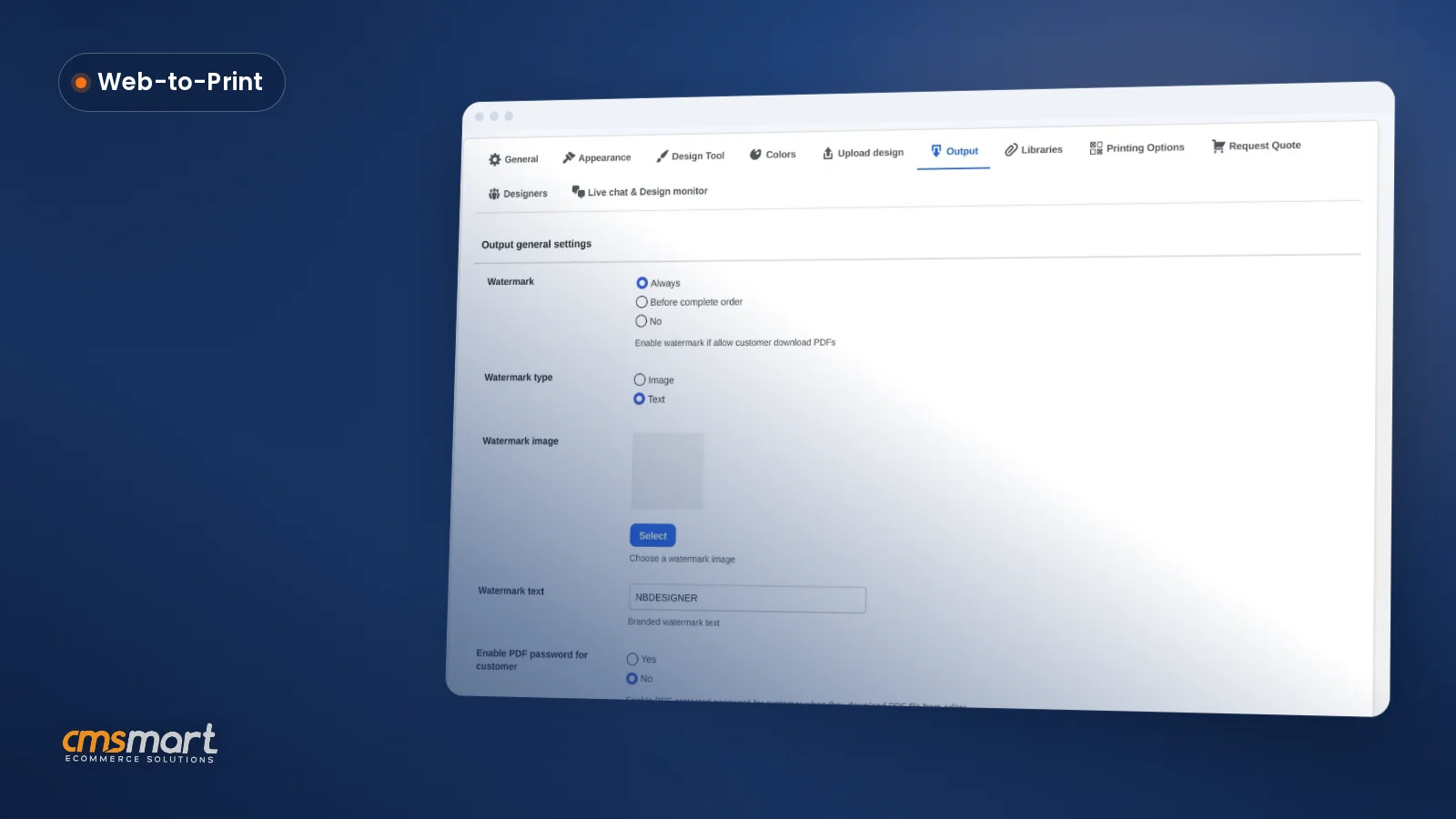
See what the print ready PDF output settings WooCommerce screen controls — watermark, password, bleed, FTP sync — and configure yours today.
Learn how to optimize your e-commerce transaction process for improved efficiency and growth. Discover strategies to enhance user experience, increase sales, and leverage technology for seamless transactions.
Table of contents
Was this tutorial helpful?
Written by
Cmsmart WooCommerce Development Lead
Leads custom WooCommerce builds: architecture, checkout, performance and integrations.
The team behind it
 Account Manager
 Project Manager
 Business Analyst
 Developers & QA
Guide · Web-to-print
See what the print ready PDF output settings WooCommerce screen controls — watermark, password, bleed, FTP sync — and configure yours today.
Case study · AI
Add an AI background remover for WooCommerce to your product designer so buyers get a clean cutout instantly, and see how Cmsmart builds the rest for...
Case study · Web-to-print
Save design and reorder WooCommerce orders in one click, with a fresh print-ready PDF every time. See how Cmsmart builds it.
Browse more guides, tutorials and case studies from the Cmsmart community.
Unlock the Power of Mobile Commerce: Propel Your Business Forward
Read MoreDiscover how to harness mobile commerce to enhance your business growth. Learn strategies for optimizing the mobile shopping experience and increasing consumer engagement.
Read MoreDiscover the benefits of mobile commerce and how it can transform your business. Learn effective strategies for maximizing sales and customer engagement through mobile-optimized shopping experiences.
Read More
Cmsmart Ecommerce provides custom ecommerce and WooCommerce development services for web-to-print, product personalization, plugin support and API integration.
Cmsmart WooCommerce Development Lead
Leads custom WooCommerce builds: architecture, checkout, performance and integrations.
Meet the team →






Did you know that the global e-commerce market is poised to exceed a staggering $6.5 trillion by 2023? In this thriving digital landscape, businesses are racing against time and competition to perfect the online transaction process. Take, for example, our client TechSphere from Australia, a leading tech accessory retailer. Faced with a swath of operational inefficiencies, they struggled with managing customer transactions, leading to abandoned carts and lost sales. After implementing Cmsmart’s tailored solutions, TechSphere saw a remarkable 45% increase in completed transactions within just three months, proving that streamlined e-commerce processes are key to success in this fast-paced environment.
This inspiring transformation resonates with many businesses today, as the complexities of customer search behaviors and the demand for seamless multi-channel experiences continue to grow. In this tutorial, we will delve into essential strategies to master the e-commerce transaction process, equipping you to enhance efficiency and drive exponential growth. Along the way, we’ll explore invaluable resources, including insights on optimizing your inventory management for maximum profitability here and discovering proven strategies for enhancing online sales here. So, let’s jump right in and unlock the secrets to transforming your e-commerce journey!
The New Age of Trading: E-commerce
Imagine being able to carry out transactions seamlessly in a world increasingly driven by digital technology. Welcome to the era of E-commerce!The digital revolution has drastically transformed how we buy and sell goods, leading to the dawn of e-commerce—a dynamic marketplace that is both vast and varied. In this new age of trading, businesses face the challenge of decoding complex customer search behaviors and mastering B2B negotiations during transactions. Additionally, the integration of shopping cart systems and sustaining customer engagement throughout the e-commerce process are critical elements for success.
Navigating the Online Shopping Process
Understanding the online shopping process is crucial for any business. With increasing complexities in customer search behaviors, it becomes imperative to adopt strategies that facilitate seamless digital transactions.
Optimizing the E-commerce Journey
Every e-commerce journey begins with an understanding of digital transaction flow and optimizing SEO strategies to improve visibility and reach.
Ensuring Seamless Digital Transactions
Seamless integration of shopping cart systems is crucial for ensuring customer satisfaction. Implementing effective B2B negotiation tactics in e-commerce can lead to streamlined operations and improved business relationships.
- Adopt advanced shopping cart solutions for efficient checkout processes.
- Engage in negotiations that focus on mutual benefits and long-term partnerships.
In summary: The future of commerce is digital. Embracing this shift with an effective strategy can significantly benefit your business. For detailed steps on starting your journey, learn more about beginning an e-commerce journey and explore our guide on understanding online search behavior. Now, lets proceed to unravel the next integral aspect of our business strategy.Understanding the E-commerce Transaction Process
Struggling with the complexity of e-commerce transactions?Youre not alone. Many businesses grapple with challenges like understanding digital transaction flows, navigating product discovery, and deploying shopping cart systems effectively.
Definition of E-commerce Transaction Process
E-commerce transactions refer to the buying and selling of goods or services using the internet, where the exchange of products or services for revenue occurs digitally. This process involves multiple components including product listing, shopping cart integration, and secure payment gateways.
The Evolution and Importance of E-commerce in Todays Market
The e-commerce sector has seen significant transformation over the years, becoming a cornerstone of modern retail. From its inception as simple online catalogs, e-commerce now offers complex, interactive platforms tailored to enhance customer interaction and streamline the online shopping process. According to recent market insights, the global e-commerce market is projected to reach $8 trillion by 2027, underscoring its vital role in todays economy.
Terminology: Grasping the Jargons of E-commerce Transaction Process
Understanding the flow of digital transactions requires familiarity with key terms:
- Shopping Cart Systems: Platforms enabling customers to select and manage purchases.
- Product Discovery: The mechanism through which customers find items of interest, often enhanced by SEO strategies.
- Marketplace Listing: The display of products for sale on digital platforms.
In summary: E-commerce transactions are more critical than ever, driving the need for integrated systems that support seamless online journeys—from product discovery to purchase completion. For more insights, explore content on how e-commerce works, lifecycle steps, and effective B2B negotiation tactics in e-commerce in our resources .Breakdown of the Online Shopping Process
Feeling overwhelmed by the complexities of e-commerce and digital transaction flows? You’re in the right place.Navigating through customer search behaviors, B2B negotiation challenges, shopping cart integration, and ensuring customer engagement can be daunting but essential components for your online success.
What is the Online Shopping Process?
The online shopping process, often referred to as the e-commerce journey, is a series of digital interactions through which customers engage in product discovery, selection, and purchase. Starting with marketplace listing, consumers typically navigate through various stages of product selection, adding items to shopping cart systems, and finally making a purchase through a secure checkout.
Advantages of Online Shopping
Adapting to digital transaction flows offers numerous benefits that enhance customer satisfaction and business efficiency.
Exploring Examples of Effective E-commerce Journey
Effective e-commerce journeys are crafted from a deep understanding of digital transaction flows and customer interactions. Leveraging SEO strategies to improve visibility can be a game-changer for proactive engagement.
- Incorporate synonyms and LSI keywords like online shopping process and customer interaction naturally throughout your content.
- Utilize AI tools to offer personalized shopping experiences to adapt to changing consumer needs .
In summary: Navigating the online shopping process is about more than just transactions; its about creating an engaging e-commerce journey. By optimizing each stage, from search behavior to B2B negotiations, your business can achieve significant growth. As we transition to the next section, delve into the understanding of online search behavior and explore effective B2B negotiation tactics in e-commerce.Dissecting the E-commerce Lifecycle
Are you struggling with the complexities of the e-commerce lifecycle? From the intricate nuances of customer search behaviors to tackling challenges in B2B negotiation and integrating shopping cart systems, engaging your customers throughout their e-commerce journey can seem daunting.Detailed Understanding of E-commerce Lifecycle
In todays digital marketplace, the e-commerce lifecycle is more significant than ever. It encompasses every step, from initial customer interest to the completion of a purchase and beyond. Understanding this lifecycle can enhance customer interaction and streamline the digital transaction flow.
The key components of the e-commerce lifecycle include:
Role of Search Engines in the E-commerce Lifecycle
Search engines are fundamental in guiding potential customers through the e-commerce process. By optimizing your marketplace listing with relevant keywords, you increase visibility and enhance customer engagement. Understanding online search behavior can significantly improve how customers find your products.
Implication of E-commerce Lifecycle in the Order Placement Process
Incorporating a user-friendly shopping cart system is crucial for smooth order placement. Ensuring all aspects of the e-commerce system work seamlessly together helps maintain high conversion rates. The e-commerce dashboard is a great tool for monitoring performance .
Summary: Mastering the e-commerce lifecycle involves optimizing each stage, from engaging potential customers to providing excellent post-purchase experiences. Up next, well explore how to brand your online store effectively .Mastery of Digital Transaction Flow
Struggling to master the complexities of your digital transaction flow?Youre not alone. Many businesses grapple with the complexities of customer search behaviors, challenges in B2B negotiation, and the integration of shopping cart systems—all while trying to maintain customer engagement throughout the e-commerce journey.
Importance of Digital Transaction Flow in E-commerce
Having a streamlined digital transaction flow is crucial in today’s e-commerce landscape. It not only enhances customer satisfaction but also boosts your brand’s credibility. This flow encompasses everything from the initial online shopping process to the final checkout and post-purchase engagement, ensuring a seamless customer interaction.
Crucial Elements of a Smooth Digital Transaction Flow
Steps to Create an Effective Digital Transaction Flow for Your Business
Implementing an effective digital transaction flow involves several key steps:
For more detailed strategies and insights into evolving your e-commerce business, explore our guides on beginning an e-commerce journey and understanding online search behavior.
In summary: Mastering your digital transaction flow is pivotal for driving sales and enhancing customer engagement. Now, let’s delve into the intricacies of how e-commerce works to refine your strategy even further.E-commerce and SEO Strategies
Overwhelmed by the complexity of customer search behaviors and B2B negotiation during transactions?The intricate nature of customer interactions and the seamless integration of shopping cart systems can present a significant challenge in the digital transaction flow. Understanding online search behavior and developing effective B2B negotiation tactics in e-commerce is crucial for enhancing the efficiency of your online shopping process.
Understanding SEO in E-commerce
SEO, or Search Engine Optimization, in e-commerce is not just a fanciful idea; its a concrete strategy that uplifts your online storefront, ensuring your products stand out in the crowded digital marketplace. Incorporating SEO strategies into your e-commerce journey allows increased visibility, attracting more prospective buyers actively searching for your products.
Link between SEO Strategies and Efficiency of E-commerce Processes
Utilizing SEO strategies effectively can streamline the e-commerce lifecycle steps, resulting in smoother customer journeys and more efficient marketplace listing processes. By ensuring products are easily discoverable, you reduce frustration, making your platform more attractive to potential business partners and customers alike.
Benefits and Challenges of SEO in E-commerce
The primary benefit of incorporating SEO in e-commerce is its potential to drive organic traffic, reducing the dependency on paid advertising. However, challenges such as keeping up with algorithm changes and optimizing for competitive keywords can not be overlooked. Here’s how you can navigate these:
In summary, optimizing SEO practices within your e-commerce ecosystem is crucial for aligning with the markets demands and enhancing customer engagement throughout the e-commerce process. For further insights, explore topics like how e-commerce works, understanding online search behavior, and B2B negotiation tactics to amplify your strategy and take your e-commerce journey a step further.
Influence of B2B Negotiation on E-commerce Transaction
The complexity of customer search behaviors and B2B negotiation challenges during transactions can hinder business growth if not addressed effectively.Identifying the Role of B2B Negotiation in E-commerce
In the rapidly evolving landscape of online shopping and digital transactions, mastering B2B negotiation can profoundly impact your e-commerce strategy. Understanding its role can streamline your digital transaction flow, enhance customer interaction, and improve marketplace listings.
Essential Tactics for Effective B2B Negotiation during Transactions
Integrating key negotiation tactics can facilitate better terms, optimize transaction processes, and ensure smooth integration with shopping cart systems.
Case Studies: Successful B2B Negotiations in E-commerce
Analyzing successful negotiation cases can offer valuable insights into best practices and strategies that work.
For more insights on e-commerce strategies, explore our guides on how e-commerce works and the e-commerce lifecycle steps.
In summary: Effective B2B negotiation can significantly influence e-commerce transactions, driving business efficiency and customer satisfaction. As you embark on beginning an e-commerce journey, understanding online search behavior and implementing effective B2B negotiation tactics in e-commerce is critical to sustaining growth in the competitive market.
The Future of E-commerce Transaction Process
Facing challenges in B2B negotiation and integrating shopping cart systems in your e-commerce business?The e-commerce transaction landscape is evolving rapidly, presenting both opportunities and complexities like customer interaction, product discovery, and ensuring customer engagement throughout the online shopping process.
Current Trends in E-commerce
The digital transaction flow has significantly advanced with technologies like AI and machine learning that enhance personalization and streamline the customer journey. According to recent reports, the global e-commerce market is booming, expected to hit $7.4 trillion by 2025
Predicted Future Design of the E-commerce Transaction Landscape
The future holds a more integrated and seamless customer experience with innovations such as voice commerce and IoT device interaction. Businesses should prepare by adopting flexible systems to handle these changes.
How to Prepare Your Business for Future E-commerce Trends
Staying ahead requires adapting to evolving customer search behaviors and utilizing effective B2B negotiation tactics during transactions. Ensure your online marketplace listing and shopping cart systems support these transitions.
Understanding the e-commerce lifecycle steps and beginning an e-commerce journey with a foundational grasp on online search behavior is crucial. For effective strategies, consider our guide on B2B negotiation in e-commerce.
In summary: By adapting to these trends, your business can secure a competitive advantage in the e-commerce sector. Next, lets dive into strategies that enhance customer retention and foster long-term brand loyalty.
Frequently Asked Questions
Complexity in customer search behaviors and challenges in B2B negotiation during transactions are common pain points for online businesses.Understanding these aspects is key to optimizing the e-commerce transaction process and ensuring continuous customer engagement across the digital shopping journey.
Question and Answer Segment Covering 5-10 Common Queries on E-commerce Transaction Process
E-commerce transactions can seem daunting, but by addressing common questions, businesses can simplify processes and improve customer satisfaction. Below, we dive into frequently asked questions to guide you through the digital transaction flow efficiently.
Optimizing E-commerce Processes for Better Engagement
Effective integration of shopping cart systems with SEO strategies and understanding customer purchase triggers can immensely boost engagement. For more insights, explore how e-commerce works.For a deep dive into B2B negotiation tactics and ensuring smooth transactions, visit our detailed guides on effective B2B negotiation tactics in e-commerce.
In summary: Addressing and optimizing these common queries can profoundly impact your e-commerce success. Next, we’ll explore crucial steps in the e-commerce lifecycle to further enhance your strategy. Dont miss out on our upcoming content on e-commerce lifecycle steps.FAQ Section: Troubleshooting and Pro Tips
What are the challenges in B2B eCommerce negotiations?
B2B eCommerce negotiations often involve complex pricing structures and customization demands, requiring clear communication and flexible solutions.
How can shopping cart systems be effectively integrated?
Integrating shopping cart systems can be streamlined by using API connections for seamless order processing and real-time inventory updates.
What influences complexity in customer search behaviors?
Complexity arises from diverse customer intents and preferences, often addressed by implementing advanced filtering and recommendation systems.
How can customer engagement be maintained in eCommerce?
Engagement can be sustained through personalized content, loyalty programs, and real-time communication channels.
What is a key factor in enhancing eCommerce transactions?
Ensuring a smooth checkout process with multiple payment options can significantly enhance the transaction experience.
Further Reading
As we've explored in this tutorial, mastering the e-commerce transaction process is not merely about keeping pace with the digital revolution; it's about leveraging it for tangible business success. From understanding complex customer search behaviors to adopting multi-channel tactics and analytics, every step towards optimizing your e-commerce journey is a stride towards increased efficiency and growth. Now, it’s time to take action. Let’s discuss how we can help you implement these strategies effectively! Reach out to David, our CEO on WhatsApp at this link, or connect with me directly at [email protected]. Interested in getting a tailored solution? Request a quotation today! Join me in transforming your store into a seamless e-commerce powerhouse.