
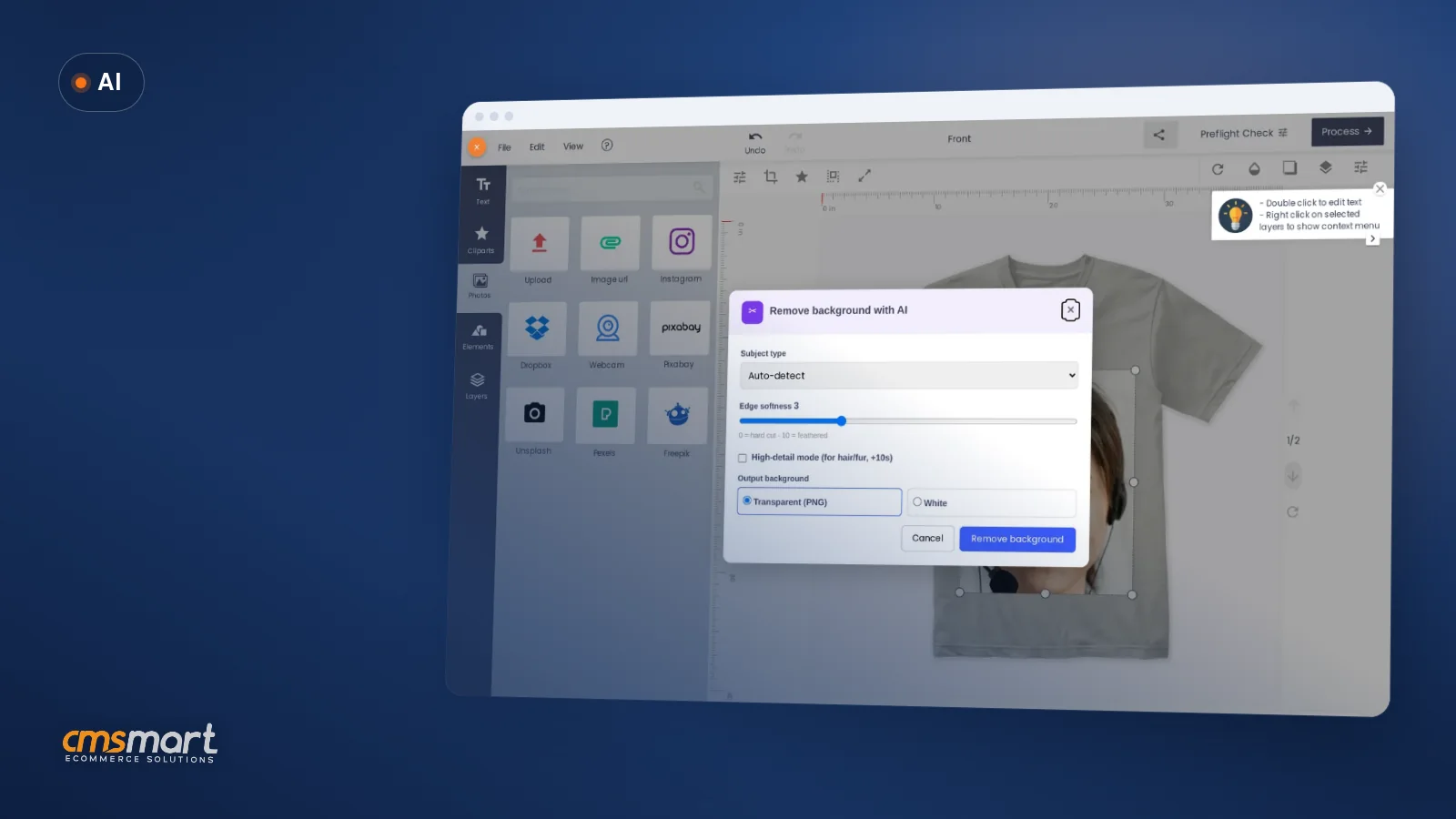
Case study · AI
AI Background Remover for WooCommerce Product Designer
Add an AI background remover for WooCommerce to your product designer so buyers get a clean cutout instantly, and see how Cmsmart builds the rest for...
Discover the power of our Ecommerce Platform to elevate your online business. From seamless integrations and customizable features to robust support, we've got the tools to optimize your sales and customer engagement.
Table of contents
Was this tutorial helpful?
Written by
Cmsmart Ecommerce Growth & Trends Analyst
Tracks ecommerce trends and turns them into practical moves for growing stores.
The team behind it
 Account Manager
 Project Manager
 Business Analyst
 Developers & QA
Case study · AI
Add an AI background remover for WooCommerce to your product designer so buyers get a clean cutout instantly, and see how Cmsmart builds the rest for...
Case study · Web-to-print
Save design and reorder WooCommerce orders in one click, with a fresh print-ready PDF every time. See how Cmsmart builds it.
Guide · Web-to-print
Custom size printing WooCommerce shoppers configure themselves: Cmsmart prices it live and matches the print-ready PDF to the order. Get a quote.
Browse more guides, tutorials and case studies from the Cmsmart community.
Unlock the Power of Mobile Commerce: Propel Your Business Forward
Read MoreDiscover how to harness mobile commerce to enhance your business growth. Learn strategies for optimizing the mobile shopping experience and increasing consumer engagement.
Read MoreDiscover the benefits of mobile commerce and how it can transform your business. Learn effective strategies for maximizing sales and customer engagement through mobile-optimized shopping experiences.
Read More
Cmsmart Ecommerce provides custom ecommerce and WooCommerce development services for web-to-print, product personalization, plugin support and API integration.
Cmsmart Ecommerce Growth & Trends Analyst
Tracks ecommerce trends and turns them into practical moves for growing stores.
Meet the team →




What if you could seamlessly launch your online store without the typical hurdles that often lead to frustration? According to Statista, the global e-commerce market is projected to exceed $6.5 trillion in sales by 2023. This staggering figure emphasizes the golden opportunities awaiting innovative entrepreneurs ready to tap into the digital marketplace. However, the path to success is often riddled with challenges such as securing online transactions, ensuring efficient order processing, and providing exceptional customer service. The good news? With the right strategies and tools, you can navigate these challenges effortlessly.
Take the case of Fashionista Boutique, a promising startup in Australia that specialized in eco-friendly clothing. Faced with the daunting task of building an engaging online presence while managing a diverse product range, they turned to Cmsmart. By leveraging our comprehensive eCommerce platform, they streamlined their operations, fortified their security measures, and enhanced the customer experience—all of which directly contributed to a 65% increase in their online sales within six months. This is just one of many success stories that illustrate how choosing the right eCommerce platform can be a game-changer in achieving your business goals.
In this tutorial, we will explore how you can transform your business with the ultimate eCommerce platform—one designed to not only drive sales but also significantly enhance your customer experience. By understanding the importance of security, effective order management, and outstanding customer service, you’ll be equipped to overcome the common barriers that new online businesses face. Ready to embark on this journey? Let’s dive in!
What if you
What if you could start your own online store without facing any of the common early-growing pains?Launching your digital commerce hub can seem daunting, especially with hurdles like securing online transactions, efficient order processing, and effective customer service. But what if there’s a way to navigate these challenges with ease?
Recognizing E-commerce Pain Points
Exploring Best Practices for Your Online Marketplace
Creating a successful web-based market platform requires strategic planning and execution. Here are some actionable steps to ensure smooth operations:Fostering B2B, B2C, C2C, and C2B Interactions
Building solid interactions across various transaction types is critical for growth. Embrace these strategies: - B2B transactions: Focus on relationship building and long-term contracts. - B2C interactions: Enhance your customer service and engagement tactics. - C2C marketplace options: Encourage user-generated content to build community. - C2B exchanges: Consider innovative business models where customers offer value to your brand. In summary: By identifying common pitfalls and implementing best practices, you can pave the way for a prosperous online store. Ready to dive deeper? Up next, we will explore the best strategies for optimizing your e-commerce platform for growth and customer satisfaction.Understanding E-commerce Platforms
Struggling to choose the right e-commerce platform for your startup? Youre definitely not alone.Selecting a secure and efficient online marketplace is crucial for navigating the complexities of digital commerce and ensuring smooth transactions and customer satisfaction.
Defining an E-commerce Platform
An e-commerce platform is your digital commerce hub, providing all the tools and features necessary for buying and selling goods online. These platforms ensure seamless online transactions, support inventory management, and facilitate effective customer service. Here are key features your platform should have:E-commerce Evolution and its Impact on Startups
E-commerce has evolved significantly over the years, impacting the way startups operate. Never before has there been a greater opportunity for small businesses to enter the market and compete with larger entities. This evolution presents unique challenges, including:Explaining Terms: B2B, B2C, C2C, and C2B E-commerce
Understanding the primary e-commerce categories is essential for navigating this digital landscape:- B2B (Business to Business): Transactions between businesses, such as wholesale distributors and retailers.
- B2C (Business to Consumer): The sale of products directly to consumers, common in most online stores.
- C2C (Consumer to Consumer): Platforms that allow consumers to sell directly to other consumers, like eBay or Craigslist.
- C2B (Consumer to Business): A model where individuals sell products or services to businesses, often seen in freelance platforms.
By understanding these categories, startups can better tailor their offerings to meet customer demands efficiently. In summary: Understanding the different aspects of e-commerce platforms, their evolution, and the various transaction models equips your startup for success. With this foundation, you can explore more about the best e-commerce platform for startups and delve into e-commerce operations and security. Next, let’s discuss how to effectively leverage support provided by e-commerce platforms for your growth.Decoding the Best E-commerce Platform for your Startups
Struggling to choose the right e-commerce platform for your startup? You’re not alone.Many entrepreneurs face the challenge of finding a reliable solution that secures online transactions, ensures efficient order processing, and offers effective customer service while navigating the myriad of options available in the e-commerce market.
What makes an E-commerce Platform the Best Choice for Startups?
When selecting an e-commerce platform, consider the following factors to ensure it meets your startups needs and growth potential:Examining the Top E-commerce Platforms for Startups
Several prominent platforms can serve as an ideal starting point for your digital commerce hub:Case Studies: Successful Startups and their E-commerce Platform
Many successful e-commerce unicorns started from humble beginnings using robust platforms. For example: Their success shows the critical role of selecting the right web-based market platform in scaling operations effectively. In summary: Choosing the best e-commerce platform is vital to overcoming common startup challenges such as security and efficient processing. To delve deeper, check our guide on the best e-commerce platform for startups. Next, we’ll explore e-commerce operations and security in greater detail.Security: A Crucial Component of E-commerce Operations
Securing online transactions is essential for any e-commerce operation. Are you ensuring your customers data is safe?In todays digital landscape, the stakes are high, and businesses must prioritize security to maintain consumer trust and confidence.
Securing Online Transactions: An Overview
E-commerce transactions are at the heart of online shopping. As the global e-commerce market continues to expand, estimated to reach $8 trillion by 2027, ensuring the security of these transactions is more crucial than ever.How to Choose an E-commerce Platform with Robust Security Features
When selecting a web-based market platform, look for features that provide strong security support. Here’s what to consider:- Check for PCI compliance to ensure that sensitive card data is handled securely.
- Look for platforms that offer built-in fraud detection systems.
- Evaluate their backup and recovery options for data protection.
Ensure that the e-commerce platform you choose supports efficient order processing while also maintaining high security standards. For detailed insights into the best e-commerce platform for startups, refer to our guide.Real World Examples of E-commerce Security Breaches and Lessons Learned
Numerous high-profile breaches have made headlines, impacting the trust of millions of customers. Learning from these cases is vital. The following lessons can help avoid future breaches:- Always secure customer data with encryption and secure storage.
- Regularly conduct security audits to uncover potential vulnerabilities.
- Educate your team about phishing and cyber threats.
In summary: Protecting your online marketplace is crucial for sustaining your business and customer loyalty. By choosing an e-commerce platform with strong security features and learning from past breaches, you can navigate the e-commerce landscape safely. Next, we will delve into strategies for effective customer service to enhance your e-commerce operations. For further insights, explore our content on support provided by e-commerce platforms and growth trends in e-commerce markets.Delivering Effective Customer Service via E-commerce Platforms
Struggling to provide stellar customer service in your e-commerce platform? You’re not alone.Many businesses grapple with ensuring efficient order handling, addressing customer inquiries promptly, and navigating the vast landscape of e-commerce options.
Importance of Customer Service in an E-commerce Context
In the highly competitive realm of online marketplaces, exceptional customer service is critical. Here’s why it matters:Implementing Effective Customer Service on an E-commerce Platform
To ensure a positive customer experience, consider these actionable strategies:Exploring E-commerce Platforms Known for Excellent Customer Service
Several e-commerce platforms excel in providing outstanding customer service. Here’s a look at some of the top-rated options:Conclusion
A commitment to effective customer service can significantly transform your e-commerce operations. The relationship you foster with your customers through support can lead to growth and loyalty—key components of success in the digital age.For strategies on choosing the best e-commerce platform for startups, as well as insights into e-commerce operations and security, look forward to the next section where we delve deeper into navigating your digital commerce journey.
Optimizing Order Processing for a Smooth E-commerce Experience
Struggling to streamline your order processing for a seamless e-commerce experience? You’re not alone.Many businesses grapple with the challenge of effective order fulfillment and secure online transactions, which are vital for retaining customers in todays competitive market.
Understanding the Basics of Order Processing in E-commerce
Order processing is the backbone of any online marketplace. It involves all steps from receiving an order to delivering the product to the customer. Here are some key aspects to consider:Enhancing E-commerce Operations through Efficient Order Processing
An efficient order processing system leads to improved customer satisfaction, repeat purchases, and ultimately higher revenue. Implement these actionable tips to enhance your e-commerce operations:How E-commerce Platforms Handle Order Processing: A Comparative Analysis
Different e-commerce platforms offer varying functionalities for order processing. Here, we compare several to help you make the best choice for your business needs:- WooCommerce: Powerful customization options for personalized user experiences.
- Shopify: Simplified order management with robust payment features.
- Magento: Scalable solutions for larger operations with complex needs.
A well-contained ecosystem results in smoother B2C interactions and improved customer loyalty. In summary: Optimizing your order processing can significantly enhance customer experience, increase sales, and lead your e-commerce business to success. To discover the best e-commerce platform for startups and explore advanced strategies for e-commerce operations and security, stay tuned for our next section on leveraging innovative solutions in the e-commerce landscape.A Glimpse into the Future: E-commerce Growth Trends for 2023 and Beyond
Struggling to keep up with the rapidly evolving e-commerce landscape? You’re not alone.Businesses everywhere are grappling with the challenges of securing online transactions, ensuring efficient order processing, and navigating the myriad choices available in the e-commerce market.
Current Trends Driving the E-commerce Market
The digital commerce hub is witnessing transformative trends that are shaping the future of shopping. Recognizing these shifts is crucial for any startup aiming to thrive. Here are some key trends to watch:Predicted Growth Trends in E-commerce
Understanding future growth trends can help e-commerce startups position themselves effectively:Preparing Your E-commerce Startup for Future Market Dynamics
Adapting to an evolving digital marketplace requires proactive measures. Here are actionable strategies:- Secure Your Transactions: Implement advanced security protocols to build trust with customers.
- Enhance Customer Service: Use chatbots and AI-driven tools to provide real-time assistance, solving issues swiftly.
- Diversify Payment Options: Offer both traditional and emerging payment methods to cater to all customer preferences.
In conclusion, the e-commerce landscape is continuously evolving, propelled by technological advancements and shifting consumer preferences. By staying informed and adaptable, your startup can not only survive but thrive in this dynamic market. Next, let’s explore the best e-commerce platform for startups and how it can support your long-term growth plan.Frequently Asked Questions
Struggling to choose the right e-commerce platform for your business? You’re not alone.Many entrepreneurs face challenges when navigating the vast options for online marketplaces, leading to insecure transactions, inefficient order processing, and unsatisfactory customer service.
Understanding Your E-commerce Options
Addressing Common E-commerce Queries
Here are some frequent questions and answers regarding e-commerce platforms: What are the best e-commerce platforms for startups? To start, platforms like Shopify, WooCommerce, and BigCommerce provide ease of setup and user-friendly interfaces, making them ideal for beginners. You can check out more on the best e-commerce platform for startups. How do e-commerce platforms ensure secure transactions? Look for platforms that offer SSL certificates, secure payment gateways, and fraud detection services. What support should I expect from e-commerce platforms? Most platforms offer technical support, resources like FAQs and user guides, and community forums.Wrapping It Up
In summary, selecting the right e-commerce platform involves understanding your business needs and the options available. By focusing on security, customer service, and operational efficiency, you can make an informed decision that sets your business up for success. For further insights, explore our sections on e-commerce operations and security or delve into support provided by e-commerce platforms. Next, lets dive into the growth trends shaping the future of e-commerce markets!FAQ Section: Troubleshooting and Pro Tips
How is online transaction security ensured?
We utilize SSL encryption to secure data during transactions and regular security updates to protect against vulnerabilities.
What strategies enhance order processing efficiency?
Automated fulfillment systems and integrated shipping solutions streamline order processing for timely deliveries.
How can effective customer service boost sales?
Prompt responses to inquiries and automated communication keep customers engaged, encouraging repeat purchases.
What are crucial considerations when choosing an e-commerce platform?
Look for customization options, scalability, user-friendly interfaces, and integrated payment solutions for a smooth shopping experience.
How can I recover abandoned shopping carts?
Implement automated email reminders to prompt customers to complete their purchases and optimize the checkout process.
What tools help in customer segmentation?
Use data analytics to categorize customers based on behaviors, purchase history, and demographics for targeted marketing.
What is the role of mobile optimization in e-commerce?
Mobile optimization ensures a seamless shopping experience, catering to users on smartphones and boosting overall sales.
Further Reading
Congratulations on taking the first step to transform your business with a robust eCommerce platform! By focusing on security, efficient order processing, and exceptional customer service, you’ve equipped yourself with the vital strategies to thrive in a competitive market. The insights gained from this tutorial empower you to launch your online store confidently and avoid pitfalls that hinder growth.
Let’s collaborate to elevate your eCommerce journey. Contact David, our CEO, on WhatsApp for personalized insights, or reach out to me, your dedicated Ecommerce Project Consultant, at [email protected]. Ready to explore the immense potential for your business? Request a quotation here. Don’t wait—let’s discuss how we can implement these strategies and maximize your sales!