

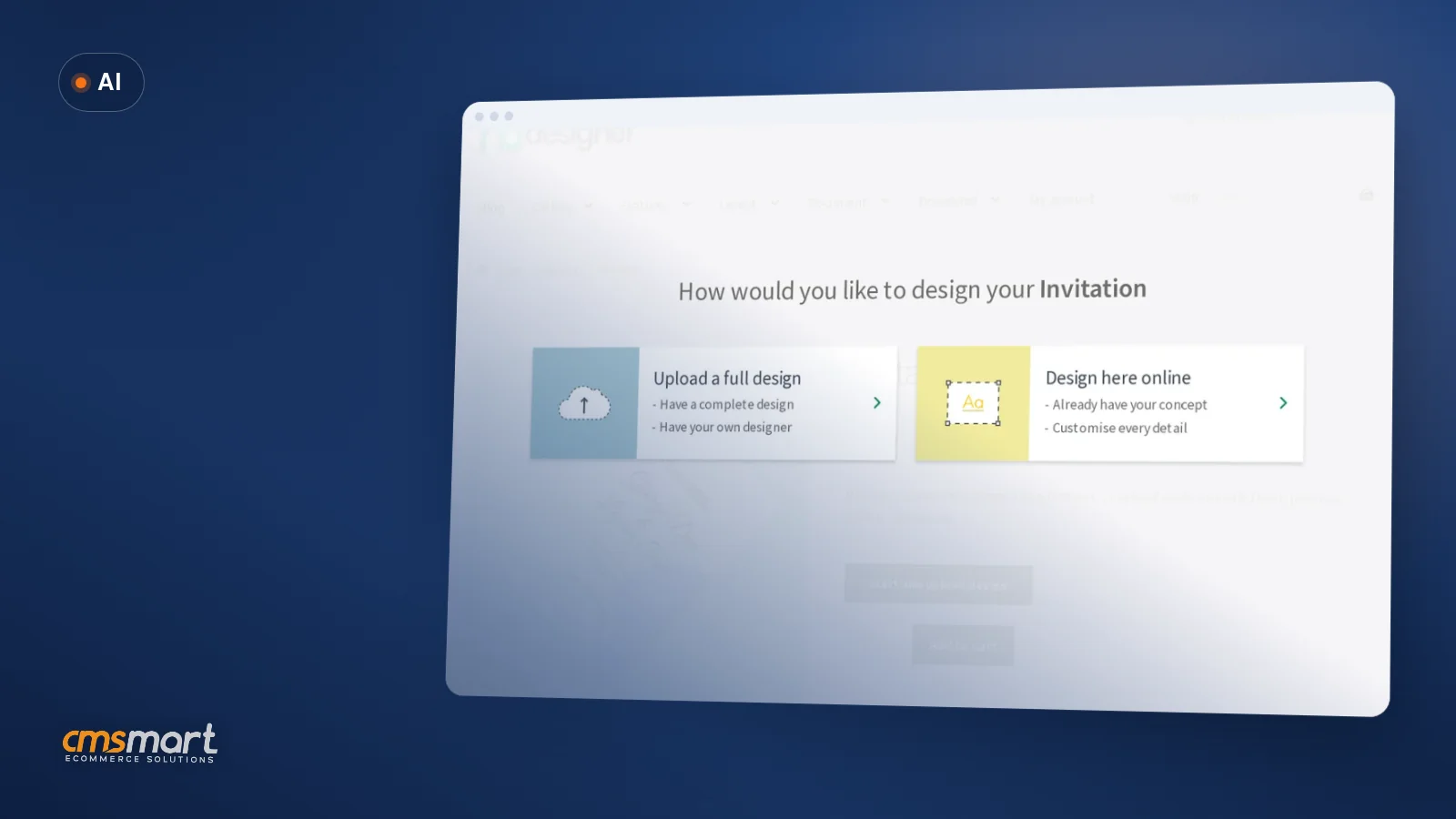
Guide · AI
AI Generated Designs Print on Demand: Quality & Rights
Selling AI generated designs print on demand? Check resolution, usage rights and AI preflight first, then get a Cmsmart quote.
Unlock the key e-commerce trends of 2025 with insights into AI-driven personalization, augmented reality shopping experiences, and multi-channel retailing. Stay ahead of the competition and enhance customer engagement.
Table of contents
Was this tutorial helpful?
Written by
Cmsmart AI for Ecommerce Engineer
Adds practical AI to stores: image tools, preflight checks, automation and assistants.
The team behind it
 Account Manager
 Project Manager
 Business Analyst
 Developers & QA
Guide · AI
Selling AI generated designs print on demand? Check resolution, usage rights and AI preflight first, then get a Cmsmart quote.
Guide · AI
Draft AI product descriptions WooCommerce shoppers trust, add a human review step, dodge duplicate content, and control cost -- see Cmsmart's setup gu...
Guide · AI
See how an AI chatbot for WooCommerce can answer order questions from your store data, where a human must step in, and get a custom build quote.
Browse more guides, tutorials and case studies from the Cmsmart community.
Unlock the Power of Mobile Commerce: Propel Your Business Forward
Read MoreDiscover how to harness mobile commerce to enhance your business growth. Learn strategies for optimizing the mobile shopping experience and increasing consumer engagement.
Read MoreDiscover the benefits of mobile commerce and how it can transform your business. Learn effective strategies for maximizing sales and customer engagement through mobile-optimized shopping experiences.
Read More
Cmsmart Ecommerce provides custom ecommerce and WooCommerce development services for web-to-print, product personalization, plugin support and API integration.
Cmsmart AI for Ecommerce Engineer
Adds practical AI to stores: image tools, preflight checks, automation and assistants.
Meet the team →



In a world where e-commerce is projected to skyrocket to an astonishing $8 trillion by 2027, the pressure is on for retailers to adapt and innovate. Consider the case of Anna’s Homewear, a family-owned brand in Australia specializing in sustainable textiles. Faced with dwindling store foot traffic and rising consumer expectations for seamless shopping experiences, Anna partnered with Cmsmart. Through our advanced AI-driven tools and personalization strategies, Anna transformed her online storefront, integrating social shopping platforms while enhancing customer engagement across all channels. As a result, her sales soared by 40% within six months—testament to the power of leveraging cutting-edge trends in e-commerce.
As we unpack the emerging e-commerce trends heading into 2025, it is essential for brands to stay ahead with innovative strategies, particularly those emphasizing personalization and integration. This tutorial dives into these crucial trends that will define the future of retail, exploring actionable insights that can propel your business forward. To further enrich your e-commerce journey, don't miss our resources on multichannel marketing strategies and harnessing technology. In this guide, we will explore how to revolutionize your retail experience with AI and personalization.
The Transformation of Retail: Welcome to the Future of E-Commerce
Need a seamless shopping experience that engages customers across platforms?Many retailers are grappling with the challenge of creating integrated online and offline experiences that appeal to today’s discerning consumers.
Embrace the Future of E-Commerce with Digital Commerce Trends
Imagine optimizing your e-commerce business with the latest trends that promise elevated customer experiences, flexible retail solutions, and integrated online and offline strategies. As we venture further into the digital age, the future of e-commerce is driven by:
Actionable Tips for Maximizing Retail Transformation
To thrive in this evolving landscape, consider the following strategies:In summary, evolving with e-commerce trends is crucial to remaining competitive and relevant in todays market. As the landscape continues to shift, retailers must adapt efficiently to meet customer expectations. In the next section, well dive into how to leverage social media for e-commerce success, offering you more tools to enhance your business.
Charting The Evolution of E-Commerce
Struggling to keep up with the rapidly evolving e-commerce landscape? You’re not alone.Many businesses are facing the critical challenge of adapting to new consumer behaviors and technological advancements in online shopping.
Defining and Understanding E-Commerce
E-commerce encompasses all online transactions, making it essential to understand the nuances of this digital marketplace. From consumer cryptocurrencies to voice-activated shopping, digital commerce trends are revolutionizing how people buy products.The Current State of E-Commerce
The state of e-commerce is defined by consumer expectations for seamless experiences and flexibility. Trends such as pop-up shops and integrated online and offline retail experiences are becoming increasingly popular.Looking Ahead: Predictions for E-Commerce Trends in 2025
As we look to the future, several trends are anticipated to reshape e-commerce:- Increased focus on augmented reality (AR) for product visualization.
- Greater integration of artificial intelligence to personalize shopping experiences.
- Adoption of sustainable practices as environmentally-conscious shopping gains traction.
In summary: The future of e-commerce is bright, filled with opportunities for innovation and growth. By staying informed and adapting strategies, businesses can thrive. Next, let’s dive into how to optimize social media for e-commerce and enhance your digital marketing strategy.The Rise of Social Commerce: Shopping in the Social Media Era
Need a seamless shopping experience on social media? Youre not alone.As retail landscapes evolve, brands are grappling with the challenge of integrating online shopping trends with social media platforms.
Exploring the Concept of Social Commerce
Social commerce is revolutionizing the way we shop by merging social media and e-commerce. With platforms like Instagram and Facebook increasingly facilitating direct purchases, consumers now expect a more cohesive online shopping experience.The Benefits and Challenges of Integrating E-Commerce with Social Media
While social commerce offers several benefits, it also presents unique challenges. Here are some key considerations: Benefits:- Enhanced customer engagement through direct interaction.
- Increased accessibility and convenience for shoppers.
- Ability to leverage user-generated content for marketing.
Challenges:How Social Commerce is Reshaping the Online Shopping Experience
The future of e-commerce is shaped by social trends. As social media continues to innovate, retailers must adapt their strategies. Pro Tips:To thrive in this era, explore optimizing your social media for e-commerce, or consider the benefits of e-commerce pop-up shops for increased customer engagement. Additionally, delve into using podcasts for brand engagement, as well as strategies for creating unified online and in-store retail experiences. In summary: Embracing social commerce enhances consumer experience and expands market reach. With the right strategies, you can position your brand at the forefront of this shopping evolution—next, let’s explore optimizing your social media strategy for maximum impact.
Power of Pop-Ups in E-Commerce: Temporary Retail Spaces
Need a flexible retail solution to engage your audience? You’re not alone.Many e-commerce businesses are searching for innovative ways to create memorable shopping experiences, and pop-up shops might just be your answer.
Exploring the Benefits of E-Commerce Pop-Up Shops
Pop-up shops represent a dynamic retail concept that allows brands to showcase products in temporary spaces. They help create a buzz and drive customer engagement. Here are some key benefits:Successful Case Studies in E-Commerce Pop-Up Shops
Numerous brands have successfully leveraged pop-up shops to boost engagement and sales. For example, a famous cosmetics retailer launched a pop-up that allowed customers to personalize their products, resulting in a 30% increase in sales during the event.The Future: How Pop-Up Shops Will Influence E-Commerce Trends
As online shopping trends evolve, integrating physical experiences with digital commerce becomes increasingly pivotal. Proven strategies for future success include:- Utilizing social media for promotion: Create buzz before your event on platforms like Instagram and Facebook.
- Integrating your online store: Ensure seamless experiences between in-person and online shopping.
- Incorporating feedback loops: Use customer interactions to refine product offerings and marketing strategies.
For more in-depth strategies, see our guides on optimizing social media for e-commerce or explore the benefits of e-commerce pop-up shops. In summary: Pop-up shops offer exciting opportunities for engagement and sales in e-commerce. As we move forward, blending online and offline experiences can help brands remain competitive and responsive to consumer needs. Next, let’s delve into how to leverage audio content for brand engagement.Podcast Marketing in E-Commerce: Engaging Your Audience with Audio Content
Engaging your audience with audio content can transform your e-commerce strategy.In a world where consumers are inundated with information, finding innovative ways to connect is crucial. Podcasts offer a unique platform that can effectively bridge the gap between brands and their audiences, making them a valuable tool for e-commerce.
The Role of Podcasts in E-Commerce
Podcasts serve as a medium that drives engagement, turning casual listeners into loyal customers. Moreover, with 79% of podcast listeners indicating they discovered new products through ads in podcasts, it’s evident that audio content play a significant role in consumer awareness.Effective Podcast Strategies for E-Commerce Businesses
To make the most of your podcasting endeavors, consider these strategies:How to Optimize Your Podcast Marketing to Boost E-Commerce Sales
Here are actionable tips to enhance your podcast marketing:- Include clear calls-to-action (CTAs) directing listeners to your website or landing pages.
- Utilize social media platforms for podcast promotion to tap into existing customer bases.
- Engage listeners through surveys and Q&A sessions to create a two-way interaction flow.
For more on how to seamlessly integrate audio with your marketing efforts, check out our guide on optimizing social media for e-commerce and the benefits of e-commerce pop-up shops. In summary: Utilizing podcasts as part of your e-commerce strategy opens new avenues for engaging audiences and driving sales. As you explore those possibilities, let’s move forward and dive into how to create unified online and in-store retail experiences that leverage these insights.Synergizing Online and In-Store Shopping: A Unified Retail Experience
Struggling to provide a seamless shopping experience that bridges online and in-store interactions? Youre not alone.In todays competitive retail landscape, businesses are seeking flexible solutions to enhance the customer journey through integrated shopping experiences.
Understanding and Creating Unified Retail Experiences
The Role of Technology in Integrating Online and Offline Retail
Employing the right technology can transform the shopping experience. Here are some strategies to consider:
Case Studies of Effective Online and In-Store Synergy
Many brands have successfully integrated their retail strategies:
By analyzing these success stories, businesses can learn essential lessons and understand how to embrace these trends actively.
In summary: Combining online shopping trends with in-store experiences not only meets customer expectations but positions your brand for future success. Looking to optimize your social media for e-commerce? Explore our next section on how to optimize social media for e-commerce for further insights!E-Commerce 2025: A Glimpse Into Future Online Shopping Trends
Looking to adapt to the shifting landscape of online shopping? Youre in good company.As e-commerce continues to evolve, businesses face the challenge of optimizing their strategies to meet changing consumer demands and technological advances.
Emerging Trends in E-Commerce for 2025
The future of e-commerce is already taking shape, with several exciting trends paving the way for transformative shopping experiences:How to Stay Ahead by Predicting and Adapting to Future Trends
Staying ahead in this fast-paced digital commerce landscape requires proactive strategies:How Future E-Commerce Trends Will Shape the Retail Landscape
The impact of these trends on the retail landscape will be profound:- Enhanced personal shopping experiences will drive customer loyalty.
- Pop-up shops will become a testing ground for new products and customer feedback.
- Brands will need to leverage data to create customized shopping journeys that blend physical and digital interactions.
As we prepare for the future of e-commerce, consider exploring more about how to optimize social media for e-commerce, the benefits of e-commerce pop-up shops, and using podcasts for brand engagement, as well as creating unified online and in-store retail experiences. In conclusion: By embracing these emerging e-commerce trends and strategies, your business can not only keep up but thrive in the evolving market landscape. Next, we’ll delve deeper into the specifics of implementing these strategies effectively.Frequently Asked Questions
Feeling overwhelmed by the rapid changes in e-commerce? Youre not alone.Businesses today are grappling with the necessity for a seamless shopping experience, the integration of flexible retail solutions, and the engagement of their audiences through innovative content.
Understanding Future E-commerce Trends and Strategies
Common Questions in E-commerce
1. What role does social media play in online shopping trends?
Social media has transformed into a significant marketplace where brands meet customers. Engaging with consumers through platforms like Instagram and Facebook allows businesses to reach their target audience directly.
2. How can businesses benefit from pop-up shops?
Pop-up shops offer a flexible retail solution. They can:
3. What is audio content marketing and why is it effective?
Audio content, like podcasts, allows brands to engage with their customers in a unique, personal way. Its a powerful tool for storytelling and building a community around your brand.
4. How can retailers integrate online and offline experiences?
By implementing strategies like click-and-collect, retailers can merge their online and offline presence, enhancing overall customer experience and convenience.
Enhancing Your E-commerce Strategy with Resources
To dive deeper into improving your online store, check out the guides on optimizing social media for e-commerce, exploring the benefits of e-commerce pop-up shops, or utilizing podcasts for brand engagement and creating unified online and in-store retail experiences. In summary: Navigating the future of e-commerce requires adaptability and strategic planning. By embracing these trends and insights, your business can stay competitive. Up next, we will uncover actionable tips for enhancing customer engagement and driving sales effectively.Further Reading
As we conclude our exploration of the transformative e-commerce trends poised to revolutionize retail in 2025, remember that embracing these advancements is crucial for creating a seamless shopping experience that resonates with today's consumers. From integrating social media shopping to enhancing retail solutions with the latest tech, the future is here, and it’s time to act. Let’s discuss how we can help you implement these strategies and drive your e-commerce success. Reach out to David at CEO WhatsApp or email your Ecommerce Project Consultant at [email protected]. For a more personalized solution, don’t hesitate to request a quotation. Join me in transforming your store today!