
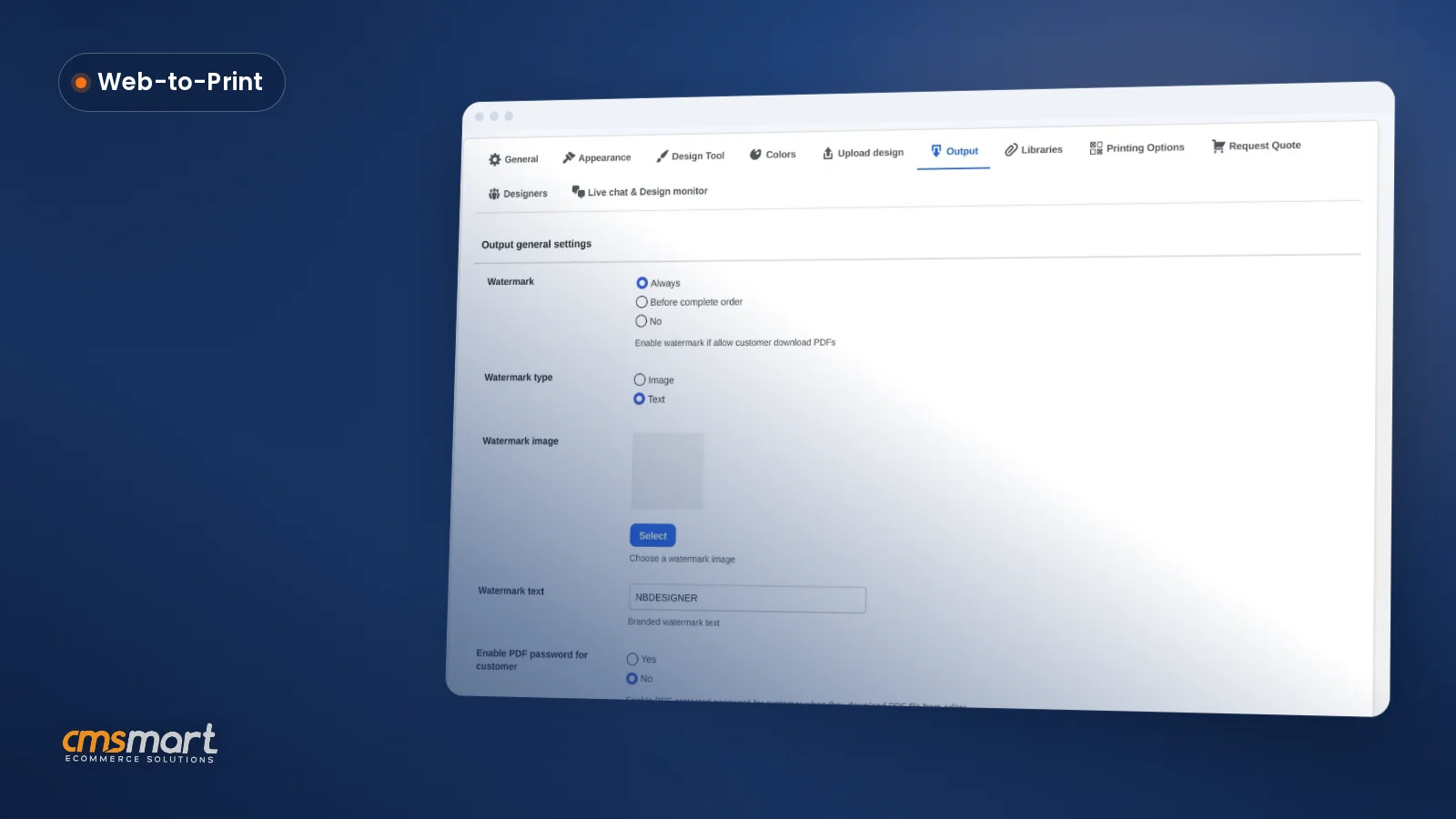
Guide · Web-to-print
Print Ready PDF Output Settings WooCommerce Setup
See what the print ready PDF output settings WooCommerce screen controls — watermark, password, bleed, FTP sync — and configure yours today.
Discover key trends shaping the ecommerce world, enhancing business strategies, and ensuring competitive advantage in the evolving digital market.
Table of contents
Was this tutorial helpful?
Written by
Cmsmart Ecommerce Growth & Trends Analyst
Tracks ecommerce trends and turns them into practical moves for growing stores.
The team behind it
 Account Manager
 Project Manager
 Business Analyst
 Developers & QA
Guide · Web-to-print
See what the print ready PDF output settings WooCommerce screen controls — watermark, password, bleed, FTP sync — and configure yours today.
Case study · AI
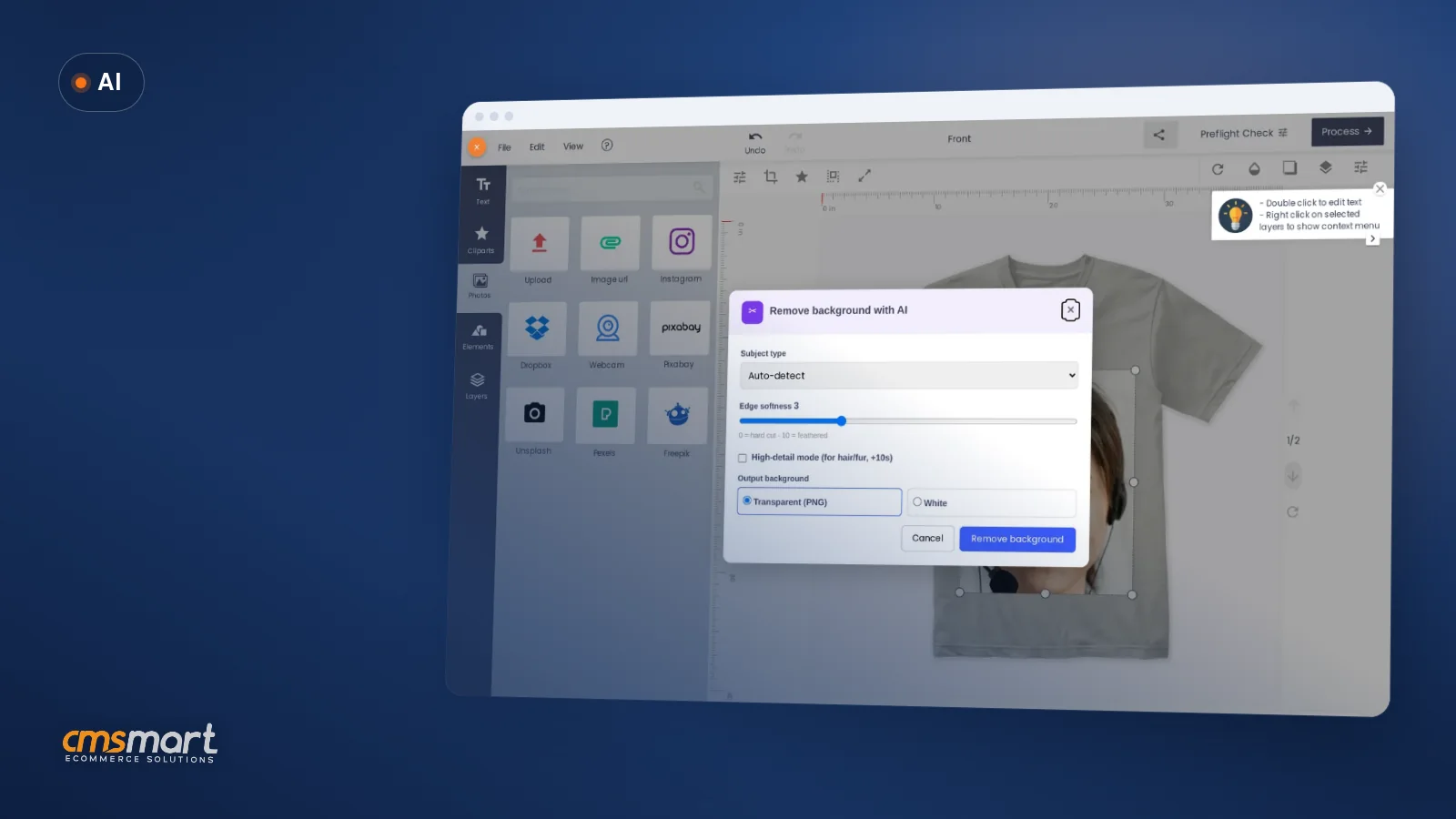
Add an AI background remover for WooCommerce to your product designer so buyers get a clean cutout instantly, and see how Cmsmart builds the rest for...
Case study · Web-to-print
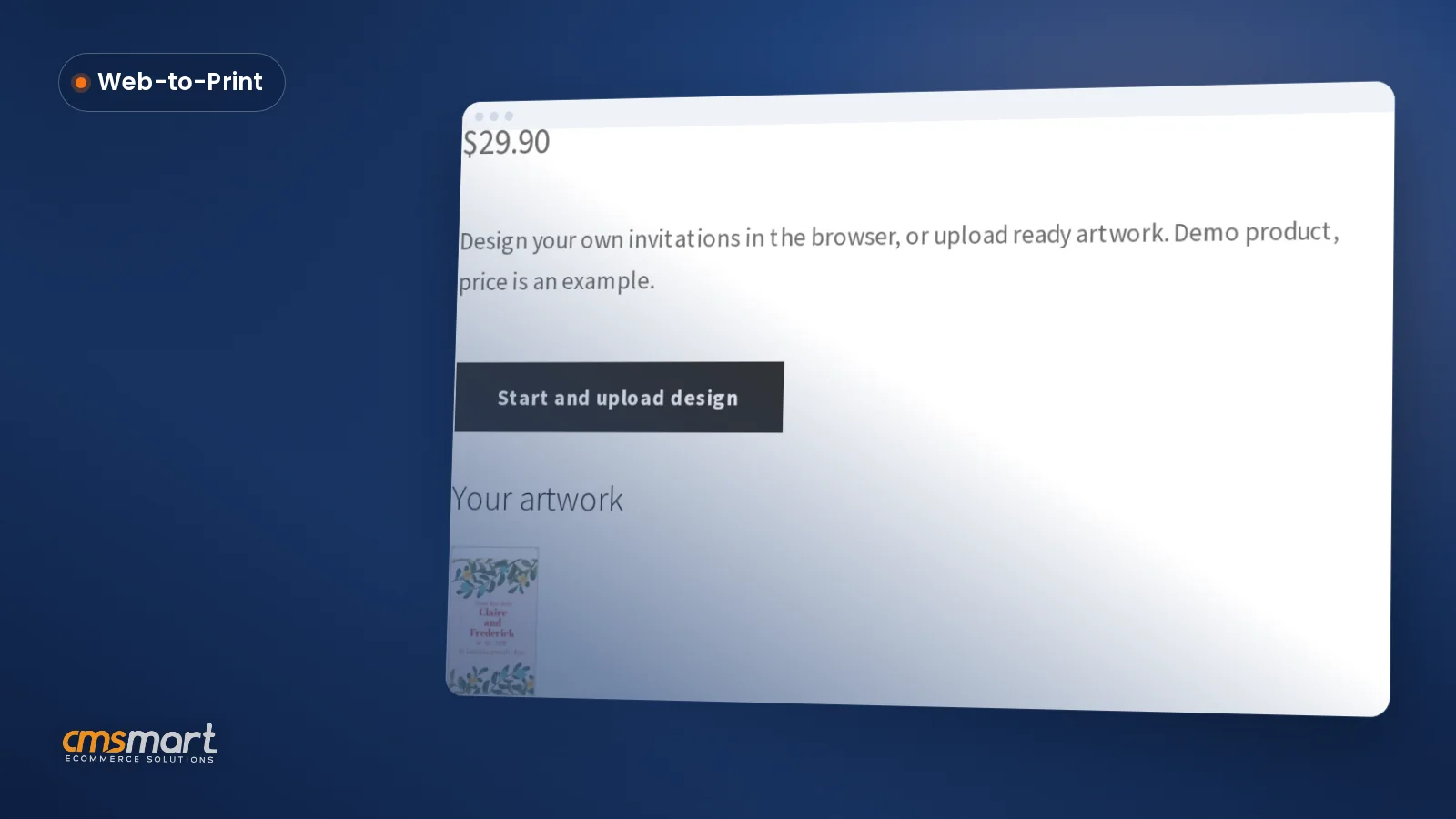
Save design and reorder WooCommerce orders in one click, with a fresh print-ready PDF every time. See how Cmsmart builds it.
Browse more guides, tutorials and case studies from the Cmsmart community.
Unlock the Power of Mobile Commerce: Propel Your Business Forward
Read MoreDiscover how to harness mobile commerce to enhance your business growth. Learn strategies for optimizing the mobile shopping experience and increasing consumer engagement.
Read MoreDiscover the benefits of mobile commerce and how it can transform your business. Learn effective strategies for maximizing sales and customer engagement through mobile-optimized shopping experiences.
Read More
Cmsmart Ecommerce provides custom ecommerce and WooCommerce development services for web-to-print, product personalization, plugin support and API integration.
Cmsmart Ecommerce Growth & Trends Analyst
Tracks ecommerce trends and turns them into practical moves for growing stores.
Meet the team →




In the rapidly evolving landscape of ecommerce, businesses are standing at the edge of a thrilling frontier. With the global ecommerce market projected to soar beyond $8 trillion by 2027, the possibilities seem endless, yet the pressures to innovate are palpable. For instance, take the case of GreenTech Innovations, an eco-friendly startup in Brazil. Faced with limited market exposure and scaling challenges, they turned to Cmsmart to transform their digital strategy. With our comprehensive suite of solutions, GreenTech not only enhanced their online presence but also tapped into global markets. The introduction of eco-conscious marketing strategies paired with cutting-edge technology enabled them to better connect with environmentally-aware consumers, dramatically boosting their sales by 150% within a year.
As we explore the future of ecommerce trends, it’s essential to recognize how actionable insights and effective strategies can empower businesses to stay ahead. From enhancing customer trust during technological shifts to implementing multi-channel selling strategies, the landscape requires adaptability and foresight. Resources like our discussion on uncovering ecommerce trends and boosting revenue through multi-channel selling are critical for any ecommerce entrepreneur wishing to thrive. In this tutorial, we'll delve into the insights and strategies necessary to navigate this transformative digital marketplace.
Unraveling Ecommerce - The New Face of Retail
Imagine a world where your shopping options are not limited by geographical boundaries or traditional business hours. That’s the power of Ecommerce! In todays digital marketplace, consumers enjoy a revolutionary buying experience that transcends limitations and fosters global connectivity.
The New Landscape of Ecommerce
Ecommerce, also known as digital commerce, has reshaped how we shop by leveraging technological advances and increased internet accessibility. Lets explore how this transformation has impacted retail:
Seamless Shopping Beyond Borders
With the rise of ecommerce, businesses are now equipped to cater to a global audience through:
- Enhanced user experiences by introducing gamified shopping environments and loyalty programs.
- Sustainability features, such as eco-friendly product options and carbon-neutral shipping to attract responsible consumers.
- Expanding into new markets with Multi-Channel Selling strategies, integrating platforms like Amazon and eBay .
Summary and Future Directions: Ecommerce continues to evolve, pushing boundaries and providing unparalleled opportunities for businesses and consumers alike. As we dive deeper, join us in the next section to explore Unprecedented Ecommerce Sales Growth, COVID-19 Impact on Online Shopping, and the Trend Towards Simplicity in Ecommerce, all pivotal to shaping the digital economy of tomorrow.Understanding the Ecommerce Landscape
Need for scalable tech infrastructure, adapting to increased online consumer demand, engaging new demographic groups online, maintaining user trust during rapid changesThe eCommerce landscape is continuously evolving, presenting businesses with both challenges and remarkable opportunities.
What Exactly is Ecommerce?
E-commerce, or electronic commerce, involves buying and selling goods and services via the internet. It is a pivotal part of the modern economy, enabling businesses to reach broader markets while customers enjoy the convenience of online purchasing. This digital transformation has introduced new dynamics in consumer behavior and technological advancement, ensuring businesses stay competitive through robust strategies tailored to online retail trends.
The Evolution and Impact of Ecommerce on Global Retail
Digital commerce trends have revolutionized global retail landscapes. Initially, e-commerce served a niche segment, but it has since become a dominant force, reshaping how businesses operate. The rise of mobile commerce, improved internet accessibility, and diverse online offerings have collectively boosted the sectors growth.
Key Players in the Ecommerce Market
Notable players like Amazon, Alibaba, and eBay continue to set benchmarks in digital innovation and customer satisfaction. These key players utilize advanced analytics, AI-driven personalization, and efficient logistics systems to maintain their lead.
In Summary: The eCommerce environment is one of rapid change and adaptation. To thrive, businesses must not only keep pace with these changes but also proactively engage new demographic groups while maintaining user trust. Transitioning to the next section, we delve into the Unprecedented Ecommerce Sales Growth, COVID-19 Impact on Online Shopping, Trend Towards Simplicity in Ecommerce, which explores how these trends continue to reshape the digital shopping experience.Unprecedented Ecommerce Sales Growth: Riding the Wave
Facing the challenge of adapting to rising online consumer demand?With the current need for scalable tech infrastructure and engaging diverse demographic groups, businesses are constantly striving to maintain user trust amidst rapid online changes.
Unveiling the Driving Factors Behind the Boom in Ecommerce Sales
The surge in eCommerce is driven by key factors such as technological advancements and increased internet accessibility, which have transformed online retail trends and consumer behavior globally.
How Businesses are Leveraging the Ecommerce Sales Surge
Companies are utilizing flexible eCommerce development platforms to harness this growing demand, ensuring they meet the evolving needs of customers while optimizing their online offerings:
Spotlight on Successful Ecommerce Growth Stories
Numerous businesses have achieved significant results by embracing digital commerce strategies:
For more insights on enhancing your eCommerce strategy, explore our tips for starting a successful eCommerce business, or consider how the eCommerce system works to your advantage.
In summary: Embracing scalable solutions and innovative tools is key to riding the wave of unprecedented eCommerce sales growth. Let’s delve deeper into understanding the trends shaping eCommerce today.The COVID-19 Impact on Ecommerce: Opportunities and Challenges
Need for scalable tech infrastructure and adapting to increased online consumer demand during COVID-19?The pandemic drastically reshaped e-commerce, presenting both immense opportunities and formidable challenges. Businesses quickly realized the necessity of an adaptable tech infrastructure to cater to surging online consumer demand and evolving purchasing behaviors.
Understanding the Shift in Online Purchasing Behavior due to COVID-19
COVID-19 profoundly altered consumer behavior, accelerating the shift towards online shopping. With widespread lockdowns, consumers turned to e-commerce for essentials and beyond.
Understanding these shifts enables e-commerce businesses to tailor their offerings to meet heightened expectations and capitalize on newfound opportunities.
Adapting Your Ecommerce Business to the Post-COVID Era
Resilience and adaptability have become the cornerstones of thriving in the post-pandemic e-commerce landscape.
By proactively addressing these areas, businesses can ensure they are not only surviving but thriving as the market continues to recover.
Case Study: Ecommerce Resiliency Amid the Pandemic
Many businesses demonstrated remarkable resilience, turning the challenges of COVID-19 into opportunities for innovation and growth.
This adaptability is critical in maintaining consumer trust and fostering long-term loyalty in an uncertain marketplace.
For further strategies and insights, see articles related to Unprecedented Ecommerce Sales Growth, COVID-19 Impact on Online Shopping, and Trend Towards Simplicity in Ecommerce.
In summary: The COVID-19 pandemic has reshaped e-commerce, driving home the need for businesses to adapt their technology and strategies to meet changing consumer behaviors and ensure sustainable growth. Next, we’ll explore enhancing customer engagement through personalized shopping experiences.Simplicity in Ecommerce: The Key to Enhancing User Experience
Are you overwhelmed by the complexity of e-commerce design?Streamlining your online store can significantly enhance user experience, addressing crucial business challenges like the need for scalable tech infrastructure and engaging diverse demographic groups.
Why Less is More in Ecommerce Design?
The principle of simplicity is not just a design preference but a strategy that can elevate your online retail performance. Customers are increasingly drawn to websites that offer an intuitive journey, meaning less clutter and more focus on functionality. By minimizing unnecessary elements, you direct users attention where it truly matters—your products.
Designing Minimalist Online Stores without Compromising User Trust
One of the major concerns with minimalist design is maintaining user trust. However, when done right, simplicity can enhance credibility. Focus on clean layouts, clear communication, and seamless navigation to ensure customers feel confident and secure during their shopping experience.
Examples of Simple yet Effective Ecommerce Interfaces
Consider leading online stores that have simplified their design yet remain effective. These platforms demonstrate that minimalistic interfaces can still be rich in functionality and user engagement.
- Focus on high-quality images to showcase products effectively.
- Incorporate intuitive search and filter options to aid product discovery.
In summary: Simplicity in e-commerce is not just an aesthetic choice but a strategic imperative to enhance user experience and trust. Next, let’s explore how these principles are influencing the trend towards simplicity in ecommerce and the impacts of COVID-19 on online shopping.Building a Robust Ecommerce Infrastructure: Scaling for Success
Struggling to meet the demands of growing online consumer behavior? You’re not alone.The need for a scalable tech infrastructure in e-commerce has never been more crucial, especially as online purchasing trends surge due to changing consumer behaviors and technological advancements. Companies are challenged to adapt swiftly, engage new demographic groups, and maintain user trust amidst rapid digital shifts.
The Need for Scalable Tech Infrastructure in Ecommerce
Scalability is key to accommodating increased traffic and transaction volumes in the e-commerce industry. With digital commerce trends pushing boundaries, businesses must ensure their technological backbone can support growth and customer demands.
Crucial Elements of an Effective Ecommerce Infrastructure
Building a reliable e-commerce infrastructure involves integrating various crucial elements that ensure seamless operation and user satisfaction.
Practical Steps for Scaling Your Ecommerce Tech Infrastructure
Adapting your tech infrastructure to support scalability is not just about expanding servers or databases. It involves strategic actions to future-proof your digital presence.
- Invest in load balancing and cache management systems.
- Regularly update software and plugins to keep your platform secure and efficient.
- Utilize cloud services that allow resource elasticity — scale up or down based on demand.
- Integrate robust eCommerce CMS like WooCommerce and leverage marketplaces like Dokan for multi-vendor scenarios .
In summary: By implementing these strategies, your eCommerce infrastructure will be poised for success, ensuring you meet the demands of todays dynamic digital market. Up next, lets dive into the unprecedented ecommerce sales growth trends and how strategies can adapt in this ever-evolving landscape.Adapting Ecommerce Strategies for New Demographics: The Next Frontier
Struggling to adapt your eCommerce strategies for new demographics? It doesnt have to be complex.Businesses today are challenged with expanding their reach while engaging new demographic groups effectively in an ever-evolving online retail environment.
Demystifying the New Demographic Shifts in Online Shopping
Understanding demographic trends is crucial as they have a significant impact on consumer behavior. Today’s digital commerce trends show a surge in younger generations using social commerce, while older age groups are becoming increasingly comfortable with online purchasing due to improved internet accessibility. This creates a rich tapestry of opportunities for retailers.
Addressing the New Demographics: Strategies and Best Practices
To adapt to these demographic shifts, eCommerce businesses need scalable tech infrastructure and engaging strategies. Engaging with demographics across various platforms strengthens your foothold in a competitive market.
Real-World Examples of Successful Demographic-Targeted Ecommerce Campaigns
Many brands successfully target specific demographics by understanding their needs and preferences. A notable example is retail giant Zara, which quickly adapts fashion trends to appeal to Gen Z consumers by prioritizing speed and personalization.
Summary: Successfully engaging new demographics involves a blend of innovation and understanding consumer behavior. Next, lets explore how unprecedented eCommerce sales growth can offer a blueprint for future strategies .
Today's Ecommerce Trends and Future Predictions
Struggling with your current eCommerce setup? Discover the latest trends shaping the future of digital commerce.The need for scalable tech infrastructure, engaging new demographic groups online, and maintaining user trust during rapid changes are critical challenges facing businesses today.
Current Digital Commerce Trends Aligned with Consumer Behavior
The evolution of online retail trends continues to be driven by consumer behavior and technological advancements. A key trend is the increasing demand for personalized shopping experiences. Here’s how:
Upcoming Trends: What does the Future Hold for Ecommerce?
As digital infrastructure evolves, businesses must adapt to upcoming eCommerce trends that promise to redefine online purchasing:
How to Stay Ahead of the Ecommerce Trend Curve
To thrive amidst changing eCommerce dynamics, businesses should focus on strategic adaptations:
In conclusion, navigating today’s eCommerce landscape requires understanding these trends and preparing for what lies ahead. By integrating the latest technologies and strategies, businesses can enhance their online presence and secure long-term success. Let’s now delve into the factors behind the unprecedented eCommerce sales growth and the impact of COVID-19 on online shopping to further harness the power of digital commerce .
Frequently Asked Questions
Need for scalable tech infrastructure and engaging new demographic groups online?Todays e-commerce landscape is rapidly evolving, facing the pressures to adapt to increased online consumer demand and maintaining user trust amidst rapid changes. This section tackles some of the most common queries related to these Online Retail Trends, providing essential insights and expert advice.
Understanding Consumer Behavior: Key Queries Answered
In the fast-paced world of Digital Commerce Trends, its crucial to stay informed. Here are some frequent questions businesses have:
With internet accessibility increasing globally, tech advancements such as AI-driven personalization and mobile commerce are redefining the shopping experience.
Engaging new demographic groups online requires personalized marketing strategies and integrating social media channels effectively.
Consumer behavior is heavily influenced by trust. Establish robust security measures and transparent policies to maintain customer trust.
Market Insight: The global e-commerce market, expected to reach $7 trillion by 2025, pushes businesses to invest in scalable platforms and innovative solutions.
Proactive adaptation includes embracing flexible business models and regular market analysis to stay ahead.
Empower Your E-commerce Development
For further insights on E-commerce Development and market strategizing, explore our resources on Unprecedented Ecommerce Sales Growth and Trend Towards Simplicity in Ecommerce. Experience how these changes can address your business pain points effectively.
Ensuring your online offerings cater to diverse consumer needs involves staying current with the Digital Commerce Trends and adapting promptly. In conclusion, our next section delves into the COVID-19 Impact on Online Shopping, offering strategies to sustain growth during uncertain times.
FAQ Section: Troubleshooting and Pro Tips
What are the latest ecommerce trends for 2025?
AI personalization, AR visualization, and subscription models are key trends.
Why is scalable tech infrastructure crucial for ecommerce?
It supports growing consumer demands and enhances performance.
How can businesses adapt to increased online consumer demand?
Implement AI-powered tools and optimize checkout processes.
What strategies help engage new demographic groups online?
Use social commerce and targeted marketing campaigns to reach diverse audiences.
How do you maintain user trust during rapid ecommerce changes?
Ensure data security, transparent practices, and consistent communication.
What role does AI play in current ecommerce trends?
AI drives personalization and enhances customer shopping experiences.
How can ecommerce platforms improve sustainability?
Offer eco-friendly shopping options and carbon-neutral shipping.
Further Reading
As we conclude our exploration of the dynamic landscape of ecommerce, it's clear that staying ahead in this digital marketplace requires foresight and adaptability. With the projected global market reaching $8 trillion by 2027, the opportunities for your business are immense. By implementing innovative strategies and technology, you can enhance user experience, build trust, and expand into new markets. Don’t navigate these transformative trends alone—let’s discuss how we can help you implement the right strategies for your store. Contact David directly via WhatsApp at +84 937 869 689, or email our Ecommerce Project Consultant at [email protected]. For personalized support, request a quotation today at this link. Together, we can transform your ecommerce vision into reality!