

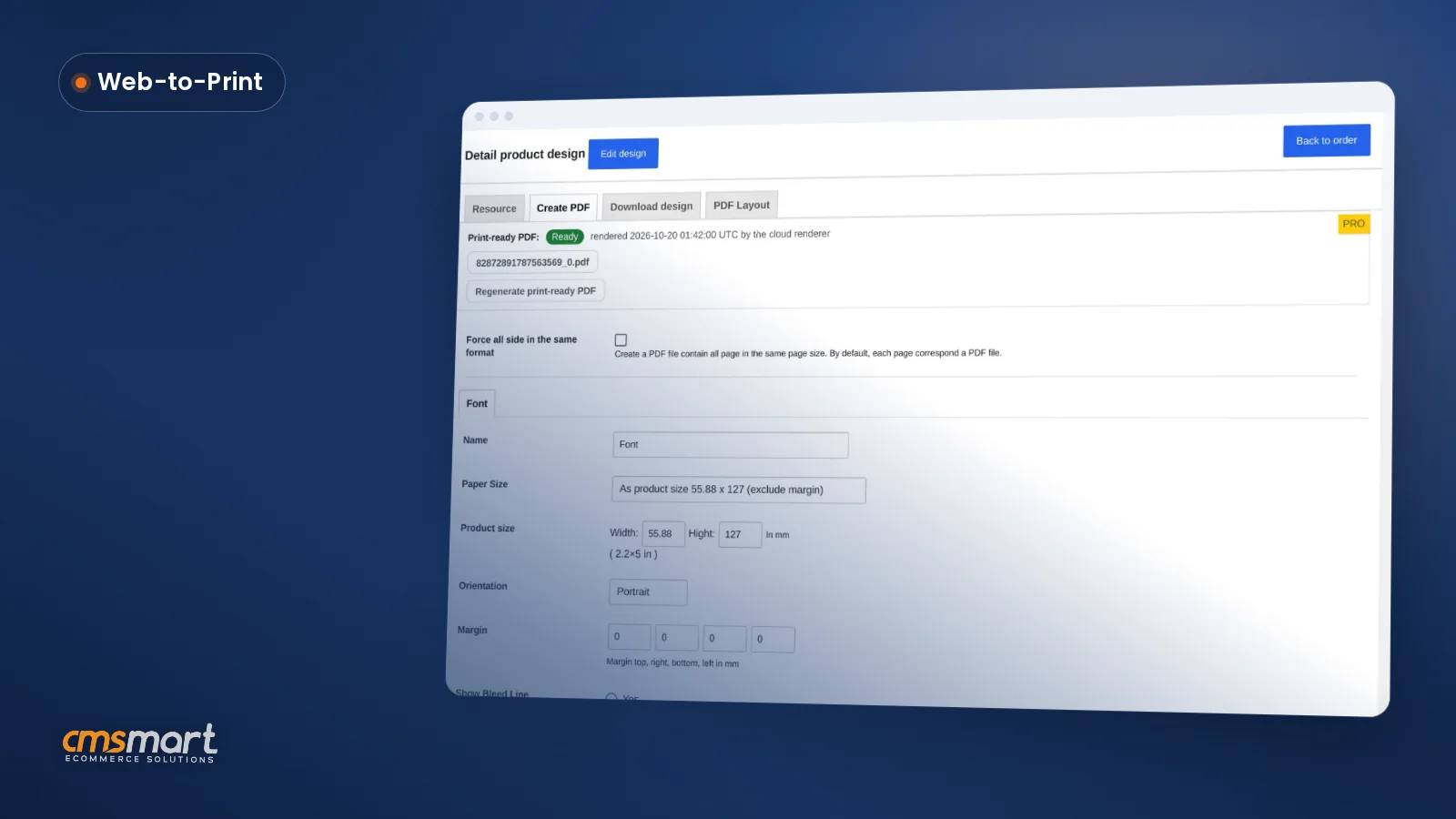
Case study · Web-to-print
Product Personalization Software for WooCommerce
Product personalization software for WooCommerce lets shoppers customize templates on the product page, then get a custom design quote from Cmsmart.
Unlock the potential of IT Asset Management with our comprehensive guide. Discover key benefits, strategies, and tools that help streamline operations, reduce costs, and maximize ROI for your organization.
Was this tutorial helpful?
Written by
Cmsmart WooCommerce Development Lead
Leads custom WooCommerce builds: architecture, checkout, performance and integrations.
The team behind it
 Account Manager
 Project Manager
 Business Analyst
 Developers & QA
Case study · Web-to-print
Product personalization software for WooCommerce lets shoppers customize templates on the product page, then get a custom design quote from Cmsmart.
Case study · Web-to-print
Set up an artwork approval workflow for WooCommerce: buyers confirm designs, Cmsmart locks the file, and print-ready PDFs generate automatically.
Guide · Web-to-print
Accept customer file uploads for print on demand orders: Cmsmart checks formats, size and DPI, then hands over a print-ready PDF. Get a custom quote t...
Browse more guides, tutorials and case studies from the Cmsmart community.
Unlock the Power of Mobile Commerce: Propel Your Business Forward
Read MoreDiscover how to harness mobile commerce to enhance your business growth. Learn strategies for optimizing the mobile shopping experience and increasing consumer engagement.
Read MoreDiscover the benefits of mobile commerce and how it can transform your business. Learn effective strategies for maximizing sales and customer engagement through mobile-optimized shopping experiences.
Read More
Cmsmart Ecommerce provides custom ecommerce and WooCommerce development services for web-to-print, product personalization, plugin support and API integration.
Cmsmart WooCommerce Development Lead
Leads custom WooCommerce builds: architecture, checkout, performance and integrations.
Meet the team →



Did you know that according to Gartner, effective implementation of IT Asset Management (ITAM) can reduce IT costs by as much as 30%? In a landscape where countless businesses struggle to align their ITAM strategies with overarching objectives, this statistic underscores a pivotal opportunity. Take the case of Tech Innovations Ltd., a growing SaaS provider in Germany, which faced significant challenges managing its IT assets. By integrating Cmsmart's tailored ITAM solutions, they not only streamlined their operational processes but also enhanced compliance, resulting in a remarkable 25% reduction in overhead costs within just six months. This transformation empowered Tech Innovations to meet customer demands swiftly while maintaining asset integrity, setting a benchmark in their industry.
For organizations wanting to embrace the full potential of IT Asset Management, the journey begins with strategic alignment and the adoption of streamlined processes. Concepts like asset oversight and workflow automation are not just jargon—they're essential for optimizing operations and enhancing efficiency. In this tutorial, we will explore actionable strategies to elevate your ITAM framework, ensuring you can maximize ROI while reducing compliance risks. Discover how to redefine your IT asset strategy for exponential growth and transform your business operations.
Demystifying IT Asset Management
Overwhelmed with starting points in IT Asset Management? You’re not alone.Many organizations grapple with aligning their IT Asset Management (ITAM) strategies with overarching business goals, often leading to inefficiencies and compliance risks.
Understanding ITAM Synonyms & LSI Keywords
Imagine if you could manage your IT resources with effortless precision while boosting efficiency and meeting business objectives. Implementing a streamlined ITAM strategy not only enhances asset integrity but also fosters compliance with industry regulations.
Actionable Tips for Effective IT Asset Management
Many organizations see significant improvements once they prioritize automating their ITAM processes. With advanced solutions, such as those found within How to Organize Your ITAM Implementation Team, companies can enhance their asset management efforts.
Next Steps: Organizing for Success
To build on this foundation, its important to explore further into strategies such as Importance of Regular Self-Audits in ITAM and Implementing LEAN Practices in ITAM. These practices can help solidify your ITAM processes and reinforce their alignment with business objectives. In summary: A robust IT Asset Management strategy provides clarity and efficiency while addressing pain points like compliance and process automation. Next, we’ll delve deeper into organizing your ITAM implementation team and getting started effectively.Exploring IT Asset Management (ITAM)
Overwhelmed by the complexities of IT Asset Management (ITAM)? You’re not alone.As companies scale, they often face challenges in aligning ITAM processes with their overarching business goals, leading to inefficiencies and compliance issues.
Definition of ITAM
IT Asset Management (ITAM) is a strategic approach that involves managing and optimizing the purchase, deployment, maintenance, and disposal of IT assets. This encompasses hardware, software, and digital resources, aiming to ensure that all assets support the organizations objectives effectively.Importance of ITAM in Modern Business
In today’s business environment, effective ITAM is crucial for several reasons:Understanding ITAM: ITAM, Asset Management, and Others
While ITAM is often confused with asset management in general, they have distinct focuses. Understanding the differences and connections can drive better strategy:- IT Asset Management: Focuses specifically on technology assets and their lifecycle.
- Asset Management: Encompasses a broader category, including physical assets like buildings and vehicles.
- Stakeholders: Identifying who will benefit from ITAM processes can enhance alignment with business objectives.
As organizations embrace automation, maintaining asset integrity becomes increasingly important. Explore Strategies for Thriving in the E-Commerce Landscape by 2027 and Ecommerce Website Design for deeper insights. In summary: Understanding the definition and importance of ITAM establishes a foundation for successful implementation. Next, let’s delve into Aligning ITAM Metrics with Business Goals for further growth strategies.Building an Effective ITAM Team
Feeling overwhelmed with how to start your IT Asset Management (ITAM) journey? You’re not alone.Many organizations struggle with aligning their ITAM efforts with overarching business goals, leading to inefficiencies and compliance challenges. The key to overcoming these obstacles lies in building an effective ITAM team.
Role of an ITAM Team in an Organization
An ITAM team plays a crucial role in ensuring that asset management aligns with business objectives. By focusing on process automation, compliance, and asset integrity, these teams can drive significant improvements in operational efficiency. Key responsibilities include:Best Practices in Forming and Managing an ITAM Team
To effectively build and manage your ITAM team, consider the following best practices:Overcoming Common Challenges in ITAM Team Organization
Organizations often face challenges such as resistance to change and lack of executive support. Here are some strategies to overcome these hurdles:- Engage executives early in the process to secure their buy-in.
- Communicate the benefits of ITAM to the broader organization to foster a culture of collaboration.
- Utilize change management techniques to guide the team through transitions.
For more strategies on enhancing your ITAM practices, check out our articles on Enhancing E-Commerce Performance with Advanced Inventory Management Solutions, How Effective Inventory Management Can Reduce Costs for Small Businesses, and Woocommerce Development. In summary: Building an effective ITAM team is essential for aligning IT asset management with business objectives and streamlining processes. By following these best practices and addressing common challenges, your organization will be better poised for success. Next, let’s explore Latest E-Commerce Trends & Strategies to Optimize Your Business Success in 2023 for improved efficiency.A Strategic Approach to ITAM Implementation
Overwhelmed with the multitude of IT Asset Management (ITAM) starting points? You’re certainly not alone.Many organizations encounter the challenge of aligning their ITAM practices with broader business goals, leading to inefficiencies and compliance risks.
Understanding the ITAM Implementation Strategy
To embark on a successful ITAM implementation, you need a strategic framework that clearly outlines objectives and integrates process automation. Here are some key components to consider:Key Steps in a Successful ITAM Implementation
Implementing ITAM effectively requires a step-by-step approach to overcome common pitfalls. Here are actionable steps to follow:Strategies to Address Common Pain Points in ITAM Implementation
Many organizations face challenges such as data silos and lack of operational visibility. Here are strategies to alleviate these issues:- Implement data integration solutions to enhance visibility across departments.
- Utilize ITAM metrics that align with business objectives for increased clarity.
- Employ LEAN practices to streamline processes and eliminate waste.
For further guidance, check out our articles on How to Organize Your ITAM Implementation Team, Starting Points for IT Asset Management, Importance of Regular Self-Audits in ITAM, and Aligning ITAM Metrics with Business Goals. In summary: A strategic approach to ITAM implementation not only aligns your asset management with business objectives but also enhances operational efficiency and compliance. Next, let’s delve into cost management practices in ITAM.Conducting Effective Self-Audits in ITAM
Feeling overwhelmed with starting points for your IT Asset Management (ITAM) journey? You’re not alone.Many organizations struggle with aligning ITAM processes and business objectives, leading to inefficiencies and potential compliance issues.
The Importance of Regular Self-Audits in ITAM
Regular self-audits are essential for maintaining asset integrity and ensuring compliance within your ITAM framework. Here are some key benefits:- Enhances process automation and efficiency
- Identifies gaps in asset management strategies
- Aligns ITAM practices with business goals
A regular self-audit reinforces compliance, streamlines processes, and fortifies overall business objectives, helping stakeholders maximize asset value effectively.Conducting a Successful ITAM Self-Audit
To conduct an effective self-audit, follow these actionable tips:- Define the scope of the audit by listing all assets and categories.
- Involve key stakeholders for a comprehensive view.
- Use automated tools to gather data and insights.
A structured approach to self-auditing will improve your likelihood of success and clarity in understanding asset status and compliance.Leveraging Self-Audit Findings for ITAM Improvement
Once your audit is complete, leverage your findings to:- Identify areas that need optimization or further automation
- Align ITAM processes with broader business objectives for better return on investment
- Inform training sessions for team members on best practices
By building on self-audit results, organizations can foster a culture of continuous improvement. In summary: Regular self-audits are a vital part of effective ITAM strategies. They help to uncover valuable insights that lead to improved efficiency and better alignment with business goals. For more guidance on structuring your ITAM team, check out our section on How to Organize Your ITAM Implementation Team. Lets move forward to explore other impactful strategies, such as Implementing LEAN Practices in ITAM for enhanced operational success.The Role of Reporting and Metrics Alignment in ITAM
Feeling overwhelmed by the complexities of IT Asset Management (ITAM)? You’re not alone.Many organizations struggle with aligning their ITAM efforts with overall business goals, leading to inefficiencies and compliance risks.
Aligning ITAM Metrics with Business Objectives
To ensure that your ITAM initiatives serve your organization’s strategy effectively, it’s crucial to establish clear connections between your asset management metrics and core business objectives. Here are some actionable tips to achieve alignment:Key Reporting Metrics in ITAM
Having the right metrics in place is essential for monitoring the performance of your ITAM strategy. Consider tracking these key metrics:Incorporating Stakeholder Feedback into ITAM Metrics
Stakeholder engagement is vital for effective ITAM. Gathering feedback helps refine your approach and enhances the relevance of your metrics. Here’s how to incorporate feedback:- Conduct regular surveys to gauge the satisfaction of stakeholders with ITAM processes.
- Facilitate open discussions with department heads to understand their unique needs regarding asset management.
- Implement iterative improvements based on stakeholder input to foster a culture of continuous enhancement.
In summary: Proper alignment of reporting and metrics in ITAM not only enhances your efficiency and compliance but also ensures that your asset management efforts support broader business goals. As you embark on this journey, consider exploring How to Organize Your ITAM Implementation Team and the Importance of Regular Self-Audits in ITAM. Next, we’ll look at implementing LEAN practices in ITAM to streamline your processes.Integrating LEAN Methodologies into ITAM
Overwhelmed by IT Asset Management (ITAM) complexities? You’re not alone.Many organizations grapple with aligning ITAM practices to their business objectives, often leading to inefficiencies and compliance concerns due to manual processes.
Understanding LEAN Practices in the Context of ITAM
LEAN methodologies are all about maximizing value while minimizing waste. Integrating LEAN practices into your ITAM processes can help streamline operations, ensuring that you maintain asset integrity and compliance effectively.
Benefits of LEAN ITAM
Implementing LEAN practices in your ITAM can lead to substantial improvements:
Implementing LEAN Practices in ITAM
Ready to get started? Here are some actionable tips to implement LEAN within your ITAM framework:
- Conduct a LEAN assessment: Evaluate your current ITAM processes to identify areas for improvement.
- Standardize processes: Create standardized procedures to ensure consistency in asset tracking and reporting.
- Engage in continuous improvement: Establish a feedback loop to refine processes regularly.
For further insights, check our guides on How to Organize Your ITAM Implementation Team and Importance of Regular Self-Audits in ITAM. In summary: Integrating LEAN methodologies into your ITAM practices not only enhances efficiency but also aligns your asset management with your business goals. Next, let’s dive into how to leverage data for ongoing improvements in your ITAM processes.Driving ITAM Success with Data Analytics
Feeling overwhelmed by the complexities of IT Asset Management (ITAM)? You’re not alone.Many organizations struggle with aligning their ITAM strategies with overall business goals, leading to inefficiencies and compliance challenges.
The Importance of Data-Driven ITAM
Data analytics plays a crucial role in enhancing ITAM by providing actionable insights that align with business objectives. Here are some benefits of leveraging data in your ITAM approach:Tools and Techniques for Deriving Insights from ITAM Data
Utilizing the right tools can significantly enhance your ITAM capabilities. Consider these techniques:Case Studies of Successful Data-Driven ITAM Implementations
Learning from others can provide valuable insights. Consider the following successful case study: For more detailed comparisons, see our guide on Importance of Regular Self-Audits in ITAM and B2B Ecommerce Marketplace. In summary: Embracing data analytics can lead to enhanced efficiency, improved compliance, and better asset management. Interested in learning how to set up your ITAM implementation team? Let’s dive into the next section!Frequently Asked Questions
Overwhelmed by starting points in IT Asset Management (ITAM)? Youre not alone.Many organizations struggle with aligning ITAM processes with their business goals, maintaining asset integrity, and automating workflows to enhance efficiency.
Common ITAM Questions Unraveled
As businesses increasingly recognize the importance of effective asset management, here are some frequently asked questions to help guide your ITAM journey:What is IT Asset Management?
IT Asset Management refers to the policies, processes, and tools used to manage an organizations IT assets throughout their lifecycle—inclusive of procurement, deployment, maintenance, and retirement. Effective ITAM can streamline operations and improve compliance.
Why is ITAM important for businesses?
ITAM is crucial as it ensures that your assets are effectively managed, minimizing risks associated with non-compliance and maximizing ROI from technology investments. Studies show that companies with active IT Asset Management see a 15-30% reduction in operational costs.
How can ITAM align with business goals?
What are the benefits of automating ITAM processes?
Automation leads to:
How can I ensure asset integrity and compliance?
To maintain compliance and integrity, consider implementing:
Where can I learn more about organizing my ITAM implementation team?
For actionable guidance, check out our article on How to Organize Your ITAM Implementation Team to align your efforts with business objectives.In summary: Understanding these fundamental questions around IT Asset Management prepares you for deeper insight into specific implementation strategies. Next, we’ll explore the Importance of Regular Self-Audits in ITAM to enhance your IT efficiency.
FAQ Section: Troubleshooting and Pro Tips
What are effective starting points for IT Asset Management (ITAM)?
Begin by establishing clear asset tracking processes and identifying all IT assets across your organization.
How can ITAM align better with business goals?
Focus on understanding business objectives and develop ITAM strategies that support those aims, ensuring both departments collaborate closely.
What are the risks of non-automated ITAM processes?
Manual processes can lead to data inaccuracies, increased resource consumption, and greater chances of compliance failures.
How can I maintain asset integrity in my ITAM system?
Implement regular audits, enforce compliance protocols, and utilize automation tools to ensure the accuracy of asset records.
What challenges arise from misalignment between ITAM and business objectives?
Misaligned ITAM can result in wasted resources, ineffective investments, and missed opportunities for improving operational efficiency.
What strategies help reduce overwhelm in managing IT assets?
Adopt user-friendly software solutions, automate repetitive tasks, and train staff to efficiently handle asset management activities.
How can automation improve IT asset management?
Automation streamlines asset tracking, reduces human error, and provides real-time insights for better decision-making.
Further Reading
As we conclude this ultimate guide on transforming your business through effective IT Asset Management (ITAM), it’s clear that the path to enhanced operational efficiency and compliance is within reach. By understanding key strategies like stakeholder engagement and workflow automation, your organization can significantly reduce IT costs—by as much as 30%, according to Gartner. Don’t let inefficiencies hold you back. Let’s discuss how we can help you implement a tailored ITAM strategy that aligns with your business objectives. Whether you're looking for insights or practical implementation, feel free to reach out to David, our CEO, on WhatsApp at David CEO WhatsApp. Alternatively, you can contact me directly at project@cmsmart.net or request a quotation through our contact page: Request Quotation. Join me in optimizing your IT management for a brighter future!