

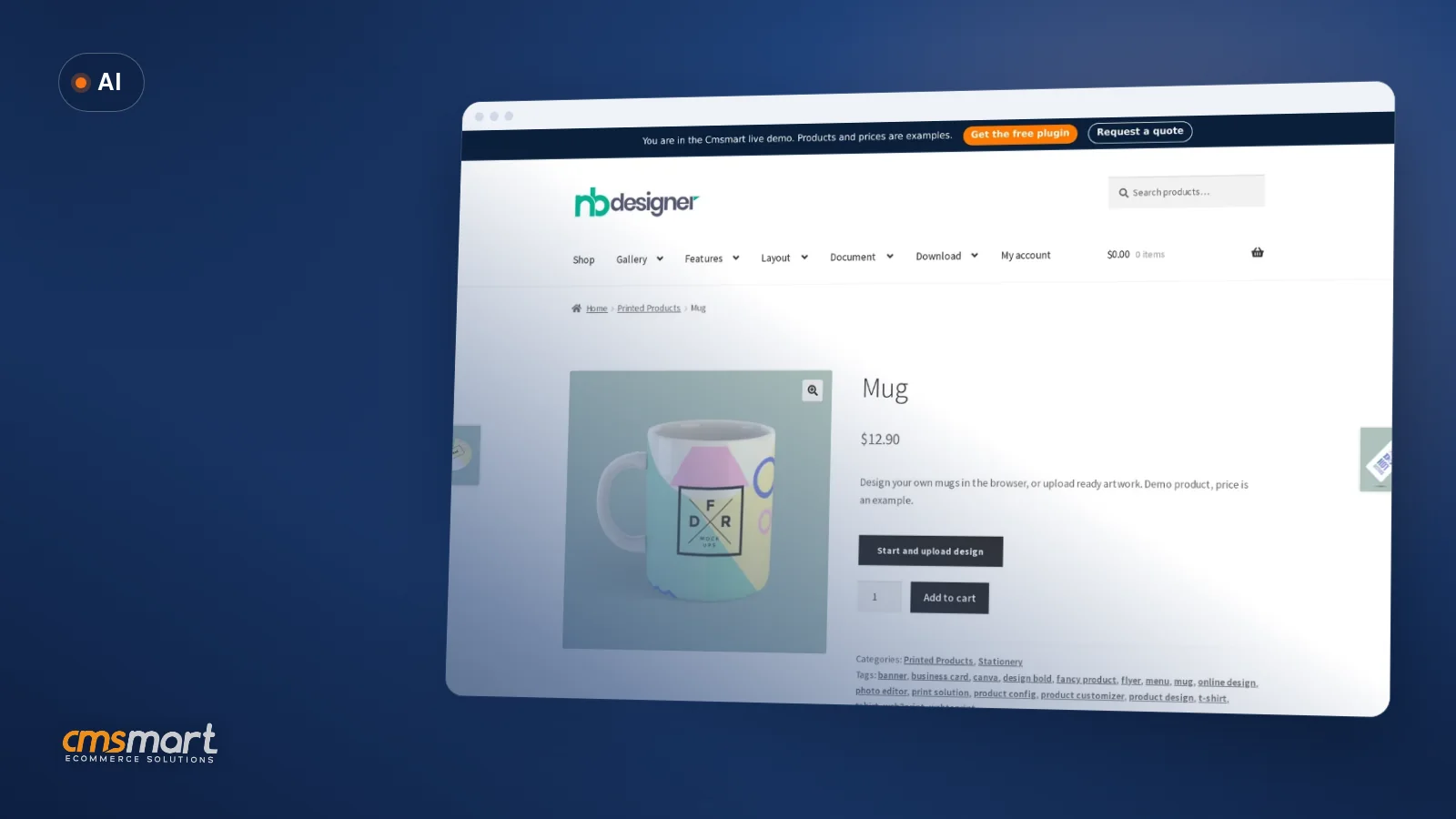
Case study · AI
Animated Filter for Personalized Products
See what an animated filter for personalized products can really do today, then get a custom AI style effect built for your store.
Explore our comprehensive e-commerce platforms comparison to find the perfect solution tailored to your needs. Make informed decisions and boost your online success!
Was this tutorial helpful?
Written by
Cmsmart WooCommerce Development Lead
Leads custom WooCommerce builds: architecture, checkout, performance and integrations.
The team behind it
 Account Manager
 Project Manager
 Business Analyst
 Developers & QA
Case study · AI
See what an animated filter for personalized products can really do today, then get a custom AI style effect built for your store.
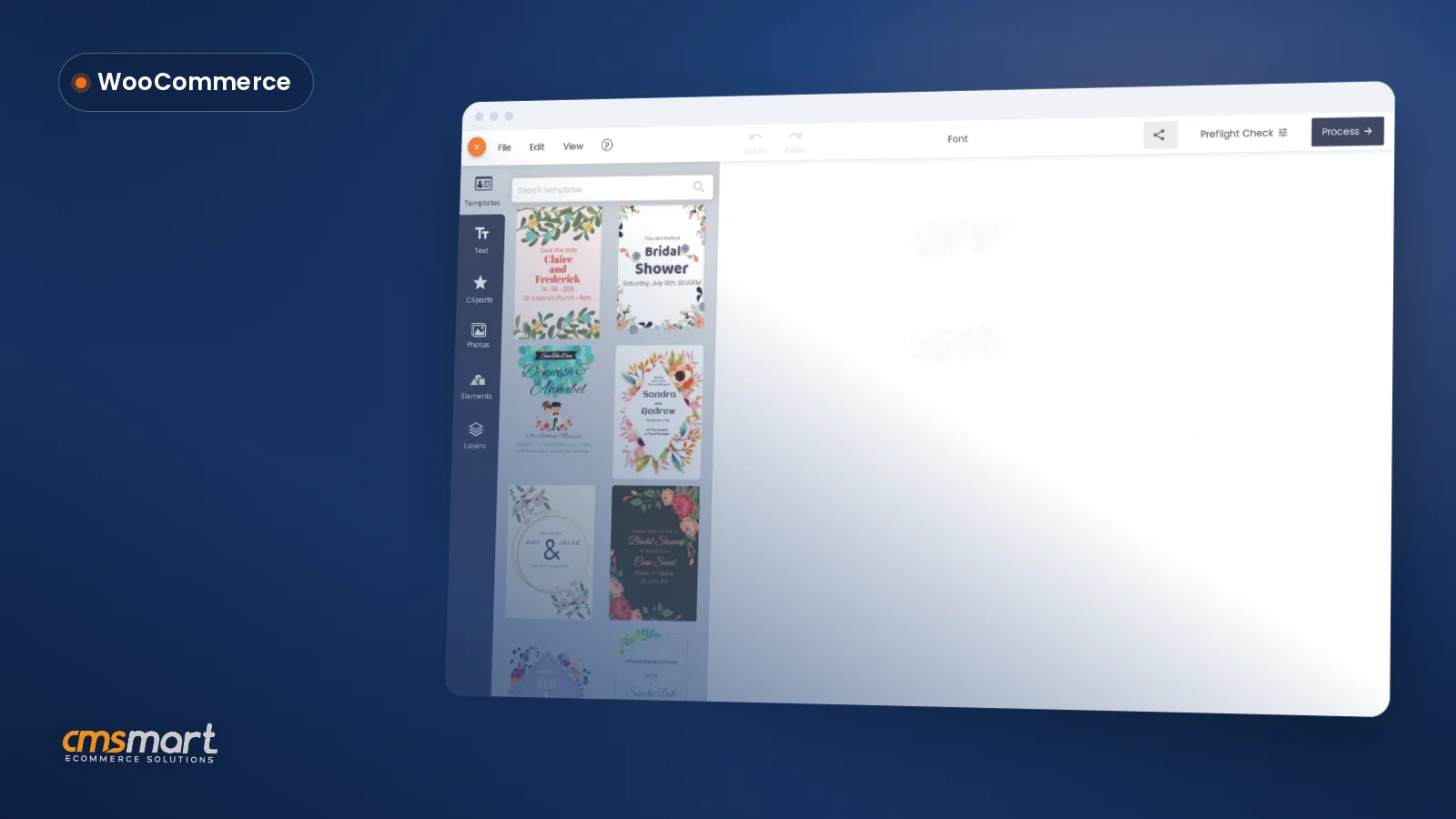
Guide · WooCommerce
See how website design and development work as one build in a real WooCommerce store, then get a custom development quote from Cmsmart.
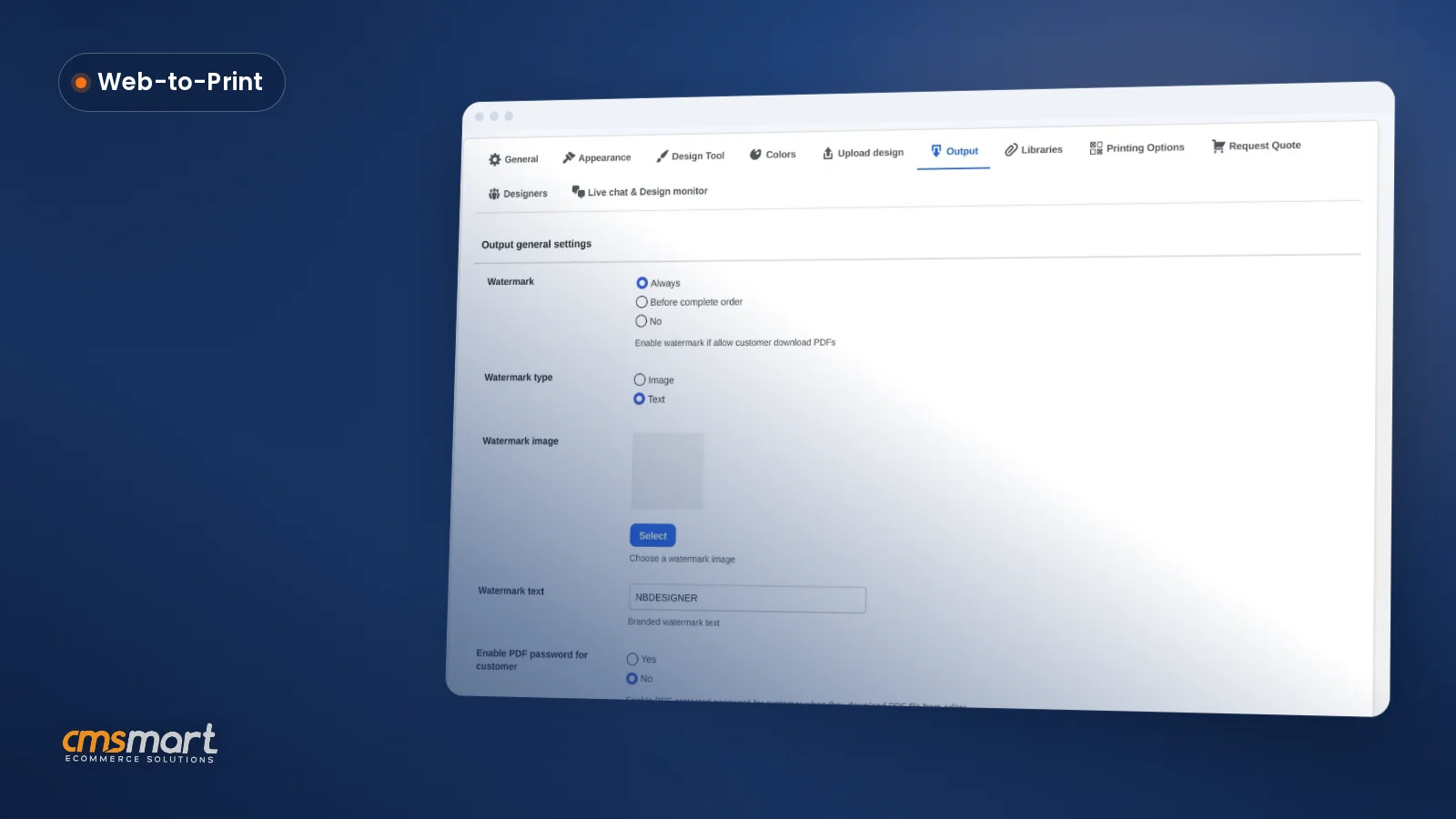
Guide · Web-to-print
See what the print ready PDF output settings WooCommerce screen controls — watermark, password, bleed, FTP sync — and configure yours today.
Browse more guides, tutorials and case studies from the Cmsmart community.
Unlock the Power of Mobile Commerce: Propel Your Business Forward
Read MoreDiscover how to harness mobile commerce to enhance your business growth. Learn strategies for optimizing the mobile shopping experience and increasing consumer engagement.
Read MoreDiscover the benefits of mobile commerce and how it can transform your business. Learn effective strategies for maximizing sales and customer engagement through mobile-optimized shopping experiences.
Read More
Cmsmart Ecommerce provides custom ecommerce and WooCommerce development services for web-to-print, product personalization, plugin support and API integration.
Cmsmart WooCommerce Development Lead
Leads custom WooCommerce builds: architecture, checkout, performance and integrations.
Meet the team →




As the countdown to a projected $8 trillion global e-commerce market by 2027 begins, the pressure on businesses to adapt quickly has never been greater. A recent study highlighted that in 2020, online commerce made up 18% of total global retail sales, a direct testament to the unprecedented digitization waves sweeping through industries worldwide. Yet, for many small to medium-sized enterprises (SMEs), the transition into this competitive landscape often feels overwhelming. Take, for example, EcoCrafts, a handmade goods retailer based in Canada. Before teaming up with Cmsmart, they struggled to identify a platform that catered to their unique needs while managing inventory and order fulfillment efficiently. With our tailored e-commerce solutions, EcoCrafts not only selected the right platform but also enhanced their operational efficiency, ultimately increasing their online sales by over 40% within six months.
In today's fast-paced e-commerce environment, the choices can be daunting— but making an informed decision is crucial for your business's success. Key players like Amazon and Alibaba elevate the standard, making it essential for companies to constantly innovate and meticulously analyze profitability metrics. In this tutorial, we will dive into a comprehensive comparison of e-commerce platforms, equipping you with the necessary insights to navigate your options effectively. For those keen on refining their approach further, don't miss our pointers on building customer engagement and offering exceptional customer service. Let’s embark on this journey to find the perfect solution tailored to your unique business needs!
Decoding the E-commerce Landscape
Navigating the competitive e-commerce landscape can be daunting for many businesses.As online retail continues to evolve, market competition intensifies, making revenue generation a pressing challenge for e-commerce platforms. Companies must maintain profitability in a crowded marketplace, adapt to fluctuating market capitalization, and cultivate investor confidence while navigating various challenges.
Understanding the E-commerce Market Dynamics
In our exploration of the e-commerce sector, we need to evaluate key trends and metrics driving online sales growth. Here are some essential insights:Strategies for Navigating the E-commerce Space
To effectively compete in the e-commerce landscape, consider the following actionable strategies:- Implement advanced SEO tactics to improve visibility and attract organic traffic.
- Utilize social media marketing to engage potential customers and build brand loyalty.
- Explore multi-channel selling opportunities to maximize reach and streamline sales.
Combining these strategies with market evaluation gives businesses the necessary tools to thrive in a highly competitive environment.Case Studies & Expert Opinions
In conclusion: The e-commerce landscape is filled with both challenges and opportunities. Businesses must strategically navigate these waters by employing effective tactics and keeping pace with market trends. For a deeper dive, next, we’ll analyze the competition amongst major e-commerce giants and their respective market influences. Visit our sections on Comparison of e-commerce giants in 2023, Analysis of Amazons market dominance, and JD.coms growth in the e-commerce sector for more insights.Understanding E-commerce Platforms
Market competition and revenue generation can be daunting in the online retail world.With so many e-commerce platforms available, businesses struggle to stand out and maintain profitability in a crowded space.
Definition of E-commerce Platforms
E-commerce platforms are software solutions that facilitate online buying and selling. They provide businesses with the tools necessary to create their own online stores, manage orders, and accept payments. Common examples include WooCommerce, Shopify, and Magento, each catering to different business needs and sizes.Rising Popularity and Importance of E-commerce Platforms
The e-commerce industry is booming, with online sales projected to reach approximately $6.3 trillion by 2024, demonstrating the growing importance of a strong digital presence. This rapid growth can be attributed to factors such as:In a world where market capitalization drives company growth, understanding e-commerce platforms is crucial. Companies need to analyze their digital marketplaces effectively to compete and satisfy investor confidence.
Success in the digital marketplace requires savvy strategies and quick adaptability. Here are some actionable tips:
- Regularly integrate new payment options to meet customer preferences
- Update your product descriptions and images to improve SEO and conversion
- Utilize social media marketing to drive traffic to your site
- Implement analytics tools to monitor customer behavior and improve performance
As you explore the e-commerce landscape, dont forget about vital comparisons of key players. Check out our section on the Comparison of e-commerce giants in 2023 for insights on how platforms like Amazon, Alibaba, and eBay maintain their market dominance. In conclusion, understanding e-commerce platforms is essential for businesses wanting to thrive in this rapidly evolving landscape. Move forward with powerful insights and prepare for our next discussion on advanced strategies for optimizing your e-commerce platform.Unearthing the Giants: Amazon, Alibaba, JD.com, Pinduoduo, eBay, and Rakuten
Struggling to navigate the competitive world of e-commerce? You’re not alone.The intense market competition poses challenges for businesses seeking profitability, effective revenue generation, and investor confidence in a crowded online retail landscape.
Unearthing the Giants of E-commerce
Understand how the heavyweights of the e-commerce world—Amazon, Alibaba, JD.com, Pinduoduo, eBay, and Rakuten—navigate these challenges and harness their strengths.Understanding Amazons Market Dominance
Amazon remains an indomitable force in the e-commerce sector, boasting a staggering market capitalization of over $1 trillion, which underscores its significant influence and dominance.Economic Performance of Alibaba
Alibaba has transformed China’s e-commerce landscape with its remarkable growth, generating over $109 billion in revenue in 2021.JD.coms Growth in the E-commerce Sector
JD.com, with its direct sales model, recorded over $150 billion in total revenue in 2021, focusing on infrastructure and customer service excellency.Pinduoduos Innovation in Online Shopping
Pinduoduo is redefining online shopping with its social commerce model, attracting over 788 million monthly active users and emphasizing community-driven shopping experiences.Analyzing eBays Business Model
Despite challenges, eBay remains relevant by providing unique value propositions through auctions and fixed-price sales, sustaining a revenue of $10 billion in 2021.Understanding Rakutens Market Position
Rakuten, often dubbed “Japan’s Amazon,” is expanding its footprint with innovative loyalty programs and diverse service offerings, contributing to its growing valuation.- Leverage partnerships with local businesses for cross-promotional opportunities
- Invest in technology to streamline operations and improve customer engagement
In summary: Each of these giants employs unique strategies to combat market competition and enhance revenue generation. Understanding their approaches can help you develop a comprehensive strategy for your own e-commerce business. Dive deeper into the comparison of e-commerce giants in 2023 and explore Amazons market dominance as we move on to explore the economic performance of Alibaba.Delving Deeper: A Comparative Analysis of E-commerce Platforms
Market competition is fierce, and generating revenue remains a critical challenge for e-commerce platforms today.As the online retail landscape continues to evolve, companies strive to maintain profitability while navigating market pressures and investor expectations.
Examining E-commerce Giants: A Closer Look
Let’s dive into a comparative analysis of major e-commerce players, outlining how they generate revenue and maintain growth:
Navigating Financial Performance Indicators
Understanding market capitalization trends and financial performance indicators is crucial for assessing the health of these e-commerce platforms. You can explore more in our articles about the Comparison of e-commerce giants in 2023, Analysis of Amazons market dominance, and Economic performance of Alibaba. In summary: Analyzing financial metrics and performance trends among leading e-commerce platforms sheds light on their strategies for success, revealing both opportunities and challenges. Next, let’s delve into how JD.com’s growth is shaping the future of the e-commerce sector.E-commerce Industry Evaluation
Facing fierce competition in the e-commerce landscape? Youre not alone.Many online retailers grapple with market saturation, seeking effective strategies for revenue generation and long-term profitability in a crowded digital marketplace.
Impact of Online Sales Growth on E-commerce Platforms
As the global e-commerce market continues to expand, projected to hit a remarkable $8 trillion by 2027, understanding how online sales growth affects e-commerce platforms is crucial. This growth translates into higher competition as businesses vie for market share, underscoring the need for robust financial performance indicators to gauge success.Market Capitalization Trends
Market capitalization plays a vital role in company growth. Elevated market caps signal investor confidence, directly influencing funding opportunities and business scalability. E-commerce platforms need to focus on effectively utilizing this capital for technology enhancements and customer reach.Role of Financial Performance Indicators in Company Growth
Financial performance indicators should not be overlooked. Key metrics such as revenue growth, profit margins, and return on investment (ROI) provide an accurate portrayal of a company’s operational efficiency.Profitability Analysis
Profitability is crucial in a saturated e-commerce market. Analyzing product lines, customer segments, and operational strategies can help identify areas that may require adjustment or innovation to keep profit margins healthy. For detailed insights on profitability metrics, check our full guide on e-commerce strategies. In summary: Evaluating your position within the evolving e-commerce landscape enables better decision-making. For deeper insights, dont miss our upcoming section on the Comparison of e-commerce giants in 2023, where we’ll dive into how leading players like Amazon and Alibaba maintain their market dominance amid changing trends.Future of E-commerce Platforms
Facing fierce competition in the e-commerce landscape? You’re not alone.Businesses worldwide encounter the challenge of standing out while generating revenue in an overcrowded online marketplace.
Current Trends Affecting E-commerce Platforms
Predicted Future Trends
As we look ahead, e-commerce platforms must be ready for several changing tides:Adapting to Market Changes
Adapting to the evolution of the digital marketplace is crucial for maintaining growth:- Utilize analytics tools for real-time consumer behavior insights
- Experiment with diverse marketing strategies to reach wider audiences
- Solicit customer feedback regularly to improve product offerings
- Stay agile in operations to pivot as market dynamics shift
In summary: The future of e-commerce platforms holds tremendous opportunities but also significant challenges. Companies must remain vigilant and agile, continuously analyzing market trends and consumer behavior. Next, we’ll dive into a Comparison of E-commerce Giants in 2023 to better understand how leading platforms are navigating this evolving landscape.Frequently Asked Questions
Market competition making it hard to stand out in e-commerce? You’re not alone.Many platforms struggle with revenue generation and maintaining profitability in a crowded online marketplace.
What are some key factors that contribute to the success of an e-commerce platform?
Success in e-commerce relies on several key factors:How does Amazons revenue compare to other e-commerce companies?
Amazon remains the titan of the e-commerce industry, generating approximately $514 billion in revenue in 2022, outpacing its closest competitors like Alibaba and eBay. Its extensive product selection and efficient delivery network give it a significant market edge.What is the role of online sales growth in the success of an e-commerce platform?
Online sales growth is pivotal for e-commerce success. Companies that successfully enhance their online sales experience tend to see:What are the biggest challenges for e-commerce platforms in maintaining investor confidence?
E-commerce platforms often face challenges that can impact investor confidence, including:- High competition limiting market share
- Shifts in consumer purchasing behavior
- Operational hurdles in scaling logistics and supply chain
Investors look for strong financial performance indicators and stable market capitalization trends to evaluate potential growth. Maintaining open communication and transparency can help alleviate concerns.How has the usability of online retail platforms evolved over time?
The usability of online retail platforms has progressed significantly, with:- Intuitive design interfaces enhancing user interaction
- Mobile optimization allowing shopping from anywhere
- Advanced payment options providing flexibility and convenience
In summary: Understanding these facets can enhance your e-commerce strategy. Next, let’s dive deeper into our analysis of leading e-commerce giants in 2023, including a comparison of market dominance, performance metrics, and growth potential. For more insights, check out our pieces on Comparison of e-commerce giants in 2023 and Analysis of Amazons market dominance.FAQ Section: Troubleshooting and Pro Tips
How does Cmsmart compare with other e-commerce platforms?
Cmsmart excels with customizable features and specialized support tailored to your business needs.
What are the revenue generation strategies in a crowded e-commerce market?
Utilizing SEO, targeted marketing, and subscription models can significantly enhance revenue streams.
How can profitability be maximized in the competitive e-commerce space?
Streamlining operations, reducing cart abandonment, and enhancing customer loyalty programs are key to boosting profitability.
What is the role of market capitalization in e-commerce growth?
Higher market capitalization can facilitate investments in technology and marketing, driving further expansion.
What challenges do e-commerce platforms face in maintaining investor confidence?
Market volatility, data security issues, and evolving consumer preferences can impact investor trust.
How do e-commerce platforms stay competitive?
By continuously innovating and integrating trending features like AI and AR, platforms can enhance the customer experience.
What impact does customer feedback have on e-commerce platforms?
Customer feedback influences product development, improves user experience, and strengthens brand loyalty.
Further Reading
In conclusion, successfully navigating the e-commerce landscape requires a deep understanding of market dynamics and strategic implementation. This tutorial has equipped you with essential insights to evaluate e-commerce platforms effectively and select the right solution tailored for your business needs. No longer should choosing a platform feel daunting; with these strategies, you can transform your online store into a thriving venture. Join me in transforming your store and unlocking your e-commerce potential! For personalized guidance, feel free to reach out to David, our CEO via WhatsApp, or email me at project@cmsmart.net. Additionally, if you’d like to discuss specific project needs, don’t hesitate to request a quotation. Let’s explore how we can implement these strategies together!