

Guide · B2B
WooCommerce Amazon Etsy Sync: Stock and Orders
WooCommerce Amazon Etsy sync guide: keep stock and orders right across channels, avoid overselling, and get a custom integration quote.
Optimize your inventory management process to boost efficiency, reduce costs, and improve customer satisfaction. Discover essential strategies and tools.
Table of contents
Was this tutorial helpful?
Written by
Cmsmart B2B Commerce & Operations Consultant
Designs B2B ordering, marketplaces and the operations behind them.
The team behind it
 Account Manager
 Project Manager
 Business Analyst
 Developers & QA
Guide · B2B
WooCommerce Amazon Etsy sync guide: keep stock and orders right across channels, avoid overselling, and get a custom integration quote.
Guide · B2B
Set up a WooCommerce request a quote B2B workflow: price matrix, approval, and one-click conversion to order. Plan yours today.
Guide · B2B
WooCommerce B2B pricing: give wholesale buyers tiered prices, customer groups and account approval. See what the plugin does today and get a custom qu...
Browse more guides, tutorials and case studies from the Cmsmart community.
Unlock the Power of Mobile Commerce: Propel Your Business Forward
Read MoreDiscover how to harness mobile commerce to enhance your business growth. Learn strategies for optimizing the mobile shopping experience and increasing consumer engagement.
Read MoreDiscover the benefits of mobile commerce and how it can transform your business. Learn effective strategies for maximizing sales and customer engagement through mobile-optimized shopping experiences.
Read More
Cmsmart Ecommerce provides custom ecommerce and WooCommerce development services for web-to-print, product personalization, plugin support and API integration.
Cmsmart B2B Commerce & Operations Consultant
Designs B2B ordering, marketplaces and the operations behind them.
Meet the team →
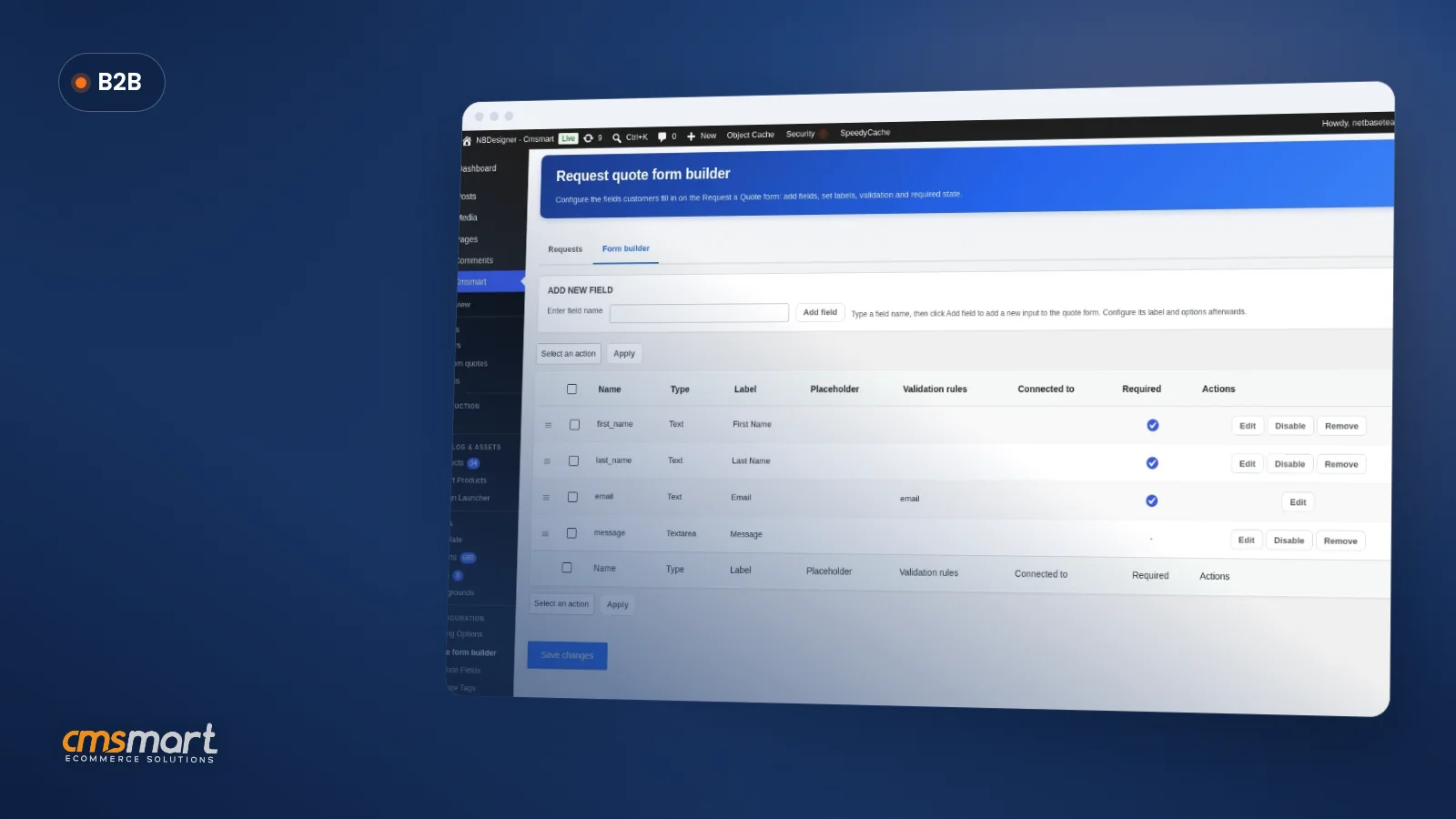


Did you know that according to a study by Statista, a staggering 62% of retailers face challenges with inventory accuracy? This issue not only impacts their sales but also diminishes customer satisfaction. For instance, let’s take the remarkable case of Fashion Hub from Australia, a flourishing apparel company that struggled with fluctuating stock levels and order inaccuracies. After implementing Cmsmart’s inventory management solutions, they witnessed a transformation: streamlined operations that drastically reduced stockouts and oversights. With access to real-time data and automated tracking, Fashion Hub not only enhanced their inventory accuracy but also substantially boosted their bottom line by 30% in just six months.
This is a compelling indication of how effective inventory management can redefine operational efficiency and profitability in the eCommerce industry. In today’s competitive landscape, mastering the intricacies of inventory is essential, especially when 62% of your peers are wrestling with similar hurdles. By implementing technology that fosters seamless tracking and centralized databases, you too can avoid overstock and stockout situations, paving the way for improved demand forecasting and customer satisfaction. If you're curious about the journey towards effective inventory management, discover how you can implement these strategies and more through our insightful resources: Unlock Seamless Inventory Management, Digital Transformation in eCommerce, and Key E-commerce Trends for Enhanced Engagement. In this guide, we will delve into the strategies and tools that can revolutionize your business with effective inventory management solutions...
Imagine a World with Streamlined Inventory Management
Imagine a world where managing your inventory is seamless and efficient.Picture a place where managing incoming inventory, ensuring all product components are ready for sale, and maintaining accurate inventory logs is easier than ever. Quick access to your inventory details can significantly enhance your sales operations and streamline your overall eCommerce inventory handling.
Unlock the Secrets to Effective Inventory Management
Key Benefits of Streamlined Inventory Management
Efficient inventory control can lead to several advantages for your business, including:- Enhanced accuracy in stock levels and product availability
- Reduced operational costs through improved stock management
- Increased customer satisfaction with quicker order fulfillment
To dive deeper into best practices for inventory management, check out our detailed guide on how to receive inventory effectively, and learn more about the consolidation process in inventory management and the importance of a detailed inventory, along with the benefits of a digital inventory database and achieving efficiency in eCommerce inventory management. In summary: By integrating effective inventory management systems, you can tackle significant pain points and enhance your overall eCommerce success. Now, lets explore the next step in streamlining your operations.Unraveling Inventory Management
Managing incoming inventory efficiently can determine the success of your eCommerce store.Businesses often struggle with ensuring all product components are ready for sale and maintaining accurate inventory logs. The challenge of having quick access to inventory details can hinder smooth operations and customer satisfaction.
Defining Inventory Control
Inventory control is the process of overseeing the ordering, storage, and use of components that a company uses in the production of the items it sells. It is a vital part of stock management that helps businesses prevent overstocking and stockouts, ensuring a balanced flow of goods.The Role of Stock Management in Todays Business Landscape
An efficient stock management system is essential for all businesses, especially in the eCommerce landscape. It involves tracking products from purchasing to storage and finally to sales. Here are some actionable strategies to enhance stock management:Understanding Inventory Handling and Its Importance
Inventory handling refers to the procedures put in place to manage stock throughout the supply chain. Proper inventory handling ensures that all products are maintained in suitable conditions and are easily accessible, which enhances operational efficiency and customer experience.- Train staff on effective inventory handling techniques
- Adopt digital inventory databases for better tracking and organization
- Implement barcode systems for quick access to inventory details
In summary: Effective inventory management is crucial for sustaining eCommerce growth and meeting customer demands. To dive deeper into this topic, check out our guides on how to receive inventory effectively, the consolidation process in inventory management, the importance of a detailed inventory, benefits of a digital inventory database, and achieving efficiency in eCommerce inventory management. Now, let’s explore how to streamline your inventory receiving processes!The Power of Efficient Inventory Receiving
Managing incoming inventory efficiently can be challenging, especially when ensuring all product components are ready for sale.Accurate inventory logs are vital for smooth operations, and quick access to inventory details can streamline your workflow.
What Does it Mean to Receive Inventory?
Receiving inventory involves accepting and processing the products delivered to your warehouse or store. Effective inventory control ensures that everything is accounted for, minimizing discrepancies that could impact your stock management.Merit of Effective Inventory Receiving Procedures
Implementing effective procedures for receiving inventory can yield numerous benefits, including:Practical Steps on How to Receive Inventory Effectively
To ensure your inventory handling processes are seamless, consider these actionable tips:Integrate Expert Insights
“Maintaining an organized receiving process has drastically improved our product tracking and reduced errors. This directly impacts our sales operations positively.” – A satisfied eCommerce manager. For additional guidance, view our resources on how to receive inventory effectively, and explore our insights on the consolidation process in inventory management. In summary: Effective inventory receiving is crucial for maintaining accurate inventory logs and ensuring that your eCommerce operations run smoothly. Up next, lets delve into the importance of a detailed inventory system and how it can further enhance your inventory management practices.Diving into Inventory Consolidation
Managing incoming inventory efficiently can be a significant challenge for businesses.Ensuring that all product components are ready for sale while maintaining accurate inventory logs and quick access to inventory details for operations can seem daunting.
Breaking Down the Concept of Inventory Consolidation
Understanding inventory consolidation is essential for effective inventory control and stock management. Essentially, it involves combining multiple inventory sources into a unified system to streamline management processes. Here are some key aspects to consider:The Significance of Consolidation in Inventory Management
Effective inventory consolidation can lead to significant benefits, including:Strategies for Effective Inventory Consolidation
To achieve efficient inventory consolidation, consider the following actionable strategies:- Conduct regular inventory audits to assess stock levels.
- Utilize inventory management software for real-time updates on stock status.
- Implement a centralized inventory system to consolidate data from multiple sources.
For more insights, check out our guide on How to Receive Inventory Effectively and the Consolidation Process in Inventory Management. In summary: Inventory consolidation is vital for overcoming the challenges of managing inventory efficiently. By putting these strategies into practice, businesses can enhance their inventory handling processes significantly. Next, let’s delve into the importance of maintaining a detailed inventory for your success.The Importance of Detailed Inventory Logs
Are you struggling to manage incoming inventory efficiently while ensuring that all product components are ready for sale? You’re not alone.Many businesses face challenges related to maintaining accurate inventory logs and quickly accessing essential inventory details to streamline operations.
Detailed Inventory: An Overlooked Asset
Maintaining detailed inventory logs is crucial for effective inventory control and stock management. An organized inventory system improves product tracking and enhances warehouse management. Here are some key benefits of precise inventory logs:Tips to Maintain Accurate and Detailed Inventory Logs
To ensure seamless inventory handling, implement these actionable tips:How Detailed Inventory Logs Contribute to Business Success
Detailed inventory logs contribute significantly to business growth by enabling informed decision-making. These logs provide insights into product performance, allowing you to optimize your stock and match supply to demand effectively. For more advanced strategies on inventory management, check out the following resources:- How to receive inventory effectively
- Consolidation process in inventory management
- Benefits of a digital inventory database
- Achieving efficiency in eCommerce inventory management
In summary: Keeping detailed inventory logs not only improves operational efficiency but also paves the way for business growth. Now, lets dive into the next section on effective methods to receive inventory for better organization and management.Leveraging Digital Databases in Inventory Management
Managing incoming inventory efficiently is crucial for business success.It’s vital to ensure that all product components are ready for sale, maintain accurate inventory logs, and provide quick access to inventory details for smooth operations. Poor inventory management can lead to lost sales, dissatisfied customers, and decreased profitability.
Digital Database: Revolutionizing Inventory Management
A digital inventory database represents a transformative approach to stock management. By utilizing a digital inventory system, businesses can streamline their inventory handling processes and enhance overall efficiency.Benefits of Using a Digital Inventory Database
Implementing a digital inventory solution provides numerous advantages, especially in the context of eCommerce inventory management. Here are some core benefits:Implementing a Digital Database for Your Inventory Workflow
Getting started with your digital inventory database involves several key steps:- Identify your specific inventory management needs.
- Choose the right software solution that supports product tracking and integrations.
- Train your team on the new system to ensure smooth adoption.
- Regularly review and update inventory data for accuracy.
For further guidance, you can explore our resources on How to Receive Inventory Effectively, or learn about the Consolidation Process in Inventory Management. In summary: A digital database can significantly enhance your inventory management efficiency, providing a solid foundation for seamless operations. Next, let’s delve into the benefits of a digital inventory database and how they can propel your business forward.The Road to Efficiency: eCommerce Inventory Management
Managing incoming inventory efficiently can make or break your eCommerce business.Without precise inventory control, you may face issues such as unprepared product components, inaccurate inventory logs, and delays in accessing vital stock information.
Understanding eCommerce Inventory Management
eCommerce inventory management refers to the methods used to track and control your stock levels, ensuring that you have the right products available at the right time. This encompasses everything from receiving goods to fulfilling customer orders. Effective inventory handling is crucial for maintaining smooth sales operations and enhancing customer satisfaction.Achieving Efficiency in eCommerce Inventory Management
To streamline your inventory system, consider implementing the following tips:Top Tips for Managing eCommerce Inventory Effectively
Implement these actionable strategies to improve your stock management techniques and drive business growth:Summary: By adopting efficient eCommerce inventory management practices, you can not only enhance your operational performance but also improve customer satisfaction. In the next section, we will delve into how to receive inventory effectively and its impact on overall warehouse efficiency, further solidifying your inventory capabilities.
Comprehending the Challenges of Inventory Management
Managing incoming inventory efficiently can be a daunting task for eCommerce businesses.Many merchants struggle with ensuring all product components are ready for sale, maintaining accurate inventory logs, and providing quick access to inventory details for operations.
Common Inventory Management Pain Points
Strategies to Overcome Inventory Management Challenges
Implementing effective inventory control requires proactive strategies. Here are some actionable tips:
Case Studies: Successful Troubleshooting of Inventory Management Pain Points
Consider this success story from a retailer that streamlined their inventory process:
By focusing on the right inventory management techniques, retailers can enhance their operations and minimize costly errors.
In summary: Understanding the challenges of inventory management is crucial for eCommerce success. With effective strategies in place, businesses can optimize their inventory systems and enhance their operational efficiency. Next, let’s delve into how to receive inventory effectively and the consolidation process in inventory management.Future Trends and Innovations in Inventory Management
Managing inventory efficiently can be a daunting task for any business owner.The challenges of ensuring all product components are available for sale, maintaining accurate inventory logs, and having quick access to inventory details are common hurdles that many face in today’s fast-paced market.
Current Innovations Redefining Inventory Management
Recent advancements in technology have transformed inventory handling, making it easier than ever to manage stock. Here are some key innovations reshaping the landscape:Predicted Trends for Inventory Control
As the industry evolves, several trends are anticipated to gain traction in inventory management:How to Keep Your Business in Sync with Emerging Inventory Management Trends
To navigate these shifts effectively, consider the following actionable tips:- Invest in scalable inventory management software that can grow with your business
- Regularly train your team on new technologies and practices
- Establish clear protocols for inventory audits and reconciliation
- Utilize mobile applications for on-the-go inventory access
Incorporating these trends not only improves efficiency in your eCommerce inventory but also helps streamline sales operations. By staying informed and adaptable, your business can effectively respond to changing market demands. In summary: As we move into an era defined by innovation, embracing these trends will empower your inventory management strategy. Next, we will dive deeper into ensuring effective inventory reception, exploring essential practices for consolidating processes to maximize efficiency.Frequently Asked Questions
Managing incoming inventory efficiently is crucial for eCommerce success.Many businesses struggle with ensuring that all product components are ready for sale and maintaining accurate inventory logs, which can directly impact their bottom line.
Can Inventory Management Improve My Business Efficiency?
What are the Benefits of Implementing a Digital Database for Inventory?
How Can Detailed Inventory Logs Impact My Business?
Maintaining detailed logs helps in:
What Should I Do to Receive Inventory More Effectively?
Implement these actionable steps:
How Important is eCommerce Inventory Management?
Effective inventory management is essential for eCommerce as it caters to:
- Enhancing customer experience through timely fulfillment.
- Facilitating better cash flow management by aligning stock levels with sales trends.
- Providing insights that aid in competitive pricing strategies.
In summary: By leveraging effective inventory management techniques, businesses can significantly enhance their operational efficiency and customer satisfaction levels. Next, let’s explore the consolidation process in inventory management to see how this further benefits your operations.FAQ Section: Troubleshooting and Pro Tips
How can I manage incoming inventory efficiently?
Utilize automated systems to streamline tracking and processing.
What are best practices for ensuring all product components are ready for sale?
Conduct thorough quality checks and maintain organized storage.
How do I maintain accurate inventory logs?
Implement regular audits and use robust inventory management software.
How can I quickly access inventory details for operations?
Leverage digital dashboards that provide real-time stock information.
What tools help in optimizing inventory control?
Adopt inventory management systems that offer data analysis and reporting.
How do I prevent stockouts in my business?
Set reorder alerts and analyze sales trends for proactive restocking.
What features should I look for in inventory management software?
Look for multi-channel support, demand forecasting, and reporting tools.
Further Reading
Congratulations on taking the step towards revolutionizing your business with effective inventory management solutions! By automating inventory tracking, creating a centralized database, and adopting a just-in-time approach, you’ve unlocked the knowledge to streamline your operations and enhance profitability. This is just the beginning. Let’s discuss how we can help you implement these strategies effectively. Whether you have specific questions or need a tailored solution, I encourage you to reach out. Contact David, our CEO, directly via WhatsApp at this link, or email our Ecommerce Project Consultant at [email protected]. For a personalized quote, request one through our contact page here. Join me in transforming your store today!