
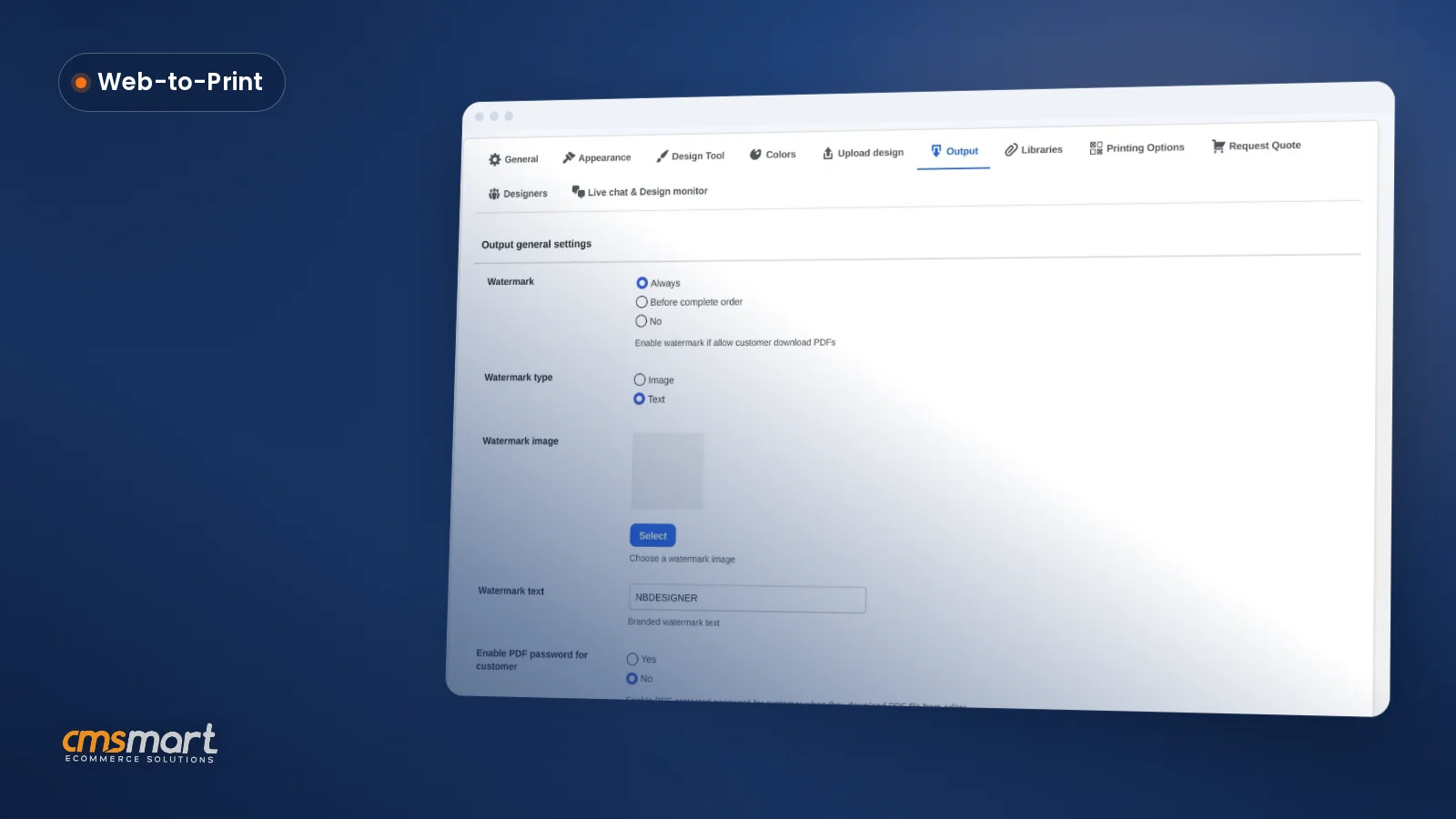
Guide · Web-to-print
Print Ready PDF Output Settings WooCommerce Setup
See what the print ready PDF output settings WooCommerce screen controls — watermark, password, bleed, FTP sync — and configure yours today.
Streamline your eCommerce ecosystem with integrated online solutions to boost efficiency and drive sales. Discover key growth strategies!
Table of contents
Was this tutorial helpful?
Written by
Cmsmart Ecommerce Growth & Trends Analyst
Tracks ecommerce trends and turns them into practical moves for growing stores.
The team behind it
 Account Manager
 Project Manager
 Business Analyst
 Developers & QA
Guide · Web-to-print
See what the print ready PDF output settings WooCommerce screen controls — watermark, password, bleed, FTP sync — and configure yours today.
Case study · AI
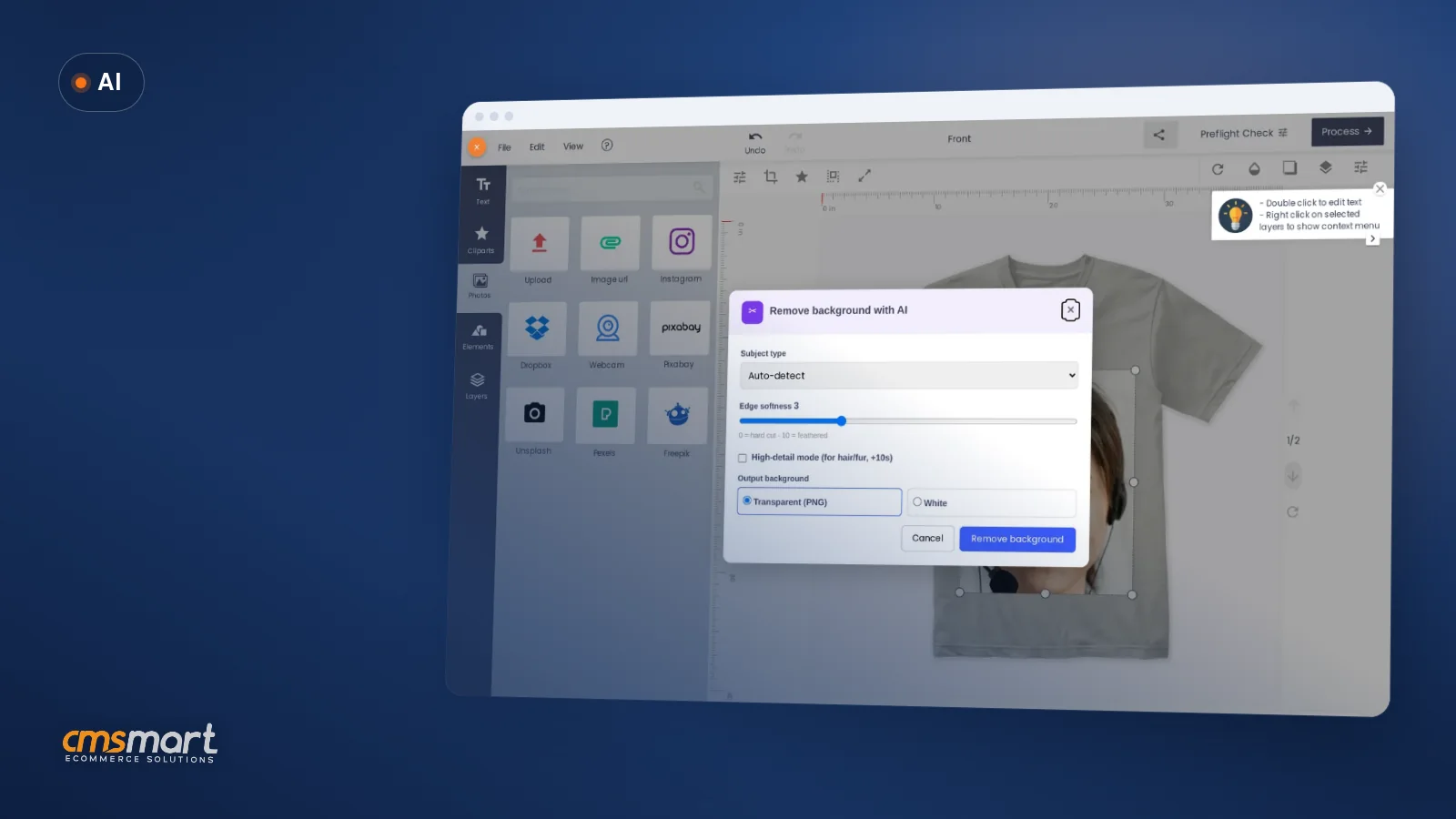
Add an AI background remover for WooCommerce to your product designer so buyers get a clean cutout instantly, and see how Cmsmart builds the rest for...
Case study · Web-to-print
Save design and reorder WooCommerce orders in one click, with a fresh print-ready PDF every time. See how Cmsmart builds it.
Browse more guides, tutorials and case studies from the Cmsmart community.
Unlock the Power of Mobile Commerce: Propel Your Business Forward
Read MoreDiscover how to harness mobile commerce to enhance your business growth. Learn strategies for optimizing the mobile shopping experience and increasing consumer engagement.
Read MoreDiscover the benefits of mobile commerce and how it can transform your business. Learn effective strategies for maximizing sales and customer engagement through mobile-optimized shopping experiences.
Read More
Cmsmart Ecommerce provides custom ecommerce and WooCommerce development services for web-to-print, product personalization, plugin support and API integration.
Cmsmart Ecommerce Growth & Trends Analyst
Tracks ecommerce trends and turns them into practical moves for growing stores.
Meet the team →





The eCommerce landscape is evolving rapidly, with global sales projected to eclipse $6 trillion by 2024, creating unprecedented opportunities for growth. Yet, many entrepreneurs find themselves navigating a treacherous path filled with obstacles like integrating new technologies into established business models and leveraging data analytics for better performance. Take the story of Global Prints, a startup from Canada specializing in custom apparel. They faced significant challenges in engaging their customers despite their high-quality products. By leveraging Cmsmart's integrated solutions, they streamlined their workflow and optimized their digital presence, resulting in a remarkable 40% increase in conversions within just six months.
This case exemplifies how adopting a comprehensive eCommerce strategy can bridge the gap between operational efficiency and customer satisfaction. In this tutorial, we'll explore strategies that not only facilitate eCommerce expansion but also harness the power of data-driven decision-making to align your offerings with customer behavior. To start your journey towards transforming your eCommerce ecosystem, check out our resources on optimizing your supply chain management and growth strategies for the next eCommerce era. In this guide, you'll discover essential insights and actionable strategies to unlock the full potential of your online business.
Exploring the Uncharted Waters of eCommerce Expansion
Struggling to successfully expand your eCommerce business? You’re not alone.Many entrepreneurs face obstacles such as integrating technology within traditional business models, understanding data analytics, and maintaining a balance between customer interaction and operational efficiency.
Unlock Potential by Embracing eCommerce Expansion Strategies
Utilize the Right Tools for Effective Digital Commerce
Integrating technology with your sales framework can lead to substantial improvements. Employ tools that enhance customer engagement online and leverage insights from data analytics for better outcomes in your digital commerce system. For more on optimizing your platform, check out our guide on strategies for optimizing eCommerce platforms.Expert Insights: Embrace Change for Unprecedented Growth
In summary: By understanding consumer behavior analysis and employing business intelligence insights, you can navigate the uncharted waters of eCommerce expansion effectively. Next, we will dive into how digital marketing boosts online sales for your store.Understanding the eCommerce Ecosystem
Struggling to integrate technology within traditional business models? Youre not alone.Many businesses face challenges in understanding and utilizing data analytics effectively while trying to balance customer interaction with operational efficiency.
Grasping the Idea of an eCommerce Ecosystem
The online retail ecosystem forms the backbone of today’s digital commerce system. It encapsulates a network of interconnected platforms, consumers, suppliers, and technologies, creating a streamlined online sales framework. Understanding these components is key to evolving your business and meeting customer expectations.Emergence and Crucial Role of the eCommerce Ecosystem in Todays World
The emergence of the eCommerce ecosystem has transformed how consumers interact with brands. With the vast majority of shopping now taking place online, understanding the dynamics of this digital marketplace is essential.Decoding the Digital Commerce System and Online Sales Framework
Navigating the digital sales structure requires agility and responsiveness. A robust understanding of the digital commerce system enables businesses to adapt their strategies to align with market trends and consumer demands.Your online presence should facilitate seamless eCommerce transactions while also providing platforms for customer engagement. Incorporate the following strategies:
- Utilize powerful analytics tools for tracking customer interactions.
- Optimize your digital platforms for a better user experience.
- Employ cutting-edge marketing tactics to enhance visibility.
In summary: Recognizing the complex relationships within the eCommerce ecosystem is fundamental for success in todays digital landscape. By embracing technology, leveraging data, and optimizing engagement, you’ll pave the way for sustainable growth. Next, let’s explore strategies for optimizing eCommerce platforms to help take your business to the next level. For additional insights, check out our guides on how digital marketing boosts online sales and tools to enhance customer engagement online.Digital Marketing Techniques for Online Sales Optimization
Struggling to integrate technology effectively within your traditional business model? Youre not alone.Many online retailers face challenges in understanding data analytics and optimizing their digital platforms for better user experience.
The Art and Science of Digital Marketing in eCommerce
Digital marketing is both an art and science, intertwining creativity with data-driven strategies. Here’s how you can streamline your approach:Strategies for Optimizing eCommerce Platforms
To enhance your digital commerce system, consider implementing these actionable strategies:How Digital Marketing Boosts Online Sales - Case Studies
Real-world success stories demonstrate the effectiveness of strategic digital marketing:- A leading fashion retailer increased online sales by 30% through targeted social media campaigns and influencer partnerships.
- Another eCommerce platform achieved a 25% uplift in conversions by leveraging data-driven decision-making techniques to personalize user experiences.
In summary: Prioritizing digital marketing techniques can optimize your online sales framework significantly. To further enhance your efforts, explore our resources on tools to enhance customer engagement online, leveraging data analytics for better eCommerce outcomes, effective inventory management strategies in eCommerce, and analyzing web traffic for improved conversion rates. Next, we’ll dive into tools to boost customer engagement, ensuring your digital marketing strategy has a strong impact.The Power of Customer Engagement Tools in eCommerce
Finding it challenging to connect with customers in the digital marketplace? You’re not alone.Many businesses struggle with integrating effective technology within existing models while enhancing customer interactions to optimize user experience.
Underlining the Importance of Customer Engagement Online
In today’s online retail ecosystem, businesses must prioritize customer engagement to drive conversions and foster brand loyalty. This involves a deep understanding of consumer behavior, utilizing actionable insights from data analytics, and maintaining a seamless balance between interaction and operational efficiency.
Top Customer Engagement Tools that Drive Conversions
Utilizing the right tools can significantly enhance your online sales framework. Here are some top customer engagement tools to consider:
Enhancing Online Customer Interaction - Best Practices
To maximize customer interaction, consider adopting these best practices:
By leveraging technology and a customer-centric approach, businesses can transform interactions into lasting relationships that drive profitable growth. For further strategies, explore our articles on strategies for optimizing eCommerce platforms, how digital marketing boosts online sales, and tools to enhance customer engagement online.
In summary: Embracing the power of customer engagement tools coupled with effective strategies can lead to substantial improvements in e-commerce outcomes. Next, let’s delve into how data analytics can further refine your customer interactions and strategy.Harnessing Data Analytics in eCommerce
Struggling to integrate technology into your traditional business model? You’re not alone.Many eCommerce businesses face challenges in understanding and utilizing data analytics effectively, which hinders their ability to balance customer interaction with operational efficiency.
Demystifying Data Analytics in the eCommerce World
In the bustling online retail ecosystem, data analytics serves as a crucial tool for understanding consumer behavior and enhancing the overall shopping experience. By diving into data, businesses can unravel patterns that inform strategy and decision-making.
Leveraging Data Analytics for Better eCommerce Outcomes
Utilizing data analytics can significantly improve decision-making and operational efficiency in your online sales framework. Here are actionable ways to harness its power:
Case Studies on Effective Use of Data Analytics in eCommerce
Real-world examples highlight the impact of data-driven decision-making:
Analyzing case studies reveals that businesses that prioritize data analytics regularly outperform their competition. Their ability to adapt quickly to market trends and consumer needs is a testament to the value of informed decision-making.
In summary: Embracing data analytics in eCommerce isnt just beneficial; its essential for staying competitive in the rapidly evolving digital commerce system. By understanding your audience and optimizing your platform, you can pave the way for enhanced customer engagement. Now, let’s explore strategies for optimizing eCommerce platforms and how digital marketing boosts online sales in the next section.Reforming eCommerce Operations through Inventory Management
Struggling to streamline your eCommerce operations? You’re not alone.Many businesses find it difficult to integrate technology into their traditional business models and optimize their workflow for enhanced operational efficiency.
Significance of Inventory Management in eCommerce
Effective inventory management is crucial for navigating the complexities of the online retail ecosystem. It impacts your ability to meet customer demands while minimizing costs. Understanding consumer behavior analysis and utilizing a robust digital commerce system can drastically improve your inventory handling. Key Benefits of Effective Inventory Management:Effective Inventory Management Strategies in eCommerce
Implementing actionable strategies can be game-changing. Here are a few to consider:Streamlining Inventory Management for Improved Efficiency - Examples
Real-life case studies can illuminate the effectiveness of these strategies. Companies that prioritize inventory management often witness remarkable results. Here are some examples of streamlined inventory management:- XYZ Retail reduced stock discrepancies by integrating an advanced inventory management software.
- ABC E-commerce leveraged analytics to predict product demand accurately, leading to a 30% increase in sales.
- 123 Stores used drop shipping methods to eliminate overhead costs while enhancing stock availability.
In summary: Efficient inventory management is at the heart of a thriving online sales framework and directly impacts your bottom line. Next, we’ll dive into strategies for optimizing eCommerce platforms to further boost your online sales efforts.Deciphering Key Performance Indicators for eCommerce Growth
Struggling to navigate the complexities of eCommerce performance indicators?Many businesses find it challenging to integrate technology effectively while striving to understand and leverage data analytics for growth.
Understanding Key Performance Indicators (KPIs) in eCommerce
Key Performance Indicators (KPIs) are essential metrics that help gauge the success of your online retail ecosystem. These data points allow you to analyze consumer behavior and make informed decisions to enhance your digital commerce system. A lack of understanding of KPIs can hinder your ability to optimize user experience and operational efficiency.Analyzing Web Traffic for Improved Conversion Rates
Understanding your web traffic is crucial for optimizing your online sales framework. Proper analysis allows you to identify where visitors drop off in the purchasing process.How KPIs can Drive eCommerce Success - Real-world Scenarios
KPIs can transform the trajectory of your business. For instance, when a retailer implemented a robust KPI tracking system, they saw a 30% increase in their conversion rates in just three months. To get the most out of your KPIs, consider utilizing various technology integrations for business intelligence and workflow optimization. In summary, focusing on key performance indicators can lead to substantial improvements in your eCommerce strategies. For more in-depth guidance, explore our next section about strategies for optimizing eCommerce platforms and learn how digital marketing boosts online sales.Optimizing the User Experience in the eCommerce Ecosystem
Are you struggling to provide an excellent user experience in your eCommerce platform? You’re not alone.Many businesses face challenges when trying to balance seamless technology integration, effective data utilization, and optimal customer interactions within their online retail environments.
Importance of User Experience (UX) in eCommerce
User Experience (UX) is paramount in the digital commerce system. A positive UX can significantly influence customer satisfaction and retention rates. In fact, according to a study by Forrester Research, every dollar invested in UX brings a return of $100, highlighting its critical role in driving online sales success. Key aspects of UX in eCommerce include:Principles for Optimizing User Experience in eCommerce
To thrive in today’s competitive eCommerce landscape, consider these foundational principles for enhancing your online user experience:Best Practices for UX Enhancement in Digital Commerce
To further solidify your user experience strategy, integrate these best practices into your operations:- Conduct user surveys to gather feedback
- Implement robust data analytics for consumer behavior analysis
- Utilize business intelligence tools for better decision-making
- Streamline your checkout process to minimize cart abandonment
- Train your team on workflow optimization techniques
In summary, optimizing the user experience in your eCommerce ecosystem requires a deep understanding of consumer behavior and a commitment to continuous improvement. By implementing these strategies, youre well on your way to creating an engaging online sales framework that resonates with your audience. For more insights, check out our content on strategies for optimizing eCommerce platforms, or explore how digital marketing boosts online sales. Up next, we’ll delve into tools to enhance customer engagement online.Frequently Asked Questions
Struggling to navigate the complexities of the eCommerce ecosystem? Youre not alone.Many businesses grapple with the challenge of integrating technology into traditional models while trying to enhance customer interactions and operational efficiencies.
Common Questions in the E-commerce Ecosystem
How Can Technology Integration Improve My Business?
Integrating technology effectively allows businesses to streamline operations, improve user experience, and utilize data to make informed decisions. Here are some actionable tips:Understanding Consumer Behavior Through Data
Understanding your customers can greatly enhance the effectiveness of your marketing strategies. Focus on:Optimizing Digital Platforms for Better User Experience
Enhancing user experience can drastically improve conversion rates. Key strategies include:- Regularly updating content to keep it fresh and relevant.
- Ensuring your website is mobile-friendly.
- Streamlining the checkout process to reduce cart abandonment.
In summary: By addressing these common questions and challenges, you gain insight into optimizing your eCommerce platform. Move on to explore strategies for optimizing eCommerce platforms, where key methods to enhance performance and drive sales are discussed.Further Reading
In conclusion, transforming your eCommerce ecosystem is not just a goal; it’s a necessity for sustainable growth. By implementing integrated solutions and data-driven strategies explored in this tutorial, you are poised to overcome the common challenges of expansion, enhance customer experiences, and streamline operations. The journey toward leveraging your digital platform is within reach. Let’s discuss how we can help you implement these strategies effectively. Don’t hesitate to reach out to David, our dedicated CEO, via WhatsApp at here or email our Ecommerce Project Consultant at [email protected]. Additionally, you can request a quotation for personalized assistance through this link. Join me in transforming your store into a powerhouse of growth!