
Guide · Web-to-print
Print Ready PDF Output Settings WooCommerce Setup
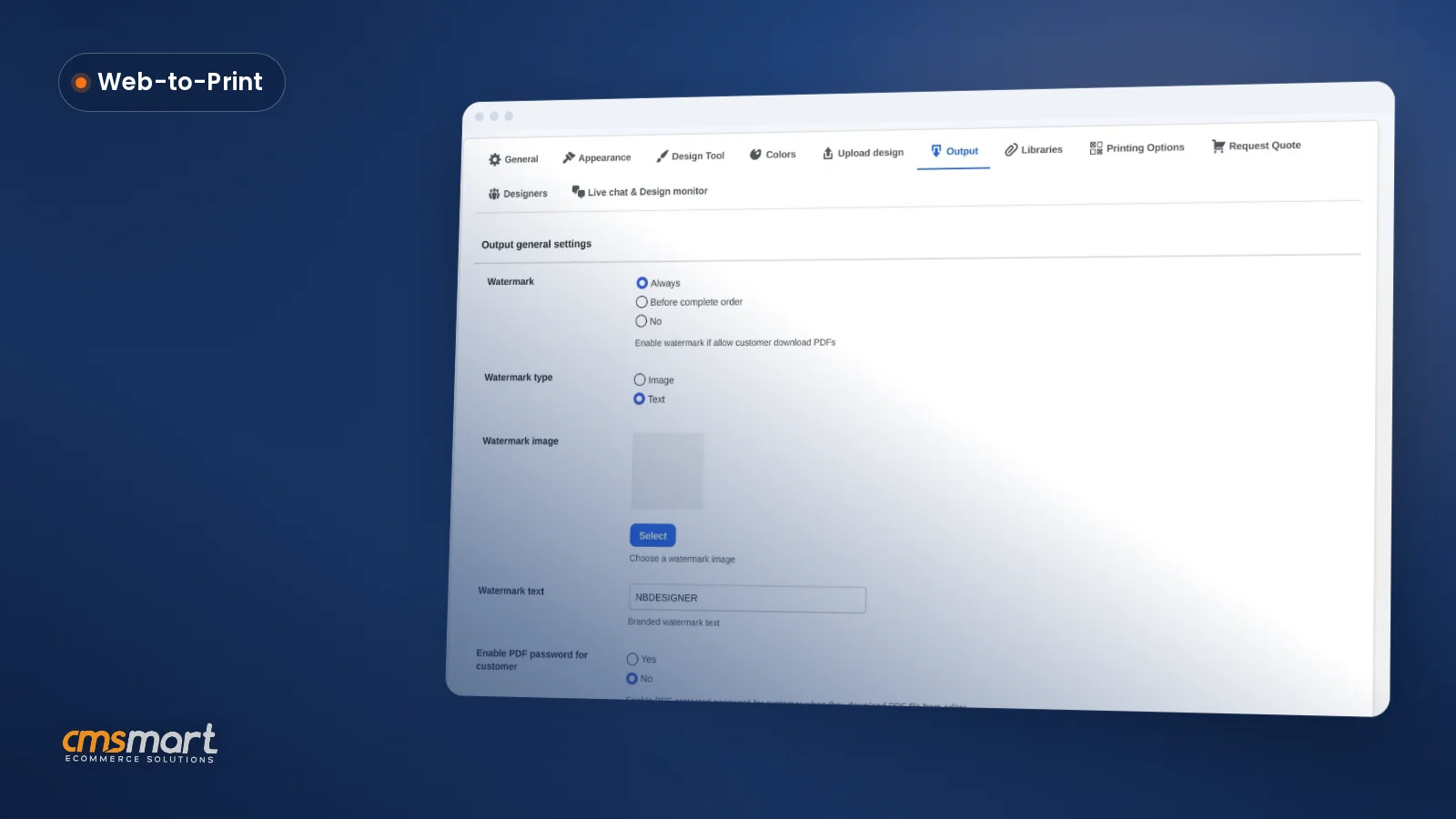
See what the print ready PDF output settings WooCommerce screen controls — watermark, password, bleed, FTP sync — and configure yours today.
Accelerate business growth with expert ecommerce solutions. Enjoy seamless platform development, integrated marketing, and enhanced customer engagement.
Table of contents
Was this tutorial helpful?
Written by
Cmsmart Ecommerce Growth & Trends Analyst
Tracks ecommerce trends and turns them into practical moves for growing stores.
The team behind it
 Account Manager
 Project Manager
 Business Analyst
 Developers & QA
Guide · Web-to-print
See what the print ready PDF output settings WooCommerce screen controls — watermark, password, bleed, FTP sync — and configure yours today.
Case study · AI
Add an AI background remover for WooCommerce to your product designer so buyers get a clean cutout instantly, and see how Cmsmart builds the rest for...
Case study · Web-to-print
Save design and reorder WooCommerce orders in one click, with a fresh print-ready PDF every time. See how Cmsmart builds it.
Browse more guides, tutorials and case studies from the Cmsmart community.
Unlock the Power of Mobile Commerce: Propel Your Business Forward
Read MoreDiscover how to harness mobile commerce to enhance your business growth. Learn strategies for optimizing the mobile shopping experience and increasing consumer engagement.
Read MoreDiscover the benefits of mobile commerce and how it can transform your business. Learn effective strategies for maximizing sales and customer engagement through mobile-optimized shopping experiences.
Read More
Cmsmart Ecommerce provides custom ecommerce and WooCommerce development services for web-to-print, product personalization, plugin support and API integration.
Cmsmart Ecommerce Growth & Trends Analyst
Tracks ecommerce trends and turns them into practical moves for growing stores.
Meet the team →






Have you ever realized that the landscape of digital commerce is evolving at an unprecedented pace? Data shows that global online retail sales are projected to surpass $6 trillion by the end of 2023, a clear indicator that digital shopping is not just a trend but a fundamental shift in consumer behavior. In an age where convenience reigns supreme, online platforms are transforming traditional shopping experiences, making nighttime sales just as viable as those during daylight hours. This isn't merely theoretical; look at the case of GreenTech Innovations, a cutting-edge startup based in Canada that faced dwindling foot traffic and stagnant sales at their brick-and-mortar location. By embracing Cmsmart's tailored ecommerce solutions, they successfully transitioned to a fully integrated online marketplace, seeing a remarkable 300% increase in sales within just six months!
This tutorial is designed to equip you with the knowledge and tools necessary to not only capture this market momentum but thrive in it. With the right strategies and solutions, your business can master the digital landscape—even amidst fierce competition. Dive deeper into topics like harnessing technology to engage consumers effectively, or explore centralized digital marketplaces that can streamline your operations. In this guide, we will explore how to unlock the full potential of ecommerce to elevate your business into a modern powerhouse of online success.
Why is Ecommerce Now More Relevant Than Ever?
Digital transformation of commerce is essential in today’s landscape.Understanding and adapting to changing consumer behaviors is more critical than ever, especially as online retail continues to metamorphose traditional shopping habits.
Discover the Growing Importance of Digital Commerce
The world has witnessed a seismic shift toward digital commerce, driven by factors like technological advancements and consumer demand for convenience. But have you ever wondered just how significant this transformation has become and what it means for your business?
How Online Retail is Changing Shopping Habits
Digital Commerce has made shopping a more dynamic and personalized experience. Platforms offer refined Algorithms and Artificial Intelligence to tailor suggestions, making every customer feel like the store was built just for them.
Moreover, the past few years have been eye-opening. Ecommerce enables retailers to adapt quickly, with the flexibility needed to navigate unforeseen challenges. Are you capitalizing on the digital transformation opportunities?
Building an Effective Ecommerce Strategy
For any retailer looking to thrive, crafting a robust ecommerce strategy is fundamental.
In summary: Building a comprehensive strategy focusing on improving user experience and implementing data-driven decisions will ensure your ecommerce platform remains resilient. Next, explore more on youth-driven ecommerce growth for future-ready strategies.
Unraveling Ecommerce: Its Evolution and Impact
Digital transformation of commerce is essential. Understanding and adapting to changing consumer behaviors is crucial in todays fast-paced digital era. Let’s dive into the dynamic world of ecommerce and its profound impact on retail.Decoding Ecommerce: A Brief Definition
Ecommerce, or electronic commerce, refers to the buying and selling of goods and services over the Internet. This digital transformation allows businesses of all sizes to reach a global audience efficiently. As online platforms continuously evolve, so does the opportunity for businesses to harness new technologies to enhance customer experiences and streamline operations.
The Trajectory of Ecommerce Growth in the Digital Era
Online retail, also known as internet shopping, has seen consistent growth. In 2021 alone, ecommerce sales contributed to over 18% of total global retail sales. Innovations like AI-driven personalized shopping, augmented reality for product visualization, and subscription-based revenue models are expanding the scope and capabilities of digital commerce .
Influence of Ecommerce on Traditional Retail Landscapes
The influence of ecommerce is shaking up traditional retail, pushing brick-and-mortar stores to integrate digital solutions to stay competitive. This includes using omni-channel strategies that blend online and in-store experiences.
- Leverage omni-channel selling for a unified customer experience .
- Embrace online platforms to optimize retail strategies and reach diverse consumer demographics
In summary: As the ecommerce landscape continues to evolve, understanding its trajectory and impact enables businesses to optimize their strategies for growth. Up next, we delve into the current state of ecommerce in 2021, examining the demographics of online shoppers and digital transformations in strategy. Explore further with our insights into online shopping trends and youth-driven ecommerce growth .Analyzing The Demographics of Digital Buyers
Digital transformation of commerce is essential.Understanding and adapting to changing consumer behaviors is critical to the optimization of ecommerce experiences for younger generations.
Who are Digital Buyers?
Digital buyers are consumers who engage in purchasing goods and services online. This group spans various demographics and includes a diverse range of purchasing habits. Recognizing these patterns helps businesses cater to the needs of digital consumers more effectively.
Significance of Understanding Buyer Demographics in Online Retail
Understanding the demographics of digital buyers is crucial for the digital economy to tap into online retails full potential. Knowing your audience can:
Comprehending the Dynamics of Gen Z Shoppers
Gen Z is a driving force in digital commerce. They are digital natives, influencing trends and expecting seamless experiences. To appeal to Gen Z:
Internal links to explore further into this topic: Ecommerce Strategy for Retailers, Online Shopping Trends, Youth-Driven Ecommerce Growth
In summary: Embracing and understanding the demographics of digital buyers is vital for ecommerce growth. Businesses must adapt their strategies to cater to these diverse and evolving consumer bases. Next, lets delve into actionable strategies for leveraging demographics in enhancing ecommerce platforms.Digital Transformation and Retail Strategies
Digital transformation of commerce is essential.In todays dynamic market, understanding and adapting to changing consumer behaviors is crucial. Optimizing ecommerce experiences for younger generations can significantly advance your business growth.
Deciphering the Concept of Digital Transformation in Retail
Digital transformation in retail isnt just about adopting new technologies; its about reimagining the entire value chain. As businesses engage in digital commerce, they must embrace internet shopping not only to survive but thrive in a highly competitive landscape.
Role of Digital Transformation in Advancing Retail Strategies
Digital transformation isnt just an upgrade; its a revolution that aligns retail strategies with evolving market demands. This paradigm shift helps brands to innovate around customer needs and unlock new growth avenues.
Challenges in Implementing Digital Transformation in Retail
While the advantages are numerous, implementing digital transformation can present challenges, from technological integrations to cultural shifts within organizations.
- Challenge: Integrating legacy systems with new digital solutions.
- Solution: Prioritize data management and system interoperability.
To summarize: The retail space continues to evolve rapidly with digital transformation at its core. As you consider how your business will navigate this digital era, explore our detailed discussions on the current state of ecommerce 2021 and how retailers can strategically optimize their ecommerce platforms for sustainable success. . Up next, delve into the demographics of online shoppers and uncover the forces driving youth-driven ecommerce growth .Decoding Consumer Behavior Trends in Ecommerce
Understanding and adapting to changing consumer behaviors is critical in todays digital transformation of commerce. As digital buyers increasingly dominate the online retail landscape, optimizing ecommerce experiences for younger generations has become essential.Significance of Consumer Behavior Trends in Online Shopping
Consumer shopping behaviors have evolved significantly with the rise of online platforms, and understanding these trends is key for retailers. By analyzing how customers interact with digital commerce, businesses can offer more personalized and engaging experiences.
Change in Consumer Shopping Behavior Amid Digital Evolution
The shift towards internet shopping has altered how consumers engage with products, impacting retail sales profoundly. Todays consumers demand convenience, personalized experiences, and a variety of purchasing options.
Effective Techniques to Study and Incorporate Consumer Behavior Trends in Ecommerce Strategies
Staying ahead of ecommerce growth requires effective methodologies to study and apply consumer behavior insights. This ensures that ecommerce strategies remain relevant and competitive.
- Implement customer feedback loops to refine product offerings.
- Invest in AI-driven personalization tools to enhance customer engagement and satisfaction.
In summary: Adopting these strategies will enable your business to effectively respond to consumer behavior trends. Up next, we’ll delve into the current state of ecommerce 2021 to further refine your strategies.Navigating through Youth-Driven Ecommerce Growth
Digital transformation of commerce is essential. Understanding and adapting to changing consumer behaviors is crucial for optimizing ecommerce experiences for younger generations.Todays digital commerce landscape is rapidly evolving, with youth-driven ecommerce growth taking center stage. As businesses strive to stay competitive, targeting the Gen Z demographic has become vital due to their influence on online retail trends.
Why Target Gen Z in Ecommerce?
Gen Z, characterized by their digital savviness, represents a significant portion of global online buyers. Engaging this group can lead to substantial ecommerce growth, as they are trendsetters in internet shopping preferences. To reach this audience effectively, businesses need to leverage platforms and strategies that resonate with their values of diversity and authenticity.
How Gen Z is Shaping the Future of Online Shopping?
Known for embracing ecommerce platforms like Instagram and TikTok for both social engagement and shopping, Gen Z drives the demand for seamless shopping experiences. Their preference for fast, mobile-friendly, and visually appealing content necessitates a shift towards more integrated online retail experiences.
Formulating Effective Retail Strategies for Gen Z and Millennials
To capture the attention of Gen Z and Millennials, a shift in ecommerce strategy is essential. Retailers should focus on creating personalized shopping experiences that cater to individual preferences.
In summary, understanding Gen Zs shopping behaviors is not just beneficial but imperative for businesses aiming for long-term ecommerce success. To delve deeper into how these insights integrate with broader trends, explore the current state of ecommerce 2021, and how to align your strategies with youth-driven growth trends.
Future Trends in Ecommerce: The Post-Pandemic Scenario
Is your business ready for the post-pandemic ecommerce revolution?As we navigate the complexities of digital commerce transformation, the evolving landscape demands a deep understanding and adaptation to shifting consumer behaviors, particularly focusing on the optimization of ecommerce experiences for younger generations.
Forecasted Trends for Ecommerce Post-Pandemic
In the post-pandemic era, digital commerce will continue to evolve rapidly. Businesses must embrace trends like:
Impact of These Trends on Online Retail Strategies
Online retail strategies need to be agile to accommodate these trends. Retailers should adjust by:
Adapting to Future Ecommerce Trends
Adapting means redefining your ecommerce strategy to meet future dynamics. Consider these actionable tips:
In summary: Embracing these trends not only prepares your business for current market conditions but also positions it for long-term success. Next, lets delve into the current state of ecommerce 2021 to understand the foundational shifts influencing these trends.
Explore more on ecommerce strategy for retailers and youth-driven ecommerce growth for deeper insights into managing the digital transformation of commerce effectively.
Frequently Asked Questions
Digital transformation of commerce is essential to thrive in todays market.Understanding and adapting to changing consumer behaviors is crucial for businesses looking to optimize ecommerce experiences, especially for younger generations.
FAQs: Addressing Common Questions About Ecommerce, Online Retail and Digital Buyers
The online retail landscape constantly evolves with digital commerce and internet shopping transforming consumer shopping behaviors. Addressing common questions about ecommerce helps businesses stay aligned with market trends.
Understanding Consumer Shopping Behaviors
As retail sales continually shift online, understanding consumer shopping behaviors becomes essential for businesses. Embracing platforms like ecommerce marketplaces and multi-vendor setups is crucial for catering to varied customer needs.
For instance, adapting strategies for youth-driven ecommerce growth can build a loyal customer base among younger digital buyers, who frequently shop through mobile devices .
Boosting Digital Commerce Success
For businesses seeking to excel in internet shopping, its vital to adopt an ecommerce strategy that aligns with the digital transformation of commerce. Discover more about this in our section on the current state of ecommerce 2021, or learn about youth-driven ecommerce growth .
In summary: Understanding these frequently asked questions and insights can empower your ecommerce strategy, preparing your business for the future of retail. Next, explore how solid ecommerce platforms can drive business success today.FAQ Section: Troubleshooting and Pro Tips
Why is digital transformation essential for ecommerce?
Digital transformation enhances scalability, efficiency, and customer experience, making businesses competitive.
How can businesses adapt to changing consumer behaviors?
By leveraging data analytics to understand trends and personalizing customer interactions and experiences.
What strategies optimize ecommerce for younger generations?
Focus on mobile-first design, integration with social media, and seamless user experience.
How does AI personalize ecommerce experiences?
AI provides personalized recommendations and predictive analytics based on user behavior.
What role does augmented reality play in ecommerce?
AR enhances product visualization, enabling virtual try-ons and immersive customer experiences.
How can businesses improve engagement through social commerce?
Integrate shopping options on social media to meet customers where they spend time online.
Further Reading
As we conclude this tutorial on unlocking the power of eCommerce, it's clear that digital transformation is essential for your business to thrive in today's competitive landscape. By understanding the evolving consumer behaviors and utilizing advanced solutions, you can tap into the enormous potential of online retail. Remember, successful adaptation to digital commerce is not just beneficial—it's a necessity. Don't navigate this journey alone! Let's discuss how we can help you implement these cutting-edge solutions and transform your store into a hub of success. Reach out to David, our CEO, via WhatsApp at here, or email our eCommerce Project Consultant at [email protected] for personalized support. For a tailored package, feel free to request a quotation. Together, we can propel your eCommerce success!