
Guide · Web-to-print
Print Ready PDF Output Settings WooCommerce Setup
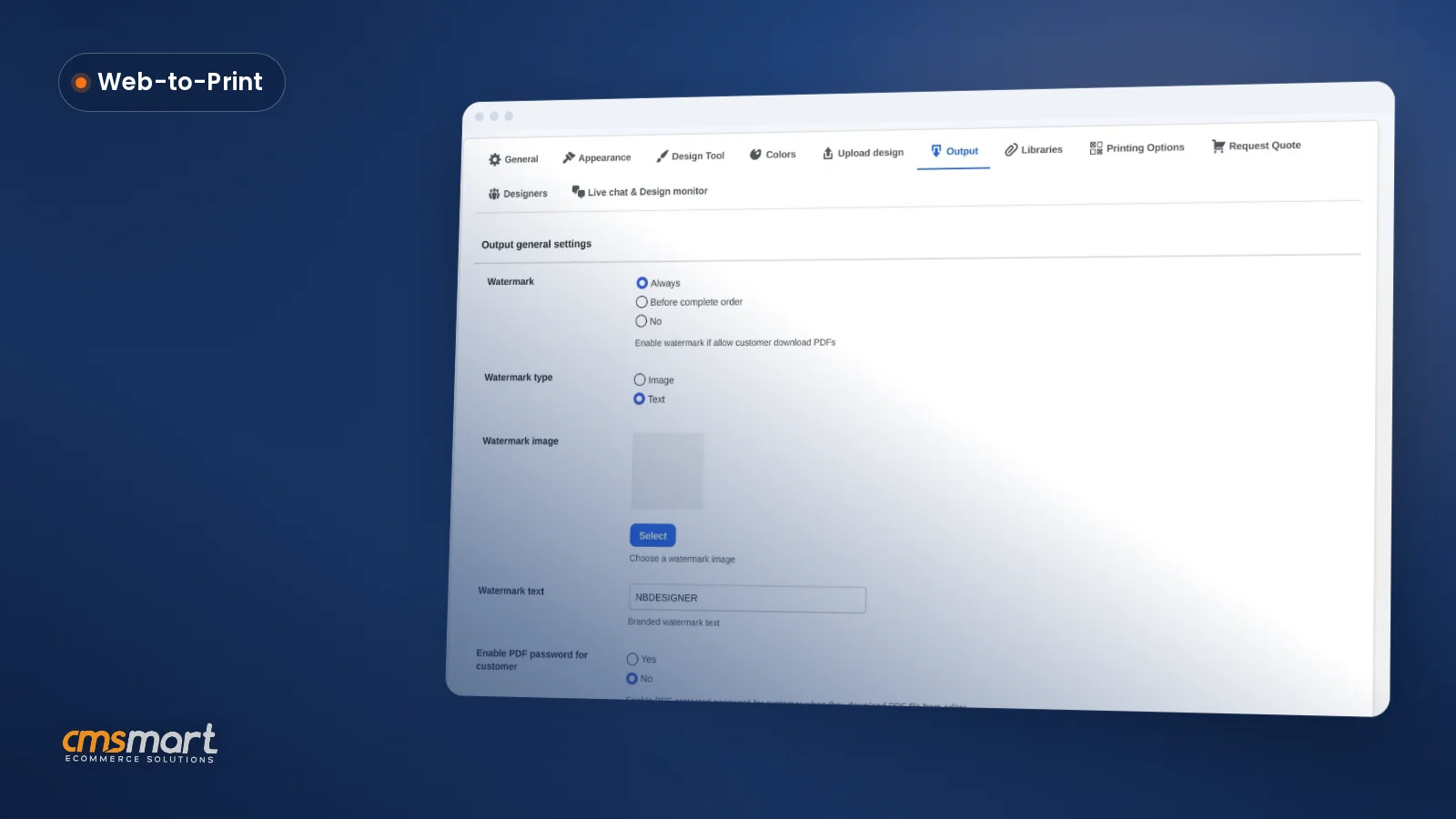
See what the print ready PDF output settings WooCommerce screen controls — watermark, password, bleed, FTP sync — and configure yours today.
Explore the latest E-commerce trends that can transform your online business. Discover how to enhance customer engagement and streamline your sales process for better growth.
Table of contents
Was this tutorial helpful?
Written by
Cmsmart Ecommerce Growth & Trends Analyst
Tracks ecommerce trends and turns them into practical moves for growing stores.
The team behind it
 Account Manager
 Project Manager
 Business Analyst
 Developers & QA
Guide · Web-to-print
See what the print ready PDF output settings WooCommerce screen controls — watermark, password, bleed, FTP sync — and configure yours today.
Case study · AI
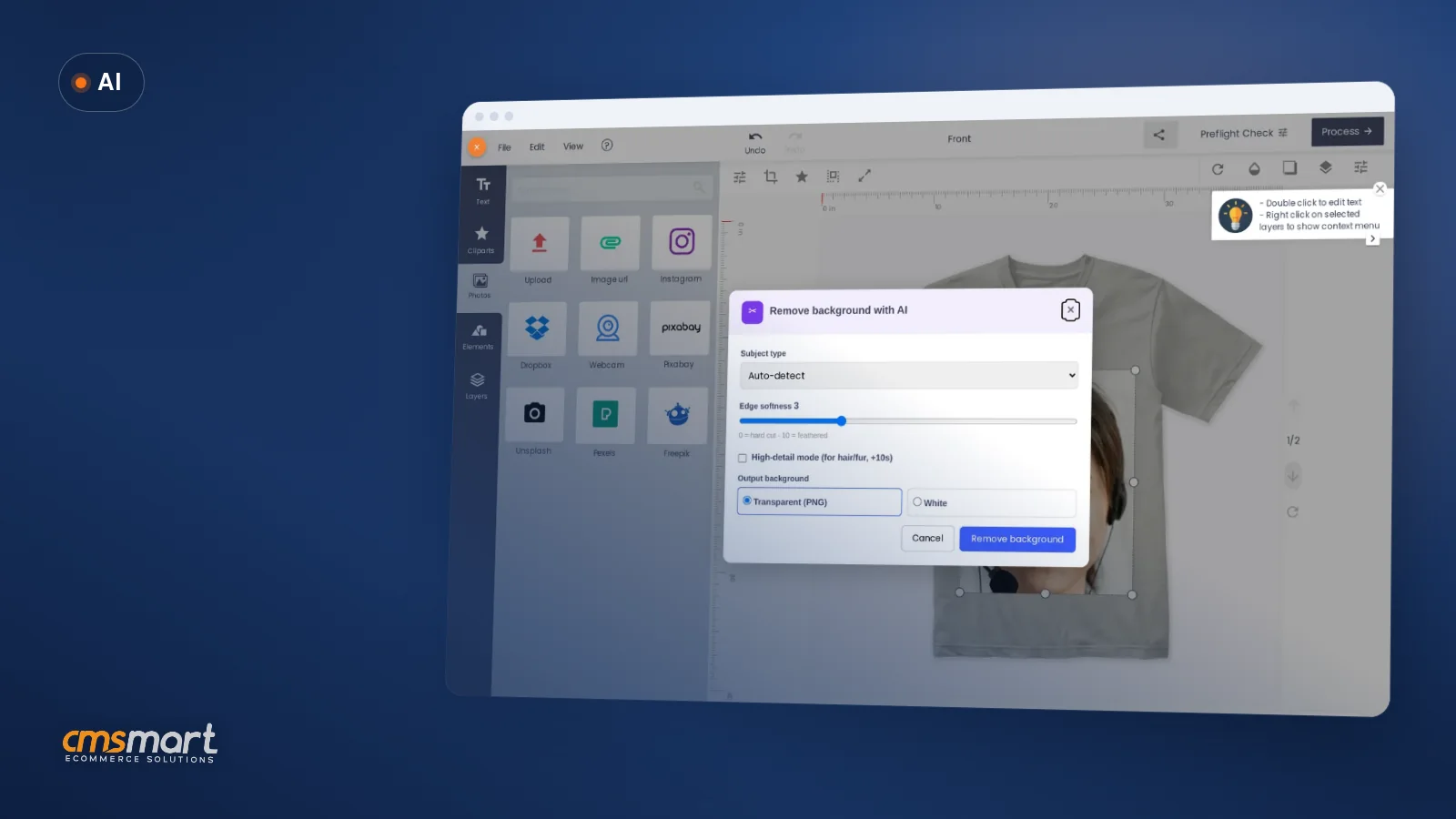
Add an AI background remover for WooCommerce to your product designer so buyers get a clean cutout instantly, and see how Cmsmart builds the rest for...
Case study · Web-to-print
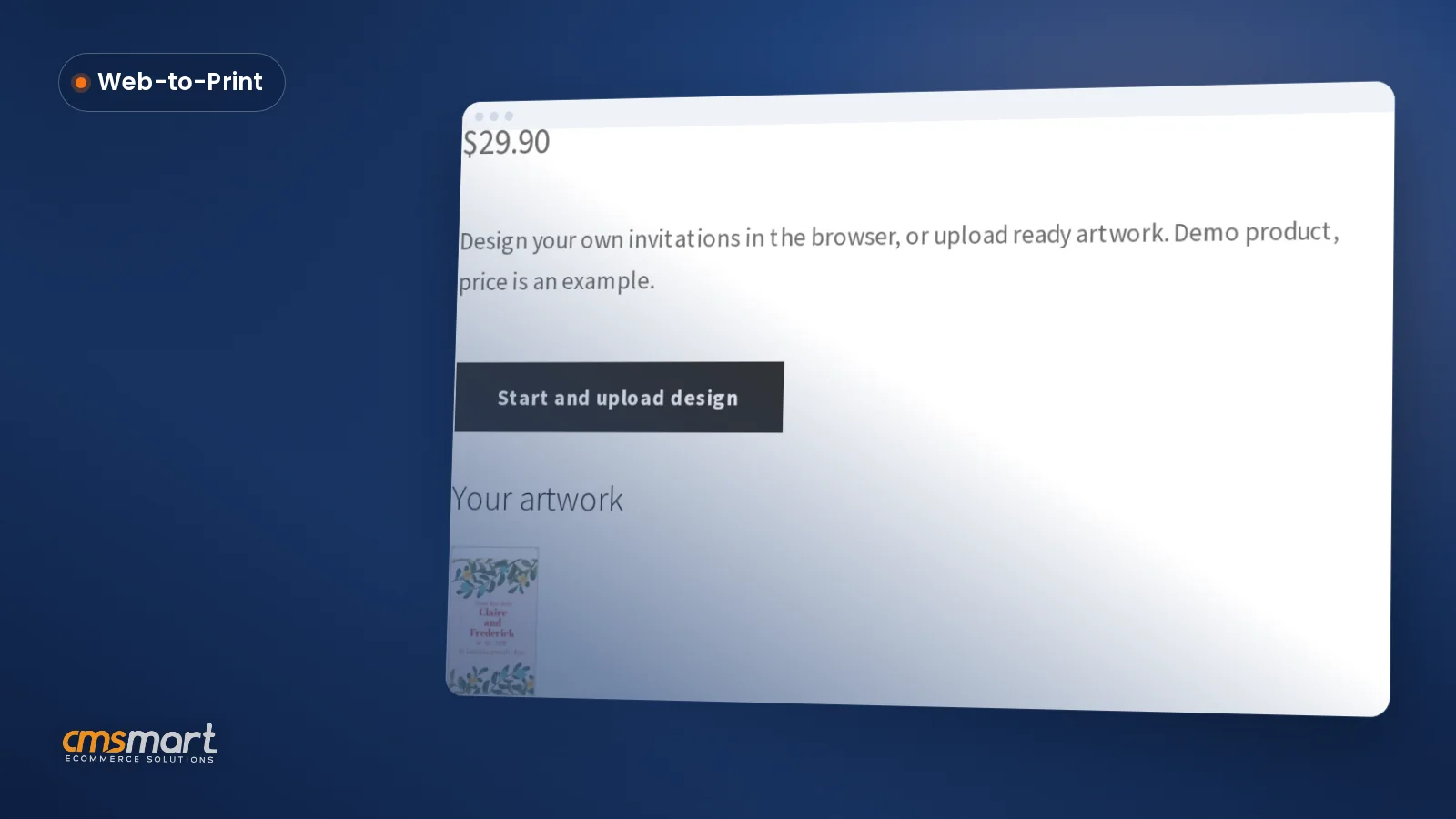
Save design and reorder WooCommerce orders in one click, with a fresh print-ready PDF every time. See how Cmsmart builds it.
Browse more guides, tutorials and case studies from the Cmsmart community.
Unlock the Power of Mobile Commerce: Propel Your Business Forward
Read MoreDiscover how to harness mobile commerce to enhance your business growth. Learn strategies for optimizing the mobile shopping experience and increasing consumer engagement.
Read MoreDiscover the benefits of mobile commerce and how it can transform your business. Learn effective strategies for maximizing sales and customer engagement through mobile-optimized shopping experiences.
Read More
Cmsmart Ecommerce provides custom ecommerce and WooCommerce development services for web-to-print, product personalization, plugin support and API integration.
Cmsmart Ecommerce Growth & Trends Analyst
Tracks ecommerce trends and turns them into practical moves for growing stores.
Meet the team →




Did you know that in 2023, mobile e-commerce sales are projected to account for an astounding 72.9% of total e-commerce sales? This significant shift in consumer behavior challenges online businesses to adapt or risk falling behind. Take the example of FashionNova, a trendy clothing brand based in the USA. By integrating mobile-friendly designs and capitalizing on social media platforms, they successfully increased their customer engagement by 50% in just six months. Such transformative strategies are essential for modern e-commerce operations, especially in an environment where consumer preferences constantly evolve.
In this tutorial, we're diving into the latest e-commerce trends that can help you unlock new levels of online sales and customer engagement. As e-commerce continues to grow at an unprecedented pace, understanding the landscape is key to staying ahead. We’ll explore effective tactics, including real-time shopping experiences and personalized marketing, that can set your business apart. For more resources, check out our articles on how m-commerce is reshaping the retail space and enhancing the customer journey for improved conversions.
In this guide, we'll equip you with actionable insights to navigate these trends and drive your e-commerce success.
Exploring the Landscape of E-commerce: The Seismic Shift in Buying Habits
Need to better understand your customers online shopping habits to improve sales? Youre in the right place.As e-commerce continues to evolve, the challenges of adapting to changing consumer behaviors can be daunting. Businesses must focus on innovative ways to retain customer trust and boost sales, especially in the ever-growing mobile shopping market.
Exploring Key E-commerce Trends
Best Practices for Engaging Customers
Effective consumer interaction is essential for sustaining e-commerce growth. To drive engagement:Transitioning to the Future of E-commerce
Embracing these digital commerce trends is vital for any business wanting to thrive in today’s market. By focusing on mobile security, enhancing user experience, and personalizing marketing efforts, businesses can effectively navigate the shifting landscape. In summary: Understanding the changing dynamics of online shopping can lead to improved strategies that boost sales. Up next, we will delve into the importance of mobile security in e-commerce and how it influences consumer trust.Why Mobile Security Matters in the E-commerce Universe
Need a trusted mobile shopping experience? You’re not alone in this quest!As e-commerce continues to rise, ensuring robust mobile security is essential for gaining consumer trust. Adapting to the increasing number of shoppers using smartphones means businesses must prioritize security measures in their digital commerce strategies.
Importance of Mobile Security in E-commerce
In todays online shopping trends, consumers are becoming more cautious. Secure transactions are the backbone of a successful online store, aiding in the retention of customers and preventing churn.Boosting Consumer Trust with Robust Mobile Security
Integrating strong security measures fosters consumer trust and encourages repeat purchases. Here are actionable tips to enhance your businesss credibility:Secure Transactions: The Backbone of a Successful Online Store
Secure transactions help reduce bounce rates and boost engagement. A seamless payment process that prioritizes security can significantly improve user experience:- Utilize reputable payment gateways.
- Offer diverse payment options to cater to individual preferences. transactions.
- Constantly monitor transactions for suspicious activity.
In summary: With the rise of mobile shopping and the emphasis on secure transactions, prioritizing mobile security is non-negotiable for gaining consumer trust and fostering long-term relationships. As we transition to the next section, let’s explore the growth of mobile shopping and its vast implications on your e-commerce strategy.Pacing Up with the Growth of Mobile Shopping
Need to adapt to the unstoppable rise of mobile shopping while ensuring customer trust? It’s time to gear up.As mobile shopping explodes—current estimates show that mobile transactions account for over 54% of total e-commerce sales—it’s crucial to embrace digital commerce trends that cater to a mobile-savvy audience while maintaining secure transactions.
Transforming Shopping Experience with Mobile
The shift towards smartphones is changing the landscape of e-commerce. To keep up, businesses must prioritize mobile optimization, ensuring that consumers enjoy a seamless shopping experience. Here are some essential tips for optimizing e-commerce for mobile devices:Smartphones: Changing the Landscape of E-commerce
Smartphones are a constant presence in our lives, driving significant change in consumer behavior. Businesses need to embrace this shift. Here’s how to adjust:Tips for Optimizing E-commerce for Mobile Devices
Keep these points in mind to ensure successful mobile optimization:- Test your site across various devices and browsers to catch any compatibility issues.
- Optimize images for faster loading times on mobile networks.
- Ensure that contact information is easily accessible for customer inquiries.
- Consider integrating chat features to provide immediate support to engaged customers.
In conclusion, addressing the elements of mobile security, maintaining consumer trust, and leveraging the growing mobile shopping trend are essential to thriving in today’s e-commerce landscape.Dive deeper into the Importance of Mobile Security in E-commerce and explore how to enhance your user experience further. The next section will guide you through the significance of social media in e-commerce growth.
Accelerating Sales with Social Media Marketing
Need help increasing your sales through social media? Youre in the right place.As online shopping trends shift towards a more social landscape, businesses struggle to utilize social media effectively for boosting sales and engaging with customers in real-time.
Role of Social Media in E-commerce
Social media platforms have become vital tools for e-commerce brands looking to enhance consumer trust and drive revenue. Here are some ways social media plays a critical role:Developing a Successful Social Media Engagement Strategy
Crafting an effective social media engagement strategy is essential for your e-commerce success. Here are key elements to consider:Leveraging Social Media for E-commerce Success
To enhance conversions and boost sales, consider these strategies:- Utilize user-generated content: Showcase real-life usage of your products to foster trust.
- Implement social proof: Share reviews and testimonials to alleviate potential customers’ doubts.
- Explore live shopping: Host live-streaming events to create real-time interactions and immediate purchasing opportunities.
- Study your analytics: Monitor engagement metrics to refine your strategies continuously.
For more insights, refer to our articles on Importance of Mobile Security in E-commerce, Growth of Mobile Shopping, and Benefits of Personalized Marketing. Each sheds light on how to adapt to changing consumer trends effectively. In summary: Harnessing the power of social media marketing not only accelerates your sales but also fosters a community around your brand. Next, we’ll dive into the exciting world of live shopping and how it can revolutionize your e-commerce strategy.Embracing Live Shopping for a Real-Time Consumer Interaction
Need to engage customers effectively while building trust in the digital shopping landscape?The surge in mobile shopping and the integration of social media for real-time interactions are game-changers for e-commerce businesses. Embracing live shopping offers a powerful tool to connect with consumers instantly, boosting both sales and customer satisfaction.
Understanding Live Shopping and Its Importance
Live shopping bridges the gap between traditional retail and the online shopping experience. It allows customers to interact with hosts in real-time, leading to enhanced consumer trust and engagement. Here are some vital insights regarding its significance:Implementing Live Shopping: Tips and Best Practices
Integrating live shopping into your e-commerce strategy can seem challenging, but these actionable tips can streamline the process:Enhancing Shopping Experience with Real-Time Interactions
To make the most of live shopping, focus on enhancing user experience by:- Using chat features for real-time feedback and interaction.
- Incorporating features like polls and quizzes to maintain engagement.
- Offering limited-time promotions during live sessions to create urgency among potential buyers.
In summary: Live shopping represents a vital trend for modern online businesses, facilitating real-time consumer interactions that drive engagement and sales. Moving forward, it’s essential to consider how implementing mobile security plays a crucial role in maintaining consumer trust. Let’s delve into the Importance of Mobile Security in E-commerce, along with its notable impact on the overall shopping experience.Driving Sales with Personalized Marketing
Need to enhance your e-commerce sales with targeted strategies? You’re in the right place.Many businesses struggle to convert visitors into customers due to generic marketing approaches that overlook individual preferences.
Exploring the Benefits of Personalized Marketing
Personalized marketing is a game-changer in the digital commerce landscape. By catering to individual preferences, brands can significantly boost consumer trust and engagement. Here are some key benefits:Creating Personalized Marketing Campaigns
Tailoring your marketing campaigns doesnt have to be complex. Start with these actionable tips:Catering to Individual Preferences for Improved Conversions
Understanding consumer behavior is crucial for success in e-commerce. Here are effective strategies to enhance conversions:- Utilize social media channels to engage audiences and gather feedback
- Implement real-time interactions, such as live shopping events, to boost engagement
- Focus on mobile optimization to cater to the growing number of smartphone users
Summary: By embracing personalized marketing techniques, youre setting your business up for improved sales and customer satisfaction. Transitioning now, lets dive into the next section focusing on the Importance of Mobile Security in E-commerce to further secure consumer trust and enhance overall strategy.Improving Mobile User Experience for Increased Sales
Struggling to enhance your mobile sales? Youre not alone.With the rise in mobile shopping, businesses often find themselves challenged by the need to adapt their e-commerce strategies to improve customer experiences and drive sales.
Understanding the Impact of User Experience on E-commerce
The user experience (UX) significantly influences your e-commerce success. A seamless UX on mobile devices fosters consumer trust, turning hesitant visitors into loyal customers. Here are some key insights:How to Improve Mobile User Experience
To decrease bounce rates and elevate sales conversions, consider implementing these actionable tips:Decreasing Bounce Rates and Elevating Sales Conversion
Making small changes can lead to significant improvements in your conversion rates. Tracking key metrics can help reveal problem areas:- Monitor your bounce rate and identify which pages have the highest exit rates.
- Utilize A/B testing for different layouts and formats to see what resonates best with your audience.
- Incorporate feedback tools to gather insights from users about their mobile experience.
For further insights on customer engagement, explore our articles on the Importance of Mobile Security in E-commerce, Growth of Mobile Shopping, and Role of Social Media in E-commerce. In summary: Improving the mobile user experience is essential for boosting sales and reducing bounce rates. By implementing these practical strategies, you can create an engaging mobile shopping environment that converts visitors into customers. Next, let’s dive into the Benefits of Personalized Marketing and how tailoring experiences can further enhance your sales performance.Debunking the Future of E-commerce: Upcoming Online Shopping Trends
Need to adapt your online store to the ever-evolving world of digital shopping?Consumers are increasingly looking for seamless, secure, and personalized shopping experiences. As the e-commerce landscape shifts, its crucial to understand and adapt to these trends to maintain consumer trust and boost revenue.
Current Digital Commerce Trends
As we navigate through 2023, several key trends are shaping the future of e-commerce. Here’s a look at whats dominating the market:Predicting the Future of E-commerce Insights
Looking ahead, here are essential insights to prepare your store: 1. Prioritize Mobile Security: Implement secure transactions and data protection measures to boost consumer trust. 2. Capitalize on Social Media Fluctuations: Stay updated on platform changes and adapt content strategies to capture audience attention. 3. Integrate Live Shopping Solutions: Invest in tools that allow for engaging real-time sales experiences. 4. Utilize Data Analytics: Analyze customer data to personalize marketing and improve overall user experience.Preparing Your Online Store for the Upcoming E-commerce Shifts
To adequately position your online store for future success, consider implementing these actionable strategies:- Enhance mobile site speed and usability to decrease bounce rates and maximize conversion potential.
- Invest in social proof such as customer reviews and testimonials to elevate your brands credibility.
- Focus on creating engaging content that aligns with your consumer’s individual preferences, enhancing their shopping experience.
- Enable personalized marketing campaigns that resonate with your audiences needs and shopping habits.
In summary, navigating the future of e-commerce requires awareness of emerging trends and a proactive approach to adaptation. By focusing on mobile security, engaging social media interactions, live shopping experiences, and personalized marketing, businesses can lay a solid foundation for ongoing success. Now, let’s dive deeper into the Importance of Mobile Security in E-commerce to ensure your store is ready for the shifting landscape.Frequently Asked Questions
Struggling to address the changing landscape of e-commerce? You’re not alone.Businesses everywhere are grappling with essential challenges like ensuring mobile security, adapting to the surge in mobile shopping, and effectively utilizing social media to boost sales.
Frequently Asked Questions on E-commerce Trends
What are the current e-commerce trends I should be aware of?
As we progress through 2023, several key trends are shaping the digital commerce landscape:
How can I improve mobile security and gain consumer trust?
Ensuring safe transactions is crucial in earning your customers trust. Here are some tips:
How can businesses adapt to the rise of mobile shopping?
Adaptability is key to thriving in the era of mobile commerce. Consider these strategies:
What role does social media play in increasing sales?
Social media platforms are powerful tools for connecting with consumers. Here’s how you can leverage them:
How effective is engaging customers in real-time through live shopping?
Live shopping creates a unique opportunity for real-time interaction. To maximize its impact, consider:
Why is personalized marketing crucial for businesses?
Personalized marketing enhances customer experience. Here’s how you can implement it:
How can businesses improve mobile user experience?
Enhancing the mobile user experience can boost conversions significantly:
- Ensure seamless navigation across pages
- Implement responsive design principles
- Reduce clutter on mobile screens
- Maximize load speed of mobile pages
In summary: Addressing these essential e-commerce trends not only paves the way for increased sales but also ensures robust consumer trust. Interested in learning more about important topics like the Importance of Mobile Security in E-commerce, Growth of Mobile Shopping, or Role of Social Media in E-commerce? Stay tuned for the next section where we dive deeper into innovative strategies that can transform your e-commerce business.Further Reading
In conclusion, navigating the transformative landscape of e-commerce is essential for maximizing your online sales and customer engagement. By embracing mobile-friendly designs, leveraging social media, and prioritizing personalization, you're set to not only meet customer expectations but also exceed them. Remember, 72.9% of total e-commerce sales are now driven by mobile—so optimizing your strategy is crucial. Let’s discuss how we can help you implement these strategies and elevate your store to new heights. Don’t hesitate to reach out to me, David, via WhatsApp at here, or email our team at [email protected]. You can also request a detailed quotation here. Together, we can transform your e-commerce approach and drive significant results!