
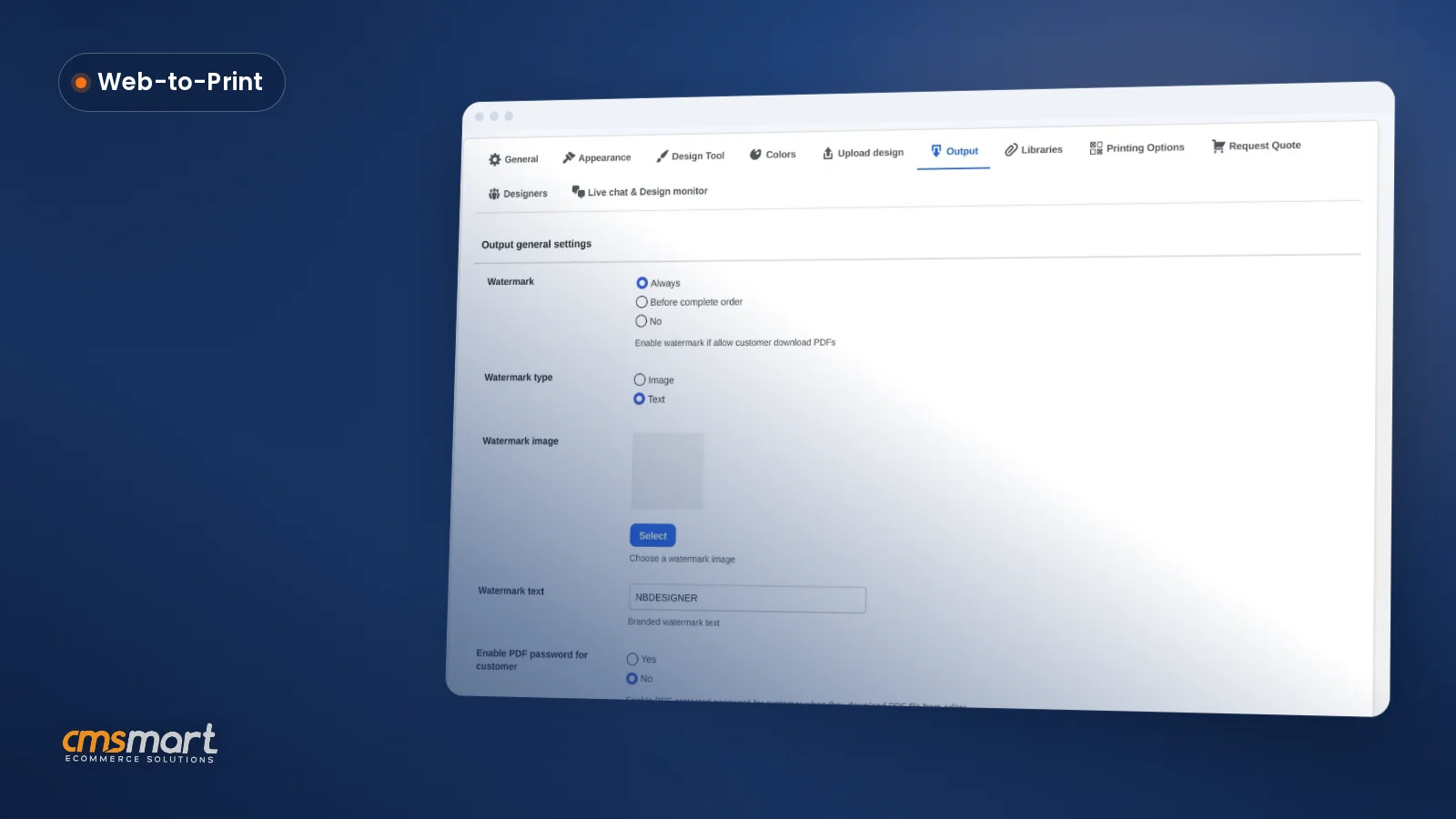
Guide · Web-to-print
Print Ready PDF Output Settings WooCommerce Setup
See what the print ready PDF output settings WooCommerce screen controls — watermark, password, bleed, FTP sync — and configure yours today.
Explore insights into modern consumer behavior and discover effective strategies for driving engagement and sales within the digital landscape. Stay ahead of trends.
Table of contents
Was this tutorial helpful?
Written by
Cmsmart Ecommerce Growth & Trends Analyst
Tracks ecommerce trends and turns them into practical moves for growing stores.
The team behind it
 Account Manager
 Project Manager
 Business Analyst
 Developers & QA
Guide · Web-to-print
See what the print ready PDF output settings WooCommerce screen controls — watermark, password, bleed, FTP sync — and configure yours today.
Case study · AI
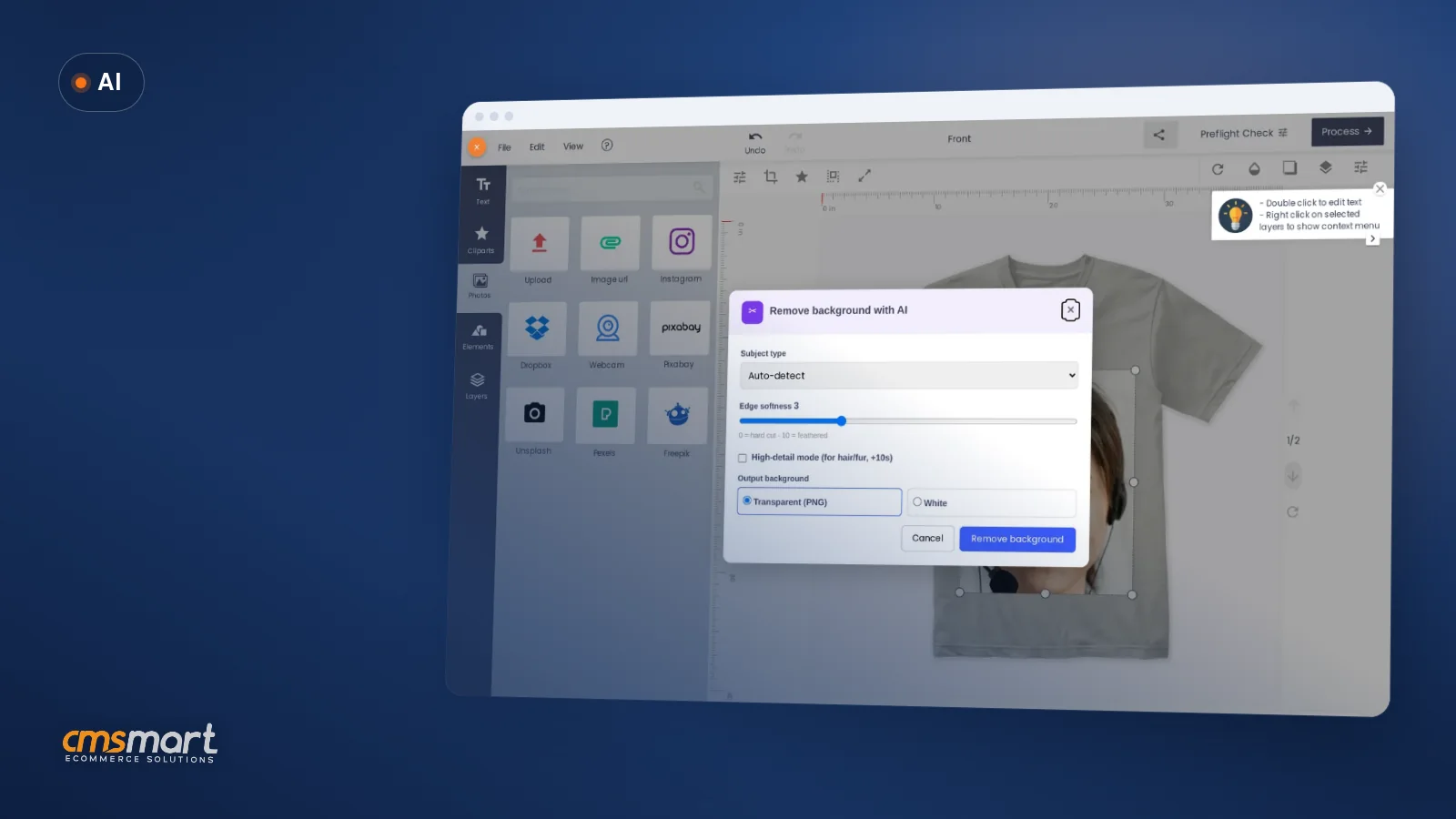
Add an AI background remover for WooCommerce to your product designer so buyers get a clean cutout instantly, and see how Cmsmart builds the rest for...
Case study · Web-to-print
Save design and reorder WooCommerce orders in one click, with a fresh print-ready PDF every time. See how Cmsmart builds it.
Browse more guides, tutorials and case studies from the Cmsmart community.
Unlock the Power of Mobile Commerce: Propel Your Business Forward
Read MoreDiscover how to harness mobile commerce to enhance your business growth. Learn strategies for optimizing the mobile shopping experience and increasing consumer engagement.
Read MoreDiscover the benefits of mobile commerce and how it can transform your business. Learn effective strategies for maximizing sales and customer engagement through mobile-optimized shopping experiences.
Read More
Cmsmart Ecommerce provides custom ecommerce and WooCommerce development services for web-to-print, product personalization, plugin support and API integration.
Cmsmart Ecommerce Growth & Trends Analyst
Tracks ecommerce trends and turns them into practical moves for growing stores.
Meet the team →





The digital landscape is witnessing an era of transformation with e-commerce sales surging to nearly $5.2 trillion in 2021 and projected to exceed $6.3 trillion by 2024. This staggering growth is not just a number; it reflects an unprecedented shift in consumer behavior as shoppers prioritize convenience, speed, and variety. Take, for instance, our client Sarah’s Boutique from Australia—a small fashion retailer faced with dwindling foot traffic and high operational costs. By embracing Cmsmart's modern consumer behavior strategies, her transition to an engaging online platform not only revitalized her sales but also enhanced customer interactions, proving that adapting to digital trends can turn challenges into remarkable success.
However, even in this thriving digital marketplace, many e-commerce businesses grapple with issues like high shipping costs and the need for personalized product interactions. These pain points can often deter potential customers from making purchases, making it vital for business owners to understand the nuances of modern shopping behavior. Through a focus on consumer engagement and feedback-driven strategies, we can share insights that empower you to navigate these complexities successfully. Effective customer service and digital marketing strategies play pivotal roles in overcoming these challenges. In this tutorial, we’ll delve into unlocking these modern strategies to drive engagement and boost sales in your digital marketplace.
The Evolution of Shopping: From Physical Stores to Digital Platforms
Imagine a world where waiting in long queues and maneuvering through crowded shops are things of the past - welcome to modern online shopping!In today’s fast-paced world, consumers prefer convenience, speed, and the ability to shop from anywhere. However, challenges such as high shipping costs and long delivery times can still influence buying decisions.
The Shift from Physical Stores to Online Shopping
The transition from brick-and-mortar stores to digital platforms marks a significant evolution in consumer shopping habits. Here’s how online shopping has changed the game:Understanding Consumer Pain Points in Online Shopping
Despite the benefits, consumers still face certain challenges when shopping online, including:Actionable Strategies to Address Pain Points
Here are some tips to improve consumer satisfaction in your online store:- Offer Free Shipping: Consider a free shipping threshold to encourage larger purchases.
- Provide Accurate Product Descriptions: High-quality images and detailed descriptions can help ease the desire for physical interaction.
- Simplify the Return Process: Make returns easy to enhance customer trust.
- Improve Delivery Options: Partner with reliable shipping services to reduce delivery times.
- Ensure Data Privacy: Implement strong security measures to protect customer information.
In summary: The evolution of shopping has undeniably shifted towards digital platforms, driven by consumer demand for convenience and variety. However, addressing specific pain points like shipping costs and delivery delays remains crucial for improving online shopping experiences. Meanwhile, the next essential topic is the impact of shipping costs on online shopping, which deeply influences consumer purchasing decisions. Let’s dive into this next!Understanding Modern Consumer Behavior
Struggling to understand modern consumer behavior? Youre not alone.Many businesses grapple with the insights needed to adapt their strategies, especially as high shipping costs, the need for product inspection, long delivery times, complicated return processes, and privacy concerns significantly influence buying decisions.
Definition and Components of Modern Consumer Behavior
Consumer behavior encompasses the study of how individuals make decisions to spend their resources on consumption-related items. Key components influencing these decisions include:The Emergence of Online Shopping and its Influence on Consumer Behavior
The rise of e-commerce has dramatically altered consumer shopping habits. With over 2.14 billion digital buyers globally in 2021, e-commerce has become integral to modern life. Online shopping offers convenience, a wider variety of products, and often better pricing. However, it also comes with challenges that influence consumer behavior:Differences between In-Store and Online Shopping Behavior
Consumers exhibit different behaviors based on the shopping environment. In-store shopping allows for tactile product interaction, which can enhance purchase confidence. On the other hand, online shopping prioritizes convenience but may lead to feelings of uncertainty regarding product quality.- Online shoppers can browse various options quickly but lack the opportunity for physical product inspection.
- In-store experiences provide instant gratification but may lack product variety and competitive pricing.
In summary: Understanding modern consumer behavior helps businesses tailor their strategies to meet consumer needs. As we move forward, its essential to consider how shipping costs, product interaction, and privacy issues affect purchasing decisions. Next, lets delve deeper into the impact of shipping costs on online shopping and how they can shape consumer purchase satisfaction.Delving into Omnichannel Shopping
High shipping costs, long delivery times, and complicated return processes are influencing consumer purchasing decisions more than ever.In todays fast-paced digital landscape, understanding the changing consumer buying behaviors is crucial for success in online shopping.
What is Omnichannel Shopping?
Omnichannel shopping is a retail strategy that integrates multiple channels to enhance the customer experience. It allows consumers to engage with brands seamlessly across online and offline platforms, ensuring they can interact with products as desired. This approach gives a holistic view of the customer journey, from browsing online to purchasing in-store or vice versa.The Relevance of Omnichannel Shopping in Todays Digital Landscape
With e-commerce sales projected to reach $6.5 trillion by 2023, the significance of omnichannel strategies is ever-growing. As consumers increasingly expect a seamless experience, businesses must adapt to changing shopping habits.Key statistics:
Here are some advantages of adopting an omnichannel shopping strategy:
- Enhanced customer experience with seamless transitions between shopping channels.
- Increased customer loyalty by offering flexible shopping options.
- Better data analytics capabilities to understand consumer purchase patterns.
However, there are also challenges to consider:Advantages and Disadvantages of Omnichannel Shopping
While the benefits of omnichannel shopping are significant, businesses must acknowledge the drawbacks as well. Advantages include:- Improved customer satisfaction leading to repeat purchases.
- Access to different shopping methods facilitating impulse buying.
Disadvantages:- Potential for logistical challenges in fulfilling orders across multiple channels.
- Difficulty in maintaining a unified customer experience.
Incorporating an omnichannel approach allows businesses to tackle common pain points such as high shipping costs and long delivery times. By offering both online and in-store experiences, customers can inspect products physically and engage with brands in a meaningful way, ultimately leading to increased satisfaction. For insightful strategies on managing shipping costs, understanding the impact of delivery delays, and overcoming complicated return processes, be sure to check out our additional resources. In summary: Embracing omnichannel shopping is key to staying competitive in the evolving retail landscape. Next, we will delve into the impact of rising shipping costs on consumer decisions and sales trends.Exploring the Prevalence of Online Shopping
Are high shipping costs influencing your buying decisions? You’re not alone!Consumers today are facing numerous challenges when shopping online, including concerns over high shipping fees, the need to physically interact with products, long delivery times, intricate return processes, and privacy issues related to data sharing.
The Rise of Online Shopping
Online shopping has transformed consumer behavior significantly over the past decade. The convenience of shopping from anywhere has propelled its popularity, especially during global events that necessitate social distancing.
Key Factors Driving Online Shopping Prevalence
Several factors continue to drive the surge in online shopping:
Online vs Brick-and-Mortar: A Comparison of Shopping Experiences
While online shopping offers many advantages, there are distinct differences compared to shopping in physical stores:
In summary, the growth of online shopping is undeniable, driven by convenience, market competitiveness, and technological advancements. However, to succeed, businesses must address pain points such as shipping costs, product returns, and privacy issues to enhance consumer trust and satisfaction. In the next section, we delve deeper into the impact of shipping costs on online shopping and explore how they affect buying decisions.
Addressing Common Barriers to Online Shopping
Are high shipping costs crucial to your online shopping decisions? You’re definitely not alone.Many consumers struggle with the financial impact of delivery charges, as they often influence purchasing decisions significantly.
High Shipping Costs as a Primary Barrier
Shipping costs remain one of the most notable challenges in online shopping. In fact, a survey revealed that 66% of consumers abandon their carts due to excessive shipping fees . To help mitigate these costs, consider these strategies:Addressing Concerns of Product Inspection and Reliability
Consumers often prefer to inspect products before buying. This is a major reason why traditional brick-and-mortar stores remain popular despite the convenience of online options. To bridge this gap, implement:The Impact of Delivery Delays and Complicated Return Processes
Long delivery times can lead to purchase dissatisfaction. Statistics show that 28% of online shoppers are less likely to buy if they perceive shipping times as lengthy . To improve customer experiences, focus on:Discussion on Privacy Concerns in E-commerce
Privacy issues dominate the minds of many online consumers. Sharing personal data can create hesitance, with 81% of consumers expressing concerns over how their data is being used . Overcome these fears by:- Implementing robust data protection measures.
- Being transparent about data usage policies.
- Offering simple, user-friendly privacy settings.
In summary: Addressing common barriers like high shipping costs, product inspection desires, delivery delays, and privacy concerns can significantly enhance the online shopping experience. These insights and strategies lay the groundwork for creating a more consumer-friendly eCommerce environment. Next, let’s dive deeper into effective techniques for optimizing your online store’s performance.The Changing Landscape of Consumer Purchase Patterns
High shipping costs, long delivery times, and privacy concerns are reshaping how consumers shop today.In an era where online shopping surges, understanding evolving consumer purchase patterns is crucial for e-commerce success.
Present Trends in Consumer Purchase Patterns
Todays consumers exhibit several distinct buying behaviors that reflect their preferences and influences. Key trends include:How Technological Innovations are Influencing Buying Behaviors
Technological advancements are transforming how consumers interact with products and retailers. Some notable influences include:Predictions for Future Consumer Shopping Habits
As consumer expectations continue to evolve, businesses must stay ahead of the curve. Anticipated trends include:- Further rise in omnichannel shopping strategies blending online and offline experiences
- Increased emphasis on sustainability influencing purchase decisions
- Greater accountability for brands regarding data security
- Improved transparency around shipping and return processes
In summary: Understanding the changing landscape of consumer purchase patterns is key to adapting your marketing strategies. To delve deeper into specific challenges like the impact of shipping costs or consumers desire for physical product interaction, let’s explore these critical topics further in the next section.Improving the E-commerce Experience: A Guide for Businesses
High shipping costs can greatly influence buying decisions, and understanding this is crucial for online retailers.Many businesses struggle with the need to reduce shipping expenses, ensuring efficient delivery, and addressing customer concerns about privacy.
Strategies for Reducing Shipping Costs
Enhancing Online Product Displays for Better Inspection
Consumers increasingly desire physical interaction with products before purchasing. To mimic this experience online, consider:Streamlining Delivery and Returns for Better Customer Satisfaction
Long delivery times and complicated return processes can frustrate consumers. Here are some actionable tips:Building Trust and Ensuring Privacy in Online Transactions
With mounting anxiety around privacy, gaining consumers trust is essential. To enhance security:- Display security badges on your site during checkout.
- Utilize reliable payment gateways that ensure transaction safety.
- Clearly communicate your privacy policy and how customer data is protected.
In summary: By applying these strategies to improve shipping costs, enhance product displays, streamline delivery and returns, and fortify consumer trust, businesses can significantly improve the e-commerce experience. Next, well delve into the impact of shipping costs on online shopping, which will further illustrate the importance of these tactics in driving customer satisfaction and loyalty.Integration of Brick-and-Mortar Stores with E-commerce
Struggling to connect your brick-and-mortar operations with your e-commerce platform? Youre not alone.Many retailers are grappling with the challenge of merging offline and online shopping experiences, leaving many customer desires unmet. This disconnect can lead to high shipping costs, delays in delivery, complicated return processes, and the persistent need for consumer interaction with products before buying.
The Rationale for Integrating Offline and Online Operations
In todays retail landscape, consumers increasingly expect seamless shopping experiences, combining the advantages of both brick-and-mortar stores and online conveniences. Key factors influencing this trend include:Case Studies Illustrating Successful Omnichannel Retailing
Brands that successfully integrate e-commerce and physical stores see increased sales and customer loyalty. For instance, major retailers like Best Buy and Nordstrom excel at creating a cohesive shopping experience, allowing customers to buy online and pick up in-store, which enhances customer satisfaction.Preparing for the Future of Retail: Omnichannel is the Way Forward
Businesses must shift their strategies to fully engage consumers across all channels. Here are some actionable tips to prepare:- Invest in Technology: Implement systems that facilitate real-time inventory updates between online and physical stores.
- Enhance Your Return Policy: Simplify your return processes to create a hassle-free experience for your customers.
- Personalize Customer Interactions: Use customer shopping data to tailor marketing messages and offers.
- Focus on Training Staff: Equip employees with the skills necessary to assist customers across platforms effectively.
For more on how shipping costs affect purchasing decisions, why consumers want to touch products, or the complications of return processes, check out our insights on shipping costs, product interaction, delivery times, and return processes. In summary: Omnichannel retailing is essential for meeting modern consumer expectations and driving sales. As we transition to the next section, lets explore further into the impact of consumer behaviors on e-commerce success.Frequently Asked Questions
High shipping costs, delivery delays, and privacy concerns are creating obstacles for many online shoppers today.These challenges can drastically influence consumer buying behavior and reduce satisfaction levels during the shopping process.
Understanding Modern Consumer Behavior
Key Questions about Consumer Shopping Habits
As we explore FAQs about online shopping, consider the following:1. How do shipping costs impact consumer buying decisions?
High shipping fees are one of the primary reasons for cart abandonment. Consumers tend to look for free shipping offers that can influence their decision to complete a purchase.2. Why do consumers prefer to physically inspect products?
Many shoppers find comfort and confidence in inspection before buying. This desire for sensory interaction often leads them to brick-and-mortar stores instead of e-commerce platforms.3. What role do delivery times play in purchase satisfaction?
Long delivery delays typically degrade customer satisfaction, leading to distrust in online stores. Faster shipping options often encourage more conversions.4. How can businesses simplify return processes?
Clear, hassle-free return policies can make a positive impact on consumer loyalty and repeat purchases; this is crucial in building long-term relationships with customers.5. Why are privacy concerns significant in online shopping?
Consumers worry about how their personal data is used and shared. Building trust through transparent practices can alleviate these fears.Actionable Strategies for E-commerce Success
To address these issues effectively, businesses can implement the following strategies:- Offer free shipping thresholds to reduce cart abandonment.
- Enhance product descriptions with high-quality images and videos to bridge the gap of physical inspection.
- Provide estimated delivery dates prominently on product pages.
- Simplify return processes by offering easy-to-follow return labels and fair customer service.
- Communicate your privacy policies clearly to help customers feel secure.
In summary, understanding and addressing these common issues can significantly improve your e-commerce strategy. Next, let’s take a closer look at the impact of shipping costs on online shopping, explore why consumers prefer to touch and feel products before buying, and discuss complicated return processes in e-commerce.FAQ Section: Troubleshooting and Pro Tips
How do high shipping costs affect buying decisions?
High shipping costs can deter customers from completing their purchases, leading to cart abandonment.
Why is physical product interaction important for consumers?
Consumers desire physical product interaction to assess quality and fit before making a purchase.
How do long delivery times impact customer satisfaction?
Long delivery times can lead to dissatisfaction and may discourage repeat purchases.
What challenges do complicated return processes present?
Complicated return processes can frustrate customers, leading to decreased loyalty and lower purchase rates.
Why are privacy concerns relevant to online shopping?
Privacy concerns can make consumers hesitant to share personal information, impacting their willingness to buy.
How can retailers improve customer trust?
Retailers can improve trust by ensuring transparency in shipping costs, return policies, and data security.
What is the role of online reviews in e-commerce?
Online reviews serve as social proof, influencing new customers' confidence and purchasing decisions.
Further Reading
As we wrap up this tutorial on unlocking modern consumer behavior strategies, it’s clear that understanding the shift to digital platforms is vital for any successful e-commerce venture. By leveraging the insights shared, you can create a more engaging shopping experience that addresses consumer pain points, ultimately driving sales and fostering loyalty. If you're ready to transform your approach to e-commerce and need expert guidance, connect with David at WhatsApp or reach out via email at [email protected]. Our team at Cmsmart is here to help you implement these strategies effectively. Don’t hesitate to request a quotation and let’s discuss how we can enhance your online shopping platform together. Your success is just a conversation away.