

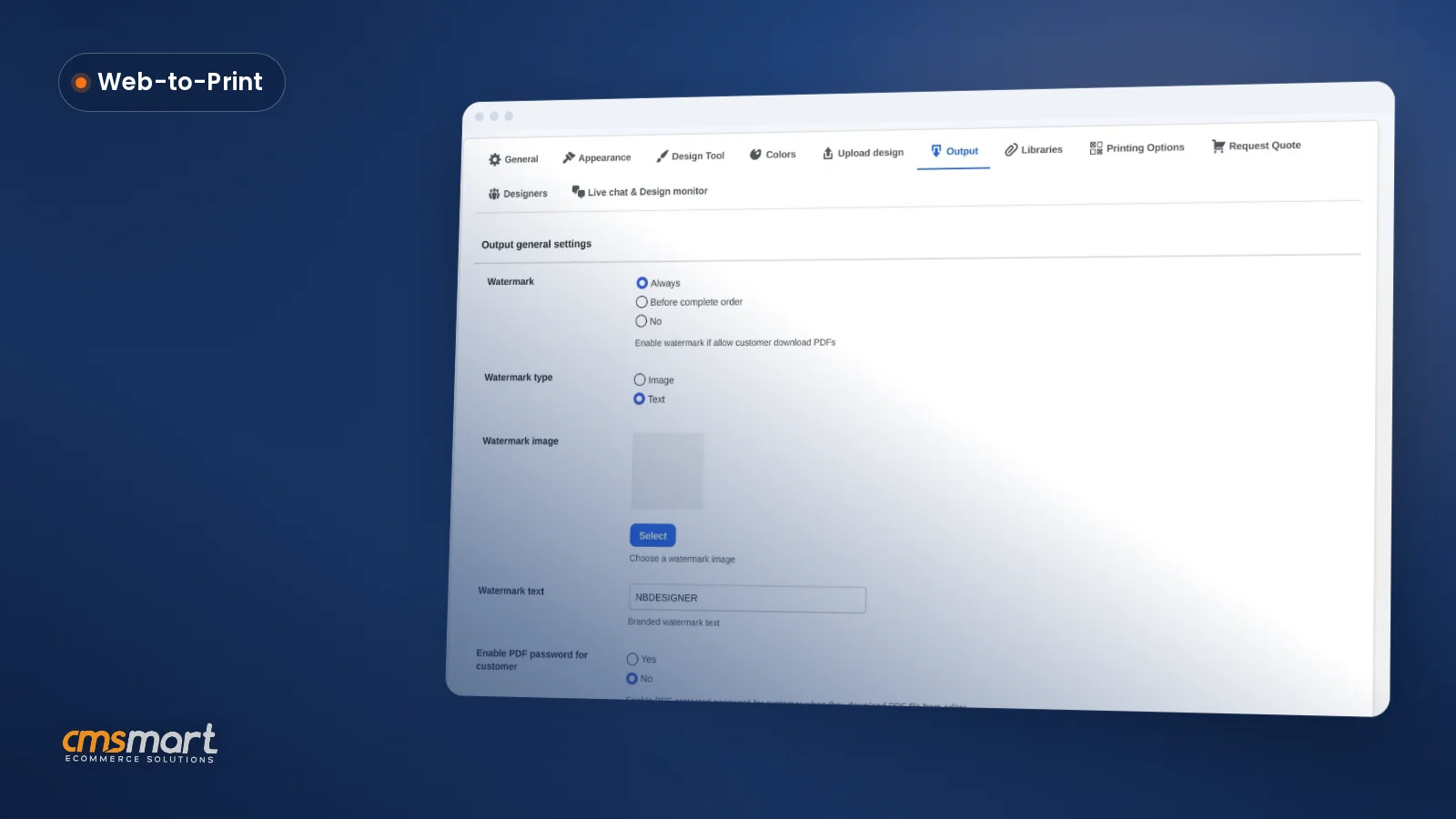
Guide · Web-to-print
Print Ready PDF Output Settings WooCommerce Setup
See what the print ready PDF output settings WooCommerce screen controls — watermark, password, bleed, FTP sync — and configure yours today.
Discover the power of m-commerce in revolutionizing your retail strategy. Leverage mobile technologies to enhance customer engagement, increase sales, and optimize the shopping experience for mobile users.
Table of contents
Was this tutorial helpful?
Written by
Cmsmart WooCommerce Development Lead
Leads custom WooCommerce builds: architecture, checkout, performance and integrations.
The team behind it
 Account Manager
 Project Manager
 Business Analyst
 Developers & QA
Guide · Web-to-print
See what the print ready PDF output settings WooCommerce screen controls — watermark, password, bleed, FTP sync — and configure yours today.
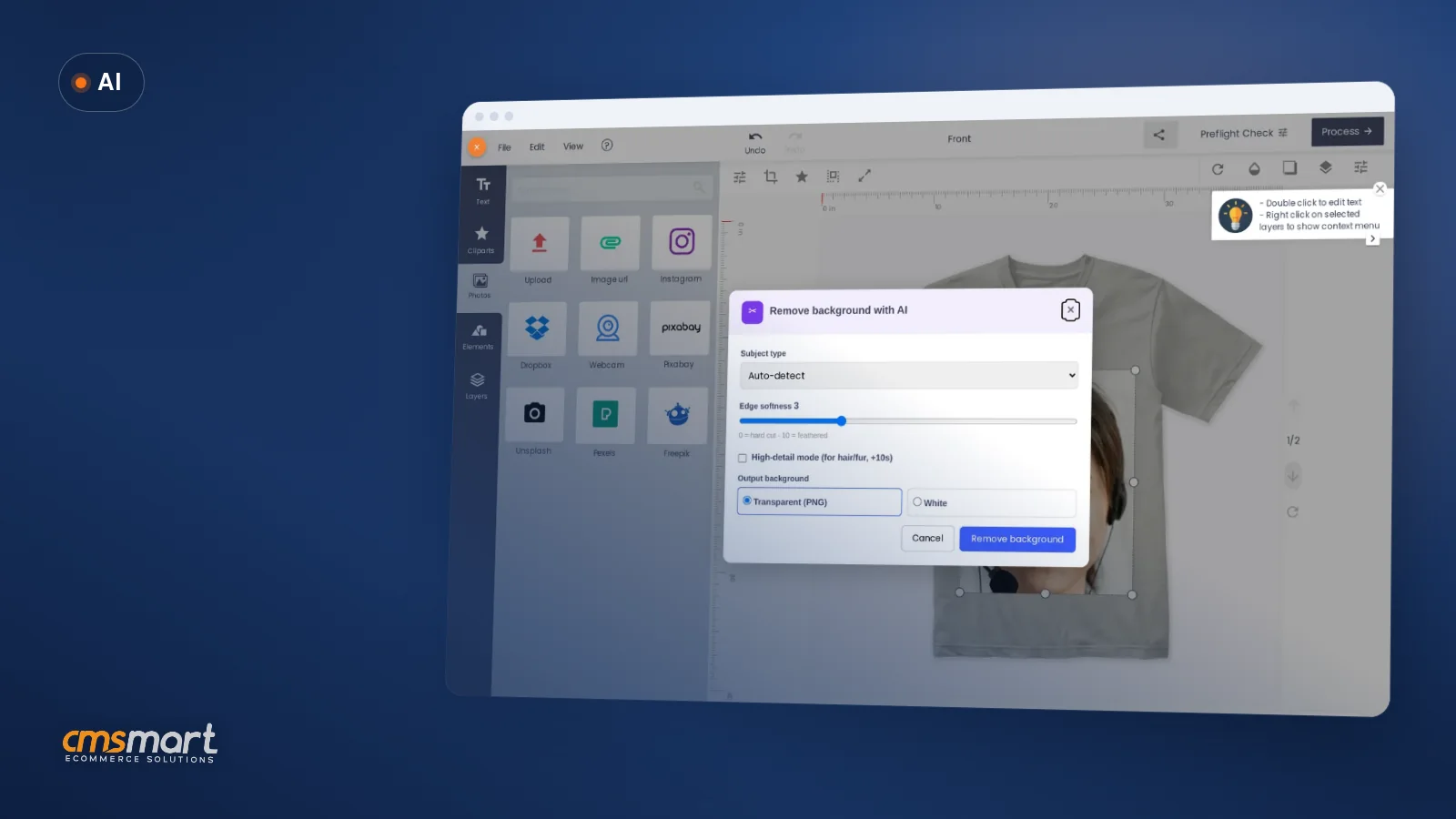
Case study · AI
Add an AI background remover for WooCommerce to your product designer so buyers get a clean cutout instantly, and see how Cmsmart builds the rest for...
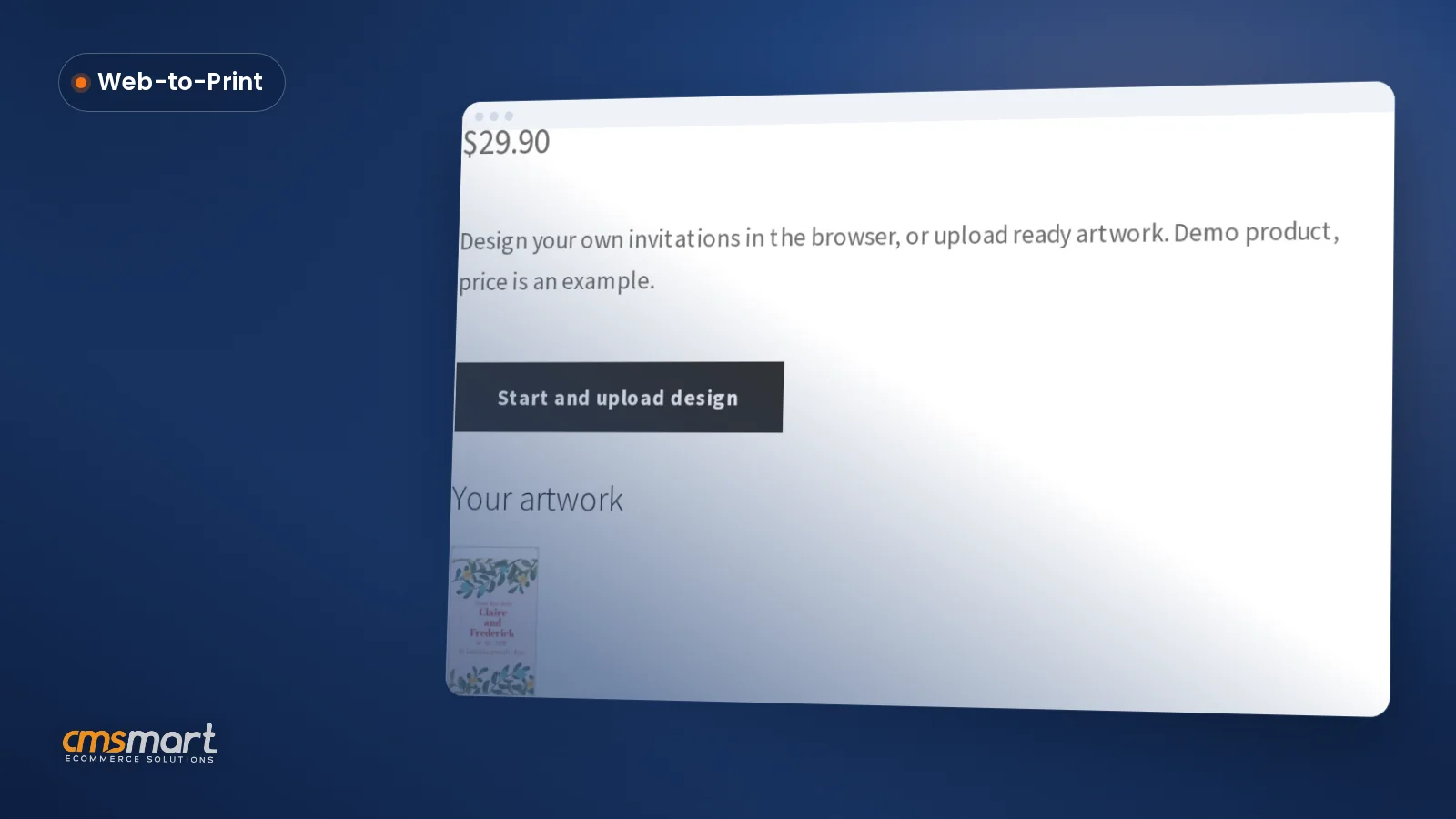
Case study · Web-to-print
Save design and reorder WooCommerce orders in one click, with a fresh print-ready PDF every time. See how Cmsmart builds it.
Browse more guides, tutorials and case studies from the Cmsmart community.
Unlock the Power of Mobile Commerce: Propel Your Business Forward
Read MoreDiscover how to harness mobile commerce to enhance your business growth. Learn strategies for optimizing the mobile shopping experience and increasing consumer engagement.
Read MoreDiscover the benefits of mobile commerce and how it can transform your business. Learn effective strategies for maximizing sales and customer engagement through mobile-optimized shopping experiences.
Read More
Cmsmart Ecommerce provides custom ecommerce and WooCommerce development services for web-to-print, product personalization, plugin support and API integration.
Cmsmart WooCommerce Development Lead
Leads custom WooCommerce builds: architecture, checkout, performance and integrations.
Meet the team →




What if your business could leverage a powerful sales tool that over 50% of the global population uses every day? Mobile commerce is not just a trend; it's a revolution transforming how consumers shop. Yet, many businesses fail to capture this immense potential. Statista projects that mobile e-commerce sales will soar beyond $3.5 trillion by 2024, signaling a critical moment for retailers to address conversion disparities and high cart abandonment rates that plague mobile shopping experiences. Take, for instance, our client Maria Tech from Germany, a home electronics retailer that initially struggled with low mobile engagement. By implementing strategies tailored to their mobile customers, Maria Tech not only improved their site’s conversion rates by 40% but also saw a remarkable increase in average order values. This success story exemplifies the profound impact that a robust mobile-first approach can yield.
In this tutorial, we're diving deep into the world of mobile commerce, exploring essential strategies to enhance user experiences, streamline account navigation, and ultimately, boost sales. By addressing common challenges such as slow loading times and complex checkout processes, we empower you to unlock the full capacity of mobile transactions. Explore our insights on essential strategies for mobile e-commerce and discover more about the role of e-commerce in business transformation. In this guide, we'll provide you with actionable tips and proven tactics to transform your mobile experience, ensuring your business thrives in an increasingly mobile-first world.
The Unexplored Potential of Mobile Commerce
What if your business could tap into a sales tool that more than half the world already uses daily?Mobile commerce is transforming the way consumers shop, yet many businesses struggle to harness this potential. With smartphone users accounting for over 50% of e-commerce traffic, addressing key pain points like conversion disparity and lower order values on mobile devices is critical for any online retailer.
Understanding Mobile Commerce Challenges
Mobile shopping comes with its own set of challenges:Actionable Tips to Enhance Mobile Conversion Rates
To improve your mobile commerce strategy, consider these actionable tips:Unlocking the Future of Mobile Shopping
As mobile commerce continues to grow, tapping into this trend is essential for businesses aiming to expand their market reach. Addressing mobile user experience challenges can ultimately improve conversion rates and customer satisfaction. To further enhance your e-commerce approach, check out our guides on increasing mobile conversion rates, improving mobile user experience, and addressing mobile purchase challenges. In summary: Embracing mobile commerce is not just an option—its a necessity for modern retailers. Stay tuned as we dive deeper into strategies for retail mobile optimization, ensuring your business remains competitive in this dynamic landscape.Decoding the Anatomy of Mobile Commerce
Struggling with the conversion disparity between mobile and desktop users? You’re not alone.Many businesses grapple with lower order values and high cart abandonment rates on mobile devices, contributing to consumer frustrations in the shopping experience.
Defining M-Commerce and Its Scope
Mobile commerce, or m-commerce, refers to the buying and selling of goods and services through mobile devices like smartphones and tablets. It has become a dynamic force in the digital economy, with mobile shopping projected to account for approximately 54.8% of total e-commerce sales by 2025 .M-Commerce vs E-Commerce: Uncovering Unique Opportunities
While e-commerce encompasses all online transactions, m-commerce zeroes in on mobile-device transactions, revealing unique opportunities for brands to harness consumer behavior. The convenience of mobile shopping directly correlates with increased sales potential, but challenges like lower average order values persist.The Role of Smartphones and Tablets in M-Commerce
Smartphones and tablets are revolutionizing the shopping landscape, enabling users to make purchases on-the-go. However, ensuring optimum mobile user experience is critical. Here are some expert strategies:- Maintain mobile-friendly design to enhance usability.
- Implement faster checkout processes to minimize abandonment rates.
- Utilize push notifications and personalized offers to re-engage users.
For those seeking to improve their mobile commerce strategy, check out our in-depth articles on increasing mobile conversion rates, improving mobile user experience, and addressing mobile purchase challenges. In summary: Understanding the anatomy of mobile commerce not only helps businesses tap into emerging market opportunities but also equips them with the tools to enhance customer satisfaction. Next, let’s delve into specific strategies for retail mobile optimization to maximize your success in this fast-evolving landscape. : https://www.statista.com/forecasts/1141097/mobile-e-commerce-revenue-worldwide : https://www.statista.com/statistics/276406/global-mobile-commerce-sales/Unlocking the Riddle of Mobile Traffic vs Conversions
Struggling with low conversion rates on mobile while desktop sales soar? Youre not alone.It’s a common challenge where businesses observe significant traffic on their mobile websites but fail to convert that interest into actual purchases, leading to lower average order values and high cart abandonment rates.
Understanding the Disparity Between Mobile Traffic and Conversion Rates
Mobile commerce has exploded in recent years, accounting for over 54% of total e-commerce sales in 2021, according to the latest reports from Statista. However, the conversion disparity between mobile and desktop remains troubling, with mobile conversion rates averaging just 1.53% compared to 3.41% on desktops.Consumers often encounter a plethora of hurdles while shopping on their smartphones, leading to frustration and abandonment. Here are some common issues:
Identifying Common User Experience Issues in M-Commerce
To turn mobile visitors into customers, it’s crucial to address user experience pain points. Consider the following strategies:Addressing the Conversion Disparity on Mobile Websites
Enhancing mobile conversion rates involves targeted marketing and understanding consumer behavior. Employ the following actionable tips:- Utilize A/B testing for different mobile layouts to see what resonates best with users.
- Leverage analytics to understand where users drop off in the purchase process.
- Incorporate trust signals, like reviews and secure payment icons, to build credibility.
- Engage in personalized marketing to target repeat customers on their mobile devices.
For strategies on improving mobile user experience, check out our detailed guide on increasing mobile conversion rates or dive deeper into addressing mobile purchase challenges. In summary: By identifying and resolving mobile user experience issues, businesses can significantly enhance their conversion rates. Next, let’s explore advanced tactics for retail mobile optimization that can put your e-commerce store ahead of the curve.Designing For Mobile: Website UI and UX
Struggling with high cart abandonment rates on mobile? You’re not alone.Many online retailers encounter significant challenges when it comes to mobile conversions, with smartphone users experiencing a lower order value compared to those on desktop devices. The disparity in conversion rates—often stemming from mobile user experience issues—can lead to frustration for both businesses and their customers.
The Importance of Mobile Website Optimization
Optimizing your website for mobile devices isnt just a trend; its essential for capturing the growing mobile commerce market. Here are key insights on the significance of mobile optimization:Strategies for Enhancing Website UI and UX for Mobile
To improve your mobile websites user interface (UI) and user experience (UX), consider the following strategies:Reducing Cart Abandonment Through UX Improvements
High cart abandonment rates on mobile can be addressed by enhancing the UX of your checkout process. Here are actionable tips to consider:- Implement guest checkout options to eliminate unnecessary steps.
- Provide clear information regarding shipping costs and delivery times upfront.
- Utilize trust signals such as security badges and customer testimonials to build credibility.
- Offer multiple payment options, as different users prefer different methods.
For further information on improving mobile user experiences and conversion rates, check out our guides on increasing mobile conversion rates and addressing mobile purchase challenges. In summary: Prioritizing mobile website optimization is crucial for driving sales and enhancing user experiences. Next, well explore effective strategies for retail mobile optimization that can lead your business to success.Crafting Seamless Omnichannel Experiences
Is your mobile conversion rate lagging behind your desktop sales? Youre not alone.Many businesses grapple with the conversion disparity between mobile and desktop, often resulting in lower order values, high abandonment rates, and frustrating user experiences on mobile sites.
Understanding How Omnichannel Experiences Benefit M-Commerce
Omnichannel marketing creates a seamless shopping journey for smartphone users, enhancing the mobile commerce experience. Here are the key benefits:Essential Elements of a Successful Omnichannel Experience in Mobile
Creating a successful omnichannel strategy for mobile involves several crucial elements:Best Practices in Omnichannel Marketing for Mobile
To effectively implement omnichannel strategies in mobile, consider these best practices:- Utilize targeted marketing campaigns to reach customers on their preferred devices.
- Incorporate social proof and customer reviews prominently to reduce purchase hesitations.
- Implement abandoned cart recovery tactics to reduce cart abandonment rates.
In summary: Focusing on crafting seamless omnichannel experiences can significantly improve mobile user experience, thereby addressing mobile purchase challenges and increasing conversion rates. Next, let’s explore strategies for retail mobile optimization to ensure your mobile platform is equipped to maximize sales. For further insights, check out our sections on increasing mobile conversion rates and improving mobile user experience.Leveraging Targeted Marketing Strategies
Struggling with the conversion gap between mobile and desktop sales? You’re certainly not alone.Businesses often grapple with challenges like lower order values on mobile, mobile user experience hiccups, and high cart abandonment rates. As mobile commerce continues to surge, achieving a seamless user experience for smartphone users has never been more vital.
The Role of Targeted Marketing in M-Commerce
Targeted marketing plays a pivotal role in enhancing mobile shopping experiences by addressing the unique needs and behaviors of consumers. Here are some actionable strategies you can implement:How to Implement Effective Mobile Marketing Strategies
Effective mobile marketing strategies are essential for converting casual browsers into loyal buyers. Here are a few key approaches:Overcoming Consumer Frustrations in M-Commerce Through Targeted Marketing
To mitigate consumer frustrations in mobile commerce, targeted marketing can help by delivering tailored solutions that address specific pain points. Consider the following:- Use behavioral data to predict and resolve customer issues before they become apparent.
- Provide multiple payment options to cater to different preferences.
- Enhance product information and visuals to build trust and confidence in purchases.
In summary: By leveraging targeted marketing strategies, businesses can significantly improve mobile conversion rates and enhance the overall user experience. As we transition to our next section on "increasing mobile conversion rates," let’s explore proven tactics to further optimize your mobile presence and tackle the unique challenges of mobile shopping.Building a Future-Proof M-Commerce Store
Struggling to convert mobile visitors into customers? Youre not alone.Many businesses face significant challenges with conversion disparity between mobile and desktop platforms, including lower order values and high cart abandonment rates.
Current Trends in M-Commerce
Mobile commerce, or m-commerce, is rapidly transforming the landscape of online shopping. As smartphone users increasingly prefer mobile shopping for convenience, several trends are shaping the future of m-commerce:Predicted Future Developments in Mobile Shopping
The m-commerce market continues to evolve, and future developments to watch out for include:Staying Ahead: How to Future-Proof Your M-Commerce Business
To stay competitive in the m-commerce space, consider these actionable strategies:- Optimize your website for mobile devices, ensuring fast loading times
- Create a streamlined checkout process to reduce friction and cart abandonment
- Utilize mobile-responsive designs for better user engagement
- Encourage reviews and build trust through authentic customer feedback
By implementing these strategies, you can transform your m-commerce store into a future-proof marketplace ready to adapt to evolving consumer behaviors. In summary: Embracing these trends and developments enables you to address mobile user experience issues effectively. Next, let’s explore how to enhance your mobile conversion rates and tackle common challenges in mobile purchases.Frequently Asked Questions
Are you struggling with lower mobile conversions and high cart abandonment rates? Youre not alone.Many businesses experience a stark contrast in conversion rates between mobile and desktop devices, leading to frustration among smartphone users trying to make online purchases.
Understanding M-Commerce and Its Challenges
Common Questions About M-Commerce
Q1: What is mobile commerce and how does it differ from traditional e-commerce?
Mobile commerce refers specifically to purchasing goods or services via mobile devices, while traditional e-commerce encompasses all online purchasing through any device.
Q2: Why are mobile conversion rates typically lower than desktop?
Factors include smaller screen sizes, complex navigation, and lengthy checkout processes that can frustrate users.
Q3: How can I improve the mobile shopping experience for my customers?
Q4: How can targeted marketing help increase mobile conversions?
Targeted marketing leverages user data to deliver personalized offers, making users feel understood and appreciated, thus increasing engagement and conversions.
Q5: What strategies can I apply to reduce mobile cart abandonment rates?
- Offer multiple payment options for convenience
- Utilize exit-intent pop-ups to remind customers of their carts
- Implement trust signals like customer reviews and secure payment icons
In summary: Addressing the pain points of mobile commerce is crucial to maximize your e-commerce potential. Improving mobile user experiences can lead to higher conversion rates and reduced abandonment. Next, lets dive into strategies for enhancing your mobile conversion rates and optimizing the user experience.FAQ Section: Troubleshooting and Pro Tips
Why are conversions lower on mobile compared to desktop?
Mobile users face challenges like slower loading speeds and complex navigation.
What factors lead to lower average order values on mobile?
Limited screen space and distractions reduce customers' product selections and add-ons.
How can I improve mobile user experience?
Focus on responsive design, simplify navigation, and streamline the checkout process.
What causes high abandonment rates on mobile sites?
Complex checkout steps and unexpected charges often lead to cart abandonment.
How does m-commerce differ from traditional e-commerce?
M-commerce prioritizes mobile-first strategies to cater to smartphone users and their behaviors.
What solutions exist for optimizing mobile checkout?
Implement auto-fill forms and express payment options to enhance the mobile checkout experience.
Why is mobile optimization critical for e-commerce success?
With increasing mobile user traffic, optimized sites boost engagement and conversion rates.
Further Reading
Congratulations on exploring the transformative world of mobile commerce! By understanding its potential and addressing the challenges outlined in this tutorial, you can turn mobile users into loyal customers, driving both engagement and sales. The insights you've gained today will empower you to optimize your mobile strategies, capitalize on the predicted $3.5 trillion market, and reduce cart abandonment rates effectively. Ready to bring these strategies to life? Let’s discuss how we can help you implement these solutions tailored to your business needs. Reach out to David, our CEO, via WhatsApp for immediate assistance or contact our Ecommerce Project Consultant at [email protected]. You can also request a quotation today. Join me in transforming your store to meet the mobile-first demand!