
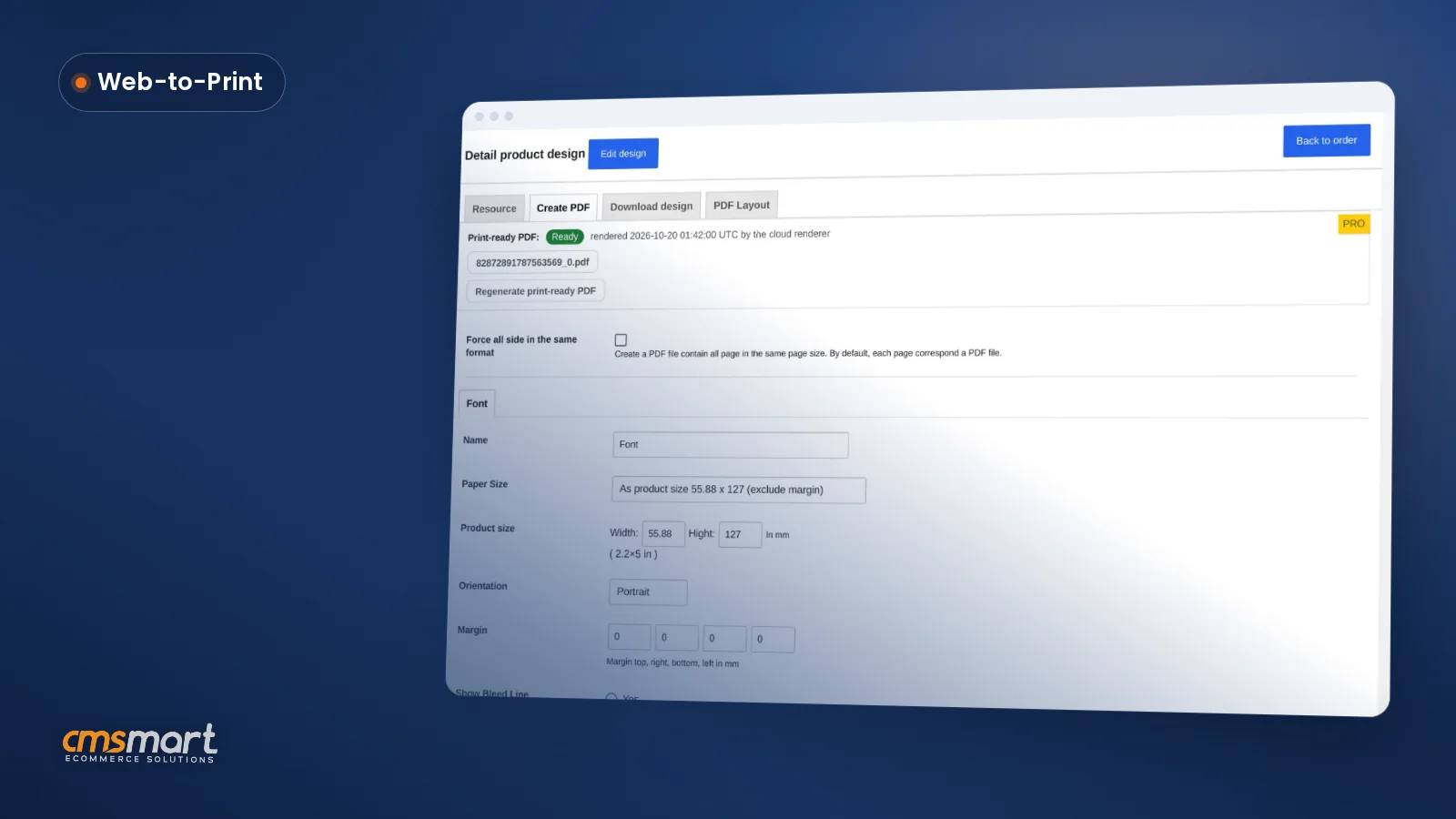
Case study · Web-to-print
Product Personalization Software for WooCommerce
Product personalization software for WooCommerce lets shoppers customize templates on the product page, then get a custom design quote from Cmsmart.
Discover insights into the E-commerce market size, including growth metrics, emerging trends, and strategic opportunities for online retailers to thrive in this dynamic landscape.
Was this tutorial helpful?
Written by
Cmsmart Ecommerce Growth & Trends Analyst
Tracks ecommerce trends and turns them into practical moves for growing stores.
The team behind it
 Account Manager
 Project Manager
 Business Analyst
 Developers & QA
Case study · Web-to-print
Product personalization software for WooCommerce lets shoppers customize templates on the product page, then get a custom design quote from Cmsmart.
Case study · Web-to-print
Set up an artwork approval workflow for WooCommerce: buyers confirm designs, Cmsmart locks the file, and print-ready PDFs generate automatically.
Guide · Web-to-print
Accept customer file uploads for print on demand orders: Cmsmart checks formats, size and DPI, then hands over a print-ready PDF. Get a custom quote t...
Browse more guides, tutorials and case studies from the Cmsmart community.
Unlock the Power of Mobile Commerce: Propel Your Business Forward
Read MoreDiscover how to harness mobile commerce to enhance your business growth. Learn strategies for optimizing the mobile shopping experience and increasing consumer engagement.
Read MoreDiscover the benefits of mobile commerce and how it can transform your business. Learn effective strategies for maximizing sales and customer engagement through mobile-optimized shopping experiences.
Read More
Cmsmart Ecommerce provides custom ecommerce and WooCommerce development services for web-to-print, product personalization, plugin support and API integration.
Cmsmart Ecommerce Growth & Trends Analyst
Tracks ecommerce trends and turns them into practical moves for growing stores.
Meet the team →



As e-commerce continues to evolve at a staggering pace, industry reports anticipate the market will surpass a jaw-dropping $8 trillion by 2027. This explosive growth not only highlights the immense potential for businesses willing to pivot online but also underscores the urgent need for strategic adaptation. For instance, ABC Fashion in Vietnam, a local clothing retailer, faced declining sales with traditional brick-and-mortar operations. After integrating Cmsmart’s eCommerce solutions, they not only expanded their digital footprint but also enhanced customer engagement significantly, resulting in a 150% increase in online sales within just six months. This real-world success story illustrates how embracing digital transformation can drive remarkable growth and adapt to shifting consumer behaviors.
Understanding the depth and breadth of the evolving e-commerce landscape is crucial for businesses aiming to seize new opportunities. As digital acceleration reshapes market dynamics, leveraging strategic insights and innovative tools can make or break your online retail journey. To stay ahead, consider exploring our resources on effective digital transformation, or dive into market trends with our guide on growth strategies for 2024. In this tutorial, we will unveil the critical trends, insights, and opportunities that can help you thrive in the booming e-commerce market.
Unveiling the Global E-commerce Landscape
Imagine a market with endless potential, massive growth, and unrivaled trend-setting power. Welcome to the world of e-commerce.Understanding the magnitude of the e-commerce industry is pivotal for businesses transitioning from physical retail to digital commerce. With market expansion driven by digital acceleration, adapting to changing buyer preferences and behaviors is crucial.
The Global Digital Marketplace: Surging Growth and Transformative Trends
The online shopping market, a cornerstone of the digital commerce industry, is witnessing unprecedented growth globally. Driven by rapid digital acceleration, the e-commerce landscape fascinates entrepreneurs and brands aiming to capture a slice of global retail sales.
Understanding Market Potential
The digital acceleration phenomenon offers vast opportunities, yet poses significant challenges. By embracing transformative change, businesses can thrive in this new era and improve their market potential.
Expert Views on E-commerce Evolution
Now, lets dive into deeper analyses on topics like understanding e-commerce market potential, evaluating global e-commerce market value analysis, exploring impact of buyer behavior on online sales, and envisioning the future of digital commerce post-pandemic to gain a fuller grasp of this ever-evolving industry.
In summary: With thoughtful execution and strategic innovation, businesses can navigate and dominate the global e-commerce landscape. Stay tuned as we transition to exploring the intricacies of digital transformation in retail.Demystifying the E-commerce Market Size
Understanding the magnitude of e-commerce as a market.Transitioning from physical retail to digital commerce can feel overwhelming, especially when keeping up with digital acceleration and transformation. Adapting to changing buyer preferences and behaviors is crucial for success in todays evolving internet retail market.
Interpreting the Digital Commerce Industry Size and Value
The digital commerce industry is booming, with online sales projected to soar to greater heights each year. The global e-commerce market size was worth approximately $4.9 trillion in 2021, and it’s expected to reach $7.4 trillion by 2025, according to Statista. This robust growth highlights the increasing reliance on internet retail markets and the opportunities for entrepreneurs and brands to expand their reach.
Understanding B2B and B2C Transactions in the E-commerce Industry
Both B2B and B2C transactions have thrived in the e-commerce realm, with B2B e-commerce transactions expected to hit $25 trillion by 2028. This growth signifies the shift in buyer behavior towards online platforms. Businesses are increasingly turning to B2B marketplaces to simplify procurement processes.
Exploring the Impact of Global Retail Sales on the E-commerce Market Size
Global retail sales have significantly impacted the e-commerce market size, driving the expansion of digital commerce. Retail giants are increasingly adopting e-commerce strategies to capture online audiences. The convenience of online shopping continues to attract consumers, augmenting the e-commerce landscape.
Navigate the Future of E-commerce
In essence, understanding the e-commerce market potential, assessing the global e-commerce market value analysis, and staying at the forefront of digital transformation in retail are key to thriving in this dynamic environment. For more on the understanding e-commerce market potential, or to delve into digital transformation strategies, continue with our upcoming section on the impact of buyer behavior on online sales and the future of digital commerce post-pandemic.The Post-Pandemic Digital Acceleration
Understanding the magnitude of e-commerce as a market has never been more critical.The transition from physical retail to digital commerce has been rapidly accelerated by the pandemic, pushing businesses to keep up with digital acceleration and transformation. Lets dive into the post-pandemic digital landscape and how it has reshaped e-commerce.
Understanding the Role of Coronavirus on the E-commerce Boom
The coronavirus pandemic significantly boosted the online shopping market as businesses and consumers turned to digital solutions to weather the storm. Prior to the pandemic, e-commerce already held a noteworthy position, but lockdowns and social distancing measures acted as a catalyst, propelling digital commerce industry growth to unprecedented levels.
Impacts of the Pandemic on E-commerce Revenue and Market Expansion
The internet retail market saw diverse shifts—some enterprises thrived, whereas others had to quickly innovate to stay afloat. Particularly, SMEs and entrepreneurs rushed to establish an online presence, capitalizing on the increased demand for online sales.
Future of Digital Commerce Post-Pandemic
As we look to the future, adapting to changing buyer preferences and behaviors remains a top priority. The e-commerce landscape will continue to evolve, with heightened emphasis on eco-friendly practices and technological innovations such as AI and machine learning, enhancing buyer experience.
In conclusion, embracing digital transformation in retail and understanding e-commerce market potential are indispensable for future-proofing your business. As digital commerce becomes a mainstay, ensure you’re positioned to adapt to new trends by leveraging insights from e-commerce system resources and ecommerce business examples .
In summary: By employing effective strategies, we can navigate the complexities of the e-commerce landscape and transition seamlessly into the future of digital commerce. Next, we will explore comprehensive strategies for understanding and harnessing global e-commerce market value analysis.The Power and Influence of Buyer Behavior in E-commerce
Understanding the magnitude of e-commerce as a market is crucial for adapting to digital commerce realities.Transitioning from traditional retail to digital commerce demands agility as businesses respond to the fast pace of digital acceleration and evolving buyer preferences.
Impact of Buyer Behavior on Online Sales
Buyer behavior holds transformative power in the digital commerce industry. Harnessing these insights can significantly amplify your online sales and market presence. Understanding these behaviors lets you predict trends, tailor offerings, and refine marketing strategies to better meet consumer needs.
Changes in Consumer Preferences and Its Effect on Internet Retail Market
Consumer preferences are continuously evolving, challenging e-commerce enterprises to keep up. The shift to preference for mobile shopping, personalized experiences, and faster shipping options significantly impacts the landscape.
Harnessing Buyer Behavior Data for E-commerce Success
Effective use of buyer behavior data is the cornerstone of successful e-commerce strategies. This data provides invaluable insights into customer needs, allowing you to tailor your marketing and product strategies accordingly.
- Utilize CRM systems to gather and analyze detailed buyer data.
- Leverage AI-powered tools to identify consumer patterns and preferences.
- Integrate this data into your marketing campaigns for personalized outreach.
In summary: Comprehending and leveraging the power of buyer behavior is pivotal for thriving in the e-commerce landscape. Next, explore the Understanding E-commerce Market Potential and delve into strategies on adapting to the Future of Digital Commerce Post-Pandemic.Digital Transformation in Retail: A Deep Dive
Understanding the magnitude of e-commerce as a market is crucial for thriving in todays digital age.Transitioning from physical retail to digital commerce presents unique challenges and opportunities. How do entrepreneurs and brands navigate this path while adapting to changing buyer preferences and behaviors in the ever-evolving digital commerce industry?
Decoding the Connection between Digital Transformation and E-commerce Growth
Digital transformation is a pivotal force driving e-commerce growth globally. By embracing technological advancements, businesses can enhance their online shopping market presence, resulting in more efficient operations and increased customer satisfaction. The global e-commerce market is expected to exceed $6 trillion by 2024, emphasizing the need for businesses to adapt.
Understand How Entrepreneurs and Brands are Adapting to Digitalization
Business success stories from diverse sectors reflect the transformative impact of digitalization. Entrepreneurs are leveraging robust e-commerce platforms to not only enter new markets but also to streamline operations.
Challenges and Opportunities in the Digital Retail Space
Navigating the digital retail space comes with its unique set of challenges. Balancing operational efficiency with customer satisfaction is essential for sustained growth in the internet retail market.
- Ensure robust cybersecurity measures to protect customer data
- Utilize SEO strategies to enhance visibility in the highly competitive e-commerce landscape
- Leverage social commerce to expand market reach by integrating with platforms like Instagram and Facebook
In summary: Embracing digital transformation is not just an option but a necessity for businesses aiming to succeed in the dynamic e-commerce industry. Next, let’s explore the Understanding E-commerce Market Potential and delve into global e-commerce market value analysis to prepare for the future of digital commerce.Comparative Analysis of the Global E-commerce Markets
Understanding the magnitude of e-commerce as a market is crucial for businesses transitioning from physical retail to digital commerce. Keeping up with digital acceleration, adapting to changing buyer preferences, and the global e-commerce landscape require strategic insights.Regional Differences in Online Shopping Markets
The digital commerce industry is shaped by diverse regional characteristics. While North America leads in technological advancements, Asia-Pacific dominates in growth rate, offering various opportunities for market expansion. Businesses should consider these variations when planning international expansions.
Growth Trends in B2B and B2C E-commerce across the Globe
The e-commerce industry is experiencing exponential growth in both B2B and B2C segments. The shift towards online shopping markets emphasizes the need for businesses to innovate and integrate effective digital solutions.
Strategies for Businesses Expanding into International E-commerce Markets
Strategies for successful market expansion into global e-commerce markets involve understanding regional preferences, regulatory landscapes, and consumer behavior nuances.
- Conduct thorough market research to understand regional differences.
- Leverage local partnerships for smoother entry into new markets.
- Integrate multi-language support to cater to diverse customer bases.
In summary: Achieving global e-commerce success requires a nuanced approach, factoring in regional characteristics, customer behavior, and robust strategies for each market segment. Continue to the next section for deep dives into understanding e-commerce market potential and global e-commerce market value analysis.Adapting to the Ever-Changing E-commerce Landscape: Practical Steps
Understanding the magnitude of e-commerce as a market: Embrace the change, or risk being left behind.In an era where digital transformation is not a choice but a necessity, transitioning from physical retail to an e-commerce platform might seem daunting. However, by embracing this shift, you ensure your business stays relevant in the expansive online shopping market.
How to Transition from Physical Retail to E-commerce Efficiently
Tackling the Challenges of Digital Acceleration and Transformation
As the e-commerce landscape continues to evolve, keeping pace with digital acceleration is crucial. Businesses must focus on streamlining operations and enhancing customer experience to stay competitive.
Future-proofing Your Business in the Competitive E-commerce Market
Adaptability is the key to thriving in the competitive e-commerce market. By understanding market trends and buyer behaviors, businesses can not only survive but thrive.
- Utilize data analytics to anticipate market demands and customer preferences.
- Foster a robust online community to increase brand loyalty and customer retention.
- Develop a multi-channel strategy to expand your reach and improve sales .
In summary: Transitioning to an e-commerce platform involves understanding market dynamics and strategically planning for future demands. Next, explore how understanding e-commerce market potential and global e-commerce market value analysis can further bolster your digital strategy.Frequently Asked Questions
Understanding the magnitude of e-commerce as a market, Transitioning from physical retail to digital commerce, Keeping up with digital acceleration and transformation, Adapting to changing buyer preferences and behaviors.As businesses increasingly shift to online platforms, the e-commerce landscape is continuously evolving, prompting many entrepreneurs and brands to seek clarity and effective strategies for thriving in this fast-paced environment.
FAQ section covering the E-commerce Market Size and Digital Transformation
Are you curious about the scale and influence of the digital commerce industry? Here, we tackle some common questions around the e-commerce market size and digital transformation that are crucial for your business growth and understanding of the internet retail market.
What is the current size of the global e-commerce market?
According to recent market insights, the global e-commerce market was valued at approximately USD 5 trillion in 2021 and is projected to reach about USD 6.5 trillion by 2023. This expansion reflects the rising demand for online shopping experiences and a robust digital commerce industry. For more detailed analysis, you can explore our global e-commerce market value analysis.
How has digital transformation impacted retail businesses?
Digital transformation in retail has created a significant shift from traditional brick-and-mortar setups to comprehensive online commerce strategies. This trend is reshaping how businesses operate, offering enhanced customer engagement and streamlined operations. For insights, see our article on digital transformation in retail.
What are the key factors driving the e-commerce market growth?
Adaptation to these drivers can significantly influence your success in the online sales market. Discover the impact of buyer behavior on online sales for more details.
How can businesses keep up with digital acceleration?
To keep pace with digital acceleration, businesses must invest in technology upgrades, enhance e-commerce platforms, and engage in continuous market analysis to refine strategies. Explore our guide on understanding e-commerce market potential and how to harness it.
In summary: Grasping the nuances of the e-commerce industry and embracing digital transformation are imperative for future success in the global market. Next, let’s dive into the future of digital commerce post-pandemic to further explore evolving consumer needs and industry innovations.FAQ Section: Troubleshooting and Pro Tips
What is the current e-commerce market size?
The e-commerce market continues to expand rapidly, driven by increasing digitalization and consumer preference for online shopping.
How significant is the e-commerce market globally?
E-commerce is a major component of global retail, with increasing shares in market economies due to advancements in technology and connectivity.
What are the challenges when transitioning from physical retail to digital commerce?
Businesses face challenges like digital infrastructure setup, data management, and adopting new sales and marketing strategies.
How can businesses keep pace with digital acceleration?
Adopting new technologies like AI and AR, and integrating multichannel sales strategies are key to staying competitive.
Why are buyer preferences changing rapidly?
Consumer behavior is shifting towards more personalized, convenient, and seamless shopping experiences due to digital influence.
What strategies can help adapt to changing buyer preferences?
Businesses should leverage data analytics, personalization, and flexible shopping options to meet evolving customer expectations.
Further Reading
As we've explored the vast potential of the e-commerce landscape, it's clear that adapting to this thriving market is essential for survival and growth. By understanding the transformative trends and leveraging valuable insights, you're positioned to capitalize on the projected $8 trillion e-commerce market by 2027. Don't navigate this journey alone. Let’s discuss how we can help you implement tailored strategies that drive digital engagement and enhance your market presence. Connect with our CEO, David, directly via WhatsApp, or reach out through email at project@cmsmart.net. For a more personalized approach, feel free to request a quotation. Join me in transforming your online retail experience today!