

Guide · Web-to-print
Cmsmart Stores Setup Wizard: What's New, October 2026
The Cmsmart Stores Setup wizard installs niche, B2B and Marketplace stores with sample data live in minutes. See what changed and try it free.
Explore the incredible journey of printing from its ancient origins to today's digital advancements.
Was this tutorial helpful?
Written by
Cmsmart Web-to-Print Solutions Consultant
Plans online print storefronts: product setup, pricing rules, proofing and print-ready files.
The team behind it
 Account Manager
 Project Manager
 Business Analyst
 Developers & QA
Guide · Web-to-print
The Cmsmart Stores Setup wizard installs niche, B2B and Marketplace stores with sample data live in minutes. See what changed and try it free.
Guide · Web-to-print
The NBDesigner plugin now gives stationery shoppers a curated background library so print-ready PDFs always match the preview. See how to set it up.
Guide · Web-to-print
See how t-shirt artwork approval and print-ready PDFs cut POD reprints on WooCommerce; get a free workflow review from Cmsmart today.
Browse more guides, tutorials and case studies from the Cmsmart community.
Unlock the Power of Mobile Commerce: Propel Your Business Forward
Read MoreDiscover how to harness mobile commerce to enhance your business growth. Learn strategies for optimizing the mobile shopping experience and increasing consumer engagement.
Read MoreDiscover the benefits of mobile commerce and how it can transform your business. Learn effective strategies for maximizing sales and customer engagement through mobile-optimized shopping experiences.
Read More
Cmsmart Ecommerce provides custom ecommerce and WooCommerce development services for web-to-print, product personalization, plugin support and API integration.
Cmsmart Web-to-Print Solutions Consultant
Plans online print storefronts: product setup, pricing rules, proofing and print-ready files.
Meet the team →
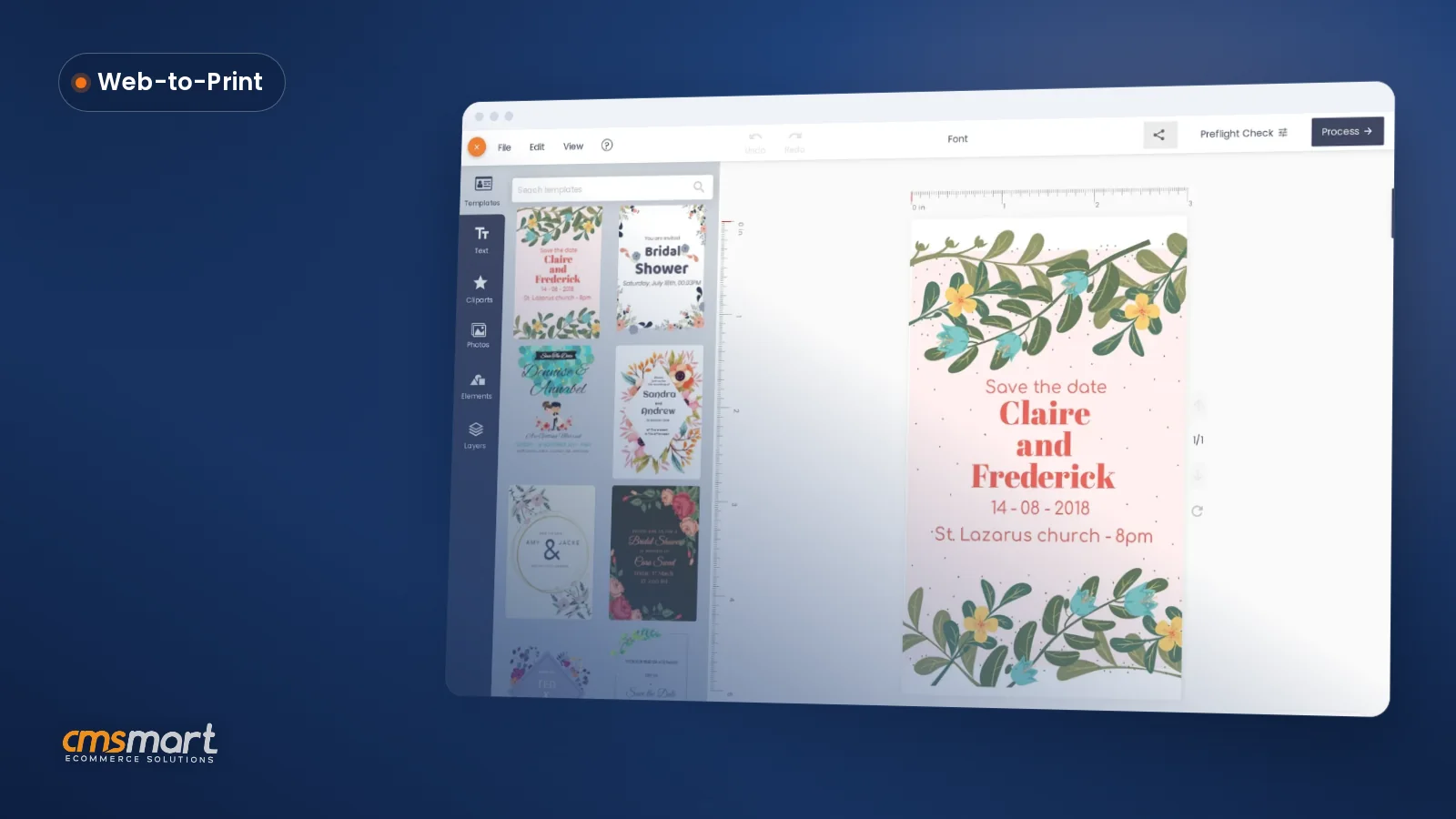




The world of printing has undergone a remarkable transformation, evolving from painstaking hand-copying to sophisticated digital technologies that shape our communication today. A stunning statistic from the GII (Global Innovation Index) reveals that as of 2022, the global printing market is valued at over $400 billion, indicative of its vast impact across industries. For instance, consider the journey of Elegant Prints from Canada, a boutique printing firm that initially struggled with outdated techniques and dwindling customer engagement. By integrating modern printing solutions provided by Cmsmart, they not only streamlined their operations but also enhanced product offerings, reaching a customer base that expanded exponentially. This case reflects not just a personal victory but highlights a wider trend seen in many businesses transitioning to innovative print technologies.
In the realm of eCommerce, understanding the evolution of printing—from the ancient woodblock printing of China to Gutenberg's revolutionary press—unlocks invaluable insights into the democratization of knowledge and the descent into rapid production capabilities. Historical estimates state that by the 9th century, millions of printed sheets circulated annually in China, which laid the foundation for modern communication. The story of printing is not merely a walk down memory lane; it holds immense relevance for today’s business strategies and consumer expectations. For further insights on leveraging innovative solutions and maximizing your eCommerce potential, check out our resources on the evolutionary journey of publishing and the role of digital transformation in modern business.
In this tutorial, we will embark on a fascinating exploration of the history and evolution of printing, uncovering how these advancements have shaped our world and what they mean for the future of eCommerce. Get ready to discover the pivotal moments that have led us from ancient inscriptions to today’s modern digital print technologies.
Birth of Printing: Ancient Chinese Printing & Gutenberg's Masterstroke
Understanding the historical advancements in printing technology is crucial for leveraging its impacts on communication and literacy.Before the era of rapid information dissemination and mass communication, there was a time when every book had to be painstakingly hand-written. Let’s journey back to witness the birth of printing, tracing its origins from ancient China to Gutenbergs groundbreaking innovations that reshaped Europe.
The Dawn of Printing in Ancient China
Imagine the laborious task of hand-copying texts—a reality until the remarkable developments in ancient Chinese printing. It was here that the worlds first print system was developed, laying the groundwork for the democratization of knowledge.
Gutenbergs Revolutionary Contribution
Johannes Gutenberg introduced the movable type printing press to Europe in the 15th century, significantly advancing the spread of knowledge.
Global Impact and Technological Evolution
The contributions of ancient Chinese printing and Gutenberg’s advancements propelled a global transformation, making printing a cornerstone of modern industry and communication. From mass literacy to the birth of industrial printing in the 1800s, these foundational technologies have continually evolved to address the growing needs of societies worldwide.
In summary: Understanding these pivotal moments in printing history offers valuable insights for modern marketing strategies and the importance of knowledge dissemination. Next, we will explore the rise of steam-powered printing in the 1800s and how William Caxtons contributions uniquely impacted literature.Early Innovations in Printing: Ancient Chinese Printing to Gutenberg’s Printing Press
Understanding the historical advancements in printing technology can unlock insights into how these innovations transformed communication, literacy, and economic development over centuries. Lets delve into the early marvels of Chinese block printing and the revolutionary Gutenberg Press.Tracing Back to the Origins: Ancient Chinese Printing
Ancient China gifted the world with one of the earliest forms of printing, dating back to the Tang Dynasty around the 7th century AD. This period witnessed the invention of woodblock printing, which was primarily used to reproduce texts and images on paper and silk.
For more fascinating insights, explore the comprehensive history of printing in ancient China.
A Look at the Ground-Breaking Innovation: Gutenberg’s Printing Press
Johannes Gutenbergs introduction of the movable type printing press around 1440 in Mainz, Germany, was a turning point in printing history. This invention allowed for the rapid production of books, making literature accessible to the masses.
Explore further the impact of Gutenbergs printing press on Europe and how it paved the way for future technological advances.
The pursuit of printing technology has always been linked with economic benefits and challenges. Early Chinese innovations expanded access to knowledge, while Gutenbergs press democratized information, setting the stage for the modern society we know today.
Conclusion: The evolution of printing technology from ancient China to Gutenberg’s revolutionary press forms the bedrock of todays printing industry. In the ensuing section, we will examine the continuous evolution of printing technology over centuries, leading up to the rise of steam-powered printing in the 1800s. Stay tuned for more insights into this fascinating journey.Printing Spreads Across Europe: William Caxton and the Spread of the Press
Understanding the historical advancements in printing technology, William Caxton was a pivotal figure in the expansion of printing across Europe, transforming how ideas spread and reshaping communication. His influence can be traced back to his introduction of the printing press in England, a move that significantly accelerated literacy and mass communication.The Role of William Caxton in the Expansion of Printing
William Caxton, an English merchant and diplomat, was not just a printer but a visionary who understood the transformative power of the printed word. His establishment of the first printing press in England around 1476 marked the beginning of a new era in which books became widely accessible, fostering an intellectual revolution. This accessibility was crucial in a time where manuscript books were both rare and expensive.
The Spread of Printing Presses throughout Europe
The diffusion of printing technology following Caxtons endeavors was rapid and widespread. Cities across the continent became bustling centers of printing activity, contributing to the cultural and political evolution of Europe. This era saw the proliferation of printed material such as pamphlets and books, pivotal in shaping public opinion and disseminating information.
This historical context sets the stage for understanding the technological leaps that followed, including the impact of Gutenbergs printing press on Europe, and its role in enhancing communication and education across societies.
In summary: William Caxtons introduction of the printing press was a catalyst for change, laying the groundwork for modern-day mass communication and the burgeoning book industry. Next, we will explore the evolution of printing technology over centuries.Modern Marvels: The Steam-Powered Printing Press and Beyond
Struggling to grasp the vast impacts of printing technology on modern society? Youre not alone.Gaining a comprehensive understanding of the historical advancements in printing technology is vital for both appreciating its transformative power and harnessing its insights for modern businesses.
The Rise and Impact of Steam-Powered Printing
The advent of the steam-powered printing press marked a pivotal moment in the history of industrial printing. This innovative technology not only increased the speed of production but also played a crucial role in the spread of knowledge and literacy.
Technological Advances in Printing: A Closer Look
Delving deeper into the technological strides made in printing reveals the core innovations that paved the way for contemporary printing solutions.
For a more comprehensive exploration, consider learning about the impact of Gutenbergs printing press on Europe and the history of printing in ancient China, which provide enlightening perspectives on how historical printing technology has shaped human communication.
In summary: Understanding the evolution from steam-powered printing to todays sophisticated methods underscores the enduring impact of these innovations on communication and marketing strategies. Next, let’s explore how William Caxtons legacy influenced English literature and shaped the modern publishing landscape.Printing and Society: Influence on Education, Economics, and Communication
Understanding the historical advancements in printing technology, analyzing the long-term impact on communication and literacy has always been integral to societal growth. Lets explore how printing has shaped education, economics, and communication, offering insights that can enhance modern marketing strategies.Printing and Its Detailed Impact on Education and Literacy
Printing technology revolutionized education by making books more widely available, thus enhancing literacy rates across the globe. By the 16th century, the dissemination of printed materials had transformed educational systems, allowing for the standardization of texts and syllabus materials, which were previously inconsistent due to manual reproduction efforts.
Economic Changes Driven by Printing Innovations
The evolution of printing technology has consistently fueled economic growth. The introduction of the print economy with products such as newspapers and periodicals allowed advertisers access to a new audience, setting the groundwork for todays marketing strategies.
Printing as a Catalyst for Mass Communication and Knowledge Dissemination
Printing has initiated an era of mass communication, making information accessible to the general populace. Initiatives like the newspaper industry can trace their success back to the printing revolution, democratizing access to information.
Learn more about the impact of Gutenbergs printing press on Europe, delve into the history of printing in ancient China, or explore the evolution of printing technology over centuries.
In summary: The historical advancements in printing have set a strong foundation for todays communication, education, and economic systems. These insights pave the way for adapting printing evolution for current marketing and educational challenges—next, let’s explore the technological leaps from steam-powered printing in the 1800s to William Caxtons contributions to literature.Printing Today and Tomorrow: Current Practices and Predictions
Understanding the historical advancements in printing technology sets the stage for appreciating its profound effects on communication, literacy, and modern industrial practices. The rich tapestry of printing history provides insights that fuel contemporary and future innovations.Industrial Printing in the Modern World
Modern industrial printing has evolved beyond simple text reproduction to becoming a cornerstone of mass communication and knowledge dissemination. In todays world, printing facilitates everything from colorful packaging to complex electronics.
Future Predictions: Whats Next in the Printing Evolution?
What does the future hold for printing? Innovations promise exciting developments, especially in areas like digital and functional printing that cater to customized solutions and faster production times.
- Expect more integration of augmented reality in print formats, enhancing user interaction and experience.
- Green printing technologies will gain prominence, focusing on sustainable materials and energy-efficient processes.
In summary: As we delve deeper into the next section on the impact of Gutenbergs printing press on Europe, it becomes clear that understanding the legacy and future of printing is indispensable for exploiting its full potential in our digital age.The Wide-Ranging Impact of Printing on Various Industries
Understanding the historical advancements in printing technology is crucial for grasping its wide-ranging impact on various industries.Analyzing the long-term impact on communication and literacy reveals how printing innovations have revolutionized business strategies globally. Explore the economic benefits and challenges these advancements brought, and learn how they inform modern marketing strategies.
How Printing Innovations Transformed Marketing Strategies
Printing in the Publishing Industry: A Revolutionary Tale
The advent of industrial printing paved the way for mass-production of literature, propelling knowledge dissemination on an unprecedented scale. Printing development from the Gutenberg press to modern presses reshaped the landscape of the publishing world, enabling mass communication and a significant improvement in literacy rates worldwide.
Printing and Its Influence on the Graphic Design Industry
Industrial printing innovation has profoundly influenced graphic design, offering new tools and mediums for creativity. The integration of digital technologies with traditional printing has enabled designers to create more vivid and intricate designs, enhancing the overall quality of products in the market.
In summary: The evolution of printing technology offers valuable insights for modern applications. For further exploration, delve into the impact of Gutenbergs printing press on Europe, explore the history of printing in ancient China, and learn about the rise of steam-powered printing in the 1800s, as well as William Caxtons contributions to literature. Navigate through our cluster contents for more related insights.Frequently Asked Questions on the Evolution of Printing
Understanding the historical advancements in printing technologyDiscovering how the evolution of printing has shaped modern communication, increased literacy, and provided economic advantages is crucial for individuals and businesses alike.
FAQ Section: Evolution of Printing
Explore some of the common questions and insights on how printing has transformed over the centuries.Actionable Tips for Understanding Printing Innovations
Internal and External Linking for Further Insights
Discover more about these fascinating topics through our detailed guides:- Impact of Gutenbergs Printing Press on Europe
- History of Printing in Ancient China
- Evolution of Printing Technology Over Centuries
In summary: Understanding the history and evolution of printing illuminates how it has influenced modern-day literacy, marketing strategies, and mass communication. Next, let’s explore the profound impact technological advancements have had on today’s printing industries.FAQ Section: Troubleshooting and Pro Tips
What are the key historical advancements in printing technology?
The invention of the Gutenberg press, the introduction of color printing, and the development of digital printing.
How has printing technology impacted communication and literacy?
Printing technology enabled widespread access to information, significantly boosting literacy rates and communication.
What are the economic benefits of printing innovations?
Printing innovations have reduced production costs, increased information accessibility, and spurred growth in various industries.
What challenges do printing innovations face?
Challenges include adapting to digital media, environmental concerns, and the need for sustainable practices.
How can insights from the evolution of printing be utilized in modern marketing?
By leveraging digital print capabilities for personalized marketing, creating engaging direct mail, and integrating QR codes for interactive content.
In what ways has digital printing transformed the industry?
Digital printing offers faster production times, customization, and the ability to print on-demand, reducing inventory costs.
How does the printing industry contribute to environmental sustainability?
The industry is adopting recycled materials, sustainable inks, and energy-efficient technologies to reduce environmental impact.
Further Reading
We’ve traveled through time to explore the impactful evolution of printing, from the ingenious woodblock techniques of ancient China to the revolutionary metal movable type introduced by Gutenberg. Understanding these historical milestones equips you with a greater appreciation of how far we've come in communication and literacy. Now is the time to take these insights and apply them to enhance your eCommerce strategy. Let’s discuss how we can help you implement innovative printing technologies in your business. Connect with David, our CEO, directly via WhatsApp at here, or reach out to our dedicated eCommerce Project Consultant at project@cmsmart.net. For a tailored solution, don’t hesitate to request a quotation. Your journey toward modernizing your store’s print capabilities begins now!